

Over 60 percent of American companies are accelerating their adoption of digital supply chain technologies to stay ahead in a rapidly connected world. As global competition intensifies, understanding supply chain digitalization has become critical for business growth and resilience. This article sheds light on the basic principles driving digital innovation in logistics, offering practical insight into how American businesses can harness technology to build smarter, more efficient operations.
Table of Contents
- Defining Supply Chain Digitalization Fundamentals
- Key Technologies Driving Digital Transformation
- Major Applications In Global Logistics Operations
- Compliance And Security In Digital Supply Chains
- Common Implementation Challenges And Solutions
Key Takeaways
| Point | Details |
|---|---|
| Supply Chain Digitalization | Integrating advanced technologies enables real-time data collection and decision-making, enhancing efficiency and responsiveness. |
| Core Technologies | Key drivers such as AI, IoT, and blockchain are essential for creating adaptive, transparent, and resilient supply chains. |
| Applications in Logistics | Digital technologies improve tracking, inventory management, and risk mitigation, leading to optimized logistics operations. |
| Compliance and Security | Robust security measures and compliance protocols are vital in managing complex regulatory requirements and protecting data integrity. |
Defining Supply Chain Digitalization Fundamentals
Supply chain digitalization represents a transformative approach to modernizing logistics and business operations through advanced technological integration. At its core, this strategy leverages cutting-edge digital technologies to create a more interconnected, responsive, and efficient supply chain ecosystem.
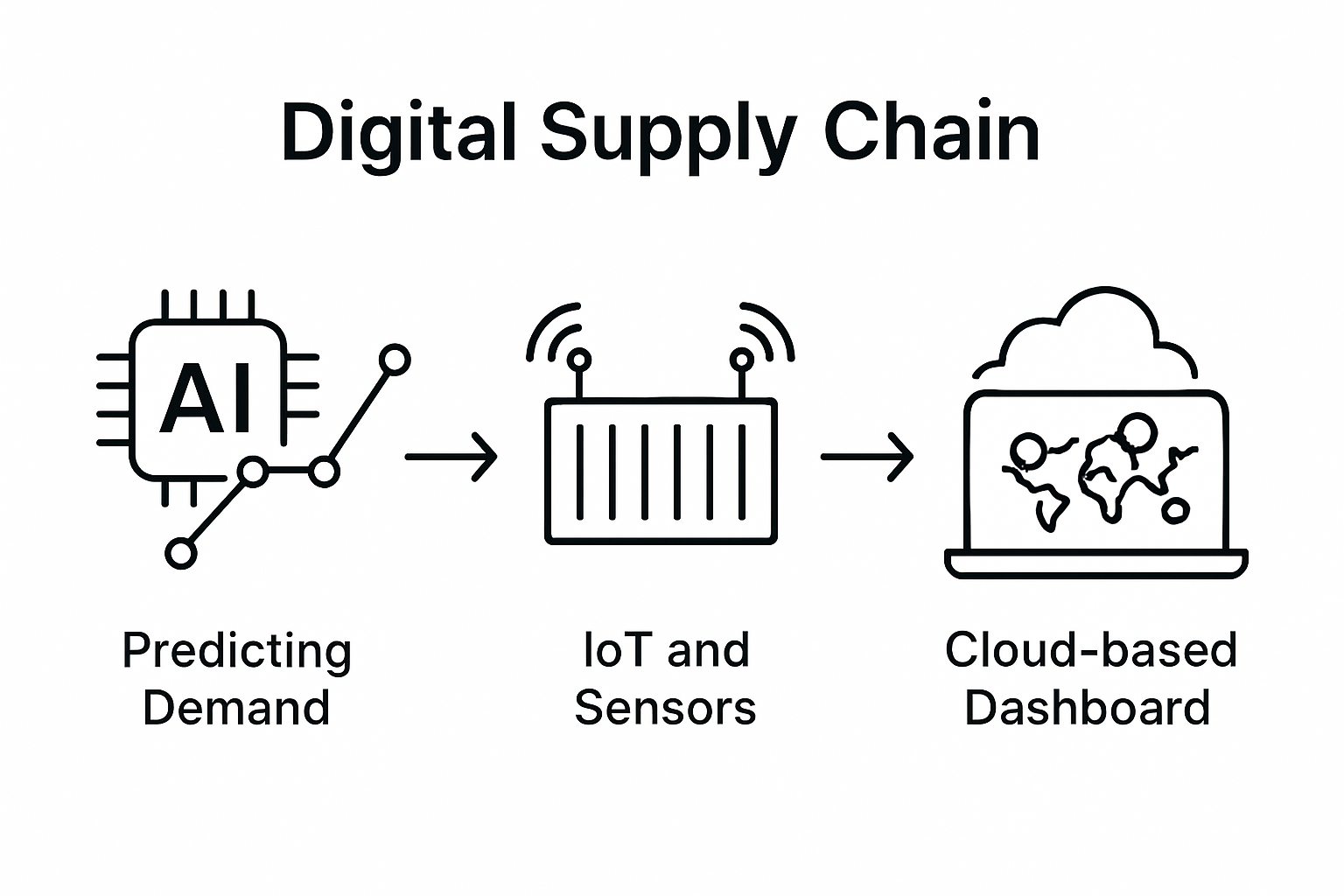
The fundamental architecture of digital supply chains involves integrating dynamic technological platforms that enable real-time data collection, analysis, and decision-making. These systems incorporate sophisticated technologies such as artificial intelligence, Internet of Things (IoT) sensors, cloud computing platforms, and blockchain networks. By implementing these digital tools, businesses can achieve unprecedented levels of visibility, predictability, and operational agility.
Key technological components driving supply chain digitalization include:
- Artificial Intelligence (AI): Enables predictive analytics and intelligent decision-making
- Internet of Things (IoT): Provides real-time tracking and monitoring capabilities
- Cloud Computing: Facilitates seamless data storage and collaborative workflows
- Blockchain: Ensures transparent and secure transaction records
Digital supply chains fundamentally transform traditional linear logistics models into dynamic, adaptive networks. This technological evolution allows companies to respond rapidly to market fluctuations, minimize operational risks, and optimize resource allocation with unprecedented precision. By embracing digital technologies, organizations can create more resilient, efficient, and competitive supply chain strategies that transcend traditional operational boundaries.
Key Technologies Driving Digital Transformation
Digital transformation in supply chain management represents a comprehensive technological evolution that fundamentally reshapes how businesses approach logistics and operational processes. Modern organizations are leveraging advanced technologies to create more intelligent, responsive, and efficient supply chain networks.
The core technological drivers of this transformation include several critical innovations. Artificial Intelligence (AI) plays a pivotal role in predictive analytics, enabling companies to forecast demand, optimize inventory management, and make data-driven strategic decisions. By analyzing complex datasets, AI algorithms can identify patterns and potential disruptions before they impact operational efficiency.
Key technologies transforming supply chain infrastructure include:
- Internet of Things (IoT): Enables real-time tracking and monitoring of goods
- Blockchain Technology: Provides transparent and secure transaction records
- Cloud Computing: Facilitates scalable and flexible data management
- Advanced Robotics: Automates complex warehouse and logistics processes
- Big Data Analytics: Supports comprehensive performance insights and decision-making
These technological innovations collectively work to create a more adaptive and resilient supply chain ecosystem. By integrating sophisticated digital tools, businesses can transform traditional linear supply chains into dynamic, intelligent networks that can rapidly respond to market changes, minimize operational risks, and drive competitive advantage through unprecedented levels of visibility and efficiency.
Major Applications in Global Logistics Operations
Global logistics operations are undergoing a radical transformation through advanced digital technologies that enhance efficiency, visibility, and strategic decision-making. These technological applications are reshaping traditional supply chain management approaches, creating more responsive and intelligent operational frameworks.

Digital technologies like IoT and artificial intelligence are revolutionizing how businesses track, manage, and optimize their logistics processes. Real-time tracking systems enable companies to monitor shipments with unprecedented precision, reducing uncertainties and minimizing potential disruptions. By leveraging advanced algorithms and sensors, organizations can now predict potential bottlenecks, optimize routing, and make data-driven decisions that significantly improve overall operational performance.
Key applications of digital technologies in global logistics include:
- Predictive Maintenance: Using AI to forecast equipment failures
- Real-Time Inventory Management: Tracking stock levels and movement instantly
- Automated Routing Optimization: Selecting most efficient transportation paths
- Demand Forecasting: Analyzing historical and current data to predict future requirements
- Risk Management: Identifying and mitigating potential supply chain disruptions
The integration of digital technologies in supply chain management represents a significant shift towards what experts call SCM 4.0. This approach enables businesses to create more agile, resilient, and customer-centric logistics networks. By embracing these technological innovations, companies can dramatically reduce operational costs, minimize lost sales opportunities, and dramatically improve overall supply chain performance through enhanced visibility and strategic insights.
Compliance and Security in Digital Supply Chains
Digital supply chains represent a complex ecosystem where technological innovation intersects with rigorous regulatory requirements. Ensuring compliance and security has become increasingly sophisticated as global trade becomes more interconnected and technologically driven.
Digital technologies like blockchain and Internet of Things (IoT) are transforming how businesses monitor, validate, and secure their supply chain operations. These advanced systems provide unprecedented transparency, enabling organizations to track every transaction, verify authenticity, and maintain comprehensive audit trails that meet stringent international regulatory standards. By implementing robust digital security protocols, companies can mitigate risks associated with data breaches, counterfeiting, and unauthorized access.
Key aspects of compliance and security in digital supply chains include:
- Data Encryption: Protecting sensitive information from unauthorized access
- Real-Time Compliance Monitoring: Tracking regulatory requirements across different jurisdictions
- Secure Authentication Protocols: Verifying user and transaction identities
- Blockchain Verification: Creating immutable transaction records
- Automated Compliance Reporting: Generating accurate regulatory documentation
International trade compliance requires a multifaceted approach that combines technological sophistication with comprehensive risk management strategies. Modern digital supply chains must navigate complex regulatory landscapes, balancing operational efficiency with stringent security requirements. By leveraging advanced technologies, businesses can create more transparent, secure, and compliant global logistics networks that protect both organizational interests and stakeholder value.
Common Implementation Challenges and Solutions
Digital supply chain transformation presents complex challenges that require strategic planning and technological innovation. Organizations must navigate a multifaceted landscape of technological integration, organizational change, and operational optimization to successfully implement digital logistics solutions.
Addressing demand variability and logistical complexities requires a comprehensive approach that combines advanced technological capabilities with adaptive strategic frameworks. Businesses frequently encounter significant obstacles during digital transformation, including legacy system incompatibilities, data integration challenges, workforce skill gaps, and resistance to technological change. These challenges demand sophisticated solutions that go beyond simple technological implementation.
Key implementation challenges and strategic solutions include:
- Legacy System Integration: Developing middleware and modular transition strategies
- Data Quality Management: Implementing robust data cleansing and validation protocols
- Skill Gap Mitigation: Creating comprehensive training and upskilling programs
- Change Management: Designing organizational transformation roadmaps
- Technology Investment: Prioritizing scalable and flexible digital infrastructure
Successful digital supply chain implementation requires a holistic approach that balances technological innovation with human adaptability. By developing flexible strategies that address both technical and organizational challenges, businesses can create more resilient, efficient, and responsive logistics networks that leverage the full potential of emerging digital technologies.
Accelerate Your Supply Chain Digitalization with Worldwide Express
Modern supply chains face challenges like real-time visibility, seamless compliance, and agile response to market changes. The article highlights complex issues such as integrating AI, IoT, and blockchain technologies while overcoming legacy systems and managing global logistics risks. Businesses striving for predictive analytics, secure documentation, and efficient routing need tailored solutions that drive operational agility and resilience.
At Worldwide Express, Inc., we specialize in bridging these digital transformation gaps by offering comprehensive international logistics services including customs brokerage, freight forwarding, and supply chain management tailored to your business needs. Our expertise in compliance, cargo tracking, and secure documentation helps you tackle challenges like regulatory complexity and data management head-on. Explore how our global reach and customized logistics plans empower your enterprise to turn supply chain digitalization concepts into measurable results.
Transform your supply chain into an adaptive, transparent, and efficient network. Visit Worldwide Express now to discover how our tailored international shipping and logistics solutions accelerate your path to digital supply chain excellence. Take the first step toward minimizing risks and maximizing performance with our expert support and advanced tools today.
Frequently Asked Questions
What is supply chain digitalization?
Supply chain digitalization is the process of modernizing logistics and business operations by integrating advanced digital technologies, resulting in a more interconnected, responsive, and efficient supply chain ecosystem.
What key technologies drive supply chain digitalization?
The main technologies include Artificial Intelligence (AI) for predictive analytics, Internet of Things (IoT) for real-time tracking, cloud computing for data management, blockchain for secure transactions, and advanced robotics for automating processes.
How does digital supply chain transformation impact global logistics operations?
Digital supply chain transformation enhances efficiency and visibility in global logistics by allowing real-time tracking, optimizing routing, predicting demand, and improving overall operational performance through data-driven decisions.
What are the primary challenges in implementing digital supply chains?
Key challenges include legacy system integration, data quality management, skill gaps in the workforce, change management concerns, and technology investment requirements. Strategies for overcoming these challenges involve planning, training, and adapting organizational processes.
Recommended
- Understanding Digital Freight Forwarding and Its Impact – Worldwide Express, Inc.
- Blockchain in Shipping: Complete Guide for Logistics – Worldwide Express, Inc.
- Understanding Smart Warehousing Solutions for Trade Success – Worldwide Express, Inc.
- Understanding What is Transloading in Logistics and Trade – Worldwide Express, Inc.
- Understanding the Importance of Customer Communication – My WordPress
- Understanding Digital Signage for Offices: Key Insights – Projector Display