Vegetable export is viable when product selection, cold chain, and destination rules line up, and it fails most often when one of those three gets skipped. WITS and OEC confirm this is a large, active market, but the winners are the exporters who match shelf life to transport method and clear import rules before the first shipment leaves the farm.
TL;DR:
- Export viability depends on matching shelf life, transportation mode, and strict import rules, especially for delicate vegetables that require rapid, temperature-controlled transit.
- China, Mexico, and Spain lead global vegetable exports, with the Netherlands acting as a distribution hub, and product complexity influences market entry barriers and pricing power.
- Protocol market access can take over a year to establish, requiring early verification of specific import regulations and certification before planting or harvesting.
- Cold chain and transit time determine feasible transport mode; sturdy vegetables often use ocean freight, while delicate greens need air or express trucking for quality preservation.
- Accurate documentation, HS codes, and regulatory compliance are crucial; errors can delay shipments or cause total losses, emphasizing the need for early verification and professional support.
Table of Contents
- What Does Global Vegetable Export Trade Look Like Right Now?
- Which Vegetables Should You Choose For Export?
- How Do You Confirm Market Access And Regulatory Requirements?
- What Cold-Chain And Transport Choices Matter Most?
- What Does A Freight Forwarder Actually Do For Vegetable Exporters?
- What Documents And Compliance Steps Do You Need?
- How Do You Price Vegetable Exports And Structure Payment Terms?
- What Should You Do In The Next 30 To 90 Days?
- Where Should You Go For Trade Data And Regulatory Rules?
- What Actually Determines Whether A Vegetable Export Business Survives?
- Sources
What Does Global Vegetable Export Trade Look Like Right Now?
China, Mexico, and Spain lead the world in vegetable exports, with China posting $11.6 billion and Mexico close behind at $11.3 billion in 2024, according to OEC. Spain follows at $9.96 billion. These three countries alone account for a meaningful share of global trade in edible vegetables, roots, and tubers.
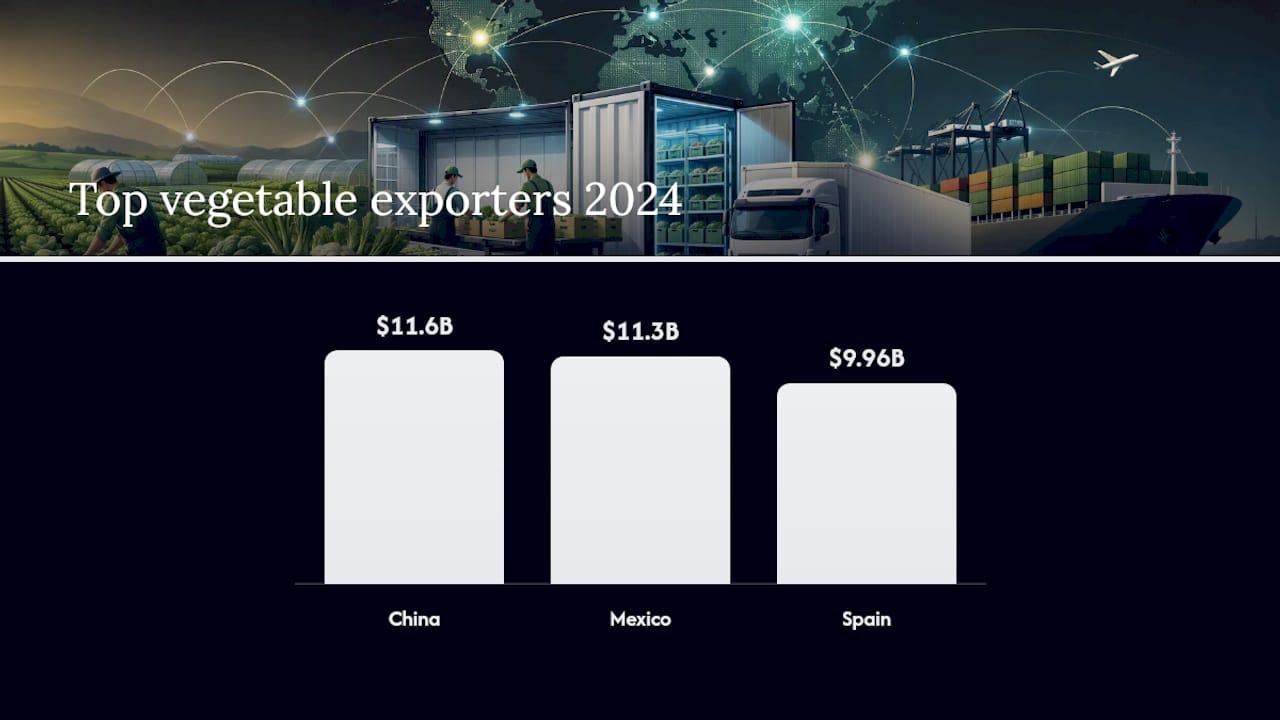
Recent industry reporting adds the Netherlands to that leading group, though its volume is influenced by its role as a distribution hub rather than pure domestic production. Dutch ports handle enormous re-export flows, so a country’s rank in WITS tables can reflect logistics muscle as much as farm output. FreshPlaza reporting on UN Comtrade and Fepex data confirms China, Spain, and the Netherlands as the three names that keep showing up at the top of recent volume rankings.
In the United States, the USDA Foreign Agricultural Service tracks fresh-vegetable exports as a distinct category, and its country summaries are the standard reference for anyone benchmarking U.S. shipments against global competitors. Statista’s time series on U.S. export value by vegetable type from 2015 through 2023 shows how the product mix shifts year to year, which matters if you’re deciding whether to specialize in one crop or diversify.
| Data Source | Best Used For | Coverage |
|---|---|---|
| WITS (World Bank) | Country-level export value and partner-country breakdowns | Global, by HS chapter |
| OEC | Leading exporter rankings and product-complexity context | Global, updated annually |
| USDA FAS | U.S. fresh-vegetable export totals and trends | United States |
| Statista | Historic export-value trends by vegetable type | United States, 2015 to 2023 |
Product complexity matters more than most new exporters realize. A country’s Product Complexity Index reflects how much processing, standardization, and logistics coordination a vegetable category demands. Fresh vegetables sit lower on that index than processed or frozen products, which means the barrier to entry is lower, but so is the pricing power. That tradeoff shapes almost every decision that follows in this guide.
Which Vegetables Should You Choose For Export?
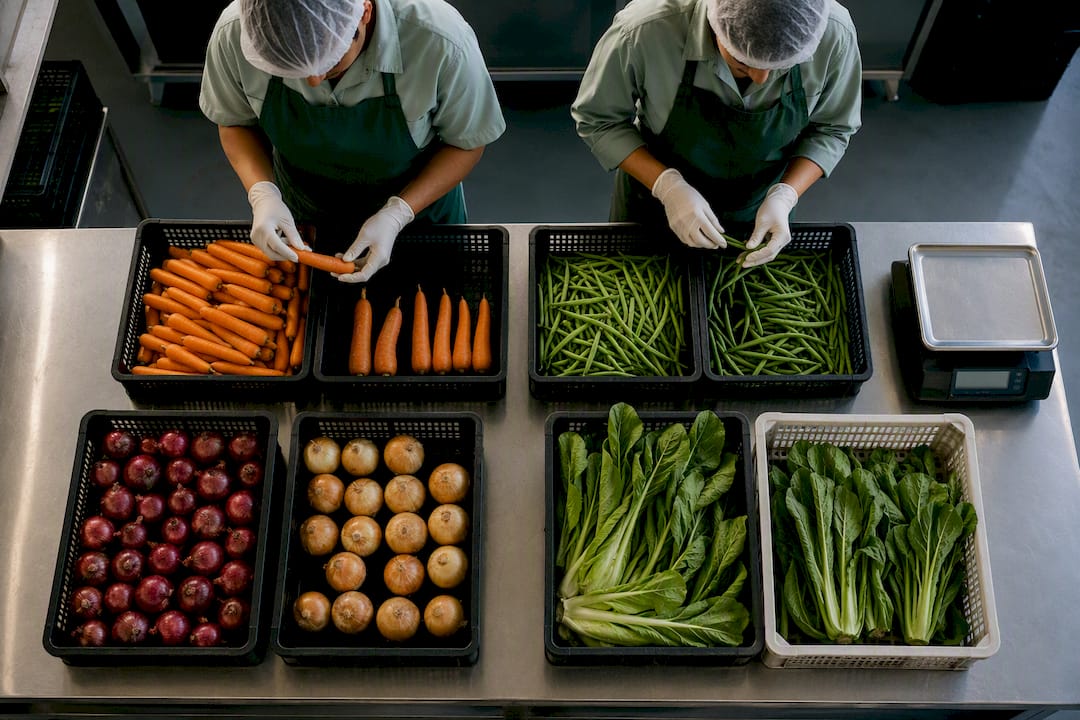
Not every vegetable belongs on a cargo manifest. Root and tuber crops like potatoes, carrots, and onions tolerate rough handling and long transit times, which makes them a natural fit for ocean freight and less urgent scheduling. Leafy greens, herbs, and delicate items like asparagus or green beans lose quality fast and usually need air transport or express refrigerated trucking to arrive sellable.
Shelf life isn’t the only variable. Profitability per kilogram often runs in the opposite direction of shipping ease. Sturdy vegetables travel cheap but sell cheap; delicate greens cost more to move but command premium pricing in markets that value freshness. Frozen and processed vegetable lines split the difference, trading some of that premium for a longer window to sell and a lower risk of total loss.
Before committing to a crop, run it through a short evaluation:
- Shelf life at target temperature: does it survive 3 weeks at sea or does it need a 3-day air window?
- Value per kilogram: does the margin justify air freight, or does it only work by ocean?
- Buyer demand signals: is there a standing order, a seasonal gap you can fill, or a speculative shipment?
- Packaging complexity: does it need specialized ventilated crates, modified-atmosphere bags, or standard cartons?
- Regulatory exposure: does the crop face pest or residue restrictions in your target country?
Sturdy exportables like potatoes, onions, and carrots tend to reward volume plays. Delicate crops reward exporters who can guarantee tight cold-chain control from field to buyer.
How Do You Confirm Market Access And Regulatory Requirements?
Every export destination falls into one of two categories: protocol markets and non-protocol markets. A non-protocol market accepts a given vegetable under general phytosanitary rules, with standard certification. A protocol market has negotiated specific, often crop-by-crop conditions with the exporting country, sometimes requiring pest-free zone certification, pre-clearance inspections, or facility audits before the first shipment can move.
That distinction changes your entire timeline. Non-protocol shipments can often move within weeks of securing a buyer. Protocol markets can take months, sometimes over a year, if the exporting country hasn’t yet negotiated access for that specific crop.
Where to check before you commit:
- MICoR (Manual of Importing Country Requirements) and equivalent national databases list crop-by-crop, country-by-country conditions.
- National inspection authorities, such as Canada’s CFIA, publish step-by-step export guides covering certification and validation.
- Company or industry association lists often show which exporters already hold protocol access for a given market, a useful signal of how established the pathway is.
The CFIA’s published process follows a pattern common to most countries: confirm the importing country’s requirements, obtain the required export certification, complete any validation or verification steps, then ship. That sequence rarely compresses, no matter how urgent your timeline feels.
Pro Tip: Start the market-access check before you plant or contract for a crop, not after. A protocol requirement discovered post-harvest can strand an entire season’s product with nowhere to go.
What Cold-Chain And Transport Choices Matter Most?
Air versus ocean isn’t a cost decision first. It’s a shelf-life decision that happens to have cost consequences. A vegetable with a 5 to 7 day usable window after harvest generally can’t survive a 3 to 5 week ocean transit plus port handling, even under refrigeration. Air freight, at 1 to 3 days transit, becomes the only realistic option, and the buyer’s pricing needs to absorb that cost.
Root vegetables and other sturdy crops flip that logic. Ocean freight in refrigerated containers handles carrots, potatoes, and onions across multi-week voyages without meaningful quality loss, and the cost savings versus air can run into multiples, not percentages.
Packing and monitoring decisions compound whichever transport mode you choose:
- Palletize with airflow gaps to prevent condensation and heat buildup inside cartons.
- Use temperature data loggers on every pallet, not just the container, since internal hot spots can hide from a single container-level sensor.
- Match packaging to the specific crop: ventilated crates for root vegetables, modified-atmosphere bags for leafy greens.
- Pre-cool product before loading. Loading warm product into a refrigerated container forces the unit to work overtime and rarely catches up.
A working reference point: transit time drives everything downstream, from insurance premiums to buyer contract terms. A shipment with a 3-day air transit carries different risk exposure, and different insurance pricing, than one with a 25-day ocean transit, even if both deliver the same product. Buyers increasingly ask for transit-time guarantees and temperature logs as a contract condition, not a courtesy. For a deeper look at refrigerated handling standards, see this guide to perishable cargo logistics. Packaging specifics, including palletization for perishables, are covered in this export packing requirements guide.
What Does A Freight Forwarder Actually Do For Vegetable Exporters?
A freight forwarder handles the operational layer that sits between “I have a buyer” and “the product arrived intact.” That includes booking refrigerated capacity on air or ocean carriers, coordinating cold-chain handling at transfer points, preparing export documentation, managing customs brokerage on both ends, and arranging cargo insurance sized to the shipment’s actual risk profile.
The paperwork side matters more than most first-time exporters expect. A forwarder tracks:
- Phytosanitary certificate requirements specific to the destination country and crop.
- HS-code accuracy, since a misclassified vegetable can trigger automatic customs holds.
- Temperature evidence, meaning the data-logger records that back up an insurance claim if a shipment arrives out of spec.
The right time to bring a forwarder in is during market selection, not after you’ve booked a buyer. A forwarder with international freight forwarding experience can flag protocol-market timelines, recommend realistic transit windows, and price cold-chain logistics before you quote a buyer a delivery date you can’t hit.
Pro Tip: Ask a prospective forwarder how they handle a temperature excursion mid-transit. Their answer tells you whether they treat cold-chain monitoring as a formality or an active risk-management practice.
What Documents And Compliance Steps Do You Need?
Missing paperwork, not lost cargo, is the most common reason a first shipment gets held at the border. The CBI’s operational guidance for exporters selling into Europe treats documentation as a first-order concern, not an afterthought.
- Phytosanitary certificate issued by your national plant-health authority, confirming the shipment meets the importing country’s pest and disease standards.
- Certificate of origin, required by many countries to apply correct tariff treatment.
- Commercial invoice with accurate, itemized declared values.
- Packing list detailing weights, dimensions, and carton counts per pallet.
- Export permits, where the exporting country requires them for specific crops or volumes.
HS-code accuracy deserves its own warning. An incorrect code doesn’t just risk a fine. It can trigger an automatic customs hold that stalls a perishable shipment past its usable shelf life, turning a paperwork error into a total loss. Declared values need the same scrutiny, since undervaluing a shipment to save on duties is one of the fastest ways to invite an audit.
Labeling and grade standards add another layer. Organic certification, country-of-origin labeling, and destination-specific grading rules (size, ripeness, cosmetic standards) can all trigger inspection holds if they don’t match what’s declared. For the full documentation chain, including customs clearance steps on the receiving end, review this overseas import customs clearance guide.
Pro Tip: Have a customs broker or forwarder verify your HS code against the official tariff schedule before your first shipment, not after a hold notice arrives.
How Do You Price Vegetable Exports And Structure Payment Terms?
Landed cost is the number that actually determines whether an export deal makes money, and it’s more than product cost plus freight. Build it from: product cost, packaging, freight (air or ocean), cold-chain handling and pre-cooling, duties and tariffs, cargo insurance, and your margin on top.
Incoterms decide who carries risk and cost at each leg, and for perishables that choice carries more weight than usual:
- FOB shifts responsibility to the buyer once goods clear the exporting port, meaning cold-chain failures in transit become the buyer’s problem, which can strain the relationship even when you’re not liable.
- CIF keeps you responsible for freight and insurance to the destination port, giving you more control over cold-chain continuity but more exposure if something goes wrong.
- DDP puts you on the hook for the full journey including duties, which only makes sense if you have tight forwarder coordination on both ends.
Order-to-delivery timelines for fresh vegetables typically run from a few days (regional air shipments) to several weeks (intercontinental ocean freight plus customs clearance). Payment terms in this trade lean toward letters of credit for new buyer relationships and open account terms once trust is established, with partial upfront deposits common for first orders.
What Should You Do In The Next 30 To 90 Days?
Turning this into an actual shipment comes down to sequencing. Here’s a realistic order of operations:
- Weeks 1 to 2: Confirm your target market’s protocol status and check MICoR or your national equivalent for crop-specific rules.
- Weeks 2 to 4: Contact your local export authority to confirm certification requirements and lead times.
- Weeks 3 to 6: Engage a freight forwarder to price cold-chain logistics and confirm realistic transit windows for your chosen route.
- Weeks 4 to 8: Secure a buyer contract with clear incoterms, payment terms, and quality specifications.
- Weeks 6 to 10: Assemble documentation: phytosanitary certificate, certificate of origin, commercial invoice, and packing list.
- Weeks 8 to 12: Book your first shipment with a confirmed cold-chain plan and insurance in place.
Protocol-market certification can push this timeline well past 90 days, so start that check first, not last.
Where Should You Go For Trade Data And Regulatory Rules?
Use WITS for country-level trade values, OEC for current exporter rankings and product-complexity context, and USDA FAS for U.S.-specific export detail. Statista fills in historical trend lines by vegetable type. For operational and regulatory guidance, CBI covers European market entry tips, while CFIA offers a model for national certification steps worth comparing against your own country’s process. Check MICoR or its national equivalent whenever you’re evaluating a new destination.
What Actually Determines Whether A Vegetable Export Business Survives?
The trade data tells a clear story: China, Mexico, and Spain didn’t get to the top of the OEC rankings by chasing every crop and every market simultaneously. They built repeatable systems around a narrower set of products and destinations, then scaled what worked.
Most new exporters overweight the sales side and underweight the compliance side. That’s backwards. Regulatory and documentation delays cause more failed shipments than transport damage or spoilage ever will, which means the unglamorous work, checking protocol status, verifying HS codes, confirming certification timelines, deserves to happen before you chase a buyer, not after.
The conventional advice to “find your market first” isn’t wrong, but it’s incomplete. Find your market, then immediately check whether that market is a protocol destination for your crop. Skipping that step is the single most common reason a promising deal dies in week ten instead of closing.
If there’s one priority to act on first, it’s cold chain and market access, in that order, before contracts get signed.
— Ian
Ready shipments still need a partner who can move refrigerated cargo across borders without losing a day to avoidable paperwork errors. Worldwideexpress handles the booking, customs brokerage, and cargo insurance layer that turns a viable export plan into a delivered shipment, and its international freight shipping services are built around the cold-chain and compliance realities covered in this guide. For a closer look at the full service range, including refrigerated handling and export documentation support, visit Worldwideexpress’s logistics services. Exporters weighing broader buyer and quality-standard questions may also find this food service quality guide useful context for what retail and wholesale buyers expect on the receiving end.
Sources
- Vegetable Products (HS Section: 2) Product Trade, Exporters and … | OEC
- Fresh Vegetables | USDA Foreign Agricultural Service
- Inspection