The fastest way to cut shipping cost without hurting delivery speed is a data-first, multi-carrier stack paired with packaging engineering and automated routing. Start with two moves this week: pull a 90-day shipment export from your carrier billing portal, and run a packaging audit on your top 20 SKUs by volume. Together, they typically expose 25–45% in avoidable shipping cost, fewer “where is my order” tickets, and real leverage the next time you sit down across from a carrier rep.
TL;DR:
- Auditing 90-day shipment data and segmenting by zone, weight, and surcharge type can reveal up to 45% in avoidable shipping costs.
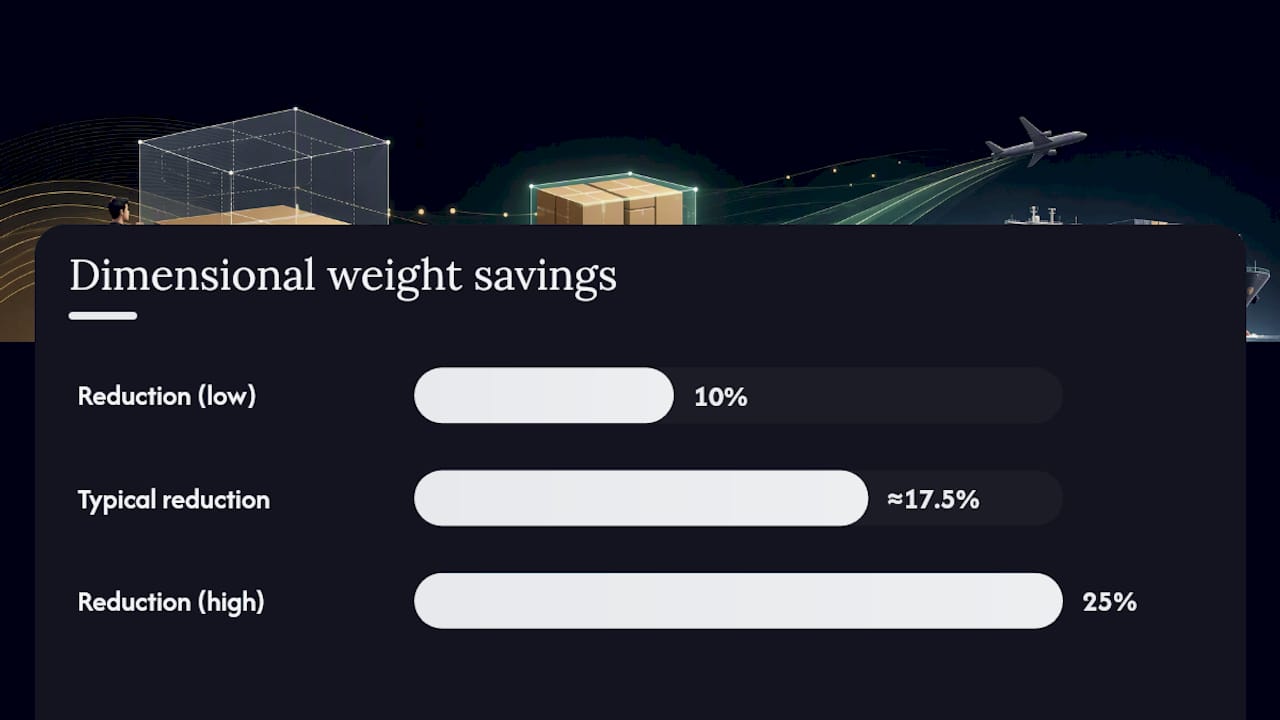
- Packaging audits on top SKUs can reduce dimensional weight charges by 10 to 25 percent and lower damage rates through right-sizing.
- Building a multi-carrier routing strategy that leverages regional carriers and negotiates surcharge caps can significantly lower total shipping costs and risk.
- Automating real-time rate shopping, routing, and tracking normalization is essential for scaling a data-driven, multi-carrier shipping operation.
- Monitoring key metrics monthly and conducting annual audits enable sustained optimization of shipping costs, delivery speed, and customer satisfaction.
Table of Contents
- What Should Your Ecommerce Shipping Strategy Actually Optimize For?
- How Do You Audit Your Current Shipping Data?
- What Shipping Goals and Service Promises Should You Set?
- How Do You Build Shipping Rules and Pricing That Match Your Goals?
- How Do You Fix Dimensional Weight and Packaging Waste?
- How Should You Structure a Multi-Carrier Strategy?
- What Automation Do You Need to Run This at Scale?
- How Should You Handle Returns and International Shipping?
- How Do You Monitor and Improve Shipping Performance Over Time?
- What Does This Look Like Applied at International Scale?
- Where a Managed Logistics Partner Fits Into Your Shipping Strategy
- Sources
What Should Your Ecommerce Shipping Strategy Actually Optimize For?
An ecommerce shipping strategy that chases only the cheapest rate usually backfires. Cutting corners on delivery speed or reliability trades a small savings on the label for a bigger loss in support tickets, refunds, and abandoned carts. The real goal is matching shipping choices to what each customer segment actually expects and will pay for.
Not every customer wants the same thing from delivery. A shopper buying a $180 skincare set has different tolerance for delay than someone ordering a $22 phone case, and a buyer in a dense metro area has different realistic transit windows than one in a rural zip code three zones away.
Segment your shipping strategy along three axes before you touch a single rate table:
- Average order value (AOV): higher-AOV orders can usually absorb free or subsidized shipping; low-AOV orders need a flat or calculated rate to protect margin.
- Product fragility and size: breakables and oversized items carry different packaging and carrier requirements than small, durable goods.
- Geography: customers near a fulfillment node can get 1 to 2 day transit economically; customers in outer zones need managed expectations or a regional carrier assist.
Delivery speed expectations vary by category, but the pattern holds across most retail verticals: customers will wait longer for a considered purchase and expect near-instant gratification on commodity items. Capture this signal directly. Add a “how soon do you need this” field in post-purchase surveys, and track cart abandonment against the delivery estimate shown at checkout. That data becomes the backbone of every shipping rule you build next.
How Do You Audit Your Current Shipping Data?
You cannot fix what you have not measured, and most ecommerce teams have never actually reconciled their invoiced shipping cost against what they assumed they were paying. The audit starts with a single export and ends with a ranked list of where your money leaks.
- Pull a 90-day shipment export from every carrier you use, including carrier name, service level, origin and destination zip, package weight, dimensions, and the final billed cost after all surcharges. A 90-day window and this exact field set is enough to reveal seasonal noise without hiding structural cost problems.
- Segment by zone, service level, and surcharge type (residential delivery, fuel, dimensional weight, address correction) to see which categories are quietly inflating your invoice.
- Calculate cost-per-SKU category and cost-per-zone. Bulky-but-light items almost always show the worst ratio of retail price to shipping cost, because carriers bill dimensional weight, not actual weight, once a package crosses a size threshold.
- Rank the top 20% of shipments by total billed cost. In most catalogs, a small number of SKUs or zones account for the majority of shipping spend.
Statistic to know: combining packaging right-sizing, multi-carrier rate shopping, negotiated volume rates, and poly mailers for eligible SKUs can cut total shipping cost 25–45% without slowing delivery down. That number only means something once you know which SKUs and zones are driving your baseline cost, which is exactly what this audit produces.
What Shipping Goals and Service Promises Should You Set?
Once you know your true cost baseline, translate it into numbers you can actually manage against. Vague goals like “reduce shipping costs” do not survive contact with a carrier negotiation or a customer service escalation.
Set specific internal targets:
- Shipping cost as a percentage of revenue (most direct-to-consumer brands target somewhere in the 8 to 12% range, though fragile or oversized categories run higher).
- Average cost per package across your full carrier mix, tracked monthly.
- On-time delivery percentage by service level, not just a blended average.
- Transit window promises by zone, stated as a range rather than a single date.
Each goal forces a tradeoff. Promising 2-day delivery nationwide means routing more volume through faster, pricier services or opening a second fulfillment node. Promising the lowest possible cost per package means accepting wider transit windows and being upfront about it at checkout.
Build a simple goal-to-promise template: internal target on one side, customer-facing message on the other. If your internal target is “average 4.2-day transit at $6.80 per package,” your checkout copy should say something concrete like “arrives in 3 to 5 business days,” never an unqualified “fast shipping.”
How Do You Build Shipping Rules and Pricing That Match Your Goals?
Shipping rules are where strategy either becomes operational or stays a slide deck. The goal is a rules engine, even a simple one, that routes every order to the right service level and price without a human touching each transaction.
- Set service-commitment rules first. Define which orders qualify for expedited service (by product, customer tier, or zone) and flag any order whose shipping cost exceeds a set ceiling relative to order value for manual review.
- Calculate your free-shipping threshold at roughly 15 to 25% above your current average order value. This nudges cart size up while keeping your subsidized-shipping cost proportional to revenue gained.
- Choose flat versus calculated rates by category. Flat rates work well for catalogs with consistent package sizes; calculated, real-time rates make more sense once you carry a wide spread of weights and dimensions.
- Design checkout UX around the threshold, using a progress bar toward free shipping and a delivery-date estimate rather than a generic “5 to 7 business days” line, which studies on cart abandonment consistently flag as a trust problem when it feels vague.
Pro Tip: Show the delivery date, not the transit time. “Arrives by Thursday, March 12” converts better than “3 to 5 business days” because it removes a math problem from the customer’s checkout decision.
How Do You Fix Dimensional Weight and Packaging Waste?
Packaging is the fastest win in almost every shipping audit, and it is entirely within your control, unlike carrier rates or fuel surcharges. Carriers bill dimensional weight, meaning a box’s volume, not just its actual weight, once it crosses a size threshold. An oversized box for a small item can double your billed cost on that shipment.
Run a packaging audit on your top 20 SKUs:
- Measure the actual product dimensions against the box you currently ship it in.
- Calculate wasted volume, the empty space a customer would see if they opened the box.
- Identify SKUs that could move from a corrugated box to a poly mailer without damage risk.
- Test two or three intermediate box sizes to close the gap between “too big” and “barely fits.”
Statistic to know: right-sizing packaging and shifting eligible SKUs into poly mailers typically reduces dimensional weight charges by 10 to 25% while also lowering damage rates, since a snugger fit means less shifting in transit. Run this as a simple A/B test: ship half your test volume in the current box, half in the right-sized alternative, and compare billed cost and damage claims after 30 days.
How Should You Structure a Multi-Carrier Strategy?
Relying on a single carrier concentrates your risk and your cost exposure. When that carrier raises rates, changes surcharge rules, or has a bad peak season, your entire shipping operation feels it at once. A mature multi-carrier stack with zone-aware routing spreads that risk and, in most cases, lowers your blended cost per shipment.
- Build routing rules by zone, weight, and delivery type. Regional carriers frequently undercut national carriers by 15 to 30% within their own service areas, so route zone 2 and 3 residential deliveries to a regional partner where coverage exists, and reserve national carriers for zones outside that footprint.
- Layer in service-level requirements, not just cost, so a cheaper regional option never gets routed to an order with a hard delivery-date promise it cannot reliably hit.
- Negotiate with real data, not guesses. Bring your zone distribution, your DIM-weight profile, and your surcharge history to the table. Requesting a higher DIM divisor, such as 194 instead of 139, can cut billed weight by 15 to 25% on bulky, lightweight items.
- Put your RFP cycle on a calendar. Annual renegotiation, informed by the scorecard data you collect monthly, keeps carriers competing for your volume instead of assuming renewal.
Pro Tip: Ask for surcharge caps in writing, not just a discounted base rate. Peak-season and residential surcharges are where carriers quietly claw back the savings you just negotiated.
What Automation Do You Need to Run This at Scale?
None of the routing logic above survives manual execution once you pass a few dozen orders a day. The operational layer that makes a multi-carrier strategy sustainable needs a few specific capabilities.
- Real-time rate shopping across every carrier in your mix at the moment of label creation, not a static rate table updated quarterly.
- Routing rules engine that applies your zone, weight, and service-level logic automatically, flagging exceptions for human review instead of routing every order manually.
- Label generation and batch printing integrated directly with your fulfillment workflow, whether in-house or through a 3PL.
- Webhook-based tracking normalization that pulls status updates from every carrier into one feed, so your support team sees one tracking format instead of five.
Integration checklist before you commit to a platform: confirm it connects natively to your ecommerce platform, your warehouse management system or 3PL, and your customer support tool. A tracking event that never reaches your help desk software just becomes another manual lookup during a WISMO ticket, which erases the labor savings automation was supposed to deliver.
How Should You Handle Returns and International Shipping?
Returns and cross-border shipping are where hidden cost hides best, because both involve a second shipment that rarely gets the same scrutiny as the outbound order.
- Use tiered return policies by SKU value. Prepaid return labels make sense for higher-value or high-return-rate categories; label-on-demand fits lower-value items where issuing a label upfront on every order is wasted cost.
- Expect real savings from label-on-demand. Brands switching from an included-label model have seen issuance costs drop 18 to 22%.
- Choose DDP (Delivered Duty Paid) over DDU for most international orders. Paying duties upfront avoids the surprise at-door charges that are a leading driver of international returns and negative reviews.
- Automate customs documentation. Manual commercial invoices and HS code entry are the most common failure point in cross-border shipping, and automated, accurate paperwork prevents the customs holds that frustrate international customers before the package even ships.
Pro Tip: If you sell into more than three countries, treat customs documentation as a system, not a manual task someone handles “when there’s time.” A single wrong HS code can hold a shipment for days.
How Do You Monitor and Improve Shipping Performance Over Time?
A shipping strategy is not a project you finish. It is a set of numbers you watch and a cadence you keep, because carrier rates, surcharges, and customer expectations all shift throughout the year.
Track four core KPIs monthly:
- Shipping cost as a percentage of revenue, watched against your target set earlier.
- Average cost per package, broken out by carrier and service level.
- On-time delivery percentage, scored against the transit window you promised, not a generic industry average.
- Damage and exception rate, which flags a carrier quietly costing you more in refunds than its rates suggest.
Set the cadence and keep it: a monthly 30-minute review of the four KPIs above, a quarterly carrier scorecard comparing on-time percentage, damage rate, and cost per zone across every carrier in your mix, and an annual full audit repeating the 90-day export process from scratch. Brands that hold this rhythm sustain their gains 3 to 7 percentage points better than teams that optimize once and move on.
| Timeframe | Priority actions |
|---|---|
| Days 1 to 30 | Pull 90-day shipment export, run packaging audit on top 20 SKUs, set initial KPI targets |
| — | Build carrier routing rules, negotiate DIM divisor and surcharge caps, launch label-on-demand for returns |
| Ongoing | Monthly KPI review, quarterly carrier scorecard, annual full data audit |
What Does This Look Like Applied at International Scale?
Worldwide Express works with importers and exporters who reach the limits of what a domestic carrier account can solve, particularly once customs brokerage, cross-border freight forwarding, and multi-country warehousing enter the picture. The same audit-first discipline applies: a business exporting into several markets still needs to know its true billed cost per shipment before it can negotiate anything.
Where this playbook gets harder to run in-house is the customs documentation layer. A retailer expanding into three new countries at once, for example, faces the same HS-code and DDP decisions covered above, multiplied across every destination’s own duty structure. That is typically the point where a managed freight forwarding and customs brokerage relationship replaces a spreadsheet.
— Ian
Where a Managed Logistics Partner Fits Into Your Shipping Strategy
Everything in this playbook, the data audit, the packaging fixes, the carrier negotiations, still leaves international freight forwarding and customs clearance as a separate, specialized problem. That is the piece a managed logistics partner is built to solve. Instead of piecing together customs brokerage, cross-border freight, and warehousing through multiple vendors, a comprehensive logistics provider can bring import and export freight forwarding, customs brokerage, air and ocean transportation, and distributed warehousing under one relationship built around your actual shipment data, not a generic rate card.
When you contact such a logistics provider, expect the conversation to start where this article does: with your shipment data. A diagnostic review of your current freight and customs costs, followed by a scoped quote for the lanes and volumes you actually run, gives you a clearer picture than another carrier’s public rate sheet ever could. If international freight, customs documentation, or cross-border returns are the piece of your shipping strategy still running on guesswork, explore Worldwide Express’s logistics services and get a scoped quote for your specific shipping lanes.
Sources
For deeper execution detail, see Worldwide Express’s guides on international shipping in five steps and returns and customs handling.
- How to Cut Shipping Costs Without Killing Delivery Speed in 2026 – Online Store News
- How to Build a Multi-Carrier Shipping Stack That Actually Cuts Costs in 2026 – Ecommerce Times
- Ecommerce Shipping Strategy: How to Ship Faster and Cheaper in 2026
- How to build a resilient international shipping strategy in 2026 – Online Store News