In this article, a “work from home freight agent” means a contracted freight-forwarding and customs-brokerage partner that manages your international shipments remotely, from quote to final delivery. The outcome you’re hiring for is door-to-door movement, customs clearance, documentation, and tracking, all handled without a local branch office. The rest of this guide walks through the vetting checklist, including Worldwide Express as one available provider.
TL;DR:
- Verifiable licenses such as FMC ocean transportation registration and customs broker licenses are essential before engaging a freight partner, ensuring accountability.
- Always request itemized, lane-specific quotes that include all potential accessorial charges and insurance costs to accurately compare total landed expenses.
- A reliable remote freight partner proactively provides real-time tracking, clear escalation procedures, and documented backup plans for staff absences or delays.
- Avoid quotes lacking detailed breakdowns, named destination agents, or clear liability and claims processes, as these often hide hidden fees or unreliable capacity.
- Total costs often exceed freight rates, so factors like demurrage, detention, surcharges, and insurance must be scrutinized to prevent unexpected expenses.
Table of Contents
- What Services Does a Freight-Forwarding Partner Actually Provide?
- What Licenses and Credentials Should You Verify First?
- How Do You Compare Quotes Without Getting Burned on Hidden Fees?
- What Happens During Onboarding, and How Long Does It Take?
- Red Flags and Negotiation Levers That Protect Your Budget
- How Do You Evaluate a Remote Freight Partner’s Reliability?
- What Should You Ask About Their Remote Setup and Backup Plans?
- How Are Freight Agent Services Priced, and What’s the Total Cost?
- What Contract Terms and SLAs Matter for a Remote Arrangement?
- What Scams and Red Flags Target Remote Freight Arrangements?
- A Veteran’s View on What Separates a Real Partner From a Risk
- Request a Quote From a Named Freight and Customs Partner
- Sources
- FAQ
What Services Does a Freight-Forwarding Partner Actually Provide?
A contracted forwarder does more than book cargo space. Core services typically include rate quoting, carrier booking, export and import documentation, customs filing, cargo insurance, consolidation, warehousing, delivery, and billing settlement. Each function closes a gap that would otherwise sit on your internal team’s desk, and each one carries its own failure risk if handled poorly.
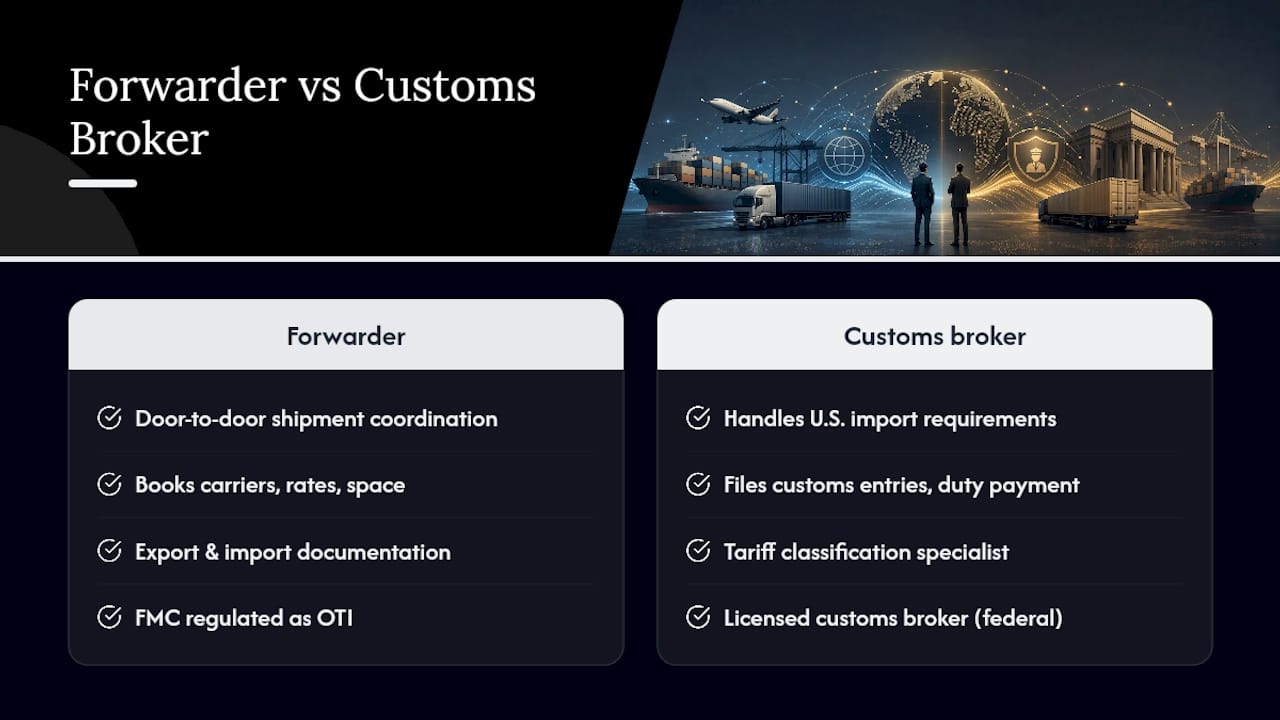
Forwarders and customs brokers are related but distinct. A freight forwarder coordinates the physical movement of goods door-to-door and is regulated by the Federal Maritime Commission as an Ocean Transportation Intermediary. A customs broker handles the federal import requirements, tariff classification, and duty payment on the U.S. side of the border. Many companies hold both licenses, but not all do, so ask which entity is filing your customs entries.
Digital capability separates modern forwarders from paper-based operations. Most run core workflows inside cloud-based freight management systems, offering online tracking, digital document portals, automated notifications, and ERP integrations that plug directly into your inventory systems. If a candidate partner still emails PDF invoices and expects you to call for status updates, that’s a meaningful red flag for how they’ll perform once a shipment gets complicated.
What Licenses and Credentials Should You Verify First?
Before you sign anything, confirm the paperwork behind the pitch. A forwarder without verifiable licensing is a forwarder you can’t hold accountable when a shipment goes sideways.
- FMC OTI registration: confirms the company is a licensed Ocean Transportation Intermediary, required for anyone arranging ocean freight on your behalf.
- Customs broker license: required if the company is filing entries with U.S. Customs; roughly a large number of licensed brokers operate in the United States, so scarcity isn’t the issue, verification is.
- IATA accreditation: relevant if air freight is part of your mix, since it confirms standing with international air cargo agreements.
- AEO or equivalent trusted-trader status: signals a track record of customs compliance, useful for lanes with heavier scrutiny.
- Named destination agent: ask for a specific contact with documented experience on your exact lane, not a vague claim of “global network” coverage. A long chain of unnamed agents adds handoffs, and every handoff is a place a shipment can stall.
- Itemized, door-to-door quote: insist on a breakdown that lists free days, surcharges, and demurrage/detention terms in writing, not a single lump-sum number.
Pro Tip: Ask each candidate the same ten questions and compare their answers, not their headline rate. The provider who answers specifically, with names and numbers, is usually the one who performs specifically.
How Do You Compare Quotes Without Getting Burned on Hidden Fees?
Two quotes that look close on paper can differ by thousands once accessorial charges show up. The fix is normalizing every proposal against the same line items before you compare totals.
- List every cost component separately: origin haulage, ocean or air freight, terminal handling charges (THCs), customs clearance fees, fuel and currency surcharges, final-mile delivery, and insurance.
- Confirm free days and demurrage/detention terms in writing. A five-day gap in free time between two quotes can outweigh a small difference in base freight rate.
- Ask for transit time as a range, not a single number, and ask what contingency routing looks like if the primary vessel or flight is disrupted.
- Request the claims process in plain language: who files, what documentation is needed, and what the typical resolution window looks like.
- Check who assumes liability for HS/HTS classification errors and how the forwarder documents its classification process, since misclassification is a recurring cause of fines and cargo holds.
- Total the landed cost, not the freight line, before ranking proposals.
Reputable industry guides emphasize itemized cost breakdowns precisely because headline freight rates routinely omit repeatable charges like THCs and currency adjustment factors. A quote that looks 8% cheaper on the freight line can end up more expensive once demurrage exposure and a shorter free-day window are factored in.
Cargo insurance deserves its own line in the comparison. Standard marine or air cargo policies through a forwarder often run around a small fraction of invoice value, and some shippers layer on separate all-risk coverage for full commercial-value protection on high-value cargo. Ask each provider to quote insurance as a distinct line so you can see whether it’s baked into the freight number or billed separately.
What Happens During Onboarding, and How Long Does It Take?
Onboarding with a new forwarding partner follows a fairly predictable sequence, and knowing the steps ahead of time keeps your first shipment from becoming a fire drill.
- Signing a master service agreement (MSA) and setting up credit terms.
- Establishing account access, named contacts on both sides, and an agreed escalation path.
- Aligning standard operating procedures (SOPs) for how bookings, documentation, and exceptions get handled.
- Connecting your systems to the forwarder’s tracking portal or EDI feed, if you want visibility inside your own ERP.
On the document side, you’ll need to supply a commercial invoice, packing list, any required certificates of origin or compliance, and clear Importer of Record details. Missing or inconsistent paperwork is one of the most common causes of delay at customs, more common than transit disruptions.
Timelines from first quote to first delivered shipment vary by lane and mode, but budget extra time for the initial run while both sides work out documentation kinks. Air freight onboarding tends to move faster than ocean, simply because there are fewer parties in the chain. The Go Global Toolkit offers useful groundwork for exporters getting their documentation and service-provider outreach organized before that first shipment goes out.
Red Flags and Negotiation Levers That Protect Your Budget
Some warning signs show up before you’ve even signed a contract. A quote that comes in dramatically below every other bid, with no named destination agent and no license number you can verify, usually means someone is cutting corners you’ll pay for later. Pressure to prepay large sums to a personal account rather than a corporate one is a serious flag, as is a “trading conditions” document too vague to tell you who’s liable when cargo is damaged or delayed.
- No verifiable FMC OTI or customs broker license number.
- No named agent at destination, just a claim of broad coverage.
- Unusually low quotes with no itemized breakdown.
- Requests to wire deposits to personal or third-party accounts.
- Trading conditions that don’t specify liability limits or claims procedures.
Once you’ve filtered out the obvious risks, negotiate on the terms that actually move your total cost: free days at origin and destination, insurance terms and deductibles, a defined escalation path with named contacts, and service credits tied to missed commitments.
Pro Tip: Send the same ten vetting questions to three providers before requesting final pricing. The differences in how thoroughly they answer will tell you more about reliability than any rate sheet.
How Do You Evaluate a Remote Freight Partner’s Reliability?
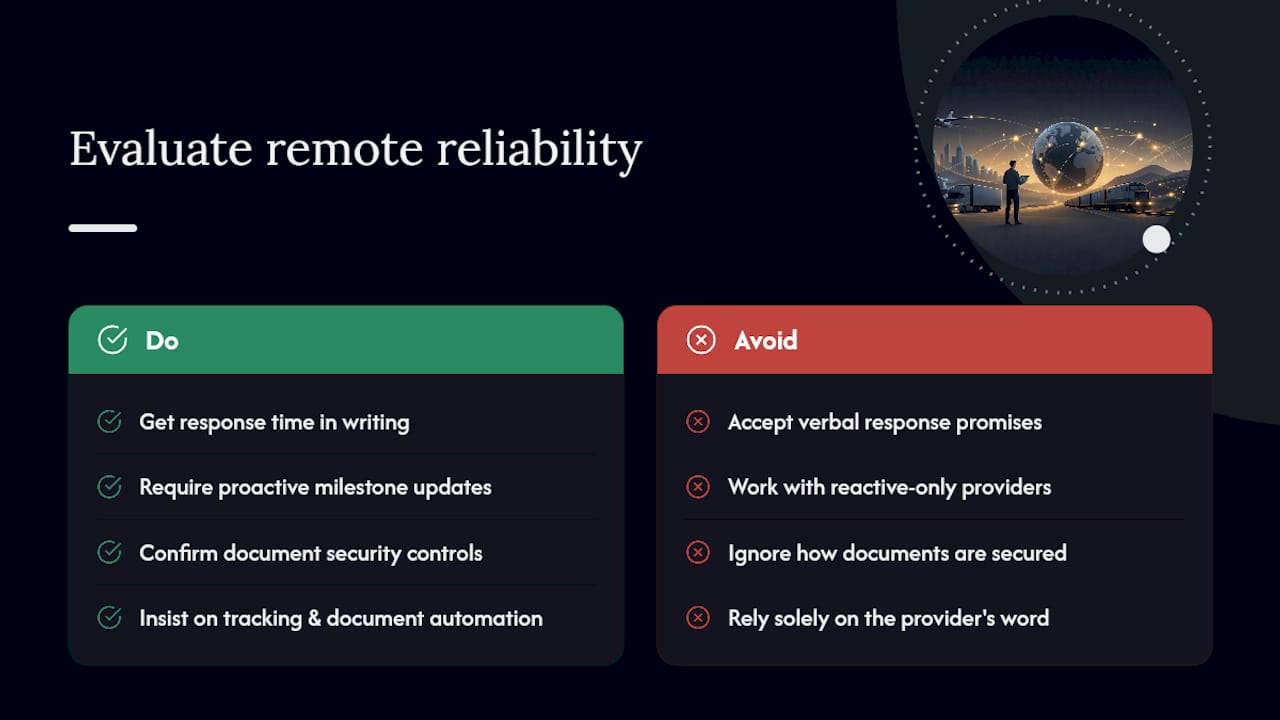
Reliability with a remote partner comes down to three things you can actually check: response time, documentation habits, and escalation clarity. Ask how quickly a named contact typically responds to a status inquiry, and get that answer in writing, not as a verbal promise during the sales call.
Communication cadence matters more with a remote partner than a local one, since you don’t have the option of walking over to someone’s desk. A well-run forwarder proactively pushes status updates at key milestones, booking confirmation, departure, transshipment, arrival, rather than waiting for you to chase them. If a provider’s default mode is reactive, expect that pattern to continue once your shipment hits a problem.
Security protocols are worth a direct question, especially since remote operations depend on shared portals and document exchange. Ask how the provider secures shipping documents, commercial invoices, and payment instructions, and whether their team uses verified, company-issued channels for anything involving wire transfers. A partner who can’t clearly describe their internal controls for handling sensitive shipment data is a partner whose remote setup hasn’t been stress-tested.
Digital visibility is the most concrete reliability signal available. A provider offering real-time tracking and document automation gives you an independent way to verify status instead of relying entirely on their word. Pairing that portal visibility with hardware-level tracking, the kind used in fleet and cargo GPS monitoring, gives larger shippers an added layer of confirmation on high-value or high-risk lanes.
What Should You Ask About Their Remote Setup and Backup Plans?
Ask what happens if your named contact is out sick, on vacation, or leaves the company entirely. A remote freight partner without a documented backup contact plan leaves you stranded exactly when you need help most.
Get specific about their contingency routing. If a vessel is delayed, a flight is cancelled, or a port faces congestion, ask how quickly they can rebook and what alternative routings they’ve used before on your specific lane. Vague answers here usually mean they haven’t actually faced the scenario.
Ask how their team accesses your shipment data and documents. Is it a shared portal with individual logins, or a single shared inbox that anyone on their side can check? The former gives you an audit trail; the latter makes accountability murky.
Confirm their escalation path in writing: who do you call if your primary contact doesn’t respond within a set window, and what’s the response time commitment at each escalation tier. Ask whether they maintain redundant communication channels, phone, email, and portal messaging, so a single system outage doesn’t cut off contact entirely. Finally, ask how they handle time zone gaps if your lane spans multiple regions, since a remote partner working odd hours relative to your team needs a clear coverage plan, not an assumption that emails will get answered eventually.
How Are Freight Agent Services Priced, and What’s the Total Cost?
Pricing for a contracted forwarding partner typically follows one of two structures: a per-shipment fee model, where you pay handling and documentation charges on top of freight costs, or a retainer-style arrangement for high-volume shippers who move enough freight to justify a fixed monthly fee with volume-based rate breaks.
Total cost goes well beyond the freight rate itself. Add customs brokerage fees, documentation charges, cargo insurance (commonly a small fraction of invoice value for standard coverage), terminal handling charges, and any warehousing or consolidation fees if your cargo needs to sit before final delivery. Currency and fuel surcharges can also shift month to month, so ask whether those are locked in for a quote period or subject to change without notice.
The lowest headline rate is rarely the lowest total cost. A provider quoting a rock-bottom freight number but vague on accessorials, free days, or insurance terms is a provider whose real invoice will look nothing like the quote. Push every proposal through the same itemized breakdown described earlier in this guide before ranking providers by price.
What Contract Terms and SLAs Matter for a Remote Arrangement?
A master service agreement with a remote freight partner should spell out response time commitments, not just service descriptions. Specify the maximum acceptable response window for status inquiries and for exception handling when something goes wrong mid-transit.
Liability language deserves particular attention. The contract should state clearly who is liable for HS/HTS misclassification, documentation errors, and cargo damage, and under what cargo insurance terms claims get filed and resolved. Vague liability clauses are where disputes get expensive.
Build in service credits or defined remedies for missed commitments, whether that’s a delayed status update, a documentation error, or a missed free-day deadline that triggers avoidable demurrage. An SLA without consequences is just a wish list. Also specify data handling terms: who owns the shipment data flowing through the provider’s portal, how long records are retained, and what happens to that data if you terminate the contract. Finally, define the escalation path contractually, not just verbally, so both sides know exactly who to contact and by when if the primary point of contact goes unresponsive.
What Scams and Red Flags Target Remote Freight Arrangements?
The most common scam pattern with remote freight arrangements involves urgency and payment redirection. A “provider” asks for an unusually fast wire transfer to a personal account or a newly introduced banking detail, often citing some deadline pressure around a container release or customs deadline. Legitimate providers invoice through established corporate channels and never ask you to rush a payment outside your normal process.
Watch for providers who can’t produce a verifiable FMC OTI number or customs broker license when asked directly. Real licensing is a matter of public record; a provider who deflects or delays on this request is telling you something important.
Be wary of quotes that arrive without any breakdown, just a single number for “door to door,” with no mention of free days, insurance, or potential surcharges. That’s often a setup for a low initial bid followed by a string of add-on charges once your cargo is already committed.
Finally, be cautious of any provider who resists giving you a named destination agent or insists their “network” handles everything without specifics. A real partner with real experience on your lane can name the agent, describe the last shipment they handled on that route, and explain what went right or wrong.
A Veteran’s View on What Separates a Real Partner From a Risk
Worldwide Express approaches client relationships around named accountability rather than a call center. What matters most in this industry isn’t the size of the network a provider claims. It’s whether a specific person, with a specific phone number, will pick up when your container gets held at customs on a Friday afternoon.
Buyers get burned less by bad rates than by vague promises. A partner who proactively flags a delay before you ask about it, who documents the escalation path in the contract instead of describing it verbally, and who can name the actual agent handling your cargo at destination, that’s the difference between a vendor and a partner.
— Ian
Request a Quote From a Named Freight and Customs Partner
A single contracted partner can provide freight forwarding, customs brokerage, cargo tracking, cargo insurance, and warehousing services, instead of juggling separate vendors for each piece of an international shipment. That consolidation matters most when a shipment hits a snag: one accountable partner means one call, not three.
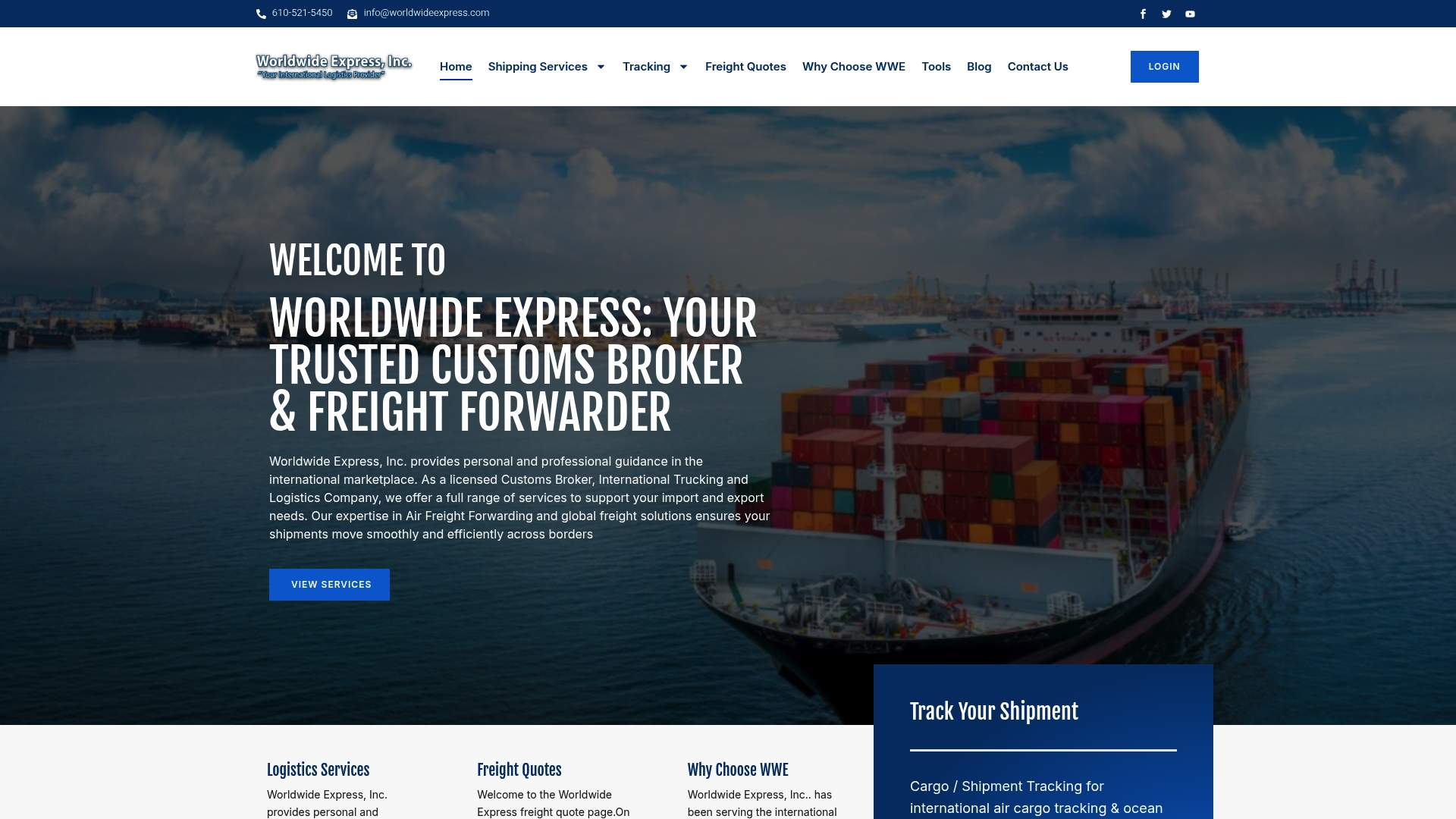
When you request a quote, ask specifically for lane and commodity experience relevant to your cargo, a named destination agent with a documented track record, an itemized door-to-door breakdown that lists free days and potential surcharges, and available cargo insurance options. Those four requests, more than any rate comparison, will tell you whether a proposal holds up once your goods are actually moving. Start by reviewing Worldwide Express’s freight forwarding services or reach out through the U.S. customs brokerage page to request a quote tailored to your specific lane and cargo type.
Sources
- Customs Brokers and Freight Forwarders
- Freight Forwarder: 2026 Complete Guide | Freightos
- How to Choose the Right Freight Forwarder: The Complete Guide | GoFreight Blog
FAQ
What Does “Work From Home Freight Agent” Mean in This Context?
It refers to a contracted freight-forwarding and customs-brokerage partner, like Worldwide Express, that manages your international shipments and customs clearance remotely rather than through a local branch office.
Do I Need Both a Freight Forwarder and a Customs Broker?
Not always separately. Many forwarders hold customs broker licenses and handle both functions, but you should confirm which entity is filing your customs entries before contracting.
How Much Does Cargo Insurance Typically Cost?
Standard cargo insurance through a forwarder commonly runs around a small fraction of invoice value, with separate all-risk policies available for full commercial-value protection.
What’s the Biggest Red Flag When Vetting a Remote Freight Partner?
A quote with no itemized breakdown and no named destination agent is the clearest warning sign, since it usually means hidden fees or unverified capacity on your specific lane.
What Should Be in an SLA With a Remote Freight Agent?
A solid SLA specifies response time windows, liability terms for classification and damage claims, an escalation path with named contacts, and service credits for missed commitments.