A shipping bill is the mandatory electronic customs declaration exporters file to move physical goods out of India, and customs issues a Let Export Order only after that declaration is accepted. File it on the ICEGATE portal using your Importer Exporter Code and a registered AD code. Service exports skip this route entirely and use SOFTEX or the Export Declaration Form instead.
TL;DR:
- Filing the correct shipping bill type is crucial, as choosing the wrong one can delay refunds or invalidate incentive claims like drawback or RoDTEP.
- The shipping bill must accurately declare HS codes, value, and quantities, since mismatches can trigger penalties and post-clearance audits.
- Most rejections result from discrepancies in invoice details, HS code mismatches, or missing licenses, which are preventable with proper document reconciliation.
- Exporters or their agents must ensure their IEC and AD codes are active for the specific port to avoid filing errors and delays.
- Maintaining a pre-filing checklist and reviewing documents before submission reduces the risk of delays and inspection issues during customs clearance.
Table of Contents
- What Is a Shipping Bill in Export, and Why Does It Carry Legal Weight?
- What Are the Types of Shipping Bills in Export?
- Who Files the Shipping Bill: The Exporter or a Customs Broker?
- How Do You File a Shipping Bill on ICEGATE?
- What Fields and Documents Does a Shipping Bill Require?
- How Does a Shipping Bill Link to IGST Refunds, Drawback, and RoDTEP?
- What Causes Shipping Bill Rejections, and How Do You Avoid Them?
- How Do You Track Shipping Bill Status on ICEGATE?
- What Should Be on Your Pre-Filing Checklist?
- A Practitioner’s View on Filing and Outsourcing
- Get Filing Support Without Losing Control of Your Compliance
- Where to Verify Shipping Bill Rules Directly
- Sources
- FAQ
What Is a Shipping Bill in Export, and Why Does It Carry Legal Weight?
A shipping bill in export is not paperwork you file after the fact. It’s the legal trigger that starts the entire customs clearance process for goods leaving India by sea, air, or land. Under the Customs Act, exporters must present this declaration before goods can be loaded, and customs assessment cannot begin without it.
Section 50 of the Customs Act requires exporters to file this declaration in the prescribed electronic form, and Section 51 governs the Let Export Order that customs issues once officers are satisfied the goods match what was declared. No shipping bill, no LEO. No LEO, no loading onto the vessel or aircraft.
That sequence matters because the shipping bill isn’t just a formality checked once and forgotten. It becomes the reference document for everything that follows: customs valuation, physical or documentary examination, and eventually the export manifest the carrier files. Any mismatch between what’s declared and what’s actually shipped creates enforcement exposure that can follow the exporter for years, not just at the port.
Here’s what rides on getting this document right the first time:
- Customs assessment starts from the declared value, HS code, and quantity on the shipping bill.
- The export manifest filed by the shipping line or airline is cross-checked against shipping bill data.
- Audit trails for GST, income tax, and RBI compliance all trace back to this single filing.
- Enforcement risk rises sharply when declared values or quantities don’t match invoices or physical cargo.
Inaccurate declarations don’t just delay clearance. They can trigger penalties under the Customs Act and complicate every downstream benefit tied to that shipment.
What Are the Types of Shipping Bills in Export?
Exporters don’t file one generic form. ICEGATE recognizes several types of shipping bill in export, each tied to a specific customs treatment, and picking the wrong one can stall a refund or an incentive claim for weeks.
- Free shipping bill (white): used when goods carry no export duty and claim no incentive, the simplest and most common category for routine commercial exports.
- Dutiable shipping bill (yellow): filed when the goods attract export duty, requiring duty calculation before LEO is issued.
- Drawback shipping bill (green): filed when the exporter intends to claim Duty Drawback on inputs used in manufacturing the exported goods.
- Ex-bond shipping bill (pink): used for goods exported from a bonded warehouse, where duty on the underlying imported inputs hasn’t yet been paid.
- Coastal shipping bill: covers movement of goods between Indian ports, not international export, and carries a different documentary trail entirely.
Choosing incorrectly has real consequences. File a free shipping bill when you meant to claim drawback, and there’s often no straightforward way to retroactively add that claim once LEO is issued. This entire framework applies only to physical goods. Software and service exports are declared through SOFTEX or the Export Declaration Form, never a shipping bill, because there’s no cargo for customs to examine.
Who Files the Shipping Bill: The Exporter or a Customs Broker?
Any exporter shipping physical goods out of India needs a shipping bill filed before cargo can move past the port or airport gate. That requirement applies whether you’re shipping a single pallet or a full container load, and it applies regardless of whether you personally sit at the keyboard or hand the job to a Customs House Agent.
Two registrations have to exist before any filing happens:
- Importer Exporter Code (IEC): issued by the Directorate General of Foreign Trade, this is the baseline identity number for any export transaction.
- AD code registration: your bank’s Authorized Dealer code must be registered with the specific customs port you’re shipping from, not just held generically.
Most exporters, especially smaller and mid-sized ones, delegate the actual ICEGATE filing to a CHA or freight forwarder who handles the portal mechanics daily. That delegation buys convenience, not legal cover. The exporter remains the party legally responsible for every declared value, HS code, and quantity, even when someone else typed it into the system. Filing through a broker reduces hands-on work but never transfers accountability, which is exactly why reviewing what your CHA submits on your behalf isn’t optional.
How Do You File a Shipping Bill on ICEGATE?
Filing runs entirely through the ICEGATE portal, and the sequence matters because skipping a step usually means resubmitting, not just waiting.
- Validate documents before touching the portal. Reconcile your commercial invoice, packing list, and any export license against your GSTIN records. Mismatches caught here save days later.
- Log in with your registered IEC and confirm your AD code is active for the specific port of export.
- Upload supporting documents through e-Sanchit, the electronic document repository, including invoice, packing list, bill of lading or airway bill, and any licenses or certificates the product requires.
- Fill in the shipping bill fields precisely, including HS code, FOB value, port code, consignee details, and transport references. These fields drive risk assessment on the customs side.
- Submit for risk assessment. The system flags shipments for either facilitation (straight through) or examination (physical or documentary check).
- Pay applicable export duty, if the shipping bill type requires it, before customs proceeds further.
- Receive the Let Export Order. LEO issuance is the formal green light for the cargo to load.
Absent examination, most shipments move to LEO within two to four days of a clean, complete filing. Shipments flagged for physical examination take longer, and the wait is almost always tied to a document gap rather than the cargo itself.
Pro Tip: Name your e-Sanchit uploads consistently with your invoice numbers before you submit. Officers cross-reference documents by hand in many cases, and unclear file names are a common reason queries get raised on otherwise clean shipments.
If your filing sits under assessment longer than expected, the first move is contacting your CHA or the port’s customs house directly rather than resubmitting, which can create duplicate records and more delay.
What Fields and Documents Does a Shipping Bill Require?
Customs officers cross-check a defined set of fields against your supporting paperwork, and a mismatch on any one of them can stall the entire filing.
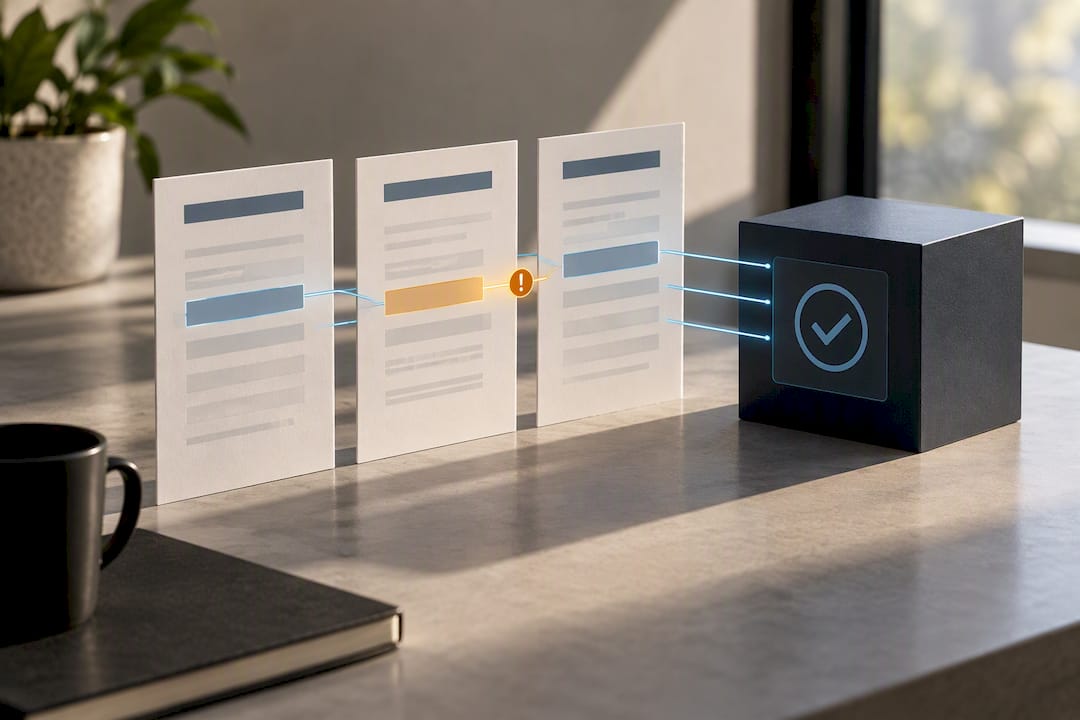
The shipping bill itself must carry exporter name and address, IEC, GSTIN, the HS code for each item, a clear goods description, declared value, currency, port of export, and transport references like the bill of lading or airway bill number.
Supporting documents get uploaded through e-Sanchit and typically include:
- Commercial invoice matching the declared FOB value exactly
- Packing list itemizing weight and quantity per package
- Bill of lading or airway bill reference
- Any product-specific licenses, certificates of origin, or inspection certificates
- Insurance documentation where the shipment terms require it
Errors in these fields rarely show up as a flat rejection. More often, they surface later as a valuation dispute, a delayed duty drawback claim, or a query during a post-clearance audit.
How Does a Shipping Bill Link to IGST Refunds, Drawback, and RoDTEP?
The shipping bill doesn’t stop mattering once LEO is issued. It becomes the backbone of every financial benefit tied to that export transaction.
When shipping bill data matches your GST returns, the shipping bill functions as a deemed application for IGST refund, no separate refund form required. That automatic linkage is exactly why field accuracy at filing time carries financial weight months later, not just clearance-day weight.
- Duty Drawback claims are calculated directly from the drawback shipping bill’s declared value and HS code.
- RoDTEP benefits are computed against the same shipping bill data submitted at export.
- Bank reconciliation under RBI’s export proceeds tracking rules uses the shipping bill number to match incoming foreign exchange against the declared export.
Treat the moment your shipping bill is accepted as the start of post-shipment compliance, not the finish line. Refund processing, incentive credit, and bank reconciliation all run off that single record for months afterward.
A shipping bill with a typo in the value field doesn’t just risk a customs query. It can quietly understate a drawback claim or create a reconciliation gap your bank flags weeks later.
What Causes Shipping Bill Rejections, and How Do You Avoid Them?
Most rejections trace back to a handful of repeat offenders, not exotic customs disputes.
- HS code mismatches between the declared classification and the actual goods, often from using a generic code instead of the precise tariff heading.
- Invoice and packing list discrepancies, particularly weight or quantity figures that don’t add up across documents.
- Incorrect exporter or consignee details, especially addresses that don’t match IEC records.
- Valuation errors, including FOB values that don’t reconcile with the commercial invoice.
- Missing licenses or certificates for restricted or regulated goods categories.
Reconciling invoices against GST returns before filing catches most of these before they reach ICEGATE. Building a standing filing checklist and confirming AD code registration ahead of each shipment, rather than at filing time, closes the rest.
Pro Tip: If customs raises a query on your shipping bill, respond with the commercial invoice and packing list first. Those two documents resolve the vast majority of valuation and description queries without needing a broader document dump.
When a query does land, prioritizing the right document over a scattershot response is often the difference between a same-day resolution and a week-long back and forth. A troubleshooting checklist for customs delays can help you triage which document to send first.
How Do You Track Shipping Bill Status on ICEGATE?
Checking status is a matter of navigating one path on the portal, but knowing what each status means matters more than finding the screen.
- Go to Public Enquiries on ICEGATE, then select Document Status, then Shipping Bill.
- Enter your shipping bill number and port code to pull the current status.
- Read the status carefully. “Under assessment” means customs is still reviewing; “examination” means a physical or documentary check is underway; “LEO issued” means you’re cleared to load.
Clean filings without examination typically clear to LEO within a couple of days. If a shipping bill sits under assessment well beyond that window, that’s the point to escalate through your CHA or contact the customs house directly rather than wait it out. A step-by-step guide to querying ICEGATE walks through the exact navigation if you’re checking status for the first time.
What Should Be on Your Pre-Filing Checklist?
A short checklist before you ever open ICEGATE prevents most of the delays covered above.
- IEC and AD code confirmed active for the specific port
- Commercial invoice and packing list reconciled against each other
- Export license or certificate secured, if the product category requires one
- Insurance and freight booking details confirmed
- HS code pre-validated against the actual goods description
- Prepare and reconcile documents, typically two to three days before intended shipment.
- File the shipping bill and upload e-Sanchit documents.
- Await risk assessment and respond to any query same-day.
- Receive LEO and confirm cargo loading with your carrier.
Keep the final shipping bill number filed alongside your invoice and packing list. You’ll need that number again for IEC shipping bill tracking when refunds or drawback claims come up for review.
A Practitioner’s View on Filing and Outsourcing
Freight forwarders and customs brokers earn their fee by catching the same errors this article just walked through, before ICEGATE ever sees them. That’s genuinely valuable for high-volume exporters or complex shipments involving licenses and multiple HS codes.
But outsourcing the keystrokes shouldn’t mean outsourcing your attention. Exporters running lower-volume or straightforward shipments can often file competently in-house. Where volume or risk climbs, a broker’s document review earns its cost. Either way, insist on seeing what your CHA actually submitted on your behalf. A forwarder bill guide explains where a broker’s role starts and where your liability never actually ends.
— Ian
Get Filing Support Without Losing Control of Your Compliance
Exporters can partner with licensed customs brokerage services that offer electronic filing paired with documentation review, shipment tracking, and compliance support to keep track of shipping bill status and issues.
Engaging Worldwideexpress typically starts with a document checklist review against your invoice, packing list, and licenses, followed by a filing and tracking plan matched to your shipment volume. That means fewer surprise queries and a clearer line of sight to LEO. If you’re weighing whether to file in-house or bring in support for a complex shipment, start with the logistics services overview or request a freight quote to see how filing and clearance support fits your specific export volume.
Where to Verify Shipping Bill Rules Directly
File and check status directly through ICEGATE, the official portal for registration, e-Sanchit uploads, and shipping bill enquiries. Cross-check any rule change against official PIB press releases, since export filing practice shifts periodically. For a deeper walkthrough of formats and refund mechanics, the shipping bill explainer covers the process in more depth.
Sources
- Home | icegate
- Shipping Bill for Export: Meaning, Types, Format & Process
- What Is a Shipping Bill? Complete Guide for Exporters
- Pib
FAQ
What Is a Shipping Bill in Export?
A shipping bill is the mandatory electronic customs declaration exporters file on ICEGATE to move physical goods out of India. Customs uses it to assess value, classification, and duty before issuing a Let Export Order that clears the cargo for loading.
How Do You Generate a Shipping Bill for Export?
You generate a shipping bill by logging into ICEGATE with a registered IEC and AD code, then filling in exporter, goods, and transport details while uploading supporting documents through e-Sanchit. Once submitted, the system runs risk assessment and issues LEO after any required examination or duty payment clears.
What Is the Difference Between a Shipping Bill and a Let Export Order?
The shipping bill is the declaration the exporter files; the Let Export Order is the approval customs issues after reviewing that declaration under Section 51 of the Customs Act. No LEO is issued without an accepted shipping bill, and cargo cannot legally load until LEO comes through.
What Do Export Bills Mean in Trade Documentation?
“Export bills” generally refers to the shipping bill itself along with the commercial invoice and other documents that support a customs declaration for outgoing goods. In banking contexts, the term also covers the documents banks use to track export proceeds against the shipping bill number under RBI reconciliation rules.
Does a Shipping Bill Apply to Service Exports?
No. Shipping bills apply only to physical goods moving through customs. Service exports use SOFTEX or the Export Declaration Form instead, since there’s no cargo for customs to examine or clear.