For businesses moving inventory across borders, “eBay international shipping” in this guide means commercial freight forwarding and customs brokerage, not eBay’s consumer parcel program. If your shipments carry real weight, value, or customs complexity, treat the move as a freight and brokerage engagement: line up a freight forwarder or licensed customs broker, and request an itemized quote before anything ships.
TL;DR:
- Freight forwarders are essential for shipments exceeding 150 pounds, frequent, or complex customs situations, even for modest initial exports.
- Key documents include a commercial invoice, packing list, bill of lading, certificate of origin, and export license, especially when declared value exceeds $2,500.
- Duties and accessorial fees can significantly increase landed costs, with HS classification and Incoterms influencing the total amount paid.
- Carefully vet freight brokers and customs agents by requesting itemized quotes, verifying licensing, and ensuring visibility tools to avoid hidden or disputed charges.
- Preparing a complete product master and clear documentation before shipment reduces delays and misclassification, critical for first-time exporters and scaling businesses.
Table of Contents
- When Should You Use Freight Forwarding vs. Parcel Shipping?
- What Documents Do You Need for a Compliant Cross-Border Shipment?
- What Actually Drives Your Landed Cost?
- How Do You Vet a Freight Forwarder or Customs Broker?
- A Step-by-Step Workflow for Your First International Shipment
- Why Documentation and Visible Ownership Matter More Than Price
- How Worldwide Express Supports Your International Shipping Program
- Sources
- FAQ
When Should You Use Freight Forwarding vs. Parcel Shipping?
The decision usually comes down to three numbers: weight, frequency, and declared value. A single box under 150 pounds moving occasionally can often ride with a parcel courier. Once you’re shipping pallets, recurring containers, or goods that trigger regulatory scrutiny, a freight forwarder earns its fee fast.
Courier networks win on speed and simplicity for small, light, infrequent shipments. Air freight makes sense once volume climbs but timelines stay tight. Ocean freight, whether LCL or full container (FCL), becomes the economical choice as shipment size grows and lead time gets less urgent.
- Parcel/courier: ideal for low weight, low frequency, minimal customs complexity
- Air freight: better for mid-size shipments needing speed over cost savings
- LCL ocean freight: cost-efficient for partial container loads with flexible timing
- FCL ocean freight: best economics at full-container volume
Pro Tip: If you’re entering a new country for the first time, use a forwarder even for a modest shipment. The U.S. International Trade Administration notes forwarders are especially valuable for first-time exporters navigating unfamiliar destination rules.
What Documents Do You Need for a Compliant Cross-Border Shipment?
Commercial shipments run on paperwork, and missing a single form can stall a container at the port for days. The core document set rarely changes, whether you’re exporting machine parts or importing finished goods.
- Commercial invoice — states value, buyer, seller, and goods description for customs valuation.
- Packing list — itemizes contents, weights, and dimensions per package.
- Bill of lading or air waybill — the transport contract and proof of shipment.
- Certificate of origin — required for many trade agreements and tariff determinations.
- Export license — needed for regulated, dual-use, or restricted goods.
The ITA lists these as the standard export document set, and it also flags a threshold worth memorizing: Electronic Export Information must be filed through AES once a Schedule B commodity value exceeds $2,500, per federal regulation.
Here’s the part many importers miss: CBP guidance is explicit that hiring a licensed broker does not transfer legal responsibility. Importers must still exercise “reasonable care” over classification and valuation, even when someone else files the entry. Build a product master, listing HS codes, country of origin, composition, and prior classification rulings, before your first shipment moves. A master export documentation guide can help you structure that file correctly.
What Actually Drives Your Landed Cost?
Freight is usually the smallest line item on a landed cost sheet, not the biggest. Duties, brokerage, and accessorials can quietly double your per-unit cost if you never asked for them upfront.
- Ocean or air freight charges
- Duties and taxes, driven by HS classification and declared value
- Broker filing and entry fees
- Terminal handling and port charges
- Storage and demurrage if cargo sits
- Inspection or exam fees
- Accessorials (fuel surcharges, residential delivery, liftgate)
- Final delivery to your warehouse
- Cargo insurance
Duty classification is the lever that moves everything else. Get the HS code wrong and you either overpay or invite a reclassification and penalty later. CBP’s importing guide recommends requesting itemized fee breakdowns specifically because broker charges vary by service scope, not a flat rate.
Incoterms decide who pays for what leg. A shipment quoted DDP puts duties and delivery on the seller’s side; EXW leaves nearly everything on the buyer. Before comparing quotes, confirm which Incoterm each one assumes, or you’re comparing apples to shipping containers.
How Do You Vet a Freight Forwarder or Customs Broker?
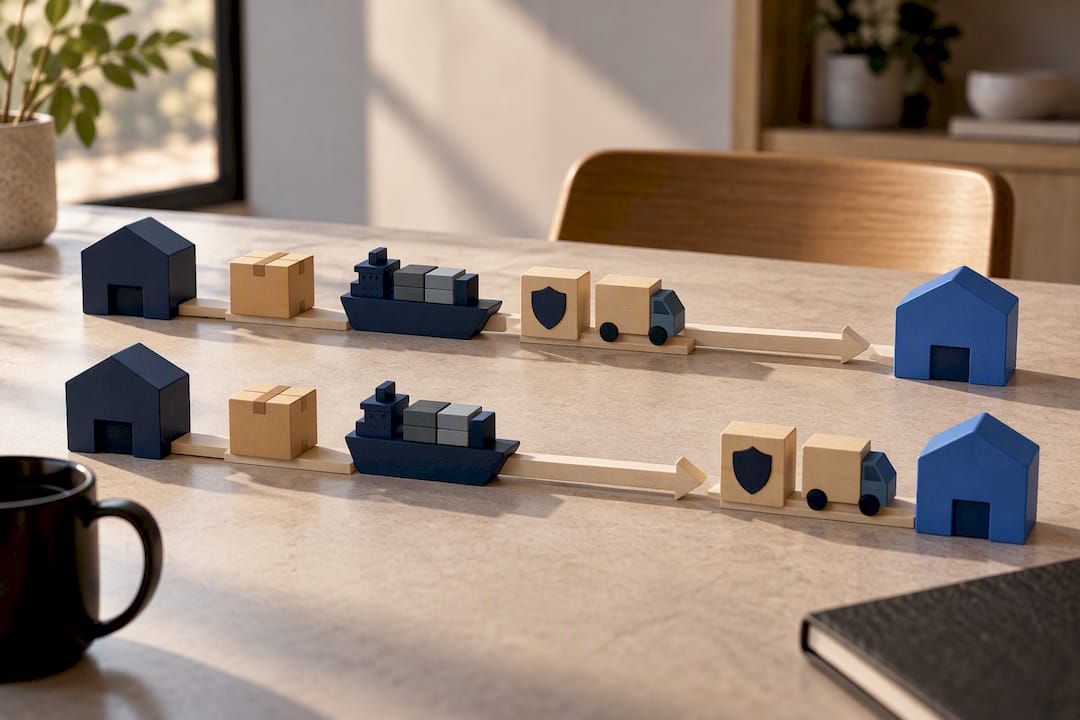
A cheap freight quote that hides brokerage fees costs more than an itemized one that looks higher upfront. Ask the right questions before signing anything.
- Request a quote itemizing transport, brokerage, duties advanced, port charges, storage, inspection, delivery, and insurance separately.
- Confirm the provider holds licensed customs broker status with national permit capability, not just a regional filing office.
- Ask who advances duty payments, how often they reconcile, and what the escalation process looks like for a customs hold.
- Request visibility tools: real-time tracking, entry status, and a named contact for exceptions.
Watch for bundled fees with no breakdown, vague answers about who owns classification errors, or no monthly itemized reconciliation. Those are the same gaps CBP flags as sources of disputed charges after the fact.
Pro Tip: Put maximum duty advance thresholds and dispute procedures directly into your service agreement. A verbal understanding about “who fronts the money” falls apart fast when a shipment is held at the port.
A Step-by-Step Workflow for Your First International Shipment
Running this sequence in order prevents the two most common failures: incomplete paperwork and unclear cost expectations.
- Build your product master: SKU, HS code, country of origin, composition, customs value.
- Prepare the commercial invoice and packing list from that master data.
- Choose your Incoterm and confirm who pays for which leg of the journey.
- Request an itemized quote covering freight, brokerage, duties, and accessorials.
- Purchase cargo insurance sized to your declared value.
- Schedule pickup and hand off documents to your forwarder.
- Track clearance status and respond promptly to any customs queries.
- Confirm duty payment and arrange final delivery to your facility.
Why Documentation and Visible Ownership Matter More Than Price
Most customs delays trace back to one root cause: nobody was clearly the importer of record on paper, or the paperwork didn’t match the cargo. A broker with licensed status, national permit authority, and real tracking closes that gap. The fix is unglamorous but effective: one product master, shared with your broker, reconciled monthly against itemized statements.
— Ian
How Worldwide Express Supports Your International Shipping Program
Once you know your shipment needs licensed brokerage and real customs accountability, the next step is finding a provider who can prove both rather than promise them. Worldwideexpress combines licensed U.S. customs brokerage with import and export freight forwarding across air and ocean, plus cargo insurance and end-to-end shipment tracking under one itemized quote.
That itemized structure matters most when a shipment gets held at the port. You want to know exactly who advances duties, what the escalation process looks like, and where the accountability sits, not a bundled invoice you have to untangle after the fact. Whether you’re moving FCL or LCL ocean freight or need faster air transportation on a tight window, the same licensed broker relationship carries your shipment from origin to final delivery.
If you’re preparing your first cross-border e-commerce program or scaling an existing one, request an itemized freight quote and get a landed cost breakdown before you commit to a lane.
FAQ
Do I Need a Customs Broker for Every Import?
You aren’t legally required to use one for every shipment, but CBP guidance recommends it once classification or valuation gets complex. You remain responsible for “reasonable care” over your entries even when a broker files them.
What Triggers the EEI/AES Export Filing Requirement?
Electronic Export Information filing through AES becomes mandatory once a Schedule B commodity’s value exceeds $2,500, according to ITA guidance. Regulated or licensed goods can trigger the requirement at lower values too.
How Much Does Worldwide Express Charge for a Freight Quote?
Pricing isn’t published because freight and brokerage costs depend on lane, weight, and service scope. You can request an itemized quote directly to get exact numbers for your shipment.
Is Freight Forwarding Cheaper Than Parcel Shipping?
It depends on volume. Parcel couriers usually win for small, infrequent shipments, while forwarding through LCL or FCL ocean freight becomes more economical as shipment size and regularity increase.
What’s the Biggest Mistake Businesses Make With Landed Cost?
Comparing freight quotes without confirming the Incoterm or checking for bundled fees. A low freight rate can hide brokerage, storage, or accessorial charges that make the total landed cost higher than a competing itemized quote.