TL;DR:
- Verifying the specific Apex Logistics entity before contracting is essential to avoid fraud and payment issues. Checking FMCSA records, surety bonds, and operational reviews helps ensure legitimacy and operational reliability. Treat every Apex Logistics entity as an unknown until verified through official federal and state documentation.
Apex Logistics is a name shared by multiple independent U.S. freight brokers, forwarders, and third-party logistics providers — and that distinction matters enormously before you sign anything. The single most important step any shipper or carrier can take is to verify the specific entity’s MC or USDOT number on FMCSA SAFER and confirm active surety bond status (BMC-84 or BMC-85) before contracting or releasing a load. As Inbound Logistics documents, providers operating under this name have served high-volume international shippers with integrated data systems — but operating authority can be revoked at any time, and impersonation on load boards is a documented risk.
Table of Contents
- What does Apex Logistics actually do?
- How to find who owns the Apex Logistics entity you’re dealing with
- What do reviews and operational patterns reveal?
- How to verify an Apex Logistics broker or carrier on FMCSA SAFER
- How does double brokering happen — and how do you stop it?
- Should you contract with an Apex Logistics entity? A decision checklist
- What tools and resources should you use for verification?
- Key Takeaways
- The real cost of skipping due diligence
- Worldwideexpress: a verified partner for forwarding and customs
- Useful sources
What does Apex Logistics actually do?
Apex Logistics entities in the U.S. typically offer a broad range of freight and supply chain services, with the most established operations focused on international forwarding and domestic distribution. Inbound Logistics has covered how one Apex entity uses integrated backend data systems to support end-to-end supply chain visibility for high-volume importers, particularly in fast-fashion and retail.
Core services typically offered:
- Air freight forwarding (international and domestic)
- Ocean freight forwarding (FCL and LCL)
- Domestic trucking and intermodal/rail
- Customs brokerage support and clearance
- Warehousing and distribution
- TMS and visibility integrations for cross-border shipments
| Service | What It Covers |
|---|---|
| Air freight forwarding | International and domestic air cargo, time-sensitive shipments |
| Ocean freight forwarding | FCL/LCL imports and exports, port-to-door delivery |
| Domestic trucking | FTL and LTL moves across the continental U.S. |
| Customs brokerage support | Entry filing, compliance documentation, clearance coordination |
| Warehousing and distribution | Short- and long-term storage, pick-and-pack, last-mile |
| TMS/visibility integrations | Real-time tracking, backend data feeds for importers |
Typical customers include high-volume importers, retail and fast-fashion brands, manufacturers, and businesses with recurring cross-border freight needs. Apex Logistics LLC, based in Adelanto, California, operates several full-service terminals across the western U.S. and covers the continental U.S. and Canada.
How to find who owns the Apex Logistics entity you’re dealing with
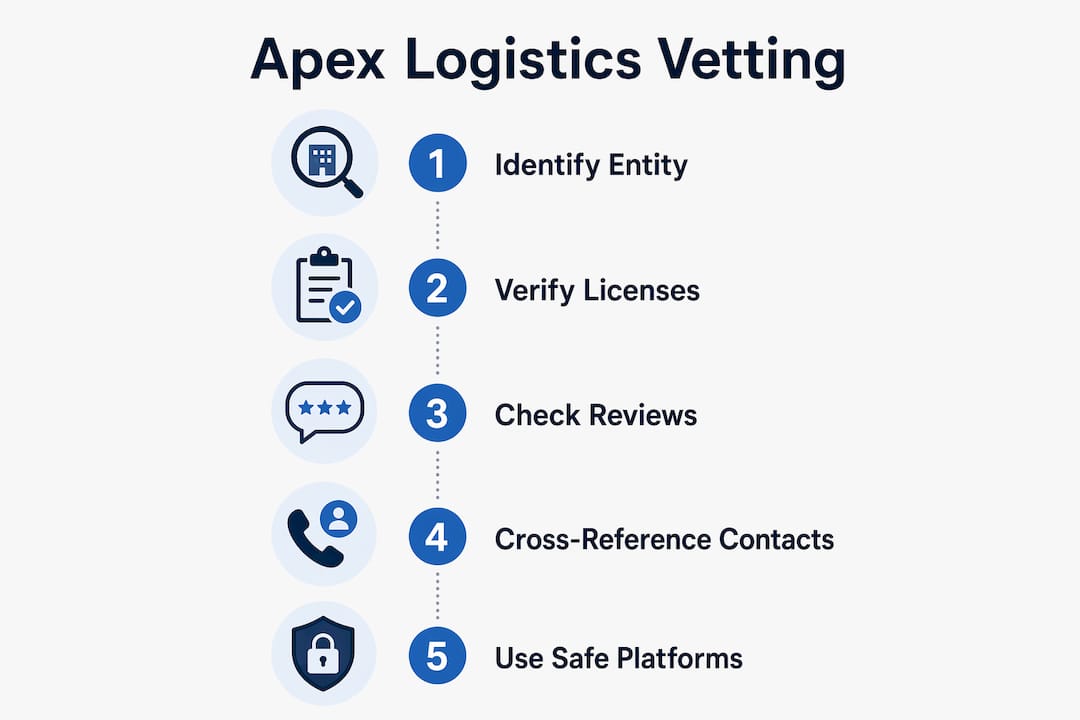
Because multiple companies operate under the Apex Logistics name, confirming the legal entity behind any given quote or contract is non-negotiable. Here is a direct process:
- Request the MC and USDOT number from the broker or carrier before any other conversation.
- Run the MC/USDOT on FMCSA SAFER and confirm the legal business name, address, and authority status match exactly what the company told you.
- Check the state business registry (Secretary of State filings) for the state where the entity claims to be incorporated — confirm the registered agent and ownership structure.
- Request the EIN/Tax ID, company legal name, and physical address in writing, then cross-reference against FMCSA records.
- Verify insurance filings on FMCSA SAFER: look for active cargo and liability insurance, not just authority status.
For reference, one Apex Logistics entity carries MC-333716 and USDOT 2223835 as an active FMCSA-licensed property broker — but that number applies to one specific legal entity, not all companies using the Apex name.
Pro Tip: Cross-check the phone number and address on the company’s website against what appears on the FMCSA record. A mismatch is a strong signal of impersonation.
What do reviews and operational patterns reveal?
The reputation picture for Apex Logistics entities is mixed, which is typical for large-volume operators with regional variation in execution. The ORD facility in Elk Grove Village, IL carries a 2.6-star rating across 14 reviews on Birdeye — a pattern worth taking seriously when planning tender decisions for that hub.
Operationally, the ORD location requires multi-step check-in procedures: photographic proof of tractor and trailer plates, fuel gauge photos, and verification of wheel chocks. Failing to comply can result in denial of service or detention charges. On Indeed, Apex Logistics International has 31 employee reviews, with roles ranging from logistics coordinator to warehouse associate — a useful secondary signal for assessing operational culture.
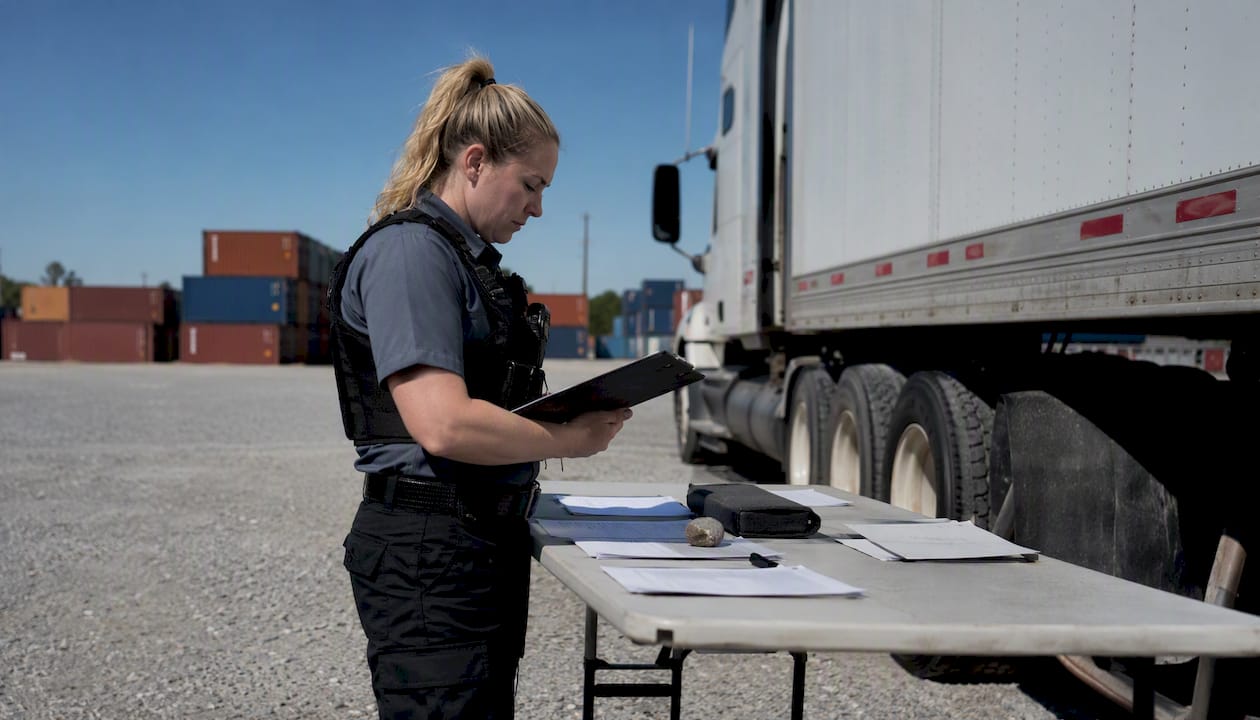
The practical takeaway: corroborate patterns across multiple reviews rather than reacting to a single negative report. When several independent sources describe the same friction (manual check-in delays, wait times at high-volume terminals), that is a reliable operational signal.
How to verify an Apex Logistics broker or carrier on FMCSA SAFER
Always start here. FMCSA SAFER is the authoritative federal database for confirming broker and carrier authority, insurance, and surety bond status.
Step-by-step FMCSA lookup:
- Go to safer.fmcsa.dot.gov and select “Company Snapshot.”
- Enter the MC number or USDOT number provided by the broker.
- Confirm the legal name and address match the entity you are contracting with exactly.
- Check authority status: it must read “Active” — not “Revoked,” “Pending,” or “Inactive.”
- Review insurance filings: confirm active cargo and liability coverage with current effective dates.
- Verify surety bond or trust status: look for an active BMC-84 (surety bond) or BMC-85 (trust fund) filing.
Documents to request from the broker before signing:
- Certificate of insurance (COI) with your company named as certificate holder
- BMC-84 or BMC-85 surety bond or trust documentation
- Signed broker-carrier agreement
- W-9 with the legal entity name matching FMCSA records
Pro Tip: Always request the MC/USDOT number in writing before the first call, then run it yourself on FMCSA SAFER. Never rely on a number the broker only states verbally.
How does double brokering happen — and how do you stop it?
Double brokering and identity fraud are among the most common risks in U.S. freight brokerage. Manual vetting of broker authority and surety bond status is the primary defense. A documented example: Apex Logistics Group LLC appeared in a broker alert from Reesor & Associates after its authority was revoked, leaving carriers at risk of non-payment.
Red flags to watch for:
- Sudden changes to payment instructions or contact information mid-shipment
- MC/USDOT or legal name that does not match FMCSA records
- Requests to deliver freight to an alternative or unscheduled location
- Unusual payment terms (e.g., net-90 or cash-only demands)
- Pressure to release documents or BOL before pickup is confirmed
Immediate mitigation steps:
- Verify the broker’s MC/USDOT on FMCSA SAFER before accepting the load.
- Call the phone number listed on the FMCSA record directly — not the number from the load board posting.
- Require original broker documentation and a signed broker-carrier agreement before dispatch.
- Use GPS-locked QR scan tools (such as TrackBOL) at pickup and delivery to create timestamped, location-verified proof of carrier identity.
- Require on-time POD scans and photographic proof of trailer plate at pickup.
If authority has been revoked and payment is withheld, carriers should document all communications immediately and consult counsel familiar with FMCSA collections. Quick action is critical — recovery options narrow as time passes.
Pro Tip: Safe freight matching platforms include built-in authority verification; use them as a first filter before any manual FMCSA check.

Should you contract with an Apex Logistics entity? A decision checklist
Accept only when FMCSA authority, surety bond status, and insurance are validated and contract terms protect your interests. Here is a prioritized checklist:
Documents to request before acceptance:
- Active COI with your entity as certificate holder
- Verified MC/USDOT matching FMCSA legal name
- Signed broker-carrier agreement with payment terms in writing
- BMC-84 or BMC-85 documentation
- Reference customers (at least two, verifiable)
Key questions to ask the broker:
- What is your subcontracting policy, and will you disclose all sub-carriers?
- What are your standard payment terms, and do you offer factoring or escrow options?
- How do you handle invoice disputes, and what is the resolution timeline?
- Who is the verified payor on the contract?
Negotiate for faster invoice dispute timelines (net-30 maximum), verified payor confirmation in writing, and proof-of-delivery requirements tied to payment release. For optimizing global shipping contracts, these protections are standard practice.
What tools and resources should you use for verification?
| Resource | Primary Use | How to Use |
|---|---|---|
| FMCSA SAFER | Authority, insurance, surety verification | Search by MC or USDOT; check legal name, status, and BMC filings |
| TrackBOL | GPS-locked pickup/delivery fraud prevention | Require QR scan at pickup; flags mismatched carriers in real time |
| Reesor & Associates (TransportationRecovery) | Broker alert and collections | Check broker alert database; contact for unpaid freight recovery |
| Inbound Logistics | Industry context and provider analysis | Use for background on provider capabilities and market positioning |
| State Secretary of State registry | Ownership and incorporation verification | Search by legal entity name to confirm registered agent and state |
Quick-reference tools:
- FMCSA SAFER: safer.fmcsa.dot.gov
- TrackBOL: trackbol.com
- TransportationRecovery broker alerts: transportationrecovery.com
- Inbound Logistics industry coverage: inboundlogistics.com
Key Takeaways
Verifying any Apex Logistics entity on FMCSA SAFER before contracting is the single most important step shippers and carriers can take to protect payment and avoid fraud.
| Point | Details |
|---|---|
| Multiple entities share the name | Always match the MC/USDOT to the exact legal name on FMCSA SAFER before contracting. |
| Surety bond status is critical | Confirm an active BMC-84 or BMC-85 filing; revoked bonds leave carriers unpaid. |
| Terminal behavior varies by location | The ORD facility has a below-average star rating; factor local operational patterns into tender decisions. |
| Double brokering requires active prevention | Use GPS-locked scan tools like TrackBOL and call the FMCSA-listed phone number directly. |
| Worldwideexpress offers verified alternatives | For customs brokerage, forwarding, and tracking, Worldwideexpress provides documented authority and end-to-end visibility. |
The real cost of skipping due diligence
The freight industry’s name-sharing problem is not a technicality — it is a structural vulnerability that bad actors exploit deliberately. When a carrier or shipper assumes that “Apex Logistics” is a single, known entity, they skip the one check that would have caught the fraud. The FMCSA SAFER database exists precisely because authority status changes without notice. A broker that was legitimate last quarter may have had its surety bond cancelled last week.
What most guides understate is the speed at which recovery options disappear after a revocation. Once a broker’s authority lapses and payment stops, the window for effective collection narrows fast. The carriers who recover unpaid freight invoices are almost always the ones who documented every communication from day one and acted within days, not weeks.
The practical standard for any logistics procurement team: treat every new Apex entity as an unknown until FMCSA records confirm otherwise. That is not excessive caution — it is the minimum due diligence the industry’s own regulatory framework was designed to enforce.
Worldwideexpress: a verified partner for forwarding and customs
Shippers who want to skip the verification maze entirely have a straightforward alternative. Worldwideexpress offers freight forwarding services covering air, ocean, and customs brokerage, with documented authority and end-to-end shipment visibility built in. For businesses that have spent time chasing down MC numbers and surety bond filings, the contrast is concrete: one verified provider, one point of contact, and U.S. customs brokerage handled under a single compliance framework.
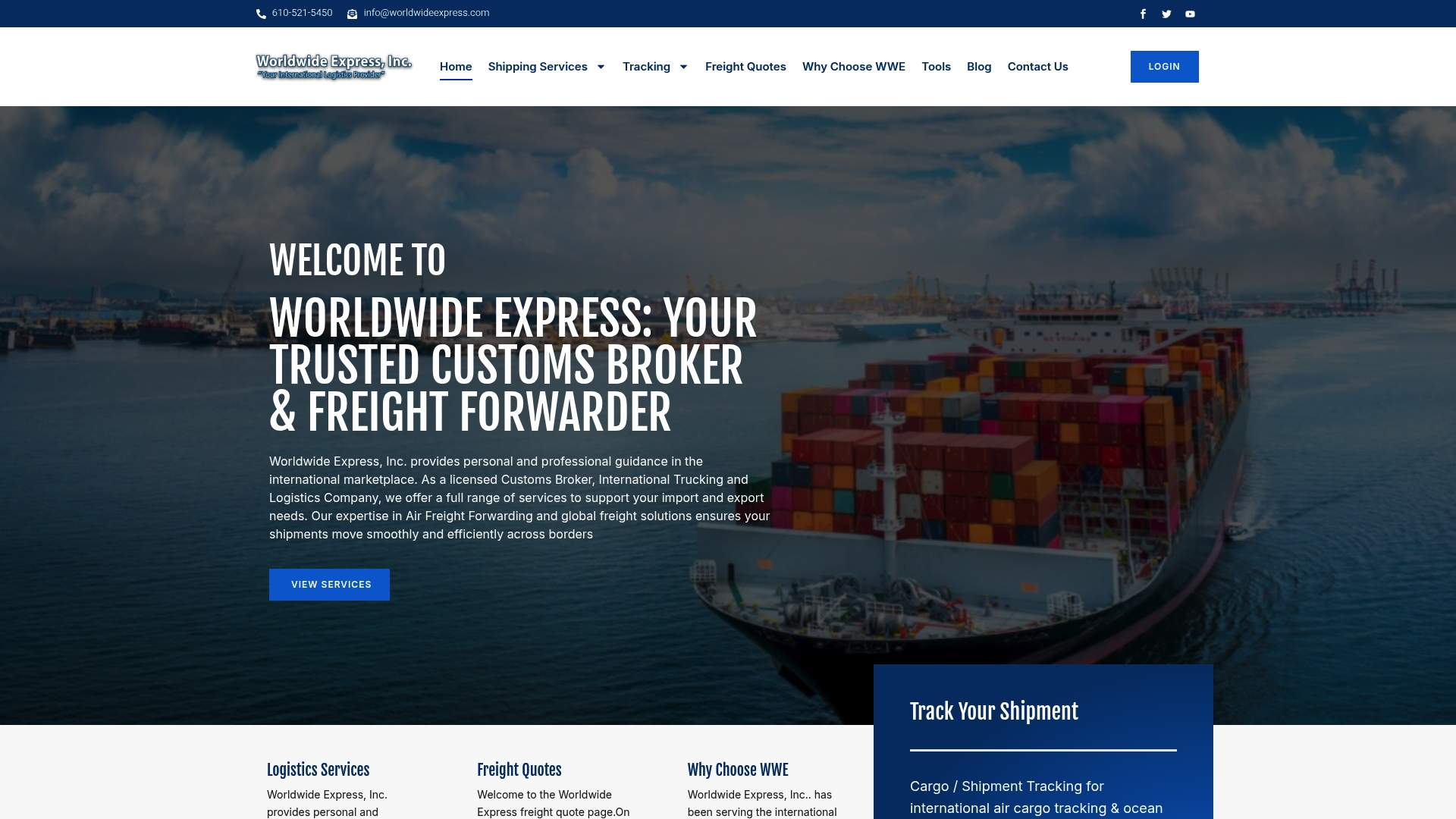
Worldwideexpress serves importers and exporters across the United States with tailored logistics plans, cargo insurance options, and real-time tracking tools. To get a freight quote or confirm service availability for your lane, visit worldwideexpress.com or contact the team directly.
Useful sources
- FMCSA SAFER: The authoritative federal database for verifying broker/carrier authority, insurance, and surety bond status by MC or USDOT number.
- Inbound Logistics — Apex Logistics feature: Industry analysis of Apex’s role in high-volume international shipping and TMS integration.
- TrackBOL: GPS-locked QR scan tool for pickup/delivery fraud prevention and timestamped carrier verification.
- Reesor & Associates / TransportationRecovery — Broker Alert: Broker alert database and collections resource for carriers facing non-payment after authority revocation.
- Birdeye — Apex Logistics International ORD: Customer and operational reviews for the Elk Grove Village, IL facility; useful for terminal-level due diligence.
- OTrucking — Apex Logistics INC (MC-333716): Example FMCSA broker listing showing how MC and USDOT numbers map to a specific legal entity.
Recommended
- Shipment Visibility Tools: A 2026 Guide for Logistics Pros – Worldwide Express, Inc.
- Importing from Europe: Step-by-Step U.S. Business Guide – Worldwide Express, Inc.
- Global Logistics Trends Shaping U.S. Supply Chains in 2026 – Worldwide Express, Inc.
- The Manifest Filing Process: A Guide for Logistics Pros – Worldwide Express, Inc.