A certified international freight forwarder is not a person with a diploma. It is an international freight forwarding company that coordinates air, ocean, and ground transport, manages export and import paperwork, and often works alongside licensed customs brokers to move cargo across borders. Hiring one centralizes shipment logistics under a single point of contact, but the importer or exporter of record still carries the legal weight for declarations, valuation, and duties.
TL;DR:
- Freight forwarders book cargo space, negotiate rates, and handle shipment consolidation, warehousing, and documentation, but the legal responsibility for declarations remains with the importer or exporter.
- They ensure compliance by managing export/import paperwork, including AES filings and certificates of origin, and provide risk mitigation through carrier vetting and cargo insurance.
- Evaluation should verify licensing, documentation ability, carrier relationships, insurance limits, explicit contractual terms, and seamless technology integration before engagement.
- Customs brokers are licensed to file customs entries and handle classification and valuation, and they must have a direct power of attorney with the importer of record, unlike forwarders.
- Companies like Worldwide Express offer combined freight forwarding and customs brokerage services, providing integrated support for shipment coordination and customs compliance.
Table of Contents
- 1. What a certified international freight forwarder actually does
- 2. Why businesses hire a freight forwarder in the first place
- 3. How to evaluate and choose a certified international freight forwarder
- 4. Customs broker versus freight forwarder: who is legally responsible
- 5. How Worldwide Express approaches forwarding and compliance
- 6. How Worldwide Express can support your shipments
- Sources
- FAQ
1. What a certified international freight forwarder actually does
A freight forwarder is the operational backbone of a cross-border shipment. It books cargo space, negotiates freight rates with carriers, and decides whether a shipment moves faster by air or cheaper by sea. Ocean freight typically splits into two options: full container load for larger volumes and less than container load for businesses shipping smaller quantities that get consolidated with other shippers’ cargo. Many forwarders also run warehousing operations and handle inland trucking on both ends of the journey, which matters when a shipment needs to move from a port to a distribution center without a second vendor in the mix.
Paperwork is where forwarders earn their keep. A typical international shipment requires a commercial invoice, a bill of lading or air waybill, a packing list, and sometimes a certificate of origin. Exporters shipping certain goods from the United States also need Automated Export System filings, which are generally required for shipments above a set value or for those requiring an export license, according to Trade.
Forwarders commonly offer:
- Booking and space negotiation across air, ocean, and trucking modes.
- Consolidation and deconsolidation for shipments that do not fill a full container.
- Warehousing and inventory staging near ports or distribution hubs.
- Preparation of export and import documentation, including AES/EEI filings where required.
- Cargo insurance arrangements and shipment tracking.
- Coordination with a licensed customs broker when in-house brokerage is not part of the service.
A large number of licensed customs brokers currently operate in the United States, reflecting how many importers choose a dedicated broker rather than relying solely on a forwarder for entry filing, according to CBP’s customs broker modernization page.
2. Why businesses hire a freight forwarder in the first place
The case for outsourcing international logistics comes down to capacity, speed, and risk. A forwarder with established carrier relationships can secure container space during tight shipping seasons that an individual shipper would struggle to book alone. Consolidation lets smaller shippers access ocean freight rates that would otherwise require a full container’s worth of cargo.
Documentation experience also cuts down on customs delays. Forwarders that understand advance filing requirements, such as the Air Cargo Advance Screening and preloading advance cargo information rules for U.S.-bound air freight, submit the right data before cargo ever leaves the origin country. FIATA’s guidance on air cargo advance screening notes that these advance-data requirements have expanded, which means a forwarder unfamiliar with the current rules can hold up a shipment before it clears a single customs checkpoint.
Risk reduction rounds out the pitch:
- Carrier vetting reduces exposure to unreliable or noncompliant transport partners.
- Cargo insurance covers loss or damage that a standard bill of lading liability limit would not.
- Contingency planning helps absorb sudden tariff changes or enforcement actions without stalling a shipment.
Pro Tip: Ask a prospective forwarder how they handled the last major tariff change in your trade lane. Their answer tells you more than any sales sheet.
3. How to evaluate and choose a certified international freight forwarder
Choosing a forwarder is a procurement decision, not a quick web search. A prioritized checklist keeps the evaluation focused on what actually protects your shipments and your compliance record.
- Verify licensing and broker relationships. Confirm whether the forwarder holds relevant permits and whether they have a direct relationship with a CBP-licensed customs broker for any U.S. entry filing.
- Confirm documentation capability. Ask for examples of AES/EEI filings, ACAS or PLACI readiness for air cargo, and experience producing certificates of origin for your specific product categories.
- Dig into carrier vetting and insurance. Request their vetting process for ocean and air carriers, their standard insurance limits, and a summary of recent claims history.
- Get contract language in writing. The agreement should state clearly who is the importer or exporter of record, define liability caps, spell out chargeback terms, and explain how power of attorney is handled.
- Evaluate technology and reporting. Ask about shipment tracking, EDI or API integration with your systems, reporting frequency, and the escalation path when something goes wrong.
Before signing anything, run through this shorter gut check:
- Does the forwarder answer documentation questions with specifics, not generalities?
- Can they name the carriers they work with in your trade lane?
- Do they disclose insurance limits without being pressed?
- Is the contract explicit about who holds importer or exporter of record status?
A forwarder that hesitates on any of these points is worth a second look before you sign a service agreement. For a deeper walkthrough of vendor evaluation, see how to choose a freight forwarder.
4. Customs broker versus freight forwarder: who is legally responsible
A freight forwarder and a customs broker are not interchangeable, and the distinction matters more than most procurement teams realize. A customs broker is licensed under federal regulation to transact customs business on behalf of an importer, including classification, valuation, and entry filing. A forwarder can coordinate the shipment and hand off paperwork to a broker, but it cannot substitute for that licensed relationship when formal customs business is required. The difference is explained in more detail in broker versus freight forwarder: key differences.
Federal rules are specific about how that relationship has to work:
- Under 19 CFR 111, a customs broker must execute a power of attorney directly with the importer of record, not through an intermediary, according to CBP’s customs broker modernization page.
- A forwarder facilitating the relationship cannot sign that POA in the importer’s place.
- The importer or exporter of record remains responsible for the accuracy of declarations even when a third party prepared the filing, according to CBP’s tips for new importers and exporters.
That last point deserves attention. Duties, penalties, and correction costs land on the importer or exporter of record, not on the forwarder or broker who filed the paperwork. For a full breakdown of what that role entails, read importer of record explained.
5. How Worldwide Express approaches forwarding and compliance
Some freight forwarding companies offer U.S. customs brokerage alongside air and ocean transportation, trucking, warehousing, and cargo tracking, building services around similar operational checklists. Licensed customs brokers can handle both import and export filings electronically, which helps keep documentation and shipment movement under coordinated oversight rather than split across unconnected vendors.
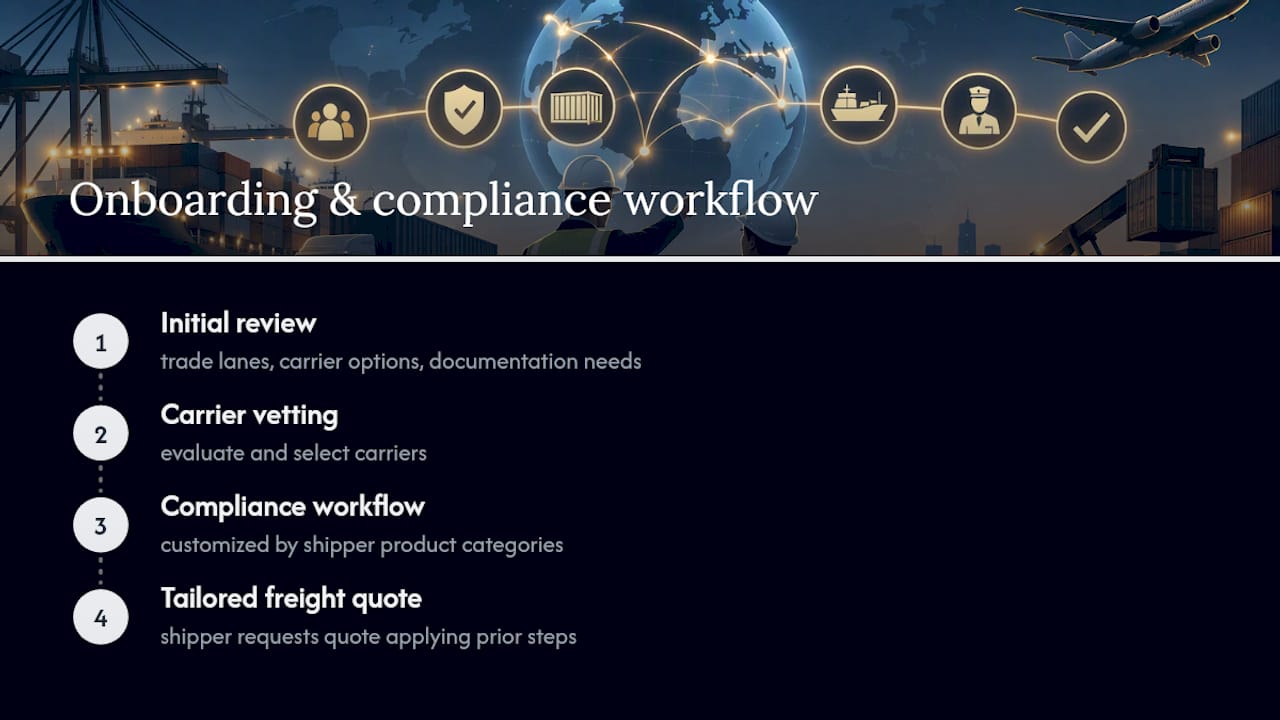
Onboarding typically starts with a review of trade lanes, carrier options, and documentation needs specific to the cargo involved, followed by carrier vetting and a compliance workflow tailored to the shipper’s product categories. Businesses evaluating a forwarder relationship can request a tailored freight quote to see how those steps apply to their own shipments.
— Ian
6. How Worldwide Express can support your shipments
Choosing a forwarder means choosing who answers the phone when a container gets held at port or a filing needs a same-day correction. Some forwarders handle that end of the work directly, pairing licensed customs brokerage with air, ocean, and ground transportation under a unified contract instead of several separate ones.
The services line up closely with the evaluation checklist covered earlier:
- International Logistics Services covering air, ocean, and ground coordination in one engagement.
- U.S. Customs Brokerage services for classification, valuation, and entry filing.
- Cargo Insurance to cover loss or damage beyond standard carrier liability limits.
- Shipment tracking and reporting for ongoing visibility into cargo location and status.
Businesses ready to compare rates can request a freight quote directly, or review the full range of logistics services to see which combination fits a specific trade lane. For import-specific needs, the import freight services page outlines how customs brokerage and inland transport connect for inbound shipments.
Sources
The rules governing brokers, importers, and forwarders come from federal regulation and trade guidance, not from any single company’s marketing material. These sources cover the licensing, liability, and documentation points referenced throughout this guide.
- Customs brokers (CBP modernization page)
- Trade
- FIATA alert: air cargo advance screening requirements
FAQ
Is a certified international freight forwarder the same as a customs broker?
No. A freight forwarder coordinates transport, documentation, and consolidation, while a customs broker is licensed to file customs entries and handle classification and valuation. A forwarder often works with a broker rather than replacing one, as explained in trade.gov’s guidance on customs brokers and freight forwarders.
Who is legally responsible if a shipment’s paperwork has an error?
The importer or exporter of record carries that responsibility, even when a forwarder or broker prepared the filing. CBP’s guidance for new importers and exporters confirms that liability for accuracy stays with the party on record, not the service provider.
What documents does a freight forwarder typically prepare?
A forwarder commonly handles the commercial invoice, bill of lading or air waybill, packing list, and certificate of origin, along with AES/EEI export filings where required. Export paperwork requirements vary by destination country and product type.
Can a freight forwarder sign customs paperwork on my company’s behalf?
Only a licensed customs broker can execute a power of attorney, and that POA must be signed directly with the importer of record under 19 CFR 111. A forwarder facilitating the relationship cannot sign in the importer’s place, according to CBP’s broker modernization page.
Does Worldwide Express handle both freight forwarding and customs brokerage?
Yes. Some companies offer U.S. Customs Brokerage services alongside air, ocean, and ground transportation, enabling businesses to coordinate shipment movement and customs filing through one contracted relationship rather than separate vendors.