A trailerable boat under 30 feet typically ships for a moderate cost on a regional route, while a 40 to 50 foot yacht crossing an ocean usually costs significantly more, and superyachts on semi-submersible vessels can be substantially more expensive. These are starting points, not quotes. Your next move should be requesting an itemized landed-cost estimate that names hull dimensions, origin and destination ports, and preferred sailing dates, because every number below stays provisional until customs and terminal fees are confirmed at destination.
TL;DR:
- Route and season significantly influence costs, with transoceanic trips for mid-size and large boats often costing several times more than regional moves.
- Larger yachts over 50 feet typically require semi-submersible transport, which commands a premium and limited sailing options, increasing overall expenses.
- A detailed, itemized quote that separates freight, port handling, duties, and insurance helps avoid hidden fees and uncertainties at delivery.
- Accurate measurements, port details, and preferred sailing dates are essential information for obtaining a reliable shipping estimate.
- Booking six to twelve weeks in advance and understanding potential extra charges like storage and cradle building can prevent delays and unexpected costs.
Table of Contents
- What Are Typical International Boat Shipping Costs by Size?
- RoRo, Container, or Semi-Submersible: Which Method Fits Your Boat?
- What Actually Drives Boat Freight Rates?
- What Information Do You Need to Get an Accurate Quote?
- How Long Does International Boat Shipping Take?
- What Hidden Fees Should You Watch For?
- Why an Itemized, Forwarder-Led Quote Reduces Your Risk
- Get a Clear, Itemized Shipping Quote
- Where to Verify These Numbers Yourself
- Sources
- FAQ
What Are Typical International Boat Shipping Costs by Size?
Boat size drives the price more than any other single factor, but route and season shift the math considerably. A small trailerable boat moving within the same ocean basin, say from Florida to the Caribbean, might land in the low thousands. A mid-size cruiser crossing an ocean multiplies that several times over, and a large yacht requiring specialized handling multiplies it again.
Rough brackets, before duties, insurance, and port fees:
- Small trailerable boats (20 to 30 feet): Regional short-haul moves typically cost in the lower range; transoceanic routes are considerably more expensive due to container or RoRo space constraints.
- Mid-size boats (30 to 50 feet): Transatlantic routes usually cost substantially more, while transpacific runs are often pricier due to longer transit and fewer sailing options.
- Large yachts (50+ feet): Costs rise steeply once a boat exceeds standard RoRo ramp dimensions, often requiring semi-submersible transport that commands a premium due to limited availability.
Port selection changes these numbers fast. A route with direct RoRo service between major hubs beats one requiring inland trucking to a secondary port, and shipping during peak season (spring relocations to the Mediterranean, fall moves to the Caribbean) tends to cost more than off-peak booking.
RoRo, Container, or Semi-Submersible: Which Method Fits Your Boat?
Method choice is not a style preference. It is dictated by your boat’s size, hull type, and whether the route even has a suitable vessel calling.
- Roll-on/roll-off (RoRo): The boat drives on and off under its own power on ramps built into the vessel. This is generally the most economical option for motored hulls, but it depends entirely on RoRo service running your specific route, and sailing frequency varies by corridor.
- Lift-on/lift-off (LoLo) and containerized shipping: Smaller boats or disassembled components go into or onto containers. This can be cost-effective if you can share container space with other cargo, and it works well for boats that fit within standard container dimensions once masts and outriggers are removed.
- Semi-submersible and water-to-water transport: For yachts too large for RoRo ramps, the vessel partially submerges to float the boat on and off. Sailings are less frequent and command a premium due to limited availability and specialized handling.
Mast removal, cradle building, and lashing requirements all get baked into the quote, so method choice cascades directly into your final number.
What Actually Drives Boat Freight Rates?
Freight is the headline number, but it is rarely the only number. A freight forwarder can advise on freight costs, port charges, insurance, and special documentation, and understanding each line item helps you spot what a bare quote might be missing.
- Ocean freight or vessel space charge — the base cost tied to your boat’s dimensions and weight, calculated by cubic measurement or deadweight.
- Terminal handling and stevedoring — loading and unloading fees charged at origin and destination ports.
- Haul-out, launch, and cradle construction — physically lifting the boat and building a cradle for transport.
- Inland drayage — trucking between the port and your final delivery address if you’re not picking up dockside.
- Customs duties, taxes, and VAT — these vary by destination country and are often the most underestimated line.
- Marine insurance — covering the boat’s value in transit, priced as a percentage of insured value.
Incoterms determine which party pays for which of these. A quote priced CIF bundles cost, insurance, and freight to the destination port, while EXW leaves nearly everything on the buyer. DDP puts the most burden on the seller, including duties. The Incoterm listed on your quote changes what you’ll owe on arrival.
Pro Tip: Ask explicitly which duties and taxes on your quote are estimated versus confirmed. Quotes should be labeled as estimated until destination customs finalizes assessments, and a forwarder who flags this distinction upfront is one worth trusting.
What Information Do You Need to Get an Accurate Quote?
Vague inquiries get vague estimates. A forwarder who receives exact specifications can compute a meaningful CIF price, often at no charge, if you hand over accurate weight and dimensions.
Before requesting quotes, gather:
- Exact hull length, beam, and air draft (height), plus displacement or weight and current flag/registration.
- Whether the mast needs to be removed for transport.
- Origin port and destination port (or full delivery address if inland trucking is needed).
- Photos of the boat and any existing cradle you own.
- Preferred sailing dates, flexibility window, and your preferred Incoterm.
Freight forwarders that specialize in total landed cost recommend requesting an itemized breakdown covering ocean freight, port handling, cradle and haul-out, storage, customs clearance, a duties estimate, and insurance, rather than accepting a single bundled figure. A bundled number hides which costs are fixed and which will move once customs weighs in.
How Long Does International Boat Shipping Take?
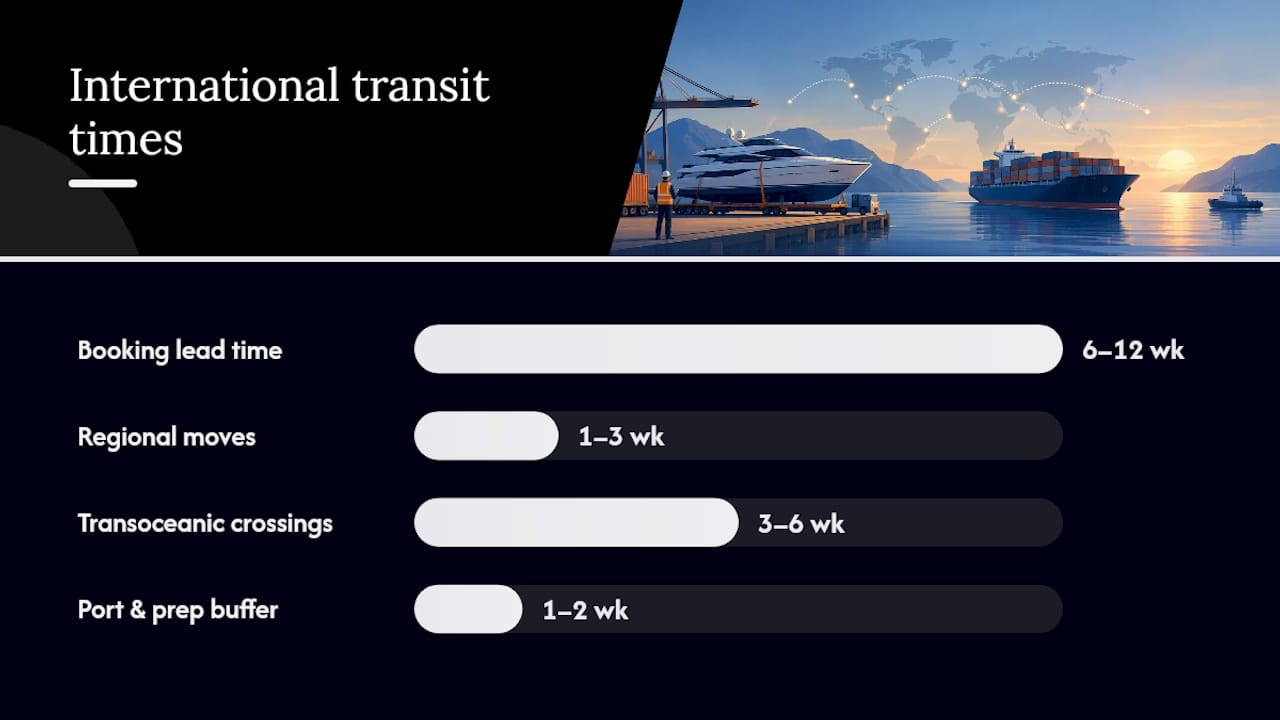
Book six to twelve weeks ahead for standard routes, longer during peak relocation seasons when RoRo and semi-submersible space fills fast. Regional moves within the same ocean basin often transit in one to three weeks. Transatlantic and transpacific crossings typically run three to six weeks depending on the vessel’s rotation and how many ports it calls before yours.
Add time on both ends: port handling, cradle building, pre-shipment inspection, and customs clearance can extend the total calendar timeline by another one to two weeks beyond pure transit. Build that buffer into any delivery deadline you’re planning around.
What Hidden Fees Should You Watch For?
Quotes frequently exclude charges that only surface once the boat reaches the dock. Port handling, cradle, and storage fees are operationally variable and often billed separately from ocean freight.
- Haul-out and re-launch fees, typically billed as a flat one-time charge per operation.
- Storage, usually billed daily once free time at the terminal expires, so delays get expensive fast.
- Shrinkwrap and prep/packaging, which may or may not be bundled into your base quote.
- Pre-shipment survey fees, sometimes required by insurers before coverage kicks in.
A storage facility like Inline Storage in San Antonio illustrates how these daily fees add up if pickup gets delayed. Get every add-on priced in writing before you commit.
Why an Itemized, Forwarder-Led Quote Reduces Your Risk
A bundled quote hides where the real cost sits. A licensed forwarder who breaks out customs brokerage, ocean freight forwarding, cargo insurance, and documentation support lets you see exactly what you’re paying for and where a number might still shift once destination customs weighs in.
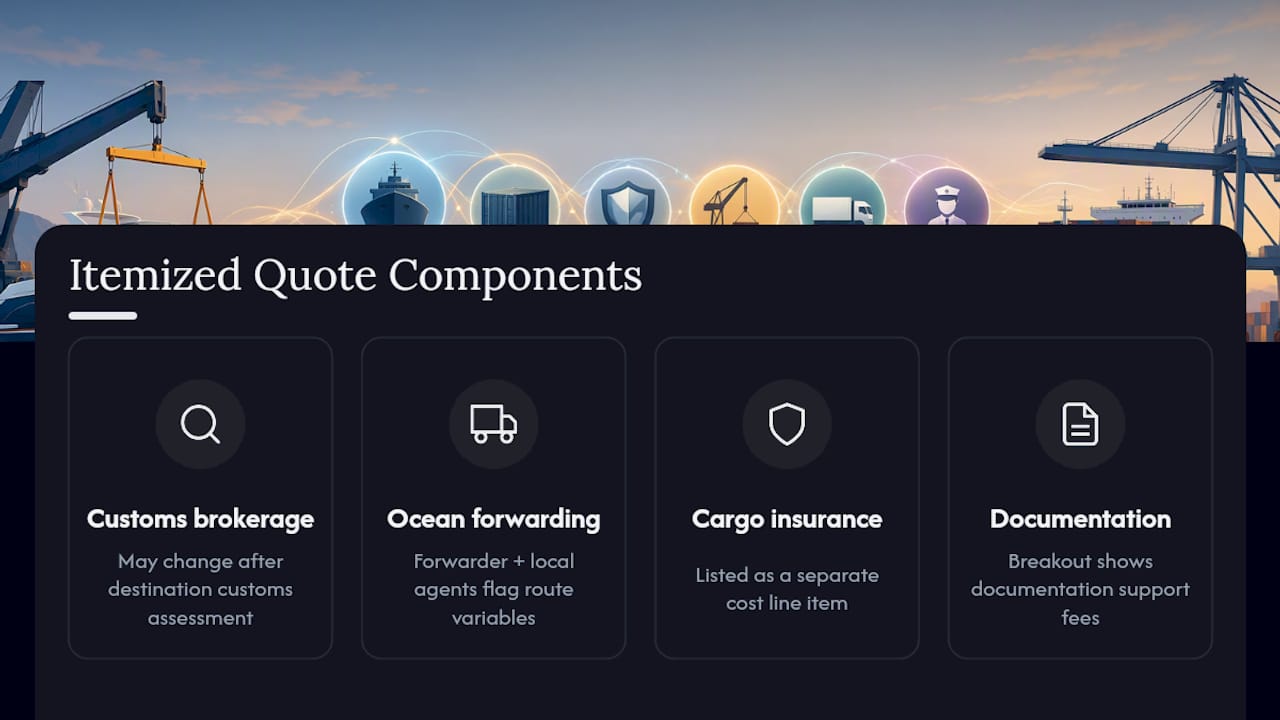
That transparency matters more on boat shipments than on standard cargo, because cradle construction, mast handling, and port-specific handling fees vary so widely between routes. A forwarder with an established local agent network and consolidated invoicing can flag those variables before you book, not after the boat is already at sea. If you’re evaluating shipping options, requesting an itemized freight quote from Worldwideexpress is a reasonable place to start comparing what a transparent breakdown actually looks like.
Get a Clear, Itemized Shipping Quote
A global logistics company works from the same philosophy this article argues for: a landed-cost number you can actually trust, not a bundled figure that surprises you at the dock. Services include freight forwarding, customs brokerage, and cargo insurance, coordinated for smooth boat shipment handling without splitting across multiple vendors who don’t communicate.
That coordination is the practical advantage here. Instead of chasing separate quotes for freight, customs clearance, and insurance, you get one point of contact managing the paperwork and the moving pieces. If you’re comparing ocean transportation services for an upcoming boat shipment, request a freight quote from Worldwideexpress and ask for the itemized landed-cost breakdown covering freight, port handling, duties estimate, and insurance before you book anything.
Where to Verify These Numbers Yourself
For primary guidance beyond this article, consult the International Trade Administration’s shipping options page for freight forwarder roles and CIF pricing, its Incoterms guide for how cost and risk get divided, and the National Vessel Documentation Center for U.S.-flagged vessel documentation fees.
Sources
- Shipping Options | International Trade Administration
- Cost, Insurance, and Freight (CIF) | BETA – International Trade Administration
FAQ
How Do You Ship a Boat Internationally?
Most international boat shipments move by RoRo (driven on and off under power), containerized LoLo shipping, or semi-submersible transport for very large yachts. You’ll need exact hull measurements, origin and destination ports, and a forwarder who can compute a CIF price and coordinate customs clearance and insurance.
How Much Does It Cost to Ship a 40 Foot Boat?
A 40 foot boat shipped internationally commonly falls in the mid five-figure range on transatlantic routes, though the final number depends heavily on method, port pair, and season. Request an itemized quote covering freight, port handling, cradle costs, insurance, and a duties estimate rather than relying on a single bundled figure.
How Much Does It Cost to Wrap a 32 Foot Boat?
Shrinkwrap pricing for boat shipping is not standardized industry-wide and varies by shipper and region, so it should be confirmed as a line item on your quote rather than assumed. Ask your forwarder whether prep and packaging, including shrinkwrap, are bundled into the base freight rate or billed separately.
What’s the Difference Between a Quote and an Estimated Landed Cost?
A freight quote typically covers ocean transport and standard handling, while an estimated landed cost adds duties, taxes, and destination fees that remain provisional until confirmed by destination customs. Always ask which figures on your paperwork are fixed and which are estimates pending final assessment.
Which Incoterm Should I Use for a Boat Shipment?
The right Incoterm depends on how much responsibility you want to hold. CIF puts cost, insurance, and freight on the seller to the destination port, while EXW shifts nearly all logistics and risk to the buyer, and the Incoterms 2020 rules define specific responsibilities for each option.