For commercial motorcycle shipments, per-unit freight cost comes down to five factors: shipping mode, battery hazmat handling, packing configuration, destination duties, and local port fees. Sea FCL beats air freight on price for volume orders, but battery documentation and container density often swing the final number more than the base freight quote does. Calculate a full landed cost and loop in a customs broker before you sign anything.
TL;DR:
- Shipping by sea full-container-load (FCL) offers the lowest per-unit cost for volume motorcycle orders, often significantly cheaper than air freight, which can be three to six times more expensive per unit.
- Lithium batteries classified as dangerous goods require UN38.3 certification and safety documentation before shipping, with air freight imposing stricter regulations and lower acceptance rates for assembled electric motorcycles.
- Packing configuration greatly impacts freight costs: Completely Knocked-Down (CKD) units can reduce per-unit costs dramatically at high volumes but require reassembly and quality control at destination.
- Customs duties, broker fees, VAT, and port handling often outweigh the initial freight quote, especially on shorter routes, making comprehensive landed-cost calculations essential before shipping.
- Planning for delays, port congestion, and DG documentation review is crucial, as shipment transit times can extend by several days beyond quoted estimates, increasing storage and demurrage costs.
Table of Contents
- What Makes Up International Motorcycle Shipping Rates?
- Should You Ship by Air or Sea for Commercial Motorcycle Orders?
- How Do Lithium Battery Rules Affect Motorcycle Shipping Rates?
- How Do CBU, SKD, and CKD Packing Change Per-Unit Freight Cost?
- Who Handles Documentation and Customs Clearance?
- How Do You Calculate the Landed Cost of a Motorcycle Shipment?
- What Fees and Delays Should You Plan For?
- How Should Logistics Managers Compare Motorcycle Freight Rates?
- Get a Tailored Motorcycle Shipping Quote
- Sources
- FAQ
What Makes Up International Motorcycle Shipping Rates?
A freight quote is never the whole story. The number a forwarder gives you upfront covers base transportation, but the real invoice usually carries several layers stacked on top of it.
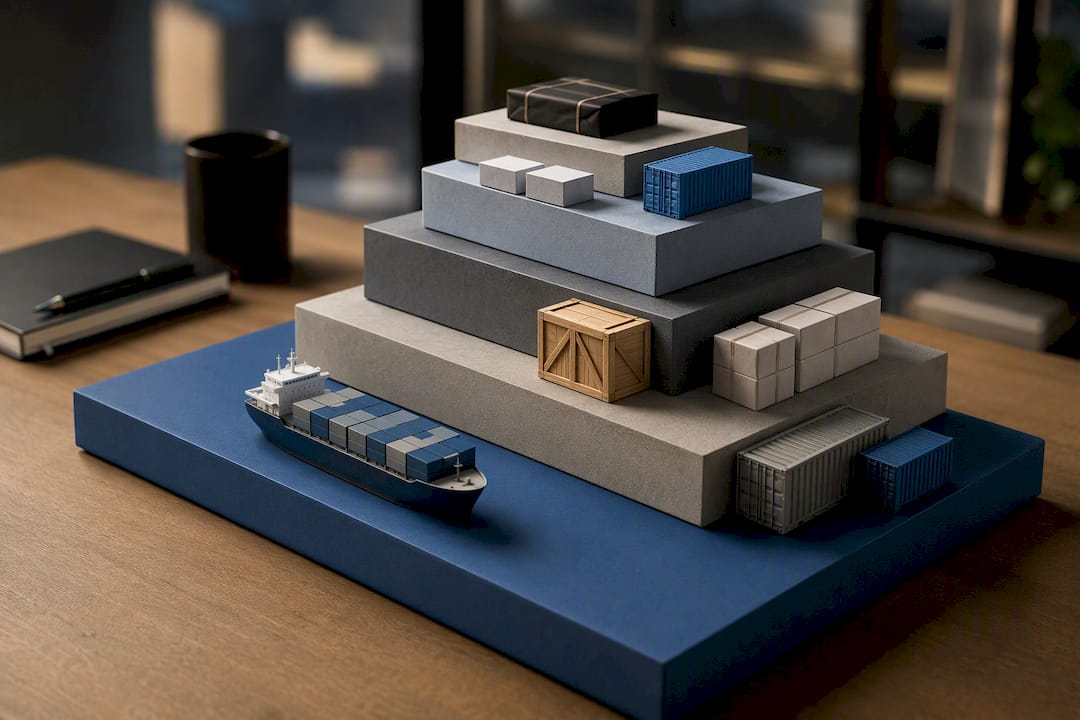
Base ocean or air freight is priced per unit or per container, but it rarely travels alone. Origin handling, port or terminal fees, and destination trucking all get added before the shipment reaches your warehouse. Surcharges compound the total: Bunker Adjustment Factor (BAF) and Currency Adjustment Factor (CAF) shift with fuel and exchange rates, peak season surcharges hit during high-demand months, and dangerous-goods (DG) handling fees apply automatically once lithium batteries enter the mix.
Customs brokerage, duties, VAT, and inspection fees frequently outweigh the freight line entirely, especially on short lanes where the shipment volume is modest relative to fixed port charges. Cargo insurance adds a smaller but predictable cost, typically a percentage of declared cargo value, and it’s one of the few components you control directly by choosing coverage level.
- Base freight (per container or per unit) plus origin and destination handling
- BAF/CAF and peak season surcharges tied to fuel and calendar
- DG handling fees for battery-equipped units
- Customs duties, VAT, and broker fees, which can exceed freight on short lanes
- Storage and demurrage if cargo sits at port past free time
- Cargo insurance, scaled to declared value
Should You Ship by Air or Sea for Commercial Motorcycle Orders?
Air freight makes sense for samples, urgent replacement parts, or single high-value units that need to move in a week. It rarely makes sense for volume orders. Sea full-container-load (FCL) freight typically delivers the lowest per-unit cost for commercial shipments, while air freight runs three to six times more expensive per unit for the same cargo.
Less-container-load (LCL) sea freight sits in between, but for battery-equipped motorcycles, LCL often stops being cost-effective. Consolidators frequently limit or refuse to mix Class 9 hazmat cargo with general freight in shared containers, and the DG surcharges applied to a partial load can erase whatever savings LCL was supposed to offer.
| Mode | Typical transit time | Cost profile | Best fit |
|---|---|---|---|
| Air freight | 7 to 14 days | Highest per unit, 3 to 6 times sea FCL | Samples, urgent units, small parts |
| Sea LCL | 28 to 40 days | Moderate, often inflated by DG surcharges | Small non-battery orders only |
| Sea FCL | 35 to 50 days | Lowest per unit at volume | Bulk commercial orders, CKD/SKD shipments |
Lane volatility and seasonality push these numbers around constantly. Container availability tightens ahead of major holidays in exporting countries, and fuel-linked surcharges move month to month independent of the base rate you negotiated.
How Do Lithium Battery Rules Affect Motorcycle Shipping Rates?
Lithium batteries are classified as dangerous goods under both air and ocean regulations, and that classification changes everything about how a shipment gets priced and accepted. Carriers require UN38.3 test reports and Material Safety Data Sheets before they’ll even quote the shipment, and incomplete hazmat paperwork is one of the most common reasons cargo gets held at a port or airport.
Air carriers apply the strictest standard: many airlines will not accept fully assembled electric motorcycles at all, and those that do generally require a low state of charge and full IATA compliance documentation. Sea freight is more forgiving on assembly state but still requires the same certification package, and DG handling surcharges apply regardless of mode.
- Confirm UN38.3 test reports and MSDS exist before booking, not after
- Verify battery state-of-charge limits with the carrier if shipping by air
- Build in extra lead time for DG documentation review at origin
- Flag any missing certification to your broker before the container is sealed
How Do CBU, SKD, and CKD Packing Change Per-Unit Freight Cost?
Packing configuration is the single biggest lever most commercial shippers underuse. Completely Built-Up (CBU) units ship fully assembled, Semi-Knocked-Down (SKD) units arrive partially disassembled, and Completely Knocked-Down (CKD) units ship in component form for reassembly at destination.
The container math tells the story on its own. A standard 40HC container typically holds 18 to 22 CBU units, 24 to 28 SKD units, or 105 to 114 CKD units. That density swing means CKD can cut per-unit freight cost dramatically compared to shipping assembled bikes.
- CBU: fastest to deploy, no reassembly labor, lowest container fill
- SKD: moderate reassembly need, better density than CBU
- CKD: highest density, lowest per-unit freight, but requires assembly labor, quality control, and spare-parts logistics at destination
CKD only pays off at volume. If your reassembly infrastructure and QC staffing can’t absorb the added labor, the freight savings get eaten by delays and part-loss risk.
Who Handles Documentation and Customs Clearance?
Every commercial motorcycle shipment needs a core paperwork set, and missing any one document can stall clearance regardless of how clean your freight rate looked on paper.
- Commercial Invoice and Packing List detailing value, quantity, and specifications for each unit
- Bill of Lading or Sea Waybill confirming carrier receipt and consignee details
- Certificate of Origin required for preferential duty treatment under trade agreements
- HS code classification (motorcycles generally fall under heading 8711, with duty rates determined by subcode and value)
- Destination-specific entry forms, such as the HS-7 declaration required by CBP for vehicles entering the United States
Incoterms decide who pays for what along the route. Under FOB, the buyer arranges freight and insurance from the origin port forward; under DDP, the seller covers everything including destination duties. Forwarders typically manage booking and the bill of lading, but the importer remains responsible for confirming importer tax IDs and destination compliance. Engage a customs broker before loading, not after the container is already at sea.
How Do You Calculate the Landed Cost of a Motorcycle Shipment?
Landed cost is the number that actually matters for budgeting, and it’s rarely what the initial freight quote suggests. The formula: FOB price + freight + insurance + duties + VAT + destination fees + inland delivery + reassembly/QA costs.
Duties depend entirely on correct HS classification. Get it wrong and you risk container detention plus fines calculated as a percentage of FOB value, with published duty rates for motorcycles ranging from 0% under free trade agreements up to 35.5% in more protected markets.
| Cost component | Sample range or note |
|---|---|
| Sea FCL freight (per unit, CKD packing) | Lowest per-unit cost tier |
| Air freight (per unit) | 3 to 6 times sea FCL cost |
| Destination agent fee | Around $350 per shipment |
| Duty rate range | 0% (FTA) to 35.5% depending on market |
Pro Tip: Run your landed-cost math twice, once at standard duty rates and once assuming a battery surcharge or misclassification penalty applies. If the two numbers are close, your margin is too thin to absorb a customs exam or a storage delay.
What Fees and Delays Should You Plan For?
Sea shipments typically run 35 to 50 days factory-to-warehouse; air freight runs 7 to 14 days. Build buffer time into both, because port congestion and DG documentation review routinely add days that a quoted transit time doesn’t account for.
- Destination agent fees, terminal handling, and inspection charges often arrive as separate line items
- Storage and demurrage penalties accrue fast once free time at the port expires
- Engage your broker before loading, not after arrival, to pre-clear where possible
- Match VIN and engine numbers across every document, and confirm whether the destination requires original paperwork or accepts scanned copies
How Should Logistics Managers Compare Motorcycle Freight Rates?
The rate on a forwarder’s first quote almost never survives contact with reality. What matters is the all-in landed cost, not the freight line item that looks best on a spreadsheet.
Engage customs and DG expertise before you commit to a mode, especially for electric or battery-hybrid models where a single missing certificate can strand a container at port. If your order volumes support it, CKD or SKD packing usually justifies the added reassembly overhead through lower per-unit freight alone. Rate shopping without a landed-cost model is how procurement teams end up surprised by a bill that’s 30% higher than the quote implied.
— Ian
Get a Tailored Motorcycle Shipping Quote
You can get an all-in landed-cost number instead of a freight quote that leaves duties, DG handling, and destination fees for you to discover later. Licensed customs brokers handling both imports and exports with electronic filing often build compliance and battery documentation into the quote from the start, rather than treating it as a surprise line item at the port.
Whether you’re moving a single container of CBU units or scaling into CKD packing for volume orders, international freight forwarding and customs brokerage services cover FCL, LCL, air transportation, and cargo insurance under one point of contact. Request a freight quote and get a line-item landed-cost estimate before you commit to a mode or a packing configuration.
Sources
This guide draws on CBP vehicle import rules, IATA and UN38.3 battery standards, and industry freight-cost explainers cited throughout for verification.
- Importing a car — U.S. Customs and Border Protection (CBP)
- Electric motorcycle air freight vs sea freight: cost comparison — Yuema
- Motorcycle shipping quotes explained line-by-line — West Coast Shipping
FAQ
What Determines International Motorcycle Shipping Rates?
Rates depend mainly on shipping mode, battery hazmat status, packing configuration, and destination duties and fees. Sea FCL freight typically costs the least per unit, while air freight runs 3 to 6 times higher for the same cargo.
Is Air Freight Ever Worth It for Motorcycle Shipments?
Air freight fits samples, urgent parts, and single high-value units needing delivery in 7 to 14 days. For volume orders it’s rarely cost-effective, and many airlines restrict or refuse fully assembled electric motorcycles.
How Do Lithium Batteries Affect Motorcycle Shipping Costs?
Lithium batteries are classified as dangerous goods, requiring UN38.3 test reports and MSDS documentation before carriers will accept the shipment. Missing paperwork is a leading cause of port and airport delays, which adds storage and demurrage costs.
Does CKD Packing Really Lower Shipping Costs?
Yes. A standard 40HC container holds roughly 18 to 22 CBU units versus 105 to 114 CKD units, which sharply cuts per-unit freight cost, though it adds reassembly labor and QC overhead at destination.
Can Worldwideexpress Handle Customs Brokerage for Motorcycle Imports?
Yes. Worldwideexpress provides U.S. customs brokerage with electronic filing alongside ocean FCL/LCL, air transportation, and cargo insurance for commercial motorcycle shipments. Current service pricing is available by requesting a quote directly on the site.