International pallet shipping works for most household and commercial loads, but only once four things are confirmed: the pallet’s footprint and height, its ISPM-15 status if it’s made of wood, the total packed weight, and accurate documentation. Skip any one of these and a shipment can sit in a bonded warehouse while a customs officer decides what happens next.
TL;DR:
- Wooden pallets require a valid ISPM-15 heat-treatment or fumigation stamp to avoid border delays, with photographic proof serving as vital evidence.
- Standard pallet sizes like 48×40 inches and 1200×800 mm are most common, but matching the buyer’s preferred dimensions improves container efficiency.
- Properly securing the load by fitting cartons to the footprint, stacking heavy items at the bottom, and using appropriate wrapping prevents damage and reduces claims.
- Full landed costs, including customs, handling, and inspection fees, are essential to avoid surprise expenses beyond the initial freight rate.
- Using a customs broker and verifying compliance documentation early can significantly speed up clearance and reduce shipment delays.
Table of Contents
- What Pallet Type and Size Should You Use for International Shipping?
- What Is ISPM-15 and Why Does It Matter for Wood Pallets?
- How Do You Prepare and Secure a Pallet Load for International Transit?
- What Labels and Documents Do You Need for International Pallet Shipping?
- What Drives International Pallet Shipping Rates?
- Which Transport Mode Fits Your Pallet Shipment?
- How Do You Book an International Pallet Shipment Step by Step?
- What Experienced Shippers Get Wrong About Pallet Compliance
- Get Your International Pallet Shipment Quoted and Compliance Checked
- Sources
- FAQ
What Pallet Type and Size Should You Use for International Shipping?
Wood remains the default choice for exporters because it’s cheap and widely available, but it comes with a regulatory catch covered in the next section. Heat-treated wood pallets satisfy that requirement in most markets. Plastic and presswood pallets sidestep the issue entirely since they’re generally exempt from wood-packaging rules, which makes them the safer default when you’re uncertain about a destination country’s enforcement habits.
Footprint matters as much as material. Mismatched pallet sizes waste container space, and some retail distribution centers reject shipments outright if the pallet doesn’t match their receiving specs.
- GMA (U.S. standard): 48 x 40 inches (1219 x 1016 mm)
- EUR pallet: 1200 x 800 mm, common across Europe
- ISO pallet: 1200 x 1000 mm, often the best fit for 20-foot ocean containers
- Asian standard: 1100 x 1100 mm, common across parts of East Asia
Check the standard pallet dimensions your buyer or freight forwarder expects before you build a single load, since a 1200 x 1000 mm footprint often loads more efficiently into a 20-foot container than some regional alternatives. When the destination country’s preference is unclear, ask the consignee directly rather than guessing.
What Is ISPM-15 and Why Does It Matter for Wood Pallets?
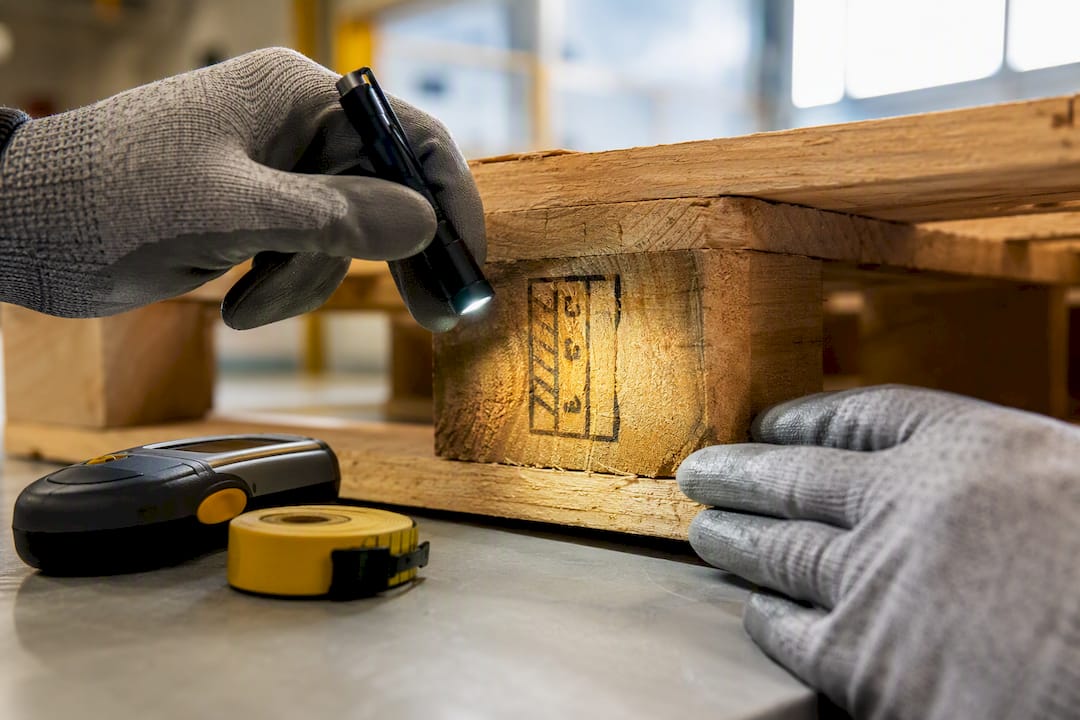
ISPM-15 requires that solid wood packaging used in international trade be heat-treated or fumigated to kill pests hiding in the timber, and every compliant pallet must carry an IPPC certification mark burned or stamped into the wood. That stamp typically shows a country code, a producer number, and a treatment code, most commonly HT for heat treatment or MB for methyl bromide fumigation.
The stakes are real: non-compliant wood packaging risks treatment, disposal, or outright refusal at the border, and the cost of any of those three outcomes falls on the importer, not the shipper who packed the load.
National Plant Protection Organizations (NPPOs) enforce these rules on behalf of the International Plant Protection Convention, and they can order inspection or additional treatment any time a stamp is missing, illegible, or the wood shows signs of infestation. Plywood, oriented strand board, and other processed wood products are generally exempt, since manufacturing already destroys pests. So are plastic pallets.
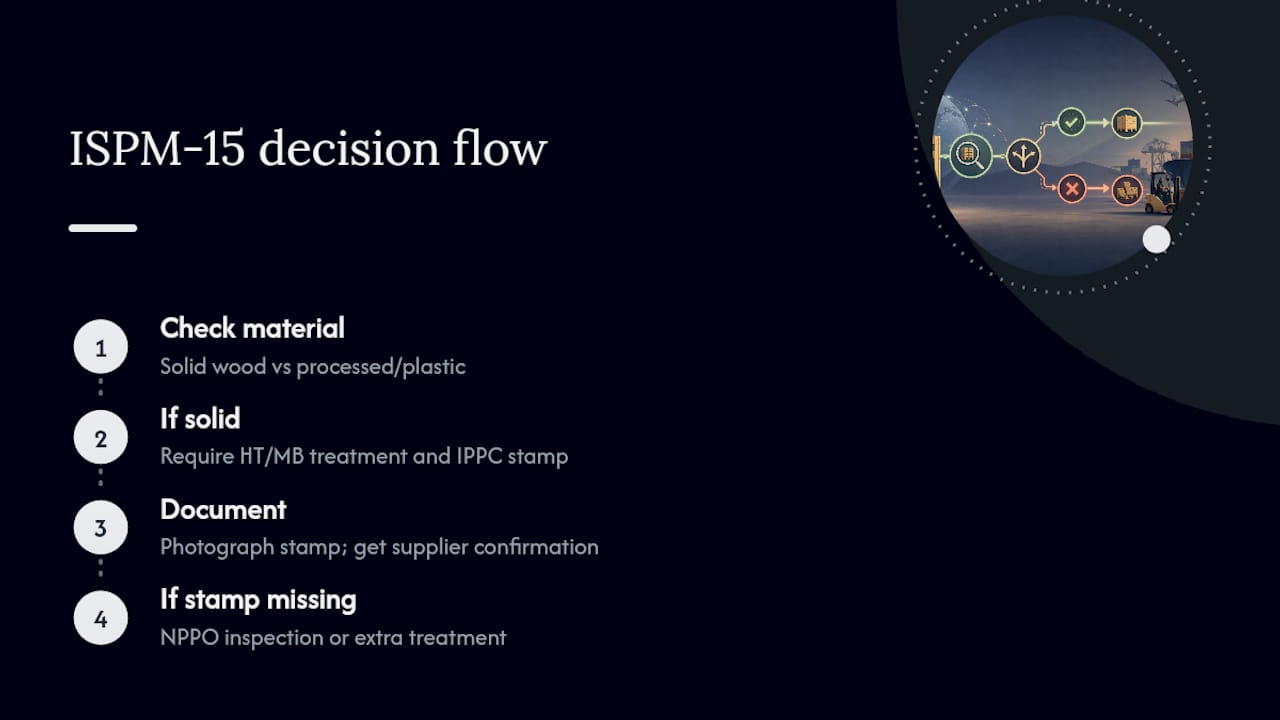
Before you book anything, photograph the IPPC stamp on every wood pallet and get written confirmation from your pallet supplier that the treatment was applied. That single photo becomes your evidence if a customs official questions the load later.
How Do You Prepare and Secure a Pallet Load for International Transit?
Damage claims on international pallet shipments trace back to the same handful of packing mistakes almost every time: overhanging cartons, poor weight distribution, and inadequate wrap. Fixing these takes minutes at the warehouse and saves days at the port.
- Fit cartons to the footprint. No carton should overhang the pallet edge; overhang gets crushed the moment another pallet stacks nearby.
- Load heavy first. Put the heaviest cartons on the bottom layer and keep the center of gravity low and centered.
- Wrap from the base up. Stretch wrap should anchor to the pallet deck itself, not just circle the cartons, and corner boards protect edges from strap cutting and forklift damage.
- Brace and block. Use dunnage to fill gaps so cartons can’t shift during rough ocean transit.
- Add desiccant for ocean moves. Humidity inside a sealed container can soak unprotected cartons over a multi-week voyage.
- Match board grade to stack height. A carton rated for a two-high stack will crush under a five-high load, so confirm the board’s edge crush test rating fits your plan.
- Measure total height. Compare your loaded pallet height against the internal clearance of the container or trailer before you commit to that packing plan.
- Photograph everything. Shoot the finished pallet from all four sides and close up on any ISPM-15 stamp, since documentation of the loaded state is your strongest tool if a claim ever comes up.
Pro Tip: Build one test pallet and physically tilt or push it before you commit to the method for the full shipment. A load that shifts on a warehouse floor will shift far worse on a rolling ocean vessel.
Keep individual carton weight manageable where the product allows, since heavier cartons slow manual handling and increase the odds of a dropped box at transfer points.
What Labels and Documents Do You Need for International Pallet Shipping?
Customs delays rarely come from the shipment itself. They come from paperwork that doesn’t match the cargo, or shipping marks a warehouse worker can’t read fast enough to sort the load correctly.
Every pallet needs shipping marks on at least two sides, including consignee name, purchase order number, carton count (like “3 of 12”), and gross and net weight. This lets receiving staff verify the shipment without opening every box.
- Commercial invoice with accurate item descriptions and values
- Packing list that matches the physical carton count exactly
- Bill of lading (ocean) or air waybill (air freight)
- Export declaration as required by the origin country
- Phytosanitary certificate if the importing country requires one for the goods or the wood packaging
Mismatches between the packing list and physical cartons are one of the most common reasons customs holds a shipment for manual review, and import authorities frequently use the accompanying documents to decide whether wood packaging needs a closer look. For shipments with multiple SKUs or split consignments, a customs broker earns their fee fast by catching documentary errors before they turn into a hold at the port.
What Drives International Pallet Shipping Rates?
Freight is only one line item in what you’ll actually pay. Landed cost bundles freight with terminal handling, inland delivery, customs brokerage, duties, taxes, and any inspection or treatment fees, and a quote that only shows the freight number is showing you a fraction of the real cost.
- Freight mode: Full container load (FCL) typically beats less-than-container-load (LCL) per pallet once you have enough volume to justify it
- Weight basis: Carriers bill on whichever is greater, actual or volumetric weight, so dense, compact pallets cost less to move than bulky, light ones
- Surcharges: Terminal handling, port fees, demurrage, and detention charges apply if cargo sits too long at the port
- Customs costs: Duties, taxes, brokerage fees, and any phytosanitary treatment ordered at the border
The real number to ask for isn’t the freight rate. It’s the full landed-cost estimate, because quoted freight often excludes handling and customs-related charges that show up later as surprise invoices. Push any forwarder for that itemized breakdown before you commit, and treat vague quotes as a red flag rather than a bargain.
Which Transport Mode Fits Your Pallet Shipment?
Ocean freight is the default for heavy palletized cargo because it’s the cheapest way to move weight and volume over long distances. Optimizing container fit and stackability matters more here than almost anywhere else in the process, since wasted cubic space is wasted money.
- Ocean FCL: Best for full container volumes; you pay for the container regardless of how full it is, so consolidate to fill it
- Ocean LCL: Can cost more per pallet than FCL if your volume is too small to justify consolidation savings
- Air freight: Reserved for urgent, small, or high-value pallets; carriers bill on volumetric weight when it exceeds actual weight, so oversized cartons quietly inflate air costs
- Multi-modal: Combines ocean or air with inland trucking; door-to-door service is worth the premium when the receiving location has no direct port or airport access
Match your pallet footprint to the container’s internal layout before you finalize packing. A pallet that’s an inch too wide for efficient stacking can cost you a full extra row of unused space across a 40-foot container.
How Do You Book an International Pallet Shipment Step by Step?
Getting from a stack of cartons to cleared cargo at destination follows a predictable sequence. Skipping steps is what turns a routine shipment into a two-week delay.
- Measure before you quote. Confirm pallet footprint, total height, and gross weight. If your pallet is wood, verify the ISPM-15 stamp now, not after booking.
- Request a landed-cost quote, not just a freight rate. Ask directly whether inspection or treatment fees are likely for your commodity and destination.
- Book the pickup and confirm labeling requirements, documentation deadlines, and the pickup window with your carrier or forwarder.
- Prepare your paperwork early: commercial invoice, packing list, and any phytosanitary certificate the destination requires.
- On pickup day, photograph every pallet. Capture the ISPM-15 stamp clearly, verify labels are legible on two sides, and hand the driver every required document, not just the bill of lading.
- Track the shipment through transit and respond immediately to any customs query. A same-day reply to a documentation request can be the difference between a two-day hold and a two-week one.
- Arrange inland delivery once cleared, or move fast if authorities order treatment or fumigation at the border, since storage fees accrue daily while cargo sits.
Pro Tip: Save every photo and document in one shared folder tied to the shipment reference number before pickup. When a customs question comes in three weeks later, you want that answer in thirty seconds, not thirty minutes of searching email threads.
What Experienced Shippers Get Wrong About Pallet Compliance
Exporters and logistics managers who move palletized freight across borders daily encounter the same small mistakes repeatedly. Nobody photographs the IPPC stamp until a customs officer asks for proof it exists. Packing lists get typed up from memory instead of counted against the actual cartons on the pallet. Someone builds the load on a pallet size the receiving warehouse doesn’t accept, and the whole shipment gets rerouted.
None of these mistakes are complicated to avoid. They just require treating the pre-shipment checklist as mandatory, not optional. A five-minute verification pass before pickup routinely saves a week of delay after the container has already sailed. When the documentation or wood-packaging rules feel unclear for a specific destination, that’s the moment to call a broker instead of guessing.
— Ian
Get Your International Pallet Shipment Quoted and Compliance Checked
Some freight forwarding companies handle parts of international pallet shipping that commonly challenge first-time exporters, such as verifying ISPM-15 compliance before pallets reach the port, managing customs brokerage paperwork that affects clearance times, and coordinating ocean and air freight forwarding door to door.
If you’re preparing a pallet shipment now, request a freight forwarding quote that includes full landed cost, not just the freight line. Ask about a compliance check on your wood packaging before you book pickup, and consider cargo insurance for any shipment where the value at risk outweighs the modest premium. Getting these three pieces confirmed up front is the fastest way to keep a pallet moving instead of sitting in a customs queue.
Sources
- Explanatory document for ISPM 15 (Regulation of wood packaging material in international trade)
- ISPM 15 for Export frequently asked questions – DAFF
- Export Packaging and Palletisation Checklist | CargoLinked
- International Freight Shipping: Costs & Methods Explained – ShipStation
FAQ
How much does it cost to ship a pallet internationally?
Cost depends on freight mode, pallet weight and density, and destination, but the freight rate is only part of the total. Always request a full landed-cost estimate that includes handling, customs brokerage, duties, and any inspection fees rather than relying on a bare freight quote.
What pallets are approved for international shipping?
Heat-treated or fumigated wood pallets bearing a valid IPPC/ISPM-15 stamp are approved in most markets, and plastic or processed wood pallets like plywood are generally exempt from the requirement entirely. Confirm your destination’s specific preference, since some retail distribution centers also reject non-standard footprints regardless of ISPM-15 status.
How much does it cost to freight a pallet?
Freight-only pricing varies by mode, with ocean typically cheapest per pound for heavy pallets and air freight billed on whichever is greater, actual or volumetric weight. Ask your forwarder for the full landed-cost breakdown so surcharges like terminal handling and demurrage don’t show up as surprises later.
Do I need a customs broker for pallet shipments?
You’re not required to use one, but a broker becomes valuable once your shipment involves multiple SKUs, phytosanitary certificates, or a destination with strict wood-packaging enforcement. Worldwide Express offers customs brokerage specifically to manage this documentary complexity before it turns into a hold at the port.
What happens if my wood pallet doesn’t have an ISPM-15 stamp?
Import authorities can order treatment, disposal, or outright refusal of the shipment, with the cost falling on the importer. Photographing the stamp and confirming treatment with your pallet supplier before booking is the simplest way to avoid this entirely.