Remote logistics jobs, in the B2B sense, are outsourced international logistics services: freight forwarding, customs brokerage, warehousing, cargo insurance, and shipment coordination, all handled by a contracted provider instead of an in-house team. The practical payoff for buyers is risk reduction. Verify licenses through the U.S. Customs and Border Protection broker registry and the Federal Maritime Commission before signing, and use a structured vetting checklist rather than a sales pitch to choose a reliable logistics partner.
TL;DR:
- Verifying licenses through CBP and FMC is essential, but demonstrated experience and local agent relationships more accurately predict reliable service.
- Request itemized, door-to-door quotes separating all costs to avoid hidden charges and ensure proper cargo insurance coverage for value gaps.
- For first-time shippers, avoid handling complex regulations alone; reliance on a contracted broker or freight forwarder reduces delays and compliance errors.
- Modern freight management systems with real-time tracking, API integration, and clear escalation contacts are crucial for remote logistics efficiency.
- Building long-term trust relies on explicit communication, tracking visibility, and selecting providers with specialized roles like customs specialists and documentation experts.
Table of Contents
- What Do Remote Logistics Services Actually Deliver?
- When Should You Outsource Instead of Handling Logistics In-House?
- How Do You Vet a Remote Logistics Provider Before Signing?
- What Technology Should a Remote Logistics Partner Provide?
- How Do Logistics Providers Price Contracts, and What Should You Compare?
- A 7-Step Playbook to Start Your Next Remote Logistics Engagement
- What Career Paths Exist Within Remote Logistics Operations?
- What Skills and Certifications Matter Most in This Field?
- What Makes Remote Logistics Work Genuinely Difficult?
- How Do Remote Logistics Roles Differ From Onsite Positions?
- Where Should You Look for Remote Logistics Talent and Opportunities?
- What Do Compensation and Benefits Look Like in This Field?
- A Buyer’s Honest Take on Vetting Logistics Partners
- Ready to Move Your Next Shipment With a Vetted Partner?
- Sources
What Do Remote Logistics Services Actually Deliver?
The phrase covers several distinct jobs, and confusing them costs buyers money. A freight forwarder arranges transport, booking, consolidation, and tracking across ocean, air, and ground legs. A customs broker handles clearance, tariff classification, and duty payment at the border. Third-party logistics (3PL) providers store and manage inventory in bonded or general warehouses. Many companies now offer more than one of these under a single contract, since forwarders and brokers perform complementary roles and combining them cuts the number of vendors a shipper has to manage.
Each service produces a specific outcome:
- A freight forwarder turns a dock pickup into a door delivery by coordinating every carrier handoff along the route.
- A customs broker secures clearance and prevents a container from sitting in bond while paperwork gets sorted out.
- A 3PL warehouse holds inventory close to demand and handles pick, pack, and last-mile fulfillment.
- Cargo insurance covers commercial loss that carrier liability limits don’t touch.
- Trucking coordination manages the first and last mile that ocean and air legs can’t reach.
Bonded warehousing deserves a specific mention: it lets importers defer duty payment until goods leave the facility, which matters for anyone holding inventory before final sale. Consolidation services matter just as much for smaller shippers, since combining partial loads with other cargo often beats paying for a full container you don’t need.
When Should You Outsource Instead of Handling Logistics In-House?
Certain signals point clearly toward hiring a remote logistics provider rather than building internal capacity. Watch for these triggers:
- This is your first international shipment. Classification errors and missing documentation cause most first-time delays.
- You’re coordinating multiple countries or transport modes on one order. Complexity compounds fast once air, ocean, and trucking legs intersect.
- You’re shipping regulated goods such as food, electronics with battery components, or anything requiring an import license.
- Your annual freight spend is significant enough to benefit from contracted rates and dedicated account teams. At that volume, a contracted rate and dedicated account team typically beat ad hoc bookings.
- Nobody on staff understands tariff classification or Incoterms. Guessing here is expensive.
Skipping this step rarely saves money. A misclassified HS code can trigger a CBP audit, a missing certificate can block cargo at the port, and demurrage charges accumulate daily once a container sits past its free days. Customs brokers increasingly act as compliance advisors, not just paperwork processors, and that advisory role is exactly what prevents these mistakes before they happen. Map your need to a service type before you request quotes: compliance gaps call for a broker, volume gaps call for a forwarder, storage gaps call for a 3PL.
How Do You Vet a Remote Logistics Provider Before Signing?
Verifying a provider on paper takes less time than fixing a bad contract after the fact. Start with licenses, since this is the fastest way to eliminate unqualified vendors.
- Check the CBP customs broker license. There are roughly 11,000 active licensed customs brokers in the United States, and CBP maintains the registry you can search directly.
- Confirm the OTI license for ocean intermediaries. Any U.S.-based ocean freight forwarder needs an Ocean Transportation Intermediary license from the Federal Maritime Commission, and the FMC publishes bond and license status publicly.
- Ask about IATA or airline accreditation if you need air freight, since agents without it can’t book cargo directly with carriers.
- Request AEO status where relevant, particularly for EU-bound shipments where Authorized Economic Operator certification speeds clearance.
Licenses only confirm eligibility, not competence. Ask for documented experience on your specific lane and commodity, and get the name of the destination agent who will actually handle your cargo on arrival. A provider with strong reach in Rotterdam means little if your shipment lands in Ho Chi Minh City and nobody local has handled your product category before. Request an itemized door-to-door quote that separates origin haulage, freight, customs fees, and delivery, along with written trading conditions spelling out liability limits and cargo insurance options.
Red flags are usually easy to spot once you know what to look for: no verifiable license number, an agent chain the provider won’t name, a lump-sum quote with no line items, or a request for unusual payment terms like wire transfers to a personal account.
Pro Tip: Ask every prospective provider one direct question: “Who is your named agent at destination, and how long have they handled this commodity on this lane?” A confident, specific answer tells you more than any glossy capabilities deck.
What Technology Should a Remote Logistics Partner Provide?
Digital visibility separates providers who manage exceptions from providers who cause them. A modern freight management system should give you a single shipment record combining documents, milestones, and exception alerts in one place, rather than scattered emails and PDFs. Freight forwarders increasingly run operations through cloud-based platforms with live carrier integration and automated document processing, which is now a real differentiator between providers rather than a nice-to-have.
Insist on these capabilities before signing:
- Tracking API or portal access, so your team can check status without calling or emailing.
- Defined SLAs for updates and escalation, specifying who gets notified and how fast when a shipment goes off-plan.
- ERP, EDI, or API integration options, so shipment data flows into your existing systems instead of requiring manual entry.
- A named escalation contact for each handoff point, particularly on complex multi-leg routes.
Requiring portal access during contract negotiation, rather than treating it as an afterthought, cuts administrative overhead measurably. It also gives you a paper trail if a dispute over timing or condition arises later.
How Do Logistics Providers Price Contracts, and What Should You Compare?
Providers price engagements four common ways: per-shipment all-in rates, cost-plus pricing, monthly retainers, or fixed project fees for defined programs. None is inherently better. Per-shipment pricing suits occasional shippers; retainers suit companies moving freight weekly and wanting rate stability.
What matters more than the pricing model is what’s inside the quote. A complete itemized quote should separate:
- Origin haulage and export documentation fees
- Ocean or air freight charges
- Terminal handling and customs clearance fees
- Final delivery and any fuel or peak-season surcharges
Industry guidance consistently recommends requesting itemized, door-to-door quotes in writing specifically to avoid hidden charges that surface after the shipment is already moving.
One point buyers underestimate: standard trading conditions used across the industry often cap forwarder liability at low per-kilogram rates, far below the actual commercial value of most cargo. That gap is exactly what separate cargo insurance, such as Institute Cargo Clauses A, B, or C, is designed to close. Negotiate free days and demurrage liability explicitly in the contract, since these terms rarely get discussed until a container is already sitting in the yard.
A 7-Step Playbook to Start Your Next Remote Logistics Engagement
Getting a shipment moving through a new provider doesn’t need to take weeks. Follow this sequence:
- Prepare your paperwork first: HS codes, commercial invoice, packing list, and agreed Incoterms.
- Request three itemized quotes for the same lane and commodity, so you’re comparing equivalent scope.
- Verify licenses and the named destination agent before signing anything.
- Put cargo insurance and trading conditions in writing, not as a verbal assurance.
- Set up tracking access and confirm escalation contacts on both sides.
- Schedule a pre-shipment confirmation call to walk through the full route and timeline.
- Record free days and demurrage terms directly in the signed contract.
Each step takes minutes, and skipping any one of them is usually where costly disputes start later.
What Career Paths Exist Within Remote Logistics Operations?
Companies staffing remote logistics engagements typically build out a handful of distinct roles rather than one generic job. A remote freight coordinator manages day-to-day shipment bookings, carrier communication, and document collection across time zones. A customs compliance specialist focuses on classification accuracy, duty calculation, and regulatory filings, often working closely with a licensed broker without holding the license personally. A remote supply chain analyst tracks performance data across lanes, flags cost or delay patterns, and feeds that intelligence back into vendor negotiations.
Larger providers also staff account managers who own the client relationship end to end, and documentation specialists who handle the commercial invoices, certificates of origin, and packing lists that customs authorities require. On the technology side, tracking and systems coordinators maintain the portal and API integrations that keep shipment data flowing to clients in real time.
For buyers evaluating a provider, understanding this role breakdown matters because it reveals how a team actually operates. A provider staffed with a single generalist handling everything from booking to compliance to tracking is a different risk profile than one with specialized roles and clear handoffs. Ask who owns customs filings versus who owns carrier booking. If the answer is “the same person for everything,” that’s worth factoring into your risk assessment, especially on complex or regulated lanes.

What Skills and Certifications Matter Most in This Field?
Competence in remote logistics work rests on a mix of formal credentials and practical judgment that’s harder to certify but just as important. On the credential side, a Certified Customs Specialist (CCS) designation or formal customs broker licensing signals verified knowledge of classification and compliance rules. Familiarity with Incoterms 2020 is close to a baseline requirement, since misreading a shipping term shifts risk and cost in ways that surprise buyers after the fact.
Practical skills matter just as much. Strong candidates and providers alike need fluency in HS code classification, comfort reading a bill of lading and commercial invoice without hand-holding, and working knowledge of the freight management systems and tracking platforms that now run most shipment workflows. Communication discipline is underrated here: a coordinator managing shipments across three time zones needs to write clear, complete updates the first time, since back-and forth clarification adds days to already tight windows.
For buyers, the certifications matter less than the evidence behind them. A team can hold every credential on paper and still lack lane-specific experience that only comes from having moved that exact commodity through that exact port before. Ask for both: verified licensing and a specific track record, not one in place of the other.
What Makes Remote Logistics Work Genuinely Difficult?
Time zone friction is the most obvious challenge, and it shows up in ways buyers don’t always anticipate. A shipment exception that occurs at 2 a.m. in one time zone might not get flagged until the next business day somewhere else, and that lag compounds when a decision needs sign-off from more than one party. The best remote teams solve this with defined escalation windows and named backup contacts, not just goodwill.
Managing vendor relationships remotely carries its own friction. Without in-person visits to a warehouse or port agent’s office, trust has to be built through consistent documentation, verifiable licensing, and a track record of accurate updates rather than face time. That’s exactly why naming a specific destination agent up front, and checking their track record on your commodity, matters more in a remote relationship than it would if you could simply walk the dock yourself.
Best practices that consistently reduce friction: agree on communication cadence and escalation triggers in writing before the first shipment moves, not after a problem occurs. Require shared visibility through a tracking portal so both sides are looking at the same data instead of reconciling conflicting updates over email. And treat every handoff point, carrier to customs, customs to trucker, as a place where ownership needs to be explicit rather than assumed.
How Do Remote Logistics Roles Differ From Onsite Positions?
The core difference isn’t the work itself, since classification, booking, and compliance tasks are largely identical whether someone sits in a warehouse office or works from home. The difference is how coordination happens. Onsite logistics roles rely on walking over to a colleague’s desk or physically inspecting a shipment on the dock. Remote roles depend entirely on documentation quality, system access, and written communication carrying the full weight of what used to happen informally in person.
This has a real operational consequence for buyers: a remote-first logistics provider that hasn’t built strong digital workflows will feel the gap immediately, showing up as slower exception handling and more emails asking for information that should already be visible in a shared system. Conversely, a provider built around a strong freight management platform and portal access often performs just as well, or better, than a traditional office-based team, because the coordination burden shifts from hallway conversations to a system everyone can see.
For hiring managers building internal remote logistics teams, this also changes onboarding. New hires need faster access to systems and clearer written protocols from day one, since there’s no senior coordinator sitting three feet away to answer a quick question. Providers and internal teams that treat documentation as a first-class deliverable, not an afterthought, tend to handle the remote transition with far fewer growing pains.
Where Should You Look for Remote Logistics Talent and Opportunities?
Specialized job boards focused on supply chain and logistics tend to surface more relevant remote postings than general job sites, simply because the postings are pre-filtered for industry-specific terms like customs compliance, freight coordination, and 3PL management. General remote-work platforms are worth checking too, but expect to filter through a much larger volume of unrelated listings.
LinkedIn remains one of the most effective channels specifically because logistics hiring managers frequently post directly and use industry groups to source candidates with verified experience. Following freight forwarders, customs brokerages, and 3PL providers directly on LinkedIn often surfaces openings before they appear on aggregator sites.
For companies staffing these roles rather than searching for them, the calculus is different: building a remote logistics team internally means investing in the same systems and documentation discipline described above, while contracting an established provider means inheriting an already-built team and infrastructure. Companies with irregular or lower shipment volume typically find the second path far more cost-effective than building and retaining specialized staff for work that doesn’t happen every week.
What Do Compensation and Benefits Look Like in This Field?
Compensation for remote logistics roles varies widely based on specialization, licensing, and seniority, with licensed customs brokers and experienced supply chain analysts commanding meaningfully higher pay than entry-level coordination roles. Roles requiring an active broker license or specialized certifications like CCS tend to sit at the higher end of the range, reflecting both the regulatory responsibility involved and the smaller pool of qualified candidates.
Benefits packages for remote logistics positions generally mirror standard remote-work benefits: health coverage, retirement contributions, and paid time off, with the notable addition that many employers offer stipends for home office equipment and software given how system-dependent the work is. Some companies also tie performance bonuses to on-time delivery rates or accuracy metrics, since those numbers are directly measurable in a remote logistics workflow where every action gets logged in a tracking system.
For buyers rather than job seekers, compensation trends matter indirectly: providers that pay competitively for licensed and experienced staff tend to retain that expertise longer, and staff turnover on your account is one of the quieter reasons shipments start slipping through the cracks. When vetting a provider, it’s reasonable to ask how long your assigned account contact has been with the company. A revolving door of contacts is often a symptom of exactly the compensation and retention pressures playing out behind the scenes.

A Buyer’s Honest Take on Vetting Logistics Partners
Most buyers over-index on price and under-index on named accountability. A quote that looks 10% cheaper means nothing if nobody can tell you who handles your cargo once it lands overseas. The single habit that separates a smooth engagement from a stressful one is insisting on a named destination agent with a documented history on your specific commodity and lane, not just a general claim of “global coverage.”
Licenses matter, but they’re a floor, not a differentiator; nearly every legitimate provider clears that bar. What actually predicts performance is how a provider handles the moment something goes wrong; a delayed vessel, a customs hold, a damaged pallet. Keep a backup forwarder relationship warm even when your primary partner is performing well, and always hold your own copies of commercial invoices, bills of lading, and certificates of origin. Providers that offer tracking visibility and customs expertise reduce the guesswork, but no system replaces the discipline of verifying who’s accountable at each step.
— Ian
Ready to Move Your Next Shipment With a Vetted Partner?
Some logistics providers cover the services this guide walks through: international freight forwarding, customs brokerage, air and ocean transportation, trucking, warehousing, cargo insurance, and tracking tools that keep shipments visible from booking to delivery. Instead of piecing together separate vendors for each service and hoping the handoffs go smoothly, you get one accountable partner managing the full route.
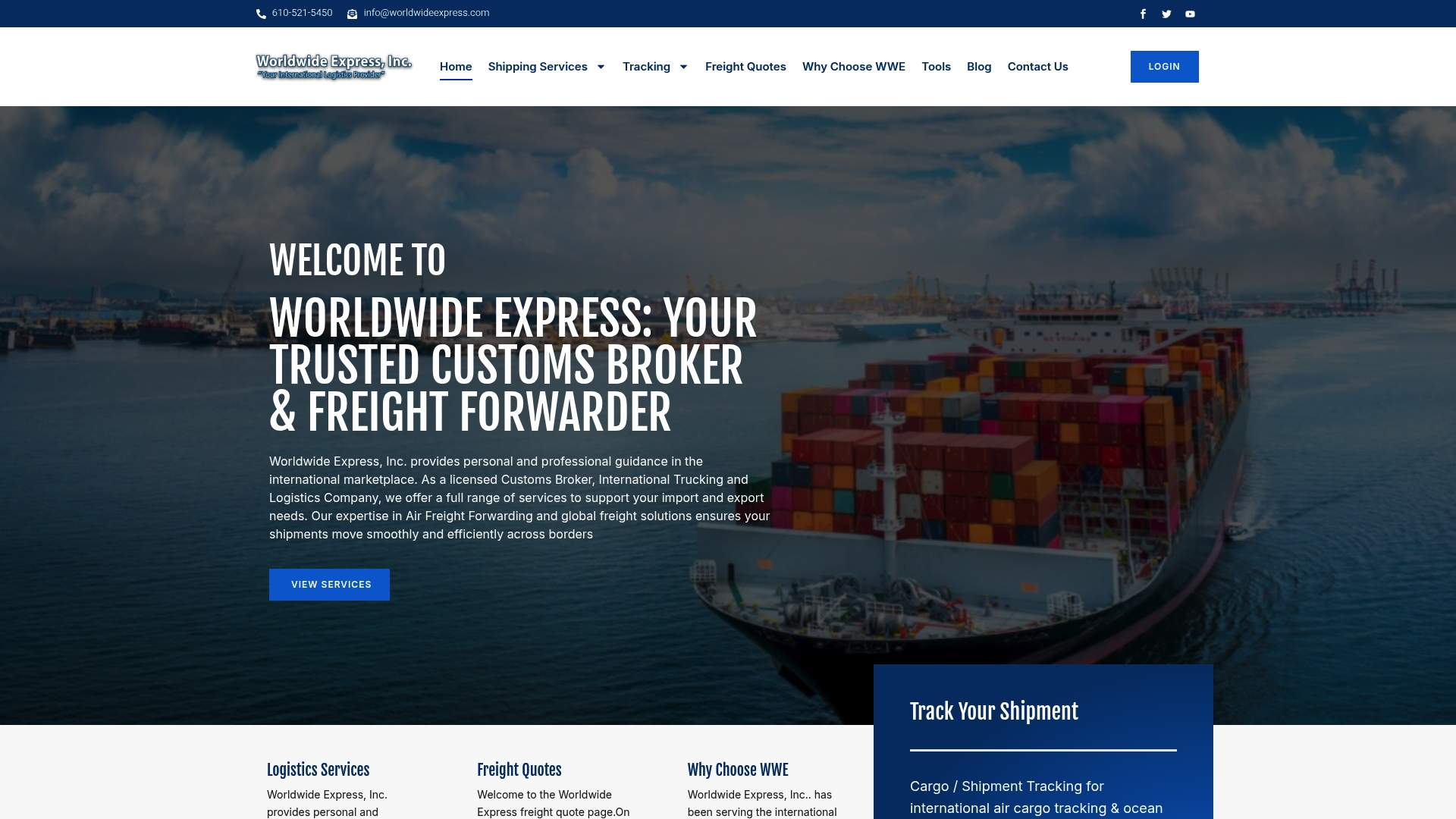
Three ways to start: request an itemized freight quote for your specific lane and commodity, ask directly about lane references and named destination agents for your target country, or schedule a walkthrough of the tracking and portal tools before committing to a contract. If customs clearance is your immediate bottleneck, the customs brokerage services page outlines what’s included. Whichever entry point fits your situation, get the full range of logistics services in front of your team and compare it against the vetting checklist above.
Sources
- Becoming a customs broker | U.S. Customs and Border Protection
- Apply for a license or request a foreign registration | Federal Maritime Commission
- Trade
- FIATA model forwarders’ standard trading conditions (FFS) 2019