A digital freight marketplace, for importers and exporters, is a managed, digital-first freight forwarding service that provides instant quoting, integrated customs brokerage, and end-to-end shipment visibility. It replaces email chains and spreadsheet quotes with a connected platform for booking, documentation, and tracking. This guide covers what to expect from one, how to evaluate a provider, and what onboarding actually looks like.
TL;DR:
- Managed digital freight platforms integrate rate management, booking, customs, and tracking into a single system, with full carrier and customs expertise.
- Relevant for shippers handling multiple lanes, recurring customs filings, and needing audit-ready documentation, especially mid-market importers and exporters.
- Key capabilities include real-time tracking, automated documentation, system integration, and freight audit, significantly reducing quote turnaround and manual work.
- Choosing the right provider involves verifying API support, customs expertise, modal coverage, clear SLAs, and secure data handling through a detailed RFP process.
- Proper onboarding requires clean data, confirmed integrations, aligned routing, current customs documentation, and starting with pilot lanes to avoid disruptions.
Table of Contents
- What Is a Digital Freight Marketplace?
- Core Capabilities to Expect From a Managed Platform
- Business Benefits and Measurable Outcomes for Shippers
- How Do You Choose the Right Managed Digital Forwarder?
- Implementation Checklist: Onboarding Without the Pain
- Why Shippers Should Rethink Freight as a Strategic Function
- How Worldwideexpress Delivers a Managed Digital Freight Solution
- Sources
What Is a Digital Freight Marketplace?
A digital freight marketplace, in the sense that matters for importers and exporters running real supply chains, is a managed freight forwarding operation delivered through a cloud platform. It combines rate management, booking, customs brokerage, cargo insurance, and shipment tracking into one system, backed by a forwarder’s licensed staff and carrier network. The forwarder still negotiates contracts, files customs entries, and manages exceptions. The platform just makes that work visible and fast.
This is a different animal from a carrier spot-exchange app where shippers post loads and bid against strangers. Full-service digital forwarding keeps a dedicated team accountable for your freight, with technology layered on top rather than replacing the relationship.
Companies that benefit most typically ship multiple ocean or air lanes monthly, deal with recurring customs filings, and need audit-ready documentation. That covers mid-market importers moving containers from overseas suppliers, exporters coordinating multi-modal shipments, and logistics managers juggling several carrier relationships at once.
Core Capabilities to Expect From a Managed Platform
A serious digital freight forwarder covers seven functional areas well. Miss any one, and you inherit manual work somewhere in the chain.
- Rate management and instant quoting that blends negotiated contract pricing with live spot rates, so you see real numbers instead of placeholder estimates.
- Booking and carrier orchestration across ocean, air, and truck from a single interface, instead of juggling separate carrier portals.
- Automated documentation and customs filing, where bills of lading, commercial invoices, and entry data auto-populate from booking data.
- Real-time tracking and milestone alerts, flagging delays before they become demurrage charges.
- TMS, ERP, and WMS integration through APIs or EDI, so shipment data flows into your existing systems without re-keying.
- Freight audit, invoice reconciliation, and cargo insurance handled as part of the service, not billed separately after the fact.
- Branded self-service portals where your team can pull reports and shipment status without calling anyone.
Digital forwarders that run quoting, booking, documentation, tracking, customs filing, and accounting on one cloud platform cut quote turnaround from hours to minutes and often double shipment capacity without adding headcount.
Pro Tip: Ask any prospective forwarder to show you their tracking dashboard live, with a real shipment in transit, before you sign anything. A polished sales deck means nothing if the actual interface is clunky.
Business Benefits and Measurable Outcomes for Shippers
The case for managed digital forwarding comes down to five outcomes that show up on a P&L.
Quote turnaround drops from hours to minutes, and your team handles more shipments without adding staff. Documentation errors fall because data auto-populates instead of getting retyped at every handoff, which lowers your exposure to demurrage and detention fees. Multi-carrier rating combined with freight audit gives you real cost control. Formal freight auditing alone recovers 2 to 3 percent of freight spend in billing errors that most shippers never catch on their own.
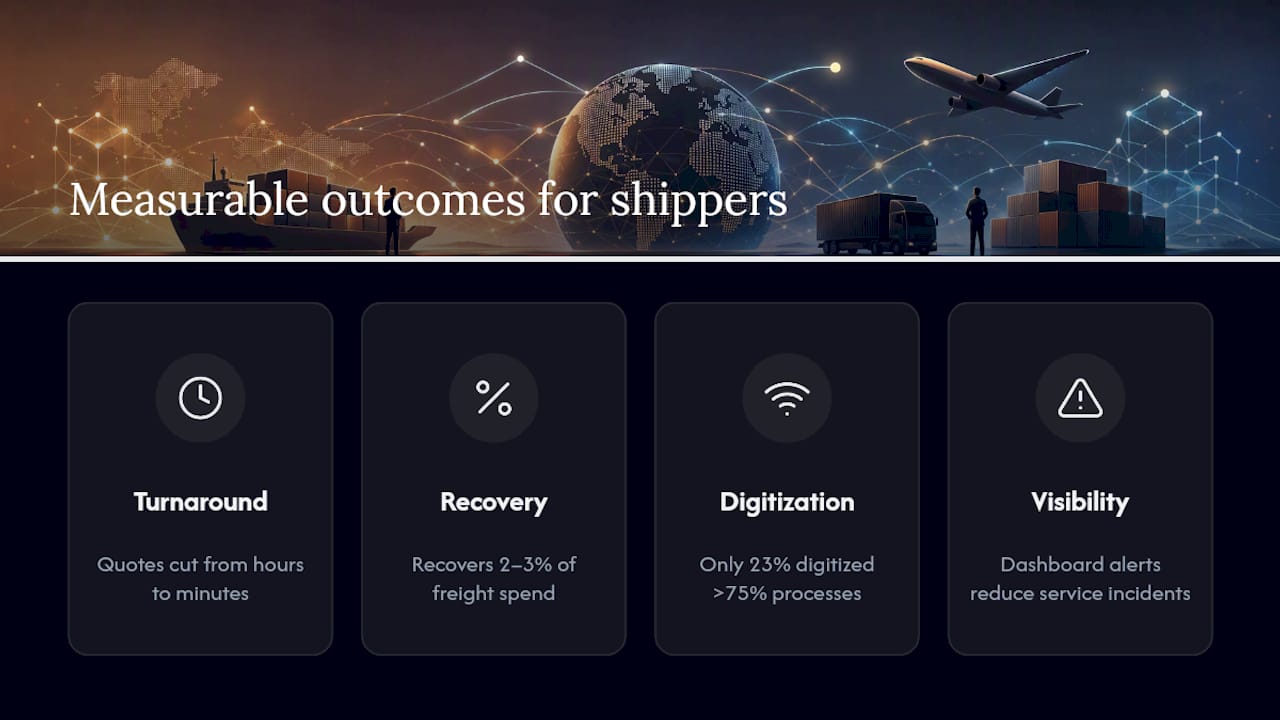
Visibility and exception management also drive fewer customer service incidents. When a shipment is running late, you find out from a dashboard alert, not from an angry call. That difference compounds across a year of shipments.
Shippers overwhelmingly want real-time tracking, integration, and automated documentation from their forwarders, yet only about 23 percent of forwarders have digitized more than three-quarters of their processes. That gap is exactly where a managed digital platform earns its cost.
How Do You Choose the Right Managed Digital Forwarder?
Evaluating forwarders means testing claims against data, not brochures. Build your RFP around these criteria.
- Technology stack. Confirm the platform has documented APIs for your TMS, ERP, or WMS, not just a promise of “integration support.”
- Customs expertise. Ask how many licensed customs brokers are on staff and which trade lanes they file for regularly.
- Modal coverage. Verify the forwarder handles ocean, air, and trucking directly rather than subcontracting one mode with no visibility.
- SLAs and KPIs. Require written service levels for quote turnaround, on-time-in-full performance, and invoice accuracy.
- Billing and audit. Ask whether freight audit is included or billed as an add-on, and how discrepancies get resolved.
- Data security. Confirm how shipment and customer data are stored and who has access.
Request a lane-history export and a sample RFP data package before the demo, so the forwarder can quote against your actual freight instead of a generic scenario. During the demo, push on four things: integration timeline, exception-handling workflow, how carrier contracts are structured, and how settlement and invoicing actually work month to month.
Pro Tip: Require the forwarder to commit to a numeric SLA in writing, such as same-day quotes or 98 percent invoice accuracy, before you sign. Verbal promises about “fast service” evaporate the first time something goes wrong.
Managed transportation programs that own carrier procurement, daily execution, and reporting end to end tend to work best for shippers with frequent, multi-lane freight, so weight your evaluation toward providers built for that volume.
Implementation Checklist: Onboarding Without the Pain
Most onboarding problems trace back to the same handful of gaps. Cover these before your first shipment moves.
- Clean up product, vendor, and lane data before migration, since bad data breaks automation immediately.
- Map every integration point (TMS, ERP, WMS) and confirm test transactions before go-live.
- Align your routing guide with the new forwarder’s carrier network so nothing falls through the cracks.
- Confirm customs paperwork, licenses, and bonds are current for every active lane.
- Start with two or three pilot lanes before scaling across your full network.
Common pitfalls include incomplete SKU or vendor data, vague SLA language that nobody enforces, weak internal change management, and customs documentation gaps discovered mid-shipment instead of during setup. For your first 60 to 90 days, focus on getting pilot lanes stable, validating invoice accuracy against your audit criteria, and only then expanding volume.
Why Shippers Should Rethink Freight as a Strategic Function
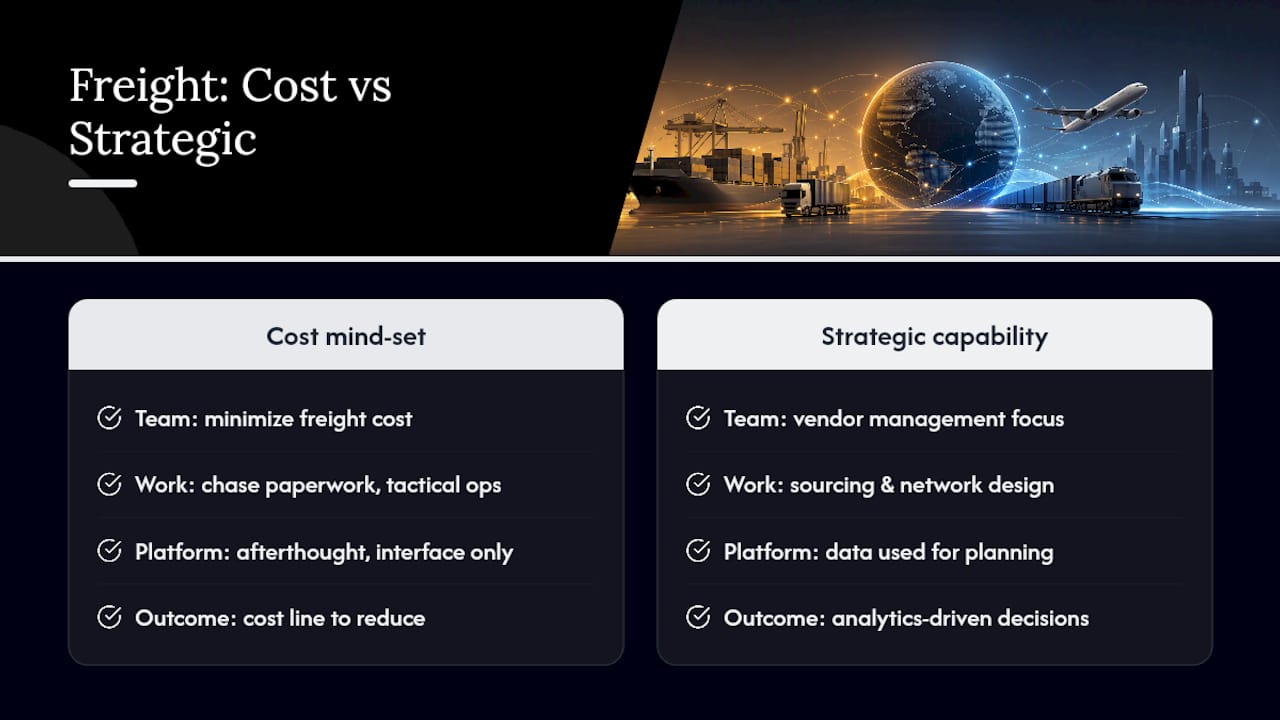
Too many companies still treat freight forwarding as a cost line to minimize rather than a capability to manage well. That framing misses what managed digital services actually change: they free your internal team from chasing paperwork and let them focus on vendor management, sourcing decisions, and network design instead.
Supply-chain managed services that pair automation with procurement analytics and control towers push logistics from tactical execution toward strategic decision-making. That shift is the real payoff, not the software interface. The data a good platform generates, on-time performance, audit recoveries, lane-level cost trends, becomes a planning tool rather than an afterthought.
— Ian
How Worldwideexpress Delivers a Managed Digital Freight Solution
Worldwideexpress runs freight forwarding the way this guide describes it: one accountable team, backed by digital tools that actually work when you log in. Customs brokerage, ocean and air transportation, trucking, warehousing, and cargo insurance run through a connected platform with TMS and system connectivity built in, so your data moves with your freight instead of trailing behind it.
Global tracking keeps every shipment visible from origin to delivery, and dedicated brokers handle the customs filings and documentation that trip up smaller operations. If you are comparing providers using the checklist above, put Worldwideexpress’s logistics services against whatever else is on your shortlist. When you are ready to see real numbers against your own lanes, request a freight quote and get a response built around your actual shipment data, not a generic rate sheet.
Sources
External research: Magaya, GoFreight, ShipTLI, Accenture. See also Worldwideexpress’s customs brokerage and shipment tracking guide.