An IEC-linked shipping bill is the customs document tied to your Import Export Code that records what you exported, its value, and its clearance history. You check its status on two official systems: ICEGATE for real-time customs data (Let Export Order, EGM, drawback flags) and DGFT for the IEC-wise summary. Search either by IEC or shipping bill number for the fastest answer.
TL;DR:
- Most shipping bill validation errors, like SB001 and SB105, stem from mismatched invoice details or incorrect reference entries, requiring precise corrections to resolve.
- ICEGATE provides real-time customs clearance status, while DGFT offers policy and incentive tracking, with delays sometimes occurring between their updates.
- Exporters should regularly reconcile shipping bills with invoices and bank remittance data monthly to catch discrepancies early and maintain compliance.
- Filings depend on proper preconditions, such as active IEC, linked AD code, and matching HS codes and GST figures, to avoid validation rejections.
- Using a customs broker can streamline complex submissions and error corrections, especially when handling high volumes or active incentive claims.
Table of Contents
- How to Check Shipping Bill Status on ICEGATE
- When Should You Check DGFT Instead of ICEGATE?
- What Documents and Preconditions Does Filing Require?
- Why Do ICEGATE Shipping Bill Validations Fail?
- How Should Exporters Reconcile Shipping Bills Each Month?
- When Does an Exporter Need a Customs Broker for Shipping Bill Filing?
- A Practical Weekly Routine for Managing Shipping Bills
- Get Filing and Tracking Support From Worldwideexpress
- Sources
How to Check Shipping Bill Status on ICEGATE
Every exporter runs into the same moment: the goods are packed, the buyer is asking for the export copy, and nobody can confirm whether Customs actually cleared the shipment. ICEGATE is where that question gets answered, and the enquiry module is more capable than most first-time users realize.
Here’s the sequence that actually works:
- Log in to ICEGATE and open the Shipping Bill enquiry service under the enquiry tab.
- Choose your search method: SB number plus SB date for a single consignment, or the IEC-wise summary to pull every shipping bill filed under your code.
- Enter the port/location code precisely. A mismatched location code is one of the most common reasons a search returns nothing even when the shipping bill exists.
- Review the returned record for Job Number, Let Export Order (LEO) date, Export General Manifest (EGM) status, and drawback or RoSCTL flags.
- Download or print the shipping bill copy, the examination report if one was generated, and the LEO acknowledgment.
Each field tells you something different. LEO issued means Customs has cleared the goods for loading. No EGM entry yet usually just means the carrier hasn’t filed its manifest, not that anything is wrong. Drawback or RoDTEP flags marked “yes” confirm the shipment is queued for the incentive claim, which matters when your finance team is reconciling receivables.
Before you search at all, confirm three things: your IEC is active, your AD code is registered with the filing port, and you’re using the correct port code for that shipping bill. Get any of those wrong and ICEGATE will simply show no results, which looks identical to a filing error even when it isn’t. For a fuller walkthrough with screenshots, There is a step-by-step ICEGATE tracking guide worth bookmarking.
Pro Tip: Save every LEO acknowledgment the moment it’s issued. Banks and DGFT incentive desks sometimes ask for it months later, and re-pulling old records from ICEGATE takes far longer than filing it away now.
When Should You Check DGFT Instead of ICEGATE?
ICEGATE is the system of record for customs clearance events. DGFT’s IEC-wise view shows a different slice of the same picture: shipping bills received from Customs, organized by IEC, along with DEL (deleted) status flags relevant to policy and incentive tracking.
The two don’t always update in lockstep. A few gaps to expect:
- ICEGATE may show LEO issued while DGFT’s IEC-wise list still hasn’t picked up the record. That’s a timing lag, not an error, and it usually resolves within a day or two.
- DGFT showing DEL status against a shipping bill that ICEGATE shows as active generally signals a data correction on the Customs side. Don’t treat it as a rejection.
- If a shipping bill is missing entirely from DGFT weeks after LEO, that’s worth escalating rather than waiting out.
Check ICEGATE first for anything operational. Check DGFT when you’re preparing a RoDTEP, drawback, or scheme-related claim, since that’s the record DGFT actually references.
What Documents and Preconditions Does Filing Require?
A shipping bill only clears validation if the groundwork is in place before you submit it. Customs runs automated checks the moment your Customs House Agent (CHA) transmits the EDI file, and missing preconditions are the single biggest reason filings bounce back.
Five shipping bill types cover almost every scenario:
- White (free) shipping bill for goods exported without duty drawback or incentive claims.
- Yellow (dutiable) shipping bill where export duty applies.
- Green (drawback) shipping bill for consignments claiming duty drawback.
- Pink (ex-bond) shipping bill for goods cleared from a bonded warehouse.
- Coastal shipping bill for cargo moving between Indian ports rather than overseas.
Before filing, confirm your IEC is active, your AD code is linked to the export port, your bank account details match your export documents, and your HS code and GST invoice figures align exactly. Mismatches between the GST invoice and the shipping bill value trigger holds almost every time.
Documents to upload through e-Sanchit include the commercial invoice, packing list, any export license or AR4 where applicable, and certificates specific to your product category. Once your CHA transmits the EDI file, the ICES message structure requires at least one invoice segment plus item, packing list, and container details before the system will even generate a shipping bill number. From there, the flow runs checklist confirmation, LEO, then EGM filing by the carrier.
Why Do ICEGATE Shipping Bill Validations Fail?
Two error codes account for a disproportionate share of exporter complaints. Knowing what triggers each one saves a full day of back and forth with your CHA.
- SB001 appears when the invoice transmitted from the GST system doesn’t match the shipping bill’s invoice combination. Fix it by correcting the invoice number or value on the GST portal, then re-transmitting so ICEGATE can match the records.
- SB105 signals an invalid shipping bill number, usually from a typo or a format mismatch in the reference field. Re-check the SB number against the ICEGATE acknowledgment and resubmit with the corrected value.
- For anything tied to a document rejection, re-upload the corrected file through e-Sanchit rather than trying to amend the original submission.
If the error persists after two correction attempts, escalate to your CHA first, then the port’s EDI helpdesk if the CHA can’t resolve it. ICEGATE’s help and enquiry desk publishes the full error-code list and is worth checking before assuming the problem is unique to your shipment.
Pro Tip: Most SB001 errors trace back to a GST invoice that was edited after the shipping bill was drafted. Lock your invoice before your CHA starts the EDI filing, not after.
How Should Exporters Reconcile Shipping Bills Each Month?
Running a monthly reconciliation against the ICEGATE IEC-wise summary is faster than chasing individual shipping bills, and it catches mismatches while they’re still easy to fix rather than months later during a drawback audit.
- Match every shipping bill number against its invoice and bank remittance to confirm export realization is on track.
- Verify HS codes stayed consistent across invoice, packing list, and shipping bill, since classification drift is a frequent cause of value queries.
- Keep signed shipping bill copies and examination reports on file. They’re the backup documentation incentive and audit desks ask for first.
- Note that drawback and IGST refund timelines run separately from bank realization tracking, so don’t assume one clearing means the other has too.
Consistent HS code use also protects you against a slower, quieter problem: repeated manual review flags from Customs’ risk engine. A guide to HS code accuracy covers how classification errors compound across shipments.
When Does an Exporter Need a Customs Broker for Shipping Bill Filing?
Complex consignments, repeated SB001 or SB105 errors, or active drawback and RoDTEP claims are the usual triggers for bringing in a broker. Customs brokerage, EDI and ICEGATE filing, e-Sanchit uploads, and LEO/EGM coordination, plus IEC and shipping bill reconciliation can support exporters juggling high shipment volumes.
A Practical Weekly Routine for Managing Shipping Bills

Run the ICEGATE IEC-wise summary weekly, not just at month end. Reconcile every open shipping bill against its invoice, confirm your AD code still matches the filing port, and flag any validation code the moment it appears rather than waiting for your CHA to mention it.
The habit that separates smooth exporters from the ones perpetually chasing Customs is timing. Catching an SB001 error the day it’s issued costs ten minutes. Catching it three weeks later, after the invoice has been amended twice more, costs an afternoon and a testy phone call with your CHA.
— Ian
Get Filing and Tracking Support From Worldwideexpress
Chasing down a stuck shipping bill or decoding an SB105 error eats hours you don’t have during a shipment cycle. Worldwideexpress handles the customs brokerage side directly, from EDI transmission and e-Sanchit uploads to LEO and EGM coordination, so validation errors get caught and fixed before they stall your cargo.
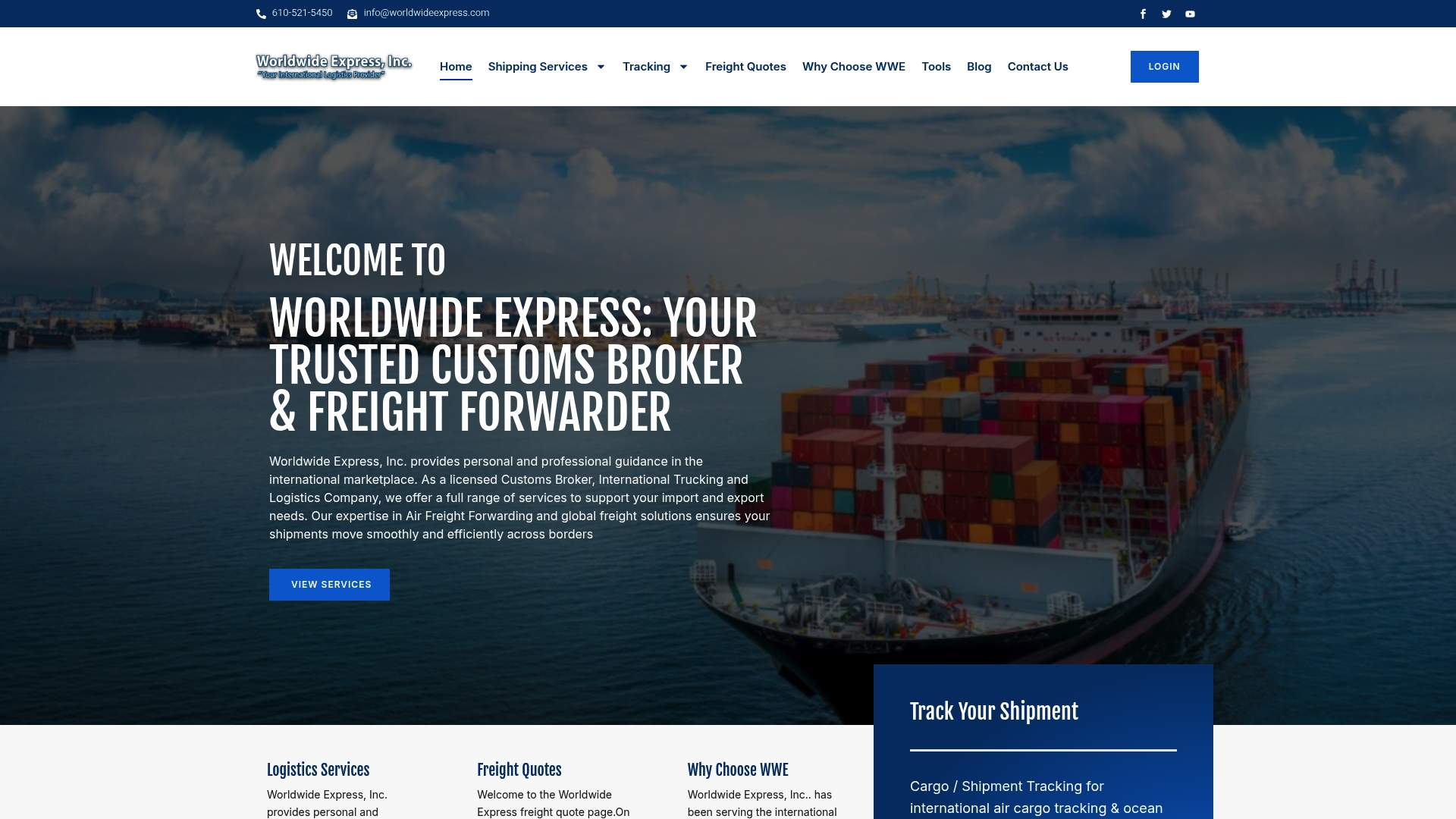
That means fewer late-night calls to your CHA and fewer shipments sitting in limbo over a mismatched invoice field. Worldwideexpress’s logistics services cover the full customs clearance workflow for exporters who’d rather have a broker managing ICEGATE filings than doing it themselves between other deadlines. If you’re planning a shipment or dealing with a current filing snag, request a quote through Worldwideexpress and get a specialist looking at your documentation today.