More than 60 percent of american businesses dealing with international shipments rely on clearly defined Importer of Record roles to avoid customs headaches and penalties. When it comes to bringing goods into the United States, understanding who takes on legal responsibility is more than a paperwork exercise. This article sheds light on the legal and financial risks tied to the Importer of Record so you can sidestep common mistakes and ensure your operations stay compliant.
Table of Contents
- Defining Importer of Record in U.S. Trade
- Key Duties and Legal Obligations
- Documentation and Customs Compliance Processes
- Common Risks, Liabilities, and Mistakes
- Choosing an Importer of Record: Alternatives Compared
Key Takeaways
| Point | Details |
|---|---|
| Importer of Record (IOR) Responsibilities | The IOR is legally responsible for ensuring compliance with customs laws and must maintain accurate documentation throughout the import process. |
| Legal Obligations | Importers must classify merchandise accurately, ensure correct valuation, and pay all applicable duties and taxes to avoid penalties. |
| Documentation Requirements | Comprehensive documents, including commercial invoices and shipping manifests, are essential for successful customs clearance. |
| Risk Management | Importers must proactively manage risks, including potential misclassification and documentation errors, to safeguard against legal complications. |
Defining Importer of Record in U.S. Trade
In international trade, the Importer of Record plays a critical role as the legal entity responsible for ensuring goods successfully enter the United States through proper customs clearance. Understanding import regulations requires deep comprehension of this pivotal role.
According to U.S. Customs and Border Protection (CBP), the Importer of Record represents the party legally accountable for all aspects of an imported shipment. This includes comprehensive responsibilities such as filing accurate customs documentation, declaring the precise value of goods, paying required import duties and tariffs, and guaranteeing that merchandise meets all federal regulatory standards. The Importer of Record essentially serves as the primary point of contact and legal representative during the entire import process.
The legal designation of Importer of Record can apply to multiple entities depending on specific transaction circumstances. Typically, this might include the actual product purchaser, the product manufacturer, a licensed customs broker, or the official shipping agent representing the importing company. Their fundamental obligation remains consistent: complete compliance with complex U.S. trade regulations and seamless customs clearance. Importer security filing tips can help organizations navigate these intricate requirements effectively.
Key characteristics of an Importer of Record include:
- Legal responsibility for shipment compliance
- Financial liability for duties and taxes
- Requirement to maintain accurate import records
- Obligation to ensure goods meet all federal import regulations
- Potential exposure to penalties for non-compliance
Understanding this role is not just a bureaucratic formality but a critical component of successful international trade operations.
Key Duties and Legal Obligations
The Importer of Record shoulders extensive legal responsibilities that extend far beyond simple shipping logistics. Understanding import security protocols is crucial for navigating these complex regulatory requirements effectively.

According to U.S. Customs and Border Protection regulations, the Importer of Record must exercise reasonable care in multiple critical areas. This includes precise classification of imported merchandise, accurate valuation of goods, and providing comprehensive information that enables customs authorities to assess appropriate duties. The legal obligation demands meticulous documentation and transparency throughout the entire import process.
The Electronic Code of Federal Regulations mandates that the Importer of Record maintain extensive import-related records, which encompass several key documentation requirements. These records must include detailed declarations, comprehensive shipping documents, transaction data, and any supplementary information demonstrating full compliance with federal import regulations. Failure to maintain accurate and complete records can result in significant legal and financial consequences.
Key legal obligations include:
- Accurate merchandise classification
- Precise goods valuation
- Complete customs documentation
- Payment of all required duties and taxes
- Compliance with import regulations
- Maintenance of comprehensive import records
Businesses must recognize that these responsibilities are not optional bureaucratic procedures but critical legal mandates with potentially severe penalties for non-compliance. Understanding import export basics can help organizations navigate these complex regulatory landscapes successfully.
Documentation and Customs Compliance Processes
The documentation and customs compliance processes represent a complex web of regulatory requirements that demand meticulous attention from importers. Understanding customs clearance procedures is critical for successfully navigating these intricate international trade protocols.
U.S. Customs and Border Protection mandates specific requirements for importers, including the need to maintain a registered business office in the United States or Canada and possess a valid continuous import bond. This involves obtaining a unique U.S. importer identification number and ensuring comprehensive documentation that covers every aspect of the imported merchandise. The compliance process requires importers to prepare and submit multiple critical documents that demonstrate the legality and authenticity of their international shipments.
The FDA’s regulatory framework further emphasizes the importance of comprehensive documentation, requiring importers to ensure that all goods fully comply with applicable import laws. This means preparing detailed commercial invoices, certificates of origin, shipping manifests, and specialized documentation depending on the specific type of merchandise. Navigating customs invoice requirements becomes a critical skill for businesses engaged in international trade.
Key documentation and compliance processes include:
- Obtaining a continuous import bond
- Securing a U.S. importer identification number
- Preparing detailed commercial invoices
- Generating certificates of origin
- Creating comprehensive shipping manifests
- Ensuring compliance with product-specific import regulations
Successful navigation of these processes requires a systematic approach, attention to detail, and a thorough understanding of constantly evolving international trade regulations. How to pay customs duties represents just one piece of this complex compliance puzzle.
Common Risks, Liabilities, and Mistakes
Navigating the complex landscape of international trade requires a deep understanding of potential risks and liabilities that can significantly impact importers. Understanding import security protocols becomes crucial in mitigating these potential challenges.
U.S. Customs and Border Protection highlights that failure to exercise reasonable care can lead to substantial consequences for importers. Common mistakes include incorrect merchandise classification, inaccurate valuation of goods, and incomplete documentation. These errors can result in significant delays in merchandise release, unexpected financial penalties, and potential legal complications. Importers may face monetary sanctions, increased scrutiny of future shipments, and in severe cases, potential suspension of import privileges.
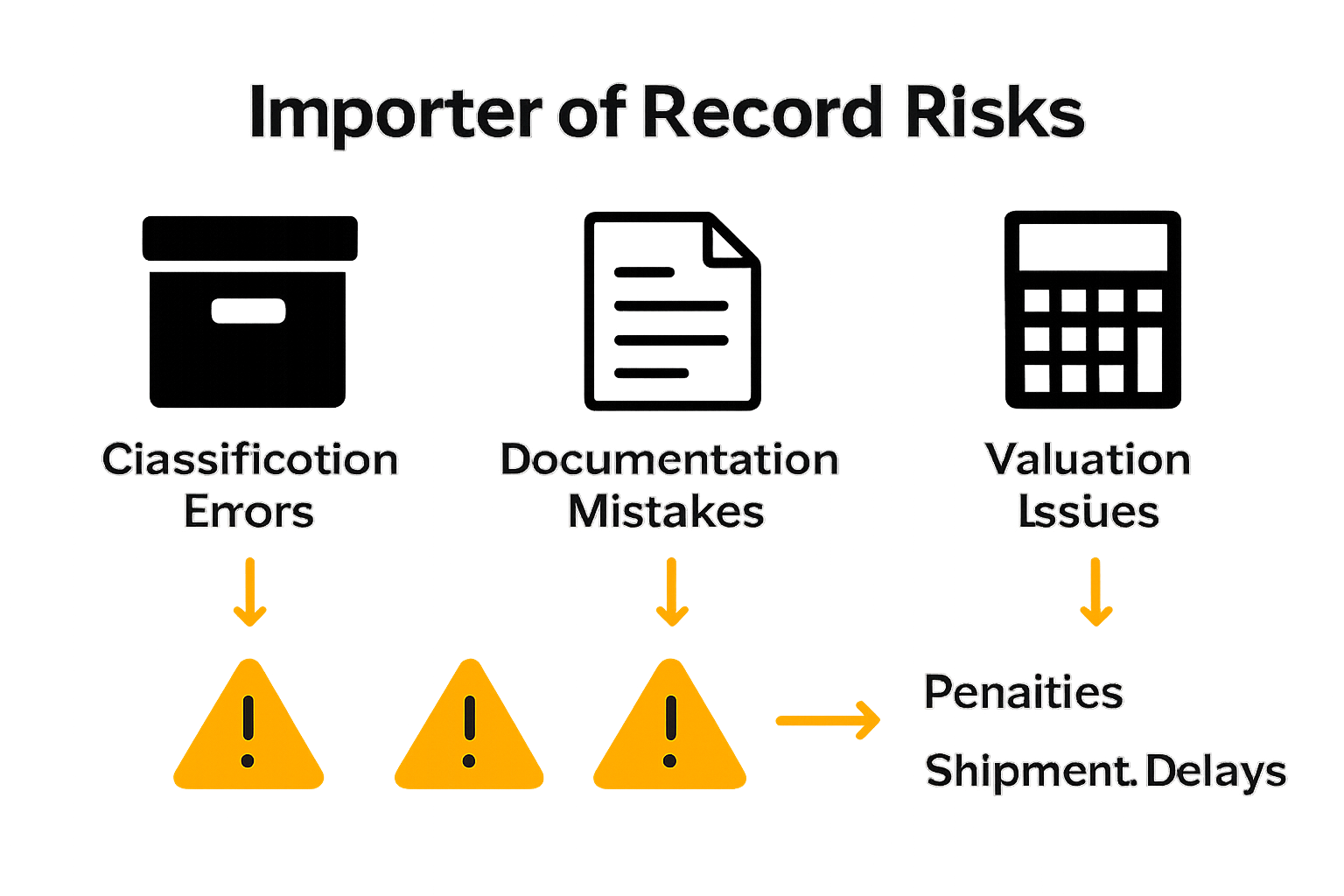
The FDA’s regulatory framework emphasizes that while importers might delegate specific tasks, they remain ultimately responsible for the entry. This comprehensive liability means that even when working with third-party logistics providers or customs brokers, the Importer of Record cannot fully transfer their legal responsibilities. How to pay customs duties represents just one aspect of managing these complex regulatory requirements.
Key risks and potential mistakes include:
- Misclassification of imported merchandise
- Inaccurate goods valuation
- Incomplete or incorrect documentation
- Failure to comply with product-specific regulations
- Inadequate record-keeping
- Miscalculation of applicable duties and taxes
Proactive risk management involves continuous education, maintaining meticulous records, and developing a comprehensive understanding of evolving international trade regulations. Successful importers recognize that preventing mistakes is far more cost-effective than addressing them after they occur.
Choosing an Importer of Record: Alternatives Compared
Selecting the right Importer of Record requires a strategic approach that balances legal compliance, operational efficiency, and risk management. Understanding importer responsibilities is crucial for making an informed decision.
U.S. Customs and Border Protection mandates specific requirements for entities serving as Importers of Record, including maintaining a business office in the U.S. or Canada and possessing a valid continuous import bond. Businesses typically have several alternatives to consider: internal company personnel, dedicated customs brokers, third-party logistics providers, or specialized import management services. Each option presents unique advantages and potential challenges that must be carefully evaluated against the company’s specific import needs, complexity of shipments, and regulatory compliance requirements.
The FDA’s regulatory framework emphasizes that regardless of the chosen approach, the ultimate legal responsibility remains with the designated Importer of Record. This means that even when outsourcing import management, companies cannot fully transfer their legal obligations. Importing from European markets requires particularly nuanced understanding of these complex requirements.
Key considerations when selecting an Importer of Record include:
- Legal compliance capabilities
- Depth of regulatory knowledge
- Experience with specific product categories
- Ability to handle complex documentation
- Financial stability and bonding capacity
- Technology and tracking capabilities
- Cost-effectiveness of the service
Successful selection demands a comprehensive evaluation that goes beyond surface-level comparisons, requiring businesses to deeply assess their unique import requirements and potential long-term implications of their chosen import management strategy.
Take Control of Your Importer of Record Responsibilities with Expert Support
Understanding the complexities behind the Importer of Record role requires meticulous attention to compliance, documentation, and risk management. Businesses often face challenges such as navigating customs paperwork, managing regulatory requirements, and avoiding costly errors in classification or valuation. These pain points make it crucial to partner with a logistics provider that offers expert guidance tailored to your unique import needs. Worldwide Express, Inc. supports you by simplifying these challenges through comprehensive customs brokerage and freight forwarding services designed to safeguard your shipments and ensure smooth customs clearance.
Ready to eliminate uncertainty and reduce import risks today? Explore how our experienced team at Worldwide Express can handle your Importer of Record obligations with precision and care. Visit our Uncategorized services page for details on our customs and compliance solutions. Don’t wait for costly delays or penalties. Start your journey to seamless international shipping now by connecting with us at Worldwide Express.
Frequently Asked Questions
What is the role of an Importer of Record?
The Importer of Record is the legal entity responsible for ensuring that goods are imported into the U.S. in compliance with customs regulations. They must file accurate documentation, declare the value of goods, pay import duties, and ensure the merchandise meets federal standards.
What are the key responsibilities of an Importer of Record?
Key responsibilities include accurate classification of goods, precise valuation, preparation of customs documentation, payment of required duties and taxes, and maintaining comprehensive import-related records.
What risks do Importers of Record face?
Importers of Record face risks such as financial penalties for incorrect classification, inaccurate valuation of goods, incomplete documentation, and potential legal ramifications if they fail to comply with regulatory requirements.
How can companies ensure compliance as an Importer of Record?
Companies can ensure compliance by exercising reasonable care in preparing import documentation, keeping accurate records, understanding complex import regulations, and potentially partnering with experienced customs brokers or logistics providers.
Recommended
- Understanding Importer of Record Responsibilities – Worldwide Express, Inc.
- 7 Essential Importer Security Filing Tips for Success – Worldwide Express, Inc.
- Understanding International Trade Compliance Basics – Worldwide Express, Inc.
- Understanding Import Export Basics for Global Trade – Worldwide Express, Inc.