More than 60 percent of American companies face customs audits each year, and even the most diligent businesses can get caught off guard by the demands. Navigating an audit quickly becomes stressful if you do not have the right documents and processes in place from the start. Understanding how to organize records, respond to officials, and fix discrepancies will help American importers and exporters manage audits smoothly and demonstrate full compliance.
Table of Contents
- Step 1: Assess Audit Notice And Gather Key Documents
- Step 2: Organize Records And Verify Customs Compliance
- Step 3: Communicate Proactively With Customs Officials
- Step 4: Respond To Requests And Address Discrepancies
- Step 5: Review Audit Outcomes And Implement Improvements
Quick Summary
| Key Point | Explanation |
|---|---|
| 1. Review Audit Notice Thoroughly | Understanding the audit notice’s scope and objectives is essential for effective preparation and response. |
| 2. Organize Relevant Documents | Collect and structure all necessary documentation to demonstrate compliance and support your case. |
| 3. Communicate Transparently | Maintain open communication with customs officials to foster trust and clarity throughout the audit. |
| 4. Address Discrepancies Systematically | Respond promptly to any findings, providing clear explanations and all required documentation to resolve issues. |
| 5. Learn from Audit Outcomes | Use audit findings as a basis for organizational improvement, focusing on preventing future compliance issues. |
Step 1: Assess audit notice and gather key documents
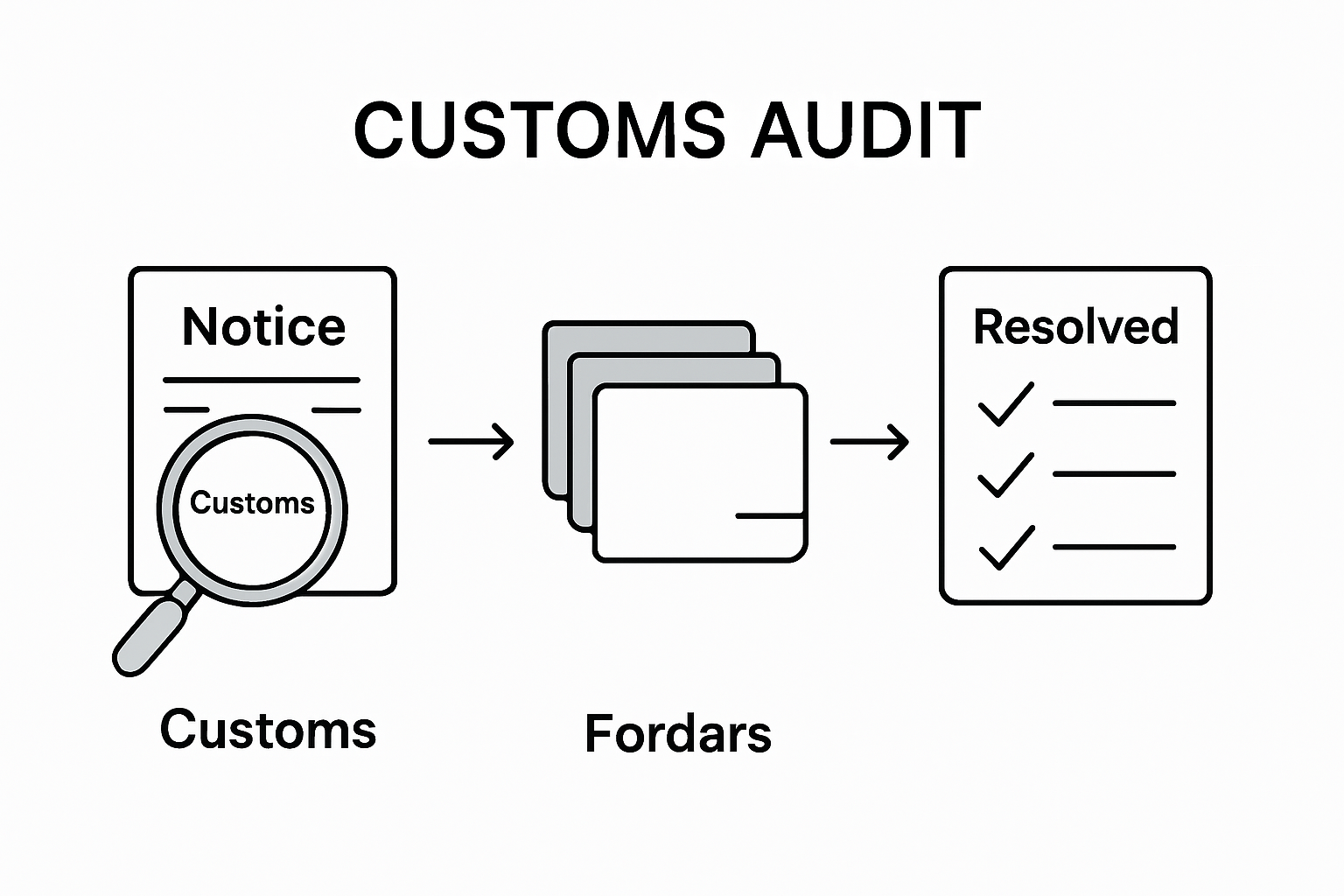
When you receive a customs audit notice, your first mission is to carefully review and understand what exactly you’re dealing with. U.S. Customs and Border Protection recommends promptly analyzing the notice to comprehend its full scope and specific objectives. This means reading every detail thoroughly and identifying precisely what documents and records the auditors want to examine.
Start by creating a comprehensive document collection strategy. You’ll want to gather all relevant commercial records including shipping documents, purchase orders, financial statements, import/export logs, and commercial invoices. The World Customs Organization suggests conducting a pre-audit survey to assess your commercial system’s strengths and weaknesses. This means taking a strategic inventory of your documentation and understanding how your records are organized. Make multiple copies of key documents and ensure they are clearly labeled and easily accessible.
Your goal is to demonstrate complete transparency and preparedness. Organize your documents chronologically, create a master index of what you’re submitting, and double check that nothing is missing. Maintaining a calm and professional approach will help you navigate this process smoothly.
Here’s a summary of essential document types and their relevance to a customs audit:
| Document Type | Purpose During Audit | Key Organizational Tip |
|---|---|---|
| Commercial Invoices | Validate transaction details | Organize by date and vendor |
| Shipping Manifests | Verify movement of goods | Cross-reference with invoices |
| Financial Statements | Confirm declared values | Store separately for easy access |
| Import Declarations | Demonstrate compliance with laws | Link to corresponding shipments |
| Purchase Orders | Prove legitimacy of transactions | Index by order and shipment dates |
Pro tip: Create a dedicated digital folder with high-quality scans of all physical documents as a backup, ensuring you have redundant documentation in case any physical copies get misplaced during the audit process.
Step 2: Organize records and verify customs compliance
In this crucial step, you will transform your scattered documents into a systematic compliance framework that withstands rigorous customs scrutiny. The U.S. Customs and Border Protection recommends maintaining accurate and accessible documentation for all transactions, which means creating an organizational system that allows for quick retrieval and comprehensive review.
Begin by categorizing your records into clear sections such as commercial invoices, shipping manifests, financial statements, and import declarations. Each category should include detailed documentation that tracks the entire transaction lifecycle. The World Customs Organization advises companies to conduct thorough internal reviews of their operations to verify adherence to customs laws, which means implementing a robust internal audit process that checks for consistency and accuracy across all documentation.
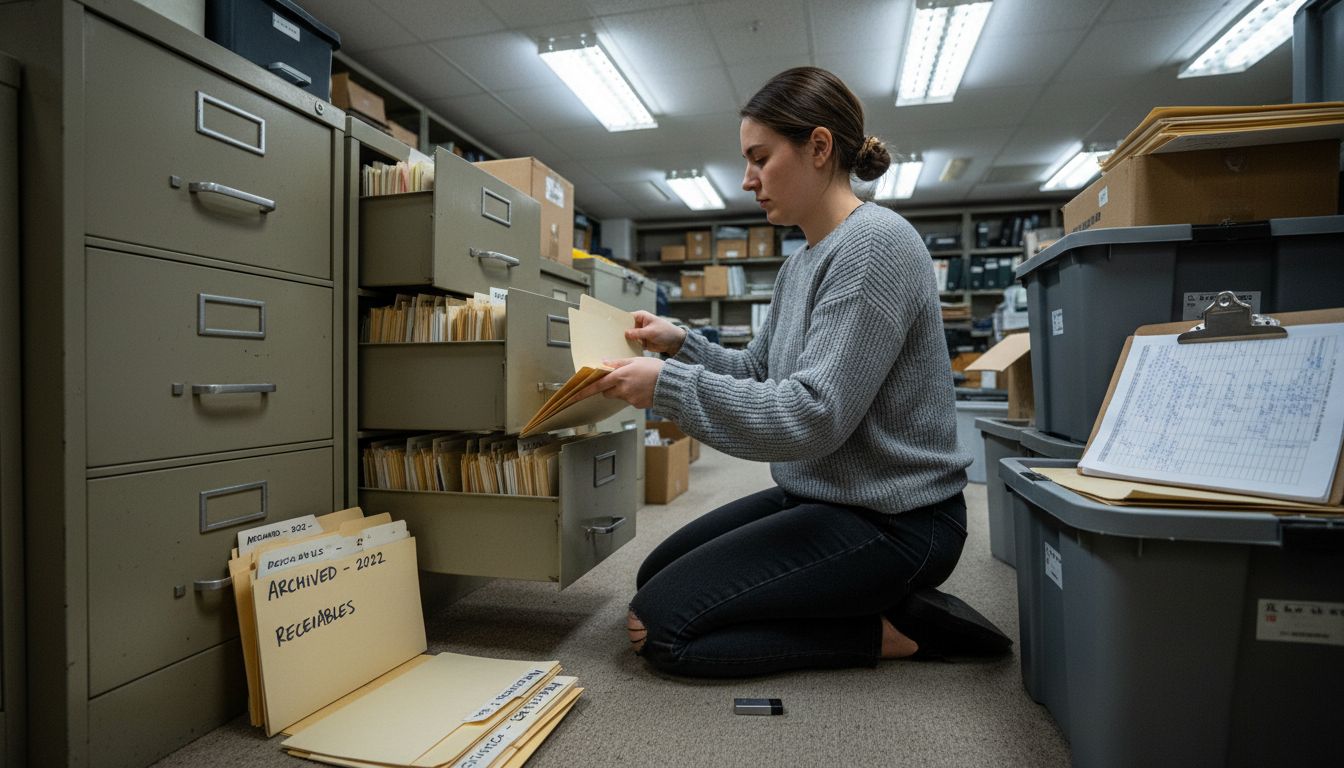
Establish a standardized review protocol where you cross reference different documents to confirm their alignment. Look for potential discrepancies in commodity descriptions, declared values, country of origin, and tariff classifications. Create a comprehensive checklist that guides you through each verification step, ensuring no critical compliance requirement is overlooked.
Pro tip: Develop a digital tracking system with date stamped entries and version control for all your customs documents, which will provide an automatic audit trail and demonstrate proactive record management.
Step 3: Communicate proactively with customs officials
Successful customs audit navigation requires strategic and transparent communication with officials from the very start. U.S. Customs and Border Protection emphasizes maintaining open communication channels throughout the audit process, which means establishing a professional and responsive approach that demonstrates your commitment to compliance.
When communicating with customs officials, focus on clarity, promptness, and thoroughness. Prepare a concise summary of your documentation and be ready to answer questions about your import or export processes. Always respond to inquiries quickly and provide complete information. The World Customs Organization recommends keeping auditees fully informed about potential findings and relevant customs matters, which means maintaining an attitude of transparency and cooperation throughout the entire audit process.
During interactions, remain professional and courteous. Schedule in-person or virtual meetings if complex questions arise. Document every communication carefully, including dates, names of officials contacted, and summaries of discussions. Your goal is to demonstrate that you are a responsible and reliable trade partner who takes customs regulations seriously.
The following table compares key communication best practices for successful customs audits:
| Best Practice | Benefit | Implementation Tip |
|---|---|---|
| Timely Responses | Builds trust with officials | Set internal response deadlines |
| Accurate Documentation | Prevents miscommunication | Keep a thorough communication log |
| Professional Attitude | Encourages positive cooperation | Use clear, polite language |
| Detailed Meeting Records | Tracks audit discussions | Assign note-taker for each meeting |
Pro tip: Create a dedicated communication log that tracks all interactions with customs officials, including email correspondence, phone calls, and meeting notes, to ensure you have a comprehensive record of your audit communication.
Step 4: Respond to requests and address discrepancies
U.S. Customs and Border Protection emphasizes the critical importance of responding promptly and comprehensively to audit information requests, which means developing a strategic approach to handling potential challenges during the customs audit process. Your primary objective is to demonstrate transparency and a proactive commitment to resolving any identified issues quickly and professionally.
When discrepancies emerge, tackle them systematically. Start by carefully reviewing the specific concerns raised by customs officials. Compare the highlighted issues against your original documentation, looking for potential root causes such as data entry errors, misclassification, or documentation gaps. The World Customs Organization recommends providing clear clarifications and supporting documents to resolve audit findings effectively, which means preparing a detailed and well organized response that directly addresses each point of concern.
Prepare a comprehensive response package that includes explanatory notes, corrected documentation, and any additional evidence that supports your position. Be direct, honest, and provide context for any discovered discrepancies. If an error has occurred, acknowledge it, explain how it happened, and outline the steps you will take to prevent similar issues in the future. Your goal is to show that you are a responsible and reliable trade partner committed to maintaining high compliance standards.
Pro tip: Create a detailed tracking sheet for each discrepancy that documents the original issue, your investigation findings, corrective actions taken, and the final resolution to ensure a thorough and transparent audit response.
Step 5: Review audit outcomes and implement improvements
U.S. Customs and Border Protection recommends conducting a comprehensive review of audit findings to enhance future compliance and operational efficiency, which means transforming the audit experience into a strategic opportunity for organizational growth. Your primary goal is to convert each identified issue into a constructive learning experience that strengthens your customs compliance framework.
Begin by thoroughly analyzing the audit report, breaking down each finding into specific categories such as documentation errors, classification mistakes, valuation discrepancies, or procedural gaps. Create a systematic action plan that addresses each identified weakness with clear, measurable steps for improvement. The World Customs Organization emphasizes using audit results to develop robust risk management strategies, which means developing a forward looking approach that prevents similar issues from recurring in future customs interactions.
Implement a comprehensive tracking system to monitor the progress of your improvement initiatives. Schedule follow up reviews to ensure that corrective actions are effectively executed and integrated into your standard operating procedures. Consider conducting internal training sessions to share insights gained from the audit and educate your team about best practices in customs compliance. Your objective is to transform the audit experience from a potential challenge into an opportunity for continuous improvement and operational excellence.
Pro tip: Develop a standardized audit response template that allows you to quickly document findings, create action plans, assign responsibilities, and track the resolution of each identified compliance issue.
Simplify Customs Audits with Expert Logistics Support
Facing a customs audit can be stressful and complex. The challenge lies in managing extensive documentation, ensuring compliance, and responding quickly to officials without losing valuable time or risking penalties. Key goals include maintaining accurate records, seamless communication, and resolving discrepancies with confidence. Terms like “compliance framework,” “audit tracking,” and “transparent communication” are crucial as you navigate this demanding process.
At Worldwide Express, Inc., we understand the pressure of customs audits and offer tailored logistics and customs brokerage solutions to ease this burden. Our expertise in customs clearance, documentation accuracy, and global freight forwarding ensures your shipments comply smoothly and inspections proceed without disruption. Explore our Uncategorized services that support audit readiness and operational efficiency.
Take control of your customs audits today with Worldwide Express. Visit our main website to discover how our comprehensive international shipping solutions and dedicated compliance support can protect your business and accelerate your global trade. Don’t wait until an audit arrives—partner with us now to stay ahead and compliant.
Frequently Asked Questions
What should I do when I receive a customs audit notice?
Review the notice thoroughly to understand its scope and requirements. Gather all relevant documents, such as shipping records and commercial invoices, to ensure you are prepared for the audit.
How can I organize my records for a customs audit?
Start by categorizing your documents into clear sections like commercial invoices and shipping manifests. Create a master index of all documents to facilitate quick retrieval during the audit.
How should I communicate with customs officials during the audit?
Maintain clear and prompt communication with customs officials. Prepare concise summaries of your documentation and be responsive to any inquiries or requests they make throughout the audit process.
What steps should I take if discrepancies are found during the audit?
Address discrepancies by carefully reviewing the points raised by customs. Compile a comprehensive response that includes clarifications, supporting documents, and corrected information to resolve issues quickly.
How can I use audit findings to improve my customs compliance?
After reviewing the audit report, identify specific areas for improvement and create an action plan. Implement changes and conduct follow-up reviews to ensure these measures are effectively integrated into your operations.
Recommended
- Complete Guide to the Customs Inspection Process – Worldwide Express, Inc.
- How to Pay Customs Duties: A Step-by-Step Guide – Worldwide Express, Inc.
- Understanding International Trade Compliance Basics – Worldwide Express, Inc.
- Understanding Customs Invoice Requirements for Trade – Worldwide Express, Inc.
- Complete Guide to Digital Forensics Chain of Custody