Shipping mistakes cost the average American importer thousands each year. For logistics managers, every untracked fee or overlooked regulation can shrink margins and disrupt operations. Understanding total landed cost offers a clear path to budget control and fewer surprises along the supply chain. This overview brings clarity to how each cost—from international freight to customs duties—adds up, helping you spot hidden charges and improve purchase decisions.
Table of Contents
- Total Landed Cost Defined For Importers
- Breakdown Of Costs In Landed Calculations
- Key Methods For Accurate Landed Costing
- Regulatory And Customs Compliance Factors
- Common Pitfalls And Ways To Avoid Overpaying
Key Takeaways
| Point | Details |
|---|---|
| Total Landed Cost | Total landed cost goes beyond product price, including all expenses from purchase to delivery, essential for optimizing procurement strategy. |
| Expense Tracking | Implement systematic tracking of all cost components to identify areas for savings and improve financial planning. |
| Regulatory Compliance | Maintain thorough knowledge of regulations to avoid penalties and ensure accurate tariff calculations, preventing unexpected costs. |
| Common Pitfalls | Be aware of hidden expenses and inefficiencies in freight selection to minimize overpayments and enhance cost management. |
Total Landed Cost Defined For Importers
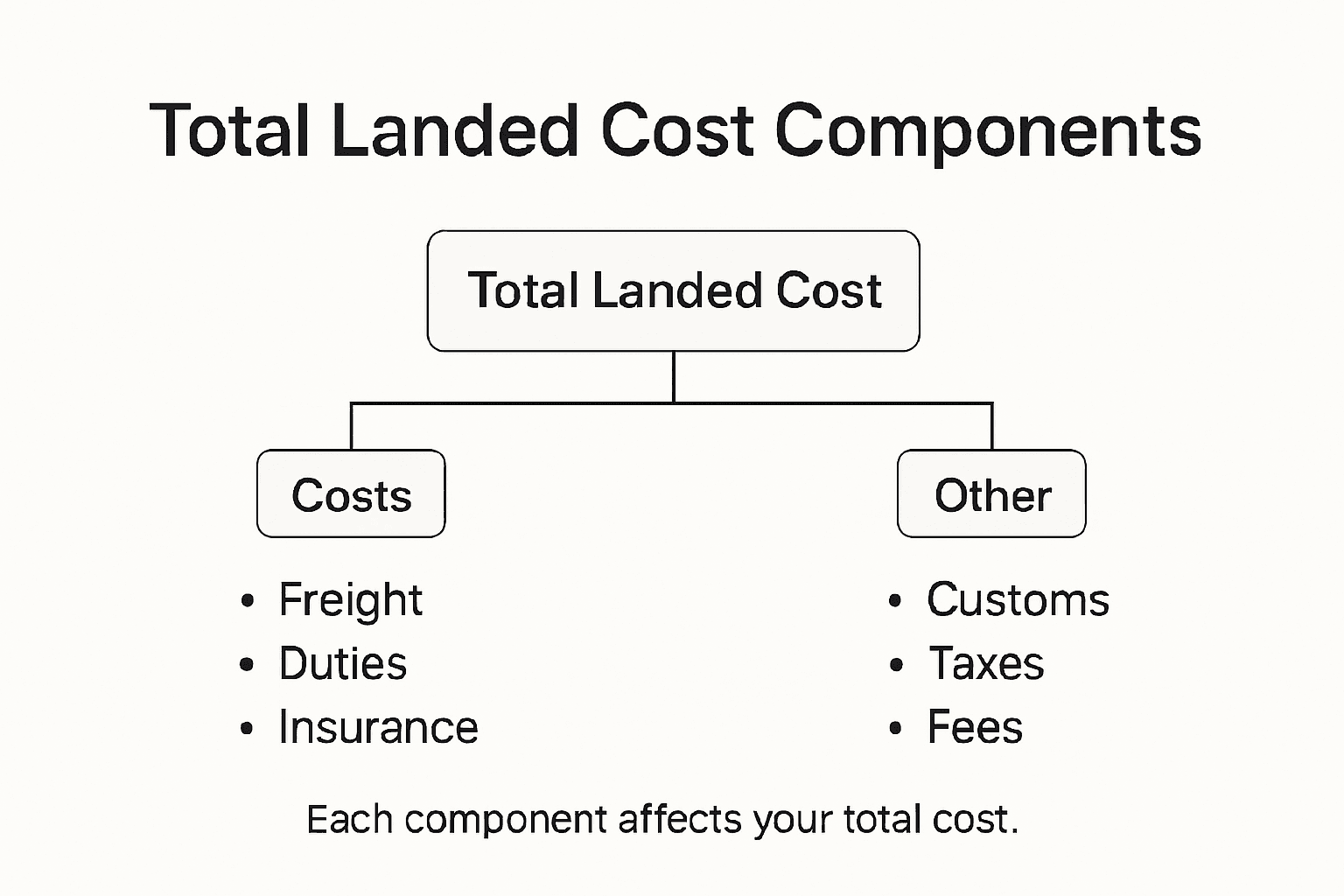
Total landed cost represents the comprehensive financial calculation that reveals the complete expense of importing goods beyond the initial purchase price. This critical metric goes far beyond simple product pricing, encompassing multiple expenses associated with bringing merchandise from overseas to its final destination. Comprehensive cost modeling requires importers to consider an intricate web of direct and indirect expenses that impact their overall procurement strategy.
According to legal definitions, total landed cost includes several core components that importers must carefully evaluate. The official import cost framework specifically outlines expenses such as:
- Product purchase price
- International shipping charges
- Customs brokerage fees
- Import duties and tariffs
- Insurance costs
- Transportation expenses from port to warehouse
- Handling and processing charges
Successful importers recognize that understanding total landed cost goes beyond simple arithmetic. Each expense component represents a potential area for strategic optimization, allowing businesses to make more informed purchasing decisions and identify potential cost-saving opportunities throughout their international procurement processes.
Pro Tip: Cost Calculation Strategy: Develop a standardized spreadsheet template that tracks all potential landed cost expenses, updating it regularly with current rates and fees to maintain accurate financial projections.
Breakdown Of Costs In Landed Calculations
Importers navigating international trade must understand the intricate components that constitute total landed cost. Comprehensive cost modeling approaches reveal that successful expense tracking goes well beyond simple product pricing, requiring a multifaceted analysis of direct and indirect expenses associated with global procurement.
The primary cost categories that importers must carefully analyze include:
- Product Cost: The base purchase price of merchandise
- Transportation Expenses: Ocean or air freight charges
- Customs Duties: Government-mandated import tariffs
- Insurance Costs: Protection against potential shipping damage or loss
- Handling Fees: Charges for loading, unloading, and processing merchandise
- Compliance Expenses: Documentation and regulatory processing costs
According to detailed import cost frameworks, each cost component represents a potential area for strategic optimization. Sophisticated importers recognize that granular expense tracking allows for more precise financial planning and can reveal unexpected opportunities for cost reduction. By breaking down each expense category, businesses can develop more accurate budgeting strategies and identify potential areas of financial efficiency.

The table below summarizes the strategic impact of key landed cost components for importers:
| Landed Cost Component | Typical Business Impact | Optimization Opportunity |
|---|---|---|
| Product Cost | Affects overall margins | Negotiate supplier terms |
| Transportation | Drives delivery timing | Compare carrier rates |
| Customs Duties | Influences price competitiveness | Classify products accurately |
| Insurance | Limits financial risk | Shop for better premiums |
| Handling Fees | Adds to overhead | Streamline warehouse processes |
| Compliance Expenses | Prevents legal issues | Automate documentation |
Pro Tip: Expense Tracking Method: Create a standardized digital tracking system that categorizes each landed cost component separately, enabling real-time expense monitoring and comparative analysis across different import shipments.
Key Methods For Accurate Landed Costing
Accurate landed cost calculation requires a systematic approach that goes beyond simple arithmetic. Comprehensive logistics modeling demonstrates that successful importers must develop a meticulous strategy for tracking and analyzing every expense associated with international procurement.
The key methods for precise landed cost calculation include:
- Harmonized System (HS) Code Verification
- Accurately identify the correct classification for imported goods
- Determine precise duty rates and potential tax implications
- Detailed Expense Tracking
- Document every direct and indirect cost
- Capture granular expense data across multiple categories
- Freight Quote Comparative Analysis
- Request multiple shipping provider quotes
- Evaluate total transportation costs, not just base rates
- Tariff and Duty Calculation
- Research current import regulations
- Understand complex duty structures for specific product categories
According to structured import cost assessment frameworks, successful importers must develop a comprehensive approach that considers every potential expense. This methodical process involves not just calculating current costs, but creating predictive models that anticipate potential financial variations in international trade.
Pro Tip: Cost Modeling Strategy: Develop a dynamic spreadsheet template that automatically updates with current tariff rates, allowing for real-time landed cost projections and quick scenario comparisons.
Regulatory And Customs Compliance Factors
Navigating the complex landscape of international trade requires a deep understanding of regulatory requirements that directly impact landed cost calculations. Legal definitions of import costs provide critical guidance for importers seeking to maintain compliance and minimize potential financial risks.
Key regulatory compliance factors importers must carefully consider include:
-
Harmonized System (HS) Code Classification
- Accurate product categorization
- Determines applicable duty rates
- Prevents potential customs penalties
-
Documentation Requirements
- Comprehensive commercial invoices
- Certificate of origin
- Detailed shipping manifests
- Customs declaration forms
-
Tariff and Duty Calculations
- Research current international trade agreements
- Understand preferential trading arrangements
- Calculate precise duty obligations
According to structured import compliance frameworks, successful importers must develop a proactive approach to regulatory compliance. This involves not just meeting minimum requirements, but creating robust systems that anticipate potential regulatory changes and minimize the risk of costly delays or penalties.
Pro Tip: Compliance Documentation Strategy: Maintain a digital archive of all import documentation with automatic version tracking, ensuring you can quickly retrieve and verify historical compliance records when needed.
Common Pitfalls And Ways To Avoid Overpaying
Importers frequently encounter hidden expenses that can dramatically inflate total landed costs. Comprehensive cost modeling research reveals that many businesses unintentionally overpay by failing to thoroughly analyze and anticipate potential financial challenges throughout their international procurement processes.
Common pitfalls that lead to unnecessary expenses include:
-
Incomplete Cost Tracking
- Overlooking hidden fees
- Neglecting auxiliary transportation charges
- Failing to account for currency exchange fluctuations
-
Inefficient Freight Provider Selection
- Choosing carriers without comprehensive price comparisons
- Ignoring long-term service reliability
- Overlooking potential volume discounts
-
Regulatory Compliance Errors
- Misclassifying product harmonized codes
- Miscalculating import duties
- Inadequate documentation preparation
According to detailed import cost assessment frameworks, successful importers must develop a proactive strategy that goes beyond simple price comparison. This involves creating robust tracking systems, understanding complex international trade regulations, and continuously monitoring potential cost-saving opportunities.
Here is a comparison of common pitfalls versus proactive solutions for minimizing landed costs:
| Common Pitfall | Risk to Importer | Proactive Solution |
|---|---|---|
| Incomplete Cost Tracking | Unexpected expenses | Use automated expense logs |
| Poor Carrier Selection | Higher freight charges | Benchmark multiple providers |
| Compliance Errors | Customs delays/penalties | Maintain updated knowledge base |
| Ignored Currency Fluctuations | Budget overruns | Lock in exchange rates |
Pro Tip: Cost Reduction Strategy: Implement a quarterly comprehensive cost audit that reviews all landed cost components, identifying potential optimization opportunities and negotiating better rates with shipping providers and customs brokers.
Take Control of Your Total Landed Cost with Expert Freight Solutions
Managing the complexities of total landed cost calculation can often feel overwhelming. From tracking hidden fees like customs brokerage and compliance expenses to navigating fluctuating tariffs and freight charges, these challenges directly affect your bottom line and delivery timelines. The article highlights how precise cost modeling and proactive expense tracking can uncover vital savings and prevent costly mistakes in international shipping.
At Worldwide Express, we specialize in simplifying the freight forwarding process by integrating customs brokerage, cargo insurance, and global tracking into one seamless solution. Our expertise ensures every element—from accurate HS Code classification to thorough documentation management—helps you reduce freight expenses and avoid compliance pitfalls.
Ready to transform your landed cost strategy into a competitive advantage Learn how our tailored international freight forwarding services can optimize your shipping costs and streamline regulatory compliance. Visit Worldwide Express today to get a freight quote and start saving on your global shipments now.
Frequently Asked Questions
What is total landed cost?
Total landed cost is the comprehensive financial calculation that includes all expenses incurred when importing goods, beyond just the purchase price. This includes shipping charges, customs duties, insurance, and handling fees.
How can I optimize my total landed cost calculation?
You can optimize your total landed cost calculation by tracking all expense components meticulously, comparing shipping providers for better rates, ensuring accurate classification to avoid customs penalties, and documenting all costs thoroughly.
What are common pitfalls that can increase total landed costs?
Common pitfalls include incomplete cost tracking, inefficient freight provider selection, regulatory compliance errors, and ignoring currency exchange fluctuations, all of which can lead to unexpected expenses.
Why is understanding regulatory compliance important for landed cost calculations?
Understanding regulatory compliance is crucial because it ensures that all documentation is accurate and complete, which helps avoid customs penalties and delays, ultimately impacting your total landed cost.
Recommended
- How to Reduce Shipping Costs: Effective Strategies for 2025 – Worldwide Express, Inc.
- 8 Key Freight Quote Factors Every Shipper Should Know – Worldwide Express, Inc.
- Understanding International Shipping Costs: Key Insights – Worldwide Express, Inc.
- Understanding Freight Rate Negotiation: Key Concepts Explained – Worldwide Express, Inc.
- How Moving Estimates Work: Complete Guide for 2025