Over eighty percent of American logistics managers say building global partnerships is their top priority for the year. In an increasingly complex world, relying on outdated networking routines can put your business at a disadvantage—especially as customs regulations shift and supply chains become more unpredictable. Discover practical strategies that help American companies cultivate exclusive contacts, form resilient global alliances, and avoid common compliance pitfalls holding others back.
Table of Contents
- What Is Business Networking in Logistics?
- Types of Networking Strategies for Logistics
- Building Effective Global Shipping Partnerships
- Leveraging Technology for Streamlined Connections
- Common Networking Pitfalls and Compliance Risks
Key Takeaways
| Point | Details |
|---|---|
| Effective Networking Enhances Competitiveness | Building collaborative relationships in logistics allows companies to access new markets and address challenges, improving global competitiveness. |
| Utilize Both Traditional and Digital Strategies | Combining in-person networking at events with digital tools like LinkedIn expands reach and facilitates meaningful connections. |
| Focus on Compliance to Mitigate Risks | Maintaining accurate documentation and regular compliance training is essential to avoid significant operational disruptions in logistics networking. |
| Leverage Technology for Efficient Collaboration | Integrating advanced technological tools can streamline communication and enhance operational efficiency across global supply chains. |
What Is Business Networking in Logistics?
Business networking in logistics represents a strategic approach to building collaborative relationships that enable companies to enhance operational efficiency, reduce risks, and expand market capabilities. At its core, this practice involves creating and maintaining professional connections across the global supply chain ecosystem to facilitate smoother, more responsive business interactions.
In the logistics industry, networking goes far beyond simple professional contact exchange. Collaborative partnerships within logistics networks enable firms to access new markets and solve real-time challenges, ultimately improving global competitiveness. These networks function like intricate communication pathways, allowing logistics managers to share critical information, negotiate better terms, and develop innovative solutions to complex transportation and shipping problems.
The topology of logistics networks is particularly fascinating, demonstrating remarkable resilience through interconnected relationships. By understanding how different organizations connect and interact, logistics managers can create more robust systems that can quickly adapt to changing market conditions. This interconnectedness means that each professional connection potentially represents a strategic asset – offering access to specialized knowledge, alternative shipping routes, risk mitigation strategies, and potential problem-solving resources.
Pro Tip: Strategic Network Builder: Attend at least two industry conferences or virtual networking events annually, focusing on meeting professionals from complementary logistics sectors to expand your professional connection ecosystem strategically.
Key Elements of Business Networking in Logistics:
- Establishing professional relationships across supply chain segments
- Sharing critical operational insights and market intelligence
- Creating collaborative problem-solving opportunities
- Developing mutually beneficial partnerships
- Expanding market reach and operational capabilities
Types of Networking Strategies for Logistics
Networking strategies in logistics encompass a diverse range of approaches designed to help professionals build meaningful connections and expand their industry influence. Professional networking for logistics executives involves multiple strategic methods ranging from traditional in-person interactions to sophisticated digital platforms, each offering unique advantages for career development and business growth.
Traditional networking strategies remain crucial in the logistics sector. Industry conferences, trade shows, and professional association events provide invaluable opportunities for face-to-face interactions. These platforms allow logistics managers to exchange insights, discuss emerging trends, and establish personal connections that can lead to potential collaborations. Third-party logistics partnerships often originate from these professional meetups, highlighting the importance of direct personal engagement.
Digital networking has dramatically transformed how logistics professionals connect and share information. LinkedIn, industry-specific online forums, and virtual conferences have become powerful tools for expanding professional networks without geographical limitations. Logistics managers can now engage with global experts, participate in specialized discussion groups, and access real-time industry updates through these digital platforms. This approach allows for continuous learning and provides opportunities to showcase professional expertise to a broader audience.

Pro Tip: Digital Network Accelerator: Dedicate 30 minutes weekly to strategic online networking by actively commenting on relevant industry posts, sharing insightful content, and connecting with three new professionals in complementary logistics sectors.
Key Networking Strategies for Logistics Professionals:
Here’s a comparison of traditional and digital networking approaches in logistics:
| Aspect | Traditional Networking | Digital Networking |
|---|---|---|
| Accessibility | Limited to physical events | Accessible globally online |
| Speed of Interaction | Slower, scheduled meetings | Instant, real-time exchanges |
| Network Diversity | Regional or local contacts | Wide range, global connections |
| Knowledge Sharing | In-person discussions | Digital content, forums, groups |
- Attending international trade conferences
- Joining professional logistics associations
- Participating in online industry forums
- Engaging in social media professional networks
- Presenting at industry seminars and workshops
- Developing cross-sector collaboration opportunities
Building Effective Global Shipping Partnerships
Global shipping partnerships represent intricate networks of strategic collaboration essential for modern logistics managers seeking to optimize international trade operations. Comprehensive research on strategic alliances reveals complex structures that enable more efficient and resilient global shipping ecosystems, underscoring the critical importance of developing robust collaborative relationships.
Successful global shipping partnerships rely on understanding different collaboration models. Ocean carrier alliances demonstrate how organizations can strategically combine resources, share operational risks, and expand market reach. These partnerships typically involve three fundamental interdependence types: sequential dependencies, where output from one partner becomes input for another; pooled dependencies, where partners share common resources; and reciprocal dependencies, characterized by mutual information and resource exchange.
Building effective partnerships requires a multifaceted approach that goes beyond simple transactional relationships. Logistics managers must develop sophisticated communication protocols, establish clear performance metrics, and create flexible frameworks that can adapt to rapidly changing global trade environments. This involves developing trust, maintaining transparency, and continuously evaluating partnership performance through key indicators like reliability, cost-efficiency, and strategic alignment.
Pro Tip: Partnership Performance Optimizer: Conduct quarterly formal reviews with key shipping partners, documenting performance metrics, discussing improvement opportunities, and realigning strategic objectives to maintain dynamic and responsive collaborative relationships.
Key Elements of Successful Global Shipping Partnerships:
- Establishing clear communication channels
- Defining mutual performance expectations
- Creating flexible collaboration frameworks
- Implementing robust risk management strategies
- Developing shared technological infrastructure
- Maintaining continuous performance evaluation
- Fostering a culture of mutual trust and transparency
Leveraging Technology for Streamlined Connections
Digital transformation has become a cornerstone of modern logistics networking, revolutionizing how professionals connect and collaborate across global supply chains. Cutting-edge research demonstrates the systematic ways digital technologies are fundamentally transforming intra- and inter-organizational logistics networking, offering unprecedented opportunities for enhanced communication and operational efficiency.
Technological platforms have dramatically expanded the scope of business networking for logistics managers. How to optimize logistics for efficient global shipping relies increasingly on sophisticated digital tools that enable real-time collaboration, data sharing, and strategic decision-making. Cloud-based collaboration platforms, artificial intelligence-powered communication systems, and Internet of Things (IoT) technologies now allow logistics professionals to create instantaneous, transparent, and highly responsive networking environments that transcend traditional geographic and organizational boundaries.
The most effective networking technologies integrate multiple capabilities, creating comprehensive ecosystems that support complex business interactions. Advanced platforms now combine communication tools, predictive analytics, risk management systems, and collaborative workspaces. These integrated solutions enable logistics managers to not just communicate, but to strategically analyze potential partnerships, assess operational risks, track performance metrics, and make data-driven decisions with unprecedented speed and accuracy.
Pro Tip: Tech Integration Strategist: Conduct an annual audit of your current technological networking tools, identifying potential integrations and emerging technologies that could streamline your communication and collaboration processes.
Key Digital Networking Technologies for Logistics:
Key technology features and their impact on logistics networking:
| Technology Type | Main Function | Impact on Networking |
|---|---|---|
| Cloud Collaboration Platforms | Real-time document sharing | Faster decision-making |
| AI Communication Systems | Automated messaging | Enhanced responsiveness |
| IoT Tracking Technologies | Shipment monitoring | Improved supply chain visibility |
| Blockchain Verification Systems | Secure partner validation | Increased trust and transparency |
- Cloud-based collaboration platforms
- Artificial intelligence communication systems
- Internet of Things (IoT) tracking technologies
- Real-time data analytics tools
- Predictive risk management software
- Integrated communication dashboards
- Blockchain-enabled verification systems
Common Networking Pitfalls and Compliance Risks
Regulatory compliance represents a critical challenge in logistics networking, where a single misstep can result in significant financial and operational consequences. Comprehensive research highlights the complex regulatory landscape that logistics managers must navigate, identifying key compliance risks and potential pitfalls in multi-partner networks, underscoring the need for proactive risk management strategies.
The most prevalent networking pitfalls stem from inadequate documentation, insufficient training, and poor technological integration. Essential steps for smooth shipping abroad emphasize the importance of maintaining meticulous records and understanding intricate international regulations. Common risks include incomplete customs documentation, misclassification of hazardous materials, overlooking environmental compliance standards, and failing to maintain proper communication protocols across international partnerships.
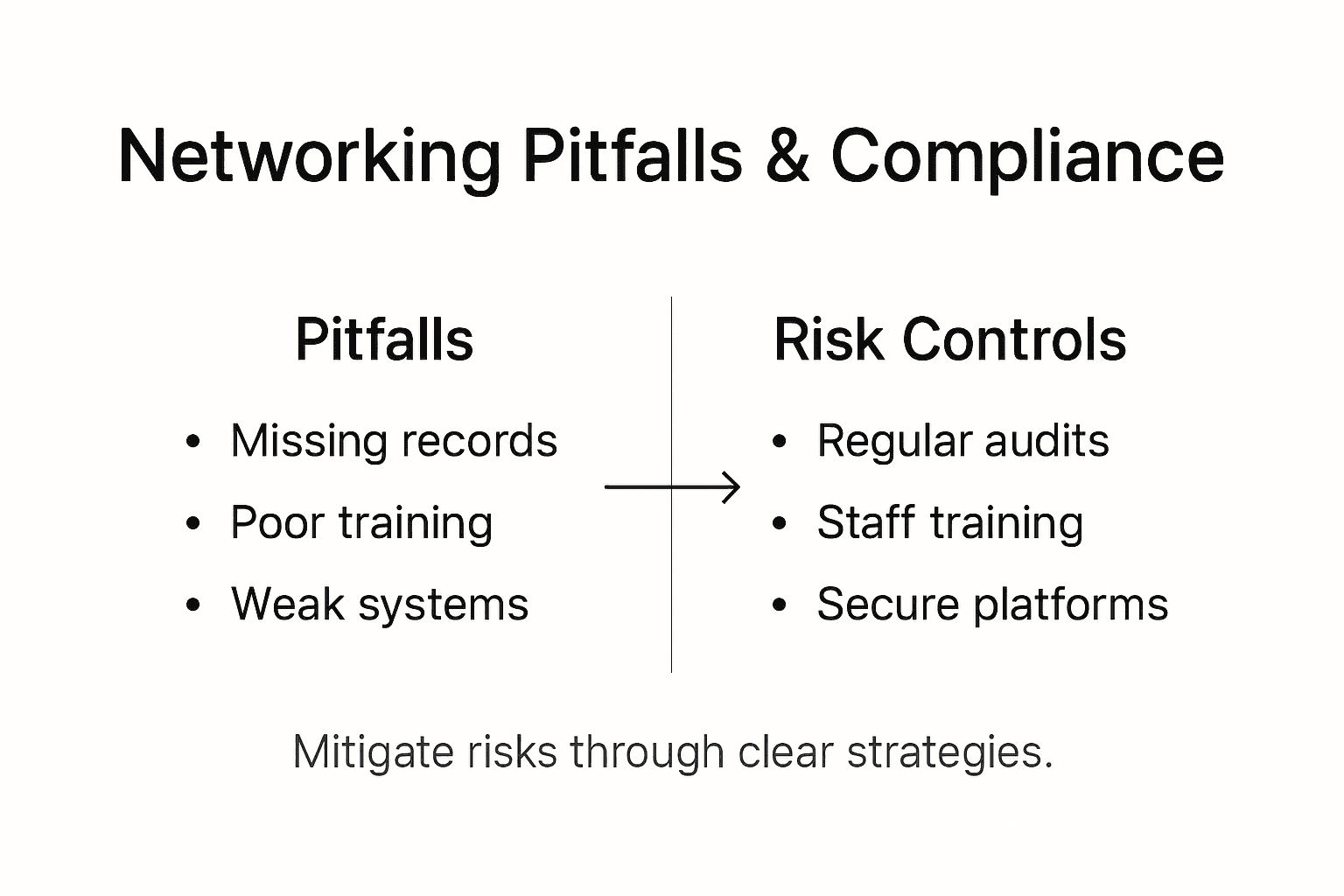
Successful risk mitigation requires a multifaceted approach that combines robust technological infrastructure, comprehensive staff training, and continuous regulatory monitoring. Logistics managers must develop dynamic compliance frameworks that can adapt to rapidly changing international trade regulations, implement advanced tracking systems, and create transparent communication channels that enable real-time information sharing and immediate risk identification. This approach demands a proactive stance, where potential compliance challenges are anticipated and addressed before they can escalate into significant operational disruptions.
Pro Tip: Compliance Vigilance Tracker: Establish a quarterly regulatory review process that includes updating compliance documentation, retraining staff on new international regulations, and conducting comprehensive audits of your networking and documentation practices.
Key Compliance Risk Management Strategies:
- Maintaining accurate and comprehensive documentation
- Implementing continuous staff training programs
- Developing robust technological compliance tracking systems
- Establishing clear communication protocols
- Conducting regular internal compliance audits
- Staying updated on international trade regulations
- Creating flexible compliance adaptation mechanisms
Strengthen Your Logistics Network with Trusted Global Shipping Solutions
Navigating the complex world of business networking in logistics demands reliable partnerships and seamless communication across global supply chains. If your goals include optimizing operational efficiency, ensuring compliance, and expanding market reach through strategic collaboration, Worldwide Express is here to transform those challenges into opportunities. Our comprehensive services cover everything from customs brokerage to detailed shipment tracking, empowering you to build stronger, more resilient networks as outlined in the article.

Take control of your logistics partnerships today. Visit Worldwide Express to explore how our tailored international shipping solutions and technology-driven tools can help you establish clear communication channels and maintain regulatory compliance. Connect with us now and elevate your logistics strategy with trusted expertise designed to keep your global shipments smooth and your business competitive.
Frequently Asked Questions
What are the key elements of business networking in logistics?
The key elements include establishing professional relationships across supply chain segments, sharing critical operational insights, creating collaborative problem-solving opportunities, developing mutually beneficial partnerships, and expanding market reach and operational capabilities.
How can logistics managers build effective global shipping partnerships?
Logistics managers can build effective global shipping partnerships by establishing clear communication channels, defining mutual performance expectations, creating flexible collaboration frameworks, and implementing robust risk management strategies.
What are the common networking pitfalls in logistics?
Common networking pitfalls in logistics include inadequate documentation, insufficient training, and poor technological integration which can lead to compliance risks and operational challenges.
How can technology enhance networking for logistics professionals?
Technology enhances networking by enabling real-time collaboration through cloud-based platforms, increasing responsiveness via AI communication systems, and improving visibility and trust in supply chains through IoT and blockchain technologies.
Recommended
- Understanding Sustainability in Logistics: Key Insights – Worldwide Express, Inc.
- Understanding Logistic Providers: Key Concepts Explained – Worldwide Express, Inc.
- How to Optimize Logistics for Efficient Global Shipping – Worldwide Express, Inc.
- Supply Chain Visibility: Driving Efficiency in Logistics – Worldwide Express, Inc.
- How to Reduce Packaging Waste: A Practical Guide for 2025 – Spaceman