Extreme weather events have already cost American manufacturers over $100 billion in annual losses, reshaping how supply chain managers approach risk. Climate change is driving unpredictable disruptions in logistics, putting every shipment and facility at stake. For today’s manufacturing leaders, understanding the challenges and strategies required to adapt is vital for protecting operations, maintaining compliance, and building long-term resilience in the face of rising regulatory demands.
Table of Contents
- Defining Climate Change’s Supply Chain Impact
- Types of Climate Disruption in Logistics
- Climate Risks in Transportation and Warehousing
- US Regulatory Compliance for Sustainability
- Financial Costs and Insurance Implications
- Effective Mitigation and Adaptation Solutions
Key Takeaways
| Point | Details |
|---|---|
| Supply Chain Vulnerability | Climate change poses significant risks to manufacturing supply chains, demanding immediate adaptation and robust strategies to mitigate disruptions. |
| Diverse Risks | Manufacturers face both physical and transitional climate risks, necessitating a comprehensive risk management approach that incorporates advanced predictive modeling. |
| Regulatory Compliance | The evolving sustainability regulations require manufacturers to maintain transparency and adaptability, which can enhance compliance and foster innovation. |
| Financial Resilience | Climate change is altering the financial landscape, pushing companies to invest in risk mitigation strategies that go beyond traditional insurance and address potential losses effectively. |
Defining Climate Change’s Supply Chain Impact
Climate change represents a profound and escalating threat to US manufacturing supply chains, introducing unprecedented levels of operational complexity and risk. As extreme weather events become increasingly frequent and severe, manufacturers must recognize that climate disruption is no longer a future concern but a present reality demanding immediate strategic adaptation.
The manufacturing sector faces multifaceted challenges from climate change, with significant supply chain disruptions emerging across critical infrastructure. Extreme weather events like hurricanes, floods, and wildfires can instantaneously halt production, damage transportation networks, and create cascading economic impacts that ripple through entire industrial ecosystems. Coastal manufacturing facilities are particularly vulnerable, with rising sea levels threatening long-term operational sustainability and potentially rendering significant infrastructure investments obsolete.
Manufacturers must develop robust, adaptive strategies to mitigate these climate-related risks. This involves comprehensive risk assessment, investment in resilient infrastructure, diversifying geographic supply sources, and developing advanced predictive modeling techniques. By integrating climate risk management into core strategic planning, companies can transform potential vulnerabilities into opportunities for innovation and competitive advantage.
Expert Recommendation: Conduct a comprehensive climate vulnerability assessment of your entire supply chain, identifying potential disruption points and developing scenario-based contingency plans to maintain operational continuity.
Types of Climate Disruption in Logistics
The logistics sector faces increasingly complex challenges from climate change, with disruptions manifesting through multiple interconnected pathways that threaten operational stability and economic performance. These disruptions can be categorized into two primary domains: physical risks and transitional risks, each presenting unique challenges for supply chain management.
Physical risks represent the most immediate and tangible climate disruptions, characterized by extreme weather events impacting transportation and infrastructure networks. These include severe phenomena like flooding that can obliterate shipping routes, prolonged droughts reducing water transportation capacities, and temperature extremes causing energy grid failures. Coastal and river-dependent logistics systems are particularly vulnerable, with rising sea levels and unpredictable precipitation patterns threatening critical transportation infrastructure.
Transitional risks emerge from broader systemic changes driven by climate policy, technological innovations, and market transformations. These risks compel logistics operators to rapidly adapt their strategies, infrastructure, and operational models. Regulatory shifts mandating lower carbon emissions, emerging green transportation technologies, and evolving market expectations around sustainability are reshaping the logistics landscape. Companies must proactively invest in resilient technologies, diversify transportation modes, and develop sophisticated risk management frameworks to navigate these complex transitional challenges.
Expert Recommendation: Develop a comprehensive climate risk mapping strategy that identifies potential disruption points across your logistics network and creates adaptive response protocols for both physical and transitional climate challenges.
Here’s a comparison of physical vs. transitional climate risks in logistics:
| Risk Type | Key Characteristics | Primary Supply Chain Impact |
|---|---|---|
| Physical Risks | Direct weather events (storms, floods) | Infrastructure damage, shipment delays |
| Transitional Risks | Regulatory, market, tech changes | Investment needs, process overhauls |
Climate Risks in Transportation and Warehousing
Climate change poses unprecedented challenges for transportation and warehousing infrastructure within US manufacturing supply chains, fundamentally transforming operational risk management strategies. The complex interplay between environmental shifts and logistics systems demands a comprehensive understanding of both immediate physical threats and long-term systemic vulnerabilities.
Supply chain vulnerabilities extend far beyond traditional risk assessments, with extreme weather events like hurricanes, heat waves, and wildfires creating significant disruptions in transportation networks and warehouse facilities. Physical infrastructure damage can lead to prolonged operational shutdowns, equipment failures, and substantial financial losses. Coastal and inland warehousing facilities face heightened risks from rising sea levels, increased flooding potential, and more frequent extreme temperature events that compromise storage conditions and transportation efficiency.
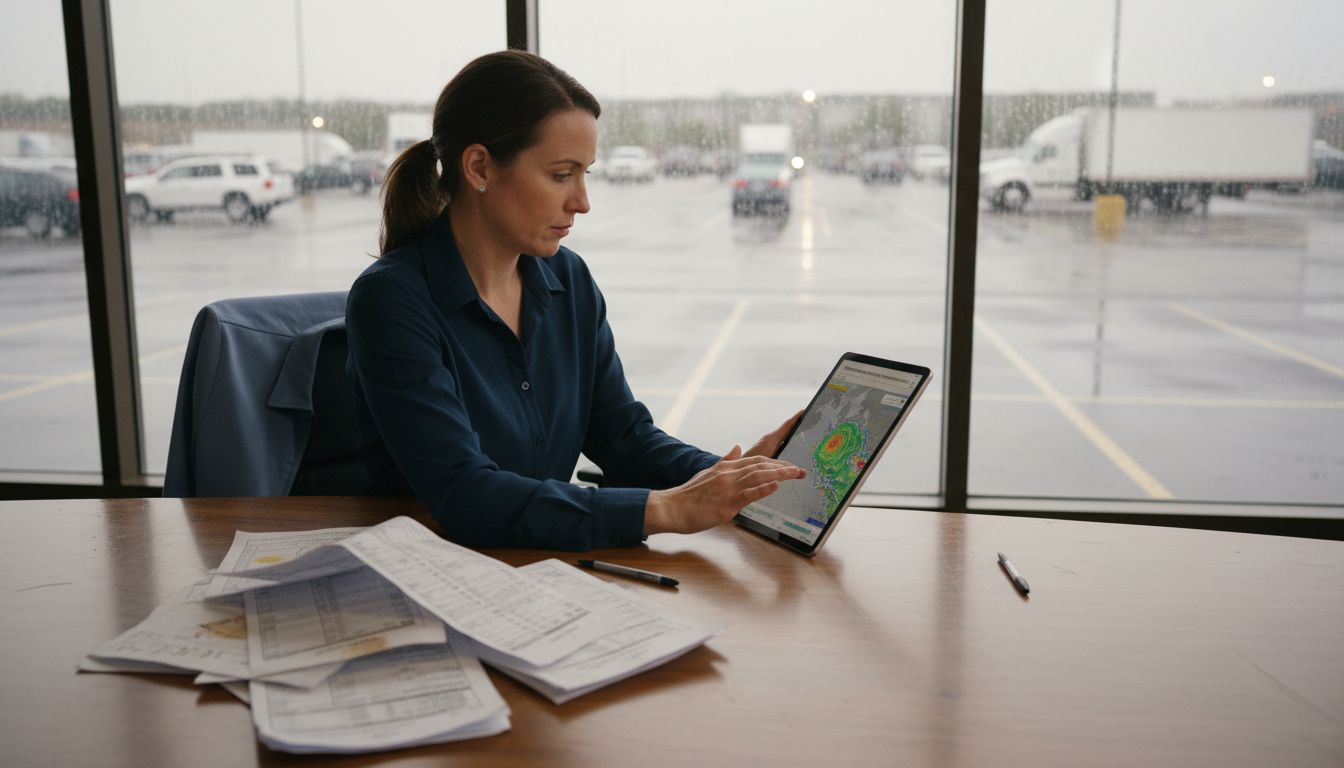
Beyond physical infrastructure challenges, manufacturers must navigate complex transitional risks driven by evolving climate regulations and technological requirements. These risks compel organizations to invest in adaptive technologies, resilient infrastructure, and sophisticated risk management frameworks. Emerging sustainability mandates are pushing companies to adopt low-carbon transportation methods, develop climate-resistant warehouse designs, and implement advanced monitoring systems that can predict and mitigate potential climate-related disruptions.
Expert Recommendation: Develop a comprehensive climate risk assessment framework that integrates predictive modeling, infrastructure resilience planning, and adaptive logistics technologies to proactively manage potential supply chain disruptions.
US Regulatory Compliance for Sustainability
The landscape of sustainability regulations in US manufacturing is rapidly evolving, characterized by a complex interplay between federal initiatives, state-level mandates, and emerging stakeholder expectations. Manufacturers must navigate an increasingly intricate regulatory environment that demands unprecedented levels of transparency, environmental accountability, and strategic reporting.
Regulatory compliance for sustainability has become a critical strategic imperative, with significant variations emerging between federal and state-level approaches. While federal regulations like Securities and Exchange Commission (SEC) climate disclosure rules have faced legal challenges, states such as California have proactively enacted stringent climate reporting legislation. This regulatory patchwork creates a challenging compliance landscape where manufacturers must develop adaptable strategies to meet diverse and sometimes conflicting requirements.
The sustainability compliance framework extends beyond traditional environmental reporting, encompassing comprehensive assessments of carbon emissions, supply chain practices, and social impact metrics. Companies are increasingly required to demonstrate not just compliance, but a proactive approach to reducing environmental footprints and implementing sustainable practices. This shift demands robust data collection systems, transparent reporting mechanisms, and strategic investments in technologies that support comprehensive sustainability goals.
Expert Recommendation: Develop a dynamic compliance management system that can rapidly adapt to changing regulatory requirements, integrating real-time emissions tracking, comprehensive reporting capabilities, and agile sustainability strategy development.
Financial Costs and Insurance Implications
Climate change is transforming the financial landscape for US manufacturing, creating unprecedented challenges in risk management, insurance coverage, and economic sustainability. The traditional cost structures and risk assessment models are being fundamentally challenged by increasingly unpredictable and severe environmental disruptions.
Climate-related supply chain risks are driving dramatic shifts in insurance and financial strategies, with annual losses from extreme weather events escalating beyond $100 billion. Manufacturing companies now face significantly higher insurance premiums, increased operational expenditures, and potential asset depreciation due to climate vulnerability. These financial pressures compel organizations to develop sophisticated risk mitigation strategies that go far beyond traditional insurance coverage.
The insurance industry is rapidly adapting its risk assessment models, requiring manufacturers to provide comprehensive climate risk documentation and demonstrate proactive resilience planning. This shift means companies must invest in advanced technologies for climate risk monitoring, develop detailed contingency plans, and maintain transparent reporting mechanisms that showcase their commitment to managing environmental vulnerabilities. The financial implications extend beyond direct asset protection, encompassing potential revenue losses, supply chain disruptions, and long-term strategic repositioning.
Expert Recommendation: Conduct a comprehensive climate risk financial assessment that quantifies potential losses, explores adaptive insurance strategies, and develops a dynamic financial resilience framework.
Effective Mitigation and Adaptation Solutions
US manufacturing supply chains must adopt a holistic approach to climate resilience, integrating sophisticated technological solutions with strategic organizational transformation. The complexity of climate challenges demands comprehensive, multifaceted mitigation strategies that address both immediate operational risks and long-term sustainability goals.
Climate adaptation strategies require a proactive, integrated approach to supply chain management, focusing on comprehensive risk assessment, advanced technological integration, and flexible operational frameworks. This involves developing robust supplier tier mapping, implementing sophisticated early warning systems, and creating dynamic business continuity plans that can rapidly respond to emerging environmental challenges. Manufacturers must invest in predictive technologies that enable real-time monitoring of climate risks, allowing for swift strategic adjustments.
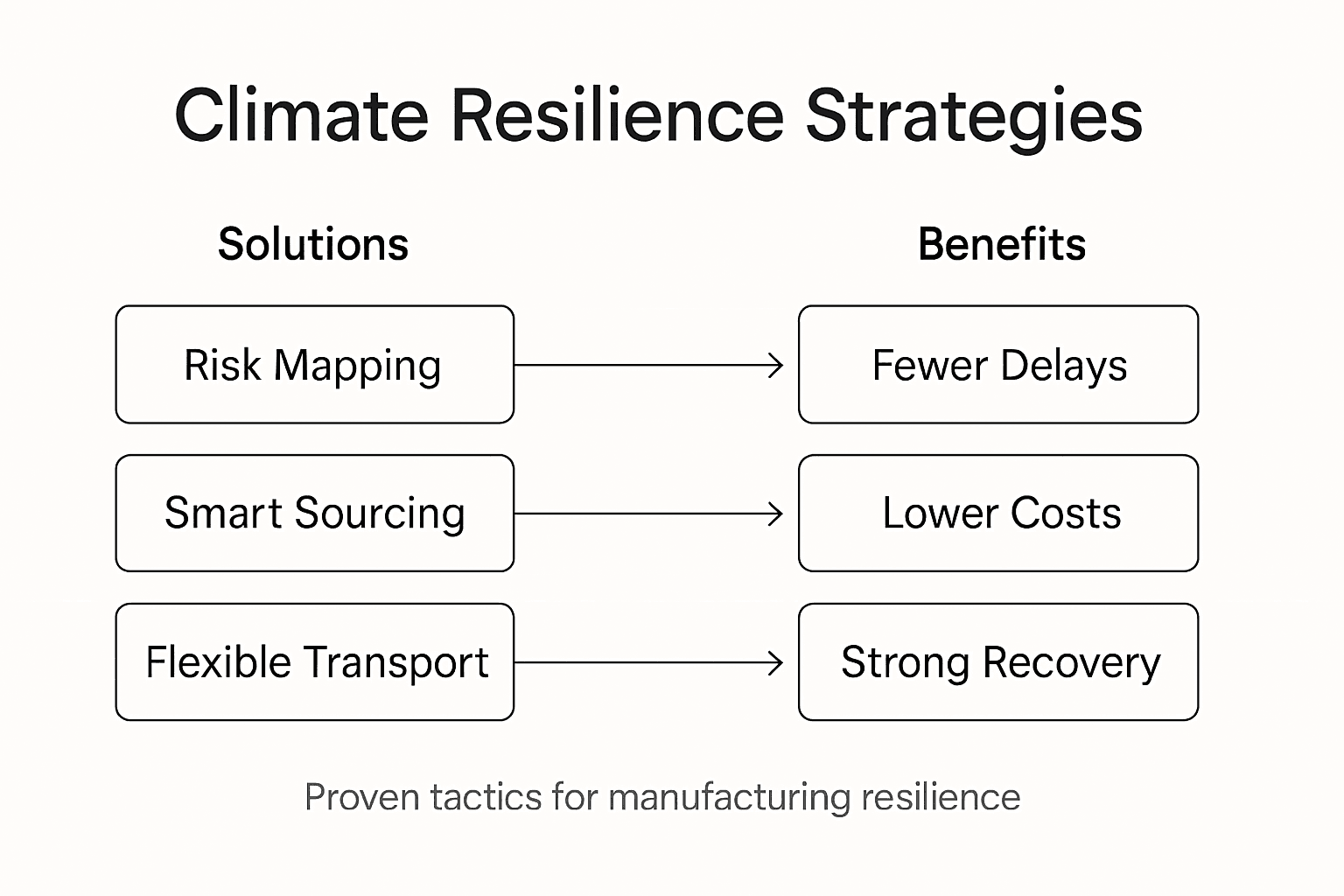
The most effective mitigation solutions combine technological innovation with strategic planning, encompassing multiple interconnected approaches. This includes adopting low-carbon technologies, enhancing energy efficiency, developing climate-resilient infrastructure, and creating diversified supply network models that can withstand environmental disruptions. Organizations must view these strategies not as cost centers, but as critical investments in long-term operational sustainability and competitive advantage.
Expert Recommendation: Develop a comprehensive climate resilience framework that integrates advanced predictive technologies, diversified supply chain strategies, and continuous adaptive planning mechanisms.
Review key strategies for climate-resilient supply chains:
| Strategy | Main Focus | Intended Benefit |
|---|---|---|
| Predictive Technologies | Real-time risk monitoring | Faster response to disruptions |
| Diversified Supply Networks | Multi-region sourcing | Reduces single-point vulnerabilities |
| Climate-Resilient Infrastructure | Strengthened facilities | Minimized weather-related damages |
| Low-Carbon Technologies | Emissions reduction | Meets sustainability requirements |
Strengthen Your Supply Chain Against Climate Disruptions with Worldwide Express
Climate change is creating new and urgent challenges that threaten the stability of US manufacturing supply chains. From extreme weather damaging transportation routes to evolving sustainability regulations, businesses face complex operational risks demanding fast, reliable logistics solutions. If you are struggling to maintain smooth international shipping, manage customs compliance, or adapt to shifting supply chain demands, you are not alone.
Partner with Worldwide Express to build climate-resilient supply chains through expert freight forwarding, customs brokerage, and supply chain management tools. Our global reach and years of industry experience empower your business to reduce vulnerabilities by ensuring timely deliveries, transparent documentation, and end-to-end shipment tracking. Act now to safeguard your operations from disruptions and meet evolving regulatory requirements confidently. Explore how our tailored solutions can strengthen your logistics at Worldwide Express. Learn more about our comprehensive international shipping services and optimize your freight forwarding needs today.
Frequently Asked Questions
What are the main types of climate risks affecting supply chains?
Climate risks affecting supply chains can be categorized into physical risks, which include severe weather events like floods and storms that disrupt transportation and infrastructure, and transitional risks, which involve regulatory changes and market shifts towards sustainability.
How can manufacturers mitigate climate change impacts on their supply chains?
Manufacturers can mitigate climate change impacts by conducting comprehensive climate vulnerability assessments, investing in resilient infrastructure, diversifying their supply sources, and integrating climate risk management into strategic planning.
What role do insurance and financial strategies play in climate risk management?
Insurance and financial strategies are crucial for managing climate risks, as companies face rising insurance premiums and increased financial pressures from climate-related disruptions. Developing sophisticated risk mitigation strategies and maintaining transparent reporting mechanisms are essential for financial resilience.
Why is regulatory compliance important for sustainability in manufacturing?
Regulatory compliance is important for sustainability in manufacturing because it ensures that companies meet diverse and evolving environmental accountability standards, reduces risks of penalties, and enhances their reputation among stakeholders through proactive environmental management.