Every American logistics manager knows that a single customs delay can disrupt an entire supply chain. With more than 50 percent of global trade passing through trading blocs, understanding these powerful alliances is not just useful but essential. Trading blocs shape international shipping by lowering costs and minimizing paperwork, helping mid-sized American companies move goods quickly and predictably across borders. This guide offers practical insights on how adopting trading bloc strategies can directly improve your company’s shipping efficiency and compliance.
Table of Contents
- What Trading Blocs Are and How They Work
- Major Types of Trading Blocs and Their Impact
- Streamlined Customs and Documentation Processes
- Lower Costs and Reduced Shipping Barriers
- Risk Management and Compliance Considerations
Key Takeaways
| Point | Details |
|---|---|
| Understanding Trading Blocs | Trading blocs are strategic partnerships that reduce trade barriers and stimulate international commerce among member nations. |
| Types of Trading Blocs | Key types include Free Trade Areas, Customs Unions, Common Markets, and Economic Unions, each offering distinct benefits and challenges. |
| Streamlined Customs Processes | Trading blocs enhance shipping efficiency through electronic documentation and standardized procedures, lowering costs and minimizing delays. |
| Compliance and Risk Management | Businesses must prioritize trade compliance by adapting to regulatory changes and implementing robust monitoring systems for risk mitigation. |
What Trading Blocs Are and How They Work
Trading blocs represent strategic economic partnerships where countries collaborate to reduce trade barriers and create more seamless international commerce. Trade blocs are multilateral agreements designed to promote economic integration by systematically eliminating tariffs, quotas, and import restrictions among member nations. These collaborative frameworks enable countries to work together, creating more efficient and competitive economic environments.
At their core, trading blocs function through several key mechanisms. They typically establish common regulatory standards that harmonize business practices across member countries. Trading blocs aim to increase trade among member countries by stimulating economic cooperation and facilitating smoother cross-border transactions. The primary goals include reducing transaction costs, creating larger unified markets, and providing members with enhanced global economic positioning.
Trading blocs can take multiple forms, each with distinct characteristics:
- Free Trade Areas: Eliminate most trade barriers between members
- Customs Unions: Establish common external trade policies
- Common Markets: Allow free movement of goods, services, capital, and labor
- Economic Unions: Integrate monetary and fiscal policies
By establishing these interconnected economic frameworks, trading blocs help businesses access broader markets, reduce regulatory complexities, and create more predictable international trade environments. Logistics managers can leverage these arrangements to streamline shipping processes, reduce customs complications, and optimize international supply chain strategies.
Pro tip: When navigating trading bloc regulations, always consult current official documentation and work closely with local trade representatives to understand the most recent compliance requirements and potential advantages.
Major Types of Trading Blocs and Their Impact
Trading blocs represent sophisticated economic frameworks with multiple structures designed to enhance international trade and cooperation. Several primary types of trading blocs exist, each with unique characteristics and strategic objectives, ranging from basic free trade agreements to complex economic unions that deeply integrate member economies.
The most prominent types of trading blocs include:
- Free Trade Areas (FTAs): Remove internal trade barriers while maintaining independent external tariffs
- Customs Unions: Establish common external trade policies in addition to eliminating internal barriers
- Common Markets: Enable free movement of goods, services, labor, and capital
- Economic Unions: Coordinate economic policies across member states
- Monetary Unions: Adopt a shared currency and unified monetary policy
Trading blocs influence economic dynamics through trade creation and diversion effects, fundamentally reshaping how member countries interact commercially. Trade creation occurs when high-cost domestic production is replaced by more efficient imports from member countries, while trade diversion shifts trade patterns away from non-member nations toward bloc participants. These mechanisms can significantly impact economic welfare, competitive landscapes, and international business strategies.
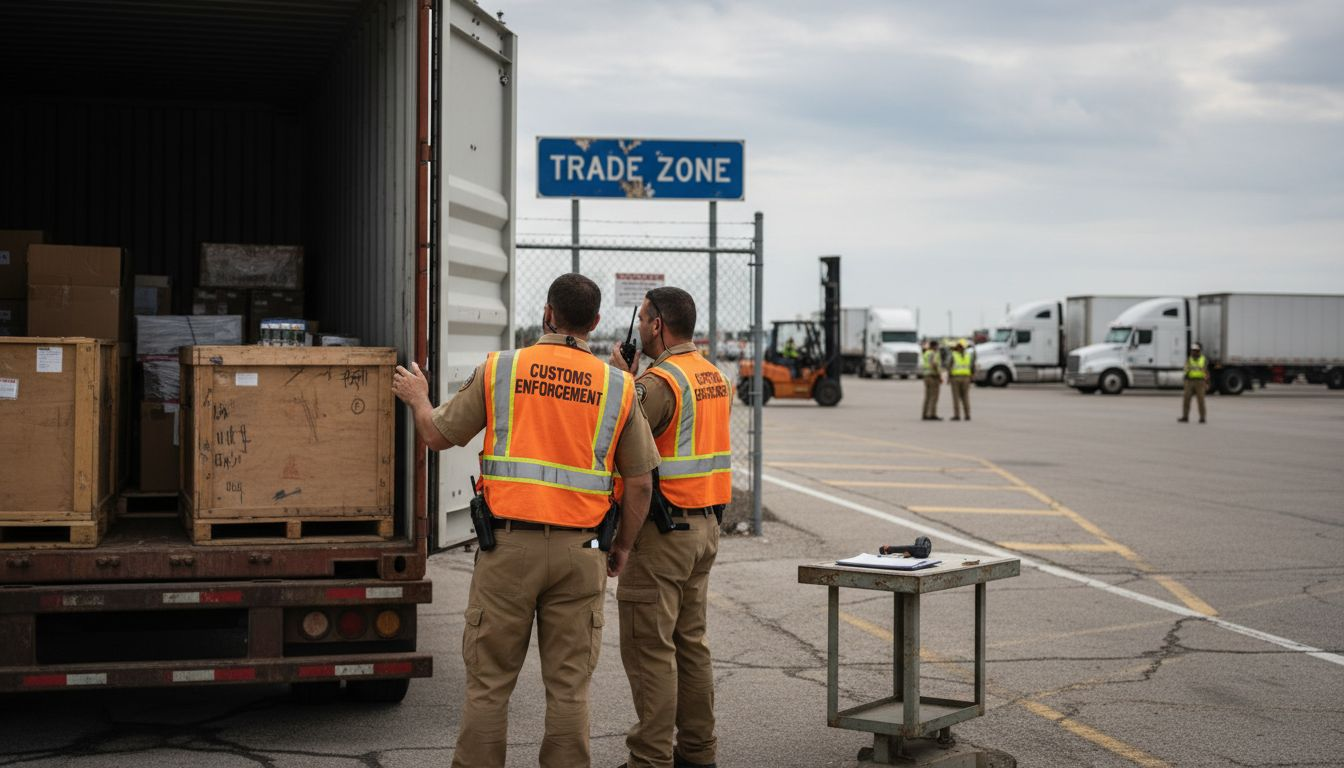
For logistics managers and international shipping professionals, understanding these trading bloc structures is critical. Each type of bloc presents unique opportunities and challenges for cross-border trade, affecting everything from tariff calculations to regulatory compliance. By comprehending these frameworks, businesses can strategically navigate complex international trade environments and optimize their global supply chain operations.
Here’s a summary of the most common trading bloc types and their distinct business implications:
| Trading Bloc Type | Key Feature | Market Access Impact | Example Bloc |
|---|---|---|---|
| Free Trade Area | Removes internal trade barriers | Expands member market reach | NAFTA |
| Customs Union | Unified external trade policies | Simplifies tariff processes | MERCOSUR |
| Common Market | Free movement of resources | Increases labor/capital flow | European Economic Area |
| Economic Union | Shares monetary/fiscal policies | Deepens economic integration | European Union |
| Monetary Union | Shared currency & monetary policy | Eases cross-border payments | Eurozone |
Pro tip: Always conduct thorough research on specific trading bloc regulations and consult with international trade experts to understand the nuanced implications for your particular industry and shipping routes.
Streamlined Customs and Documentation Processes
Trading blocs have revolutionized international shipping by implementing sophisticated mechanisms to reduce administrative barriers and enhance documentation efficiency. These strategic reforms transform complex cross-border transactions into more streamlined, predictable processes that significantly minimize delays and reduce operational costs for businesses engaged in international trade.
Key components of streamlined customs processes typically include:
- Electronic Documentation Systems: Replacing paper-based processes with digital platforms
- Standardized Documentation Formats: Creating uniform templates across member countries
- Automated Customs Clearance: Implementing technology-driven verification mechanisms
- Harmonized Regulatory Standards: Establishing consistent compliance requirements
- Real-time Information Sharing: Enabling faster communication between customs authorities
The technological infrastructure supporting these streamlined processes represents a quantum leap in international shipping efficiency. Electronic documentation systems have dramatically reduced the time, cost, and complexity of export and import procedures, enabling businesses to move goods across borders with unprecedented speed and transparency. How to Avoid Customs Delays becomes less of a challenge when trading blocs implement these advanced technological solutions.
For logistics managers, understanding and leveraging these streamlined processes is crucial. By embracing digital documentation, standardized protocols, and automated verification systems, companies can significantly reduce customs-related risks, minimize potential delays, and optimize their international shipping strategies. The result is a more predictable, efficient, and cost-effective global trade environment that benefits businesses of all sizes.

The following table highlights how trading blocs streamline international shipping and customs operations for businesses:
| Efficiency Feature | Operational Benefit | Logistics Impact |
|---|---|---|
| Electronic Documentation | Speeds up paperwork | Reduces import/export delays |
| Standardized Formats | Lowers document errors | Simplifies compliance |
| Automated Clearance | Shortens processing times | Minimizes shipment hold-ups |
| Harmonized Regulations | Reduces regulatory uncertainty | Smooths cross-border trade |
Pro tip: Invest in comprehensive digital documentation training for your team and stay updated on the latest electronic customs clearance technologies to maintain a competitive edge in international shipping.
Lower Costs and Reduced Shipping Barriers
Trading blocs represent a transformative approach to reducing international shipping expenses and eliminating complex trade barriers. Regional trade arrangements systematically lower trade costs by harmonizing regulations and reducing tariffs, creating a more streamlined and economically efficient environment for businesses engaged in cross-border commerce.
The primary mechanisms for cost reduction in trading blocs include:
- Tariff Elimination: Removing or significantly reducing import/export taxes
- Regulatory Harmonization: Standardizing compliance requirements across member countries
- Simplified Customs Procedures: Reducing administrative overhead and processing times
- Shared Infrastructure: Developing cooperative logistics and transportation networks
- Bulk Negotiation Advantages: Leveraging collective economic power to negotiate better rates
Economic unions like the European Union, NAFTA, and ASEAN have demonstrated substantial economic benefits by creating more accessible and cost-effective shipping environments. These arrangements enable businesses to reduce international container shipping rates by minimizing bureaucratic complexities and creating more direct, efficient trade routes.
For logistics managers, understanding these economic dynamics is crucial. Trading blocs essentially function as collaborative platforms that redistribute economic advantages, allowing member countries to create more competitive and cost-effective shipping ecosystems. By reducing transportation expenses, eliminating redundant regulatory processes, and fostering a more integrated market environment, these blocs provide tangible financial benefits that directly impact a company’s bottom line.
Pro tip: Continuously monitor trading bloc regulations and actively explore opportunities for consolidating shipments to maximize cost reduction strategies.
Risk Management and Compliance Considerations
Navigating trade compliance complexities has become increasingly critical for businesses operating within international trading blocs. The evolving global landscape demands sophisticated risk management strategies that anticipate regulatory shifts, geopolitical tensions, and complex international trade requirements.
Key compliance considerations for businesses include:
- Export Control Management: Understanding and adhering to international trade regulations
- Sanctions Monitoring: Tracking and preventing transactions with restricted entities
- Customs Regulation Compliance: Maintaining accurate documentation and declarations
- Geopolitical Risk Assessment: Analyzing potential disruptions in trade relationships
- Regulatory Change Tracking: Implementing adaptive compliance frameworks
Successful risk management requires a proactive and comprehensive approach. Effective trade compliance strategies demand embedding robust monitoring systems throughout organizational operations, ensuring that businesses can quickly adapt to regulatory changes and mitigate potential risks. Supply chain risk management practices play a crucial role in developing resilient international shipping strategies.
Logistics managers must recognize that compliance is not a static process but a dynamic, continuous effort. By developing flexible frameworks that can quickly respond to regulatory changes, businesses can protect themselves from potential penalties, operational disruptions, and reputational damage. This approach transforms compliance from a potential liability into a strategic competitive advantage.
Pro tip: Develop a dedicated compliance team that regularly reviews international trade regulations and maintains a real-time update system for tracking global regulatory changes.
Unlock Smooth International Shipping with Trusted Trading Bloc Expertise
Navigating the complexities of trading blocs requires expert knowledge in customs clearance, compliance, and streamlined documentation processes. This article highlights the challenges businesses face with regulatory harmonization, tariff elimination, and risk management within various trading bloc structures. At Worldwide Express, Inc., we understand these hurdles and deliver tailored logistics solutions that align perfectly with the benefits trading blocs offer. Our experienced team specializes in simplifying cross-border freight forwarding and customs brokerage to help you minimize delays, reduce costs, and ensure regulatory compliance—turning potential risks into confident, seamless global trade.
Whether you are leveraging free trade agreements or operating within a customs union, our comprehensive services include air and ocean transportation, trucking, and supply chain management tools designed to maximize your international shipping efficiency. Explore how you can benefit today by partnering with us for reliable customs clearance and expert freight forwarding solutions. Your global supply chain deserves nothing less than precision and proven expertise that supports growth and competitive advantage.
Ready to transform your international shipping challenges into opportunities with advanced logistics support?
Discover how our customized strategies bring the full advantages of trading blocs directly to your business at Worldwide Express, Inc.. Get started now by visiting our global shipping services and experience logistics that keep your goods moving without compromise.
Frequently Asked Questions
What are trading blocs?
Trading blocs are agreements between countries to reduce trade barriers and promote economic cooperation, facilitating smoother and more efficient international commerce.
How do trading blocs improve international shipping efficiency?
Trading blocs streamline customs and documentation processes, utilize electronic documentation systems, and standardize regulations, which collectively reduce delays and lower operational costs for businesses engaged in international trade.
What types of trading blocs exist and how do they differ?
There are several types of trading blocs, including Free Trade Areas, Customs Unions, Common Markets, Economic Unions, and Monetary Unions. Each type varies in the level of economic integration and regulatory harmonization it offers to member countries.
How can businesses benefit financially from trading blocs?
Businesses can benefit from trading blocs by realizing lower shipping costs due to tariff elimination, simplified customs procedures, and reduced regulatory complexities, which ultimately enhance competitiveness in international markets.
Recommended
- Free Trade Agreement Benefits for U.S. Logistics – Worldwide Express, Inc.
- Understanding Ocean Carrier Alliances for Trade Success – Worldwide Express, Inc.
- Blockchain in Shipping: Complete Guide for Logistics – Worldwide Express, Inc.
- Freight Consolidation Strategies: Complete Guide – Worldwide Express, Inc.