Managing international shipping for your import or export business means facing a maze of regulations, complex paperwork, and constant uncertainty. A single missed document or an overlooked rule can lead to expensive delays and frustrated customers. Every decision, from choosing a freight forwarder to understanding customs requirements, can impact your bottom line and reputation.
You need clear, actionable guidance to turn unpredictable shipping processes into smart, reliable business practices. This list is packed with practical steps that will help you understand compliance, protect your cargo, and reduce unnecessary costs.
Get ready to discover focused strategies and insider tips that make international logistics easier and more profitable for you. Stay ahead of costly mistakes and bring more control to your global shipping with these key insights.
Table of Contents
- Understand Key International Shipping Regulations
- Select the Right Freight Forwarder for Your Needs
- Optimize Documentation and Customs Clearance
- Leverage Cargo Insurance for Risk Management
- Utilize Global Shipment Tracking Technology
- Integrate Warehousing and Supply Chain Solutions
- Implement Cost-Saving Strategies for Shipping
Quick Summary
| Key Insight | Explanation |
|---|---|
| 1. Understand Shipping Regulations | Compliance with international shipping regulations prevents delays and penalties in your operations. Stay updated with changes from authorities like the IMO. |
| 2. Choose the Right Freight Forwarder | Selecting a freight forwarder with specific expertise can enhance efficiency and minimize compliance mistakes, ultimately benefiting your bottom line. |
| 3. Optimize Documentation Accuracy | Ensuring correct and complete documentation avoids customs delays and related costs, streamlining your shipping process significantly. |
| 4. Leverage Cargo Insurance | Utilizing cargo insurance protects against financial losses from damage or theft, allowing you to maintain business continuity amid disruptions. |
| 5. Implement Cost-Saving Strategies | Analyzing shipping costs and employing strategies like consolidation can significantly reduce expenses, enhancing your overall budget and pricing strategy. |
1. Understand Key International Shipping Regulations
International shipping doesn’t operate in a legal vacuum. Your shipments must comply with a complex web of rules that span multiple countries, agencies, and governing bodies. Understanding these regulations is not optional if you want to avoid delays, penalties, or seized cargo.
The foundation of modern maritime shipping rests on international conventions and treaties. The International Maritime Organization (IMO) is the United Nations specialized agency responsible for safety, security, and environmental protection across shipping. Think of the IMO as the rule maker for global maritime trade. They develop international treaties that member states enforce, covering everything from ship safety standards to pollution prevention requirements and crew welfare protocols. When the IMO updates its rules, your operations must adapt accordingly.
For your import/export business, several key regulatory frameworks directly affect your shipping operations. Safety conventions mandate specific equipment, crew qualifications, and maintenance schedules on vessels. Environmental regulations restrict what pollutants ships can release and require fuel quality documentation. Security protocols demand advance cargo information and screening procedures before vessels depart. Documentation requirements vary by destination country but universally require accurate bills of lading, commercial invoices, and customs declarations.
One critical area that impacts your bottom line is understanding regional compliance demands. The Rotterdam Rules, for example, represent a modern approach to standardizing maritime liability and shipper obligations across countries that adopt them. This kind of harmonization reduces confusion and potential disputes. UNCTAD (United Nations Conference on Trade and Development) actively works on international maritime law implementation to help nations adopt and enforce these standards consistently. When more countries align their regulations, your shipping becomes more predictable.
Why should you care about regulations beyond basic compliance? Regulations shape shipping timelines and costs. A vessel that fails a safety inspection cannot leave port, halting your entire shipment. Environmental violations trigger substantial fines that get passed to the shipper. Missing or incorrect documentation causes customs holds that add days to delivery. Your freight forwarder should stay current on regulation changes in your target markets, but you need basic awareness of which rules affect your operations.
Practical application means knowing your shipper responsibilities under the rules. You must provide accurate cargo information within the timeframes specified by port authorities. Hazardous materials require specific certifications and declarations. Restricted items need pre-approval before shipment. Your documentation must match your physical cargo exactly, or customs will investigate the discrepancy. Partner with a logistics provider experienced in handling regulations for your specific product categories and destination markets.
Pro tip: Subscribe to updates from the IMO and your country’s customs authority to stay informed about regulatory changes, then communicate these changes to your supply chain partners immediately so everyone adjusts procedures in sync.
2. Select the Right Freight Forwarder for Your Needs
Your freight forwarder is your logistics partner, not just a service provider. The wrong choice can cost you money through inefficiency, compliance mistakes, or missed deadlines. The right one becomes an extension of your team, handling the complexity of customs, documentation, and carrier coordination while you focus on your business.
Finding the right freight forwarder requires understanding what you actually need. Start by identifying your specific requirements. Are you primarily shipping air cargo or ocean freight? Do you need specialized handling for hazardous materials, temperature controlled goods, or oversized equipment? What countries dominate your trade lanes? A forwarder with deep expertise in your product category and destinations will navigate regulations and logistics more effectively than a generalist trying to serve every shipper equally.
Experience matters significantly in this industry. A forwarder with years of history in your specific trade corridors understands the quirks of customs procedures in your target markets. They know which ports operate efficiently and which ones tend toward delays. They have established relationships with reliable carriers that provide better service and competitive rates. They can anticipate problems before they happen because they have seen those problems before.
The scope of services varies dramatically between forwarders. Some handle only basic freight forwarding, while others offer integrated solutions including warehousing, customs brokerage, cargo insurance, and supply chain management tools. Consider whether you need a full service partner or a focused specialist. Many mid-sized import/export companies benefit from a partner offering comprehensive freight forwarding services that eliminates the need to coordinate multiple vendors.
Technology and transparency are increasingly important differentiators. Your forwarder should provide real time shipment tracking so you know where your cargo is at any moment. They should offer online freight quote systems that give you accurate pricing without back and forth email exchanges. Clear communication about costs prevents surprises when invoices arrive. Some forwarders still operate with outdated systems that make simple status checks frustrating. Modern logistics demands partners who embrace digital tools.
Cost is important but should never be the only factor. The cheapest forwarder might cut corners on documentation review, leading to customs delays that cost you far more than any savings. They might use unreliable carriers that miss delivery windows. Ask for references from companies similar to yours. Talk to actual customers about their experience, not just what the sales team promises. Request quotes for your typical shipment profiles so you can compare apples to apples.
Regulatory expertise becomes critical when handling items with special requirements. A forwarder familiar with import regulations for your specific products prevents costly mistakes. They understand licensing requirements, tariff classifications, and origin documentation that customs authorities demand. This expertise directly protects your supply chain from unexpected holds or rejections.
Pro tip: Create a scorecard evaluating potential forwarders across dimensions like service coverage in your markets, technology capabilities, customer references, specialized expertise for your products, and fee transparency, then weight each factor by importance to your operations for an objective comparison.
3. Optimize Documentation and Customs Clearance
Documentation errors are the silent killer of efficient international shipping. A single misclassified product, missing signature, or inconsistent detail can halt your shipment at customs for days or weeks. Getting documentation right the first time is far cheaper than fixing problems after your cargo arrives at the border.
The stakes are real. Customs officials review thousands of shipments daily. They use documentation to verify that goods match your declared values, quantities, and descriptions. They cross check this against tariff classifications to calculate proper duties. They verify that all required certificates and licenses accompany restricted items. When your paperwork is incomplete or contains errors, inspectors must physically examine your cargo to resolve discrepancies. Physical inspections add time and cost. Your shipment sits idle while inspectors unpack, inspect, and repack containers. Meanwhile, your customer waits and your supply chain rhythms get disrupted.
Understanding the key documents required for your shipments prevents most problems. The bill of lading serves as your contract with the carrier and proof of shipment. The commercial invoice details the goods, quantities, prices, and payment terms. The packing list shows exactly what is in each box or pallet. The certificate of origin proves where goods were manufactured, which affects tariff treatment in many countries. Additional documents depend on your products. Hazardous materials need safety data sheets and hazmat certifications. Electronics may require certificates of compliance. Certain foods need health certificates. Your forwarder knows which documents your specific products require.
Accuracy in product classification is critical because it determines duty rates and regulatory requirements. Different tariff codes trigger different import rules. A chemical compound might classify as a raw material in one category and a finished product in another, with vastly different duty implications. Misclassification either overstates your costs through excess duties or triggers customs penalties if discovered during audit. The World Customs Organization develops uniform customs procedures that many countries adopt to standardize how goods get classified and processed.
Documentation standardization across borders saves you time and money. When countries adopt harmonized documentation standards, your paperwork requires fewer modifications as shipments cross different borders. Information flows more smoothly from shipper to forwarder to customs broker to destination customs authority. Less rework means faster clearance.
Practically speaking, work with your forwarder to establish document templates for your standard shipments. These templates ensure consistency and reduce the chance of omissions. Before submitting any shipment, verify that all values match across every document. Your invoice price should match your packing list, which should match your bill of lading. Inconsistencies trigger additional scrutiny. Provide accurate HS codes (harmonized tariff codes) based on your products’ actual composition and intended use. When in doubt, consult with a customs broker who specializes in your product category.
Timing matters for customs clearance. Submit advance cargo information to customs authorities as required by port regulations. Many ports now demand 24 to 72 hours advance notice before vessels arrive. Submitting this information early gives customs time to assess your shipment’s risk level. Low risk shipments often clear without physical inspection. Submitting late forces inspectors to expedite their review, increasing the chance they examine your cargo physically.
Pro tip: Maintain a master documentation checklist specific to each product line you ship, update it whenever regulations change, and share it with your forwarder so every shipment gets reviewed against the same standards before submission to customs.
4. Leverage Cargo Insurance for Risk Management
Cargo moves through unpredictable environments. Containers get damaged during loading and unloading. Shipments get delayed at ports due to weather or congestion. Theft happens, especially for high value goods. Cargo insurance transforms these potential financial disasters into manageable, predictable costs.
Think of cargo insurance as business interruption prevention. When a shipment arrives damaged or goes missing, your customer still expects their goods on time. Your production line might depend on that incoming material. Without insurance, you absorb the entire loss while trying to source replacement inventory and manage customer relationships. With insurance, you file a claim and recover your investment, allowing you to focus on solving the logistics problem rather than the financial crisis.
Understanding what cargo insurance actually covers helps you choose appropriate protection. Standard policies cover physical loss or damage to goods during transit. They protect against losses from accidents, weather, fire, and collision. Enhanced policies add coverage for theft, pilferage, and nondelivery. Some policies cover strikes, riots, and civil unrest. The scope of coverage depends on your specific risks and the premium you are willing to pay. Electronics and pharmaceuticals might need different coverage than raw materials or machinery.
The cost of cargo insurance typically ranges from 0.5 to 2 percent of your shipment value, depending on the route, the product, and the coverage level. This cost is relatively small compared to the financial exposure if something goes wrong. A damaged shipment worth $50,000 with no insurance creates a $50,000 loss. A $500 insurance premium on that same shipment transfers that risk to the insurer. The math is compelling for valuable goods.
Rising cargo theft presents a serious risk that many shippers underestimate. Valuable goods like electronics, pharmaceuticals, and designer products attract organized theft rings. Using cargo security standards like TAPA significantly reduces theft risks for high value items. Carriers and logistics providers that achieve TAPA certification maintain enhanced security protocols including facility controls, driver screening, and cargo tracking. When you work with certified partners and maintain appropriate insurance, you create multiple layers of protection against loss.
Practically implementing cargo insurance starts with understanding your exposure. Calculate the value of your average shipment. Assess the risk level based on your routes, products, and carriers. High value goods on long ocean routes merit comprehensive coverage. Lower value shipments on established air routes might need less extensive protection. Work with your forwarder or freight broker to evaluate available cargo insurance options and select policies matching your risk profile.
Document your shipment values accurately because insurance claims require proof of loss. Keep invoices, purchase orders, and detailed packing lists that establish exactly what was shipped and its value. When damage or loss occurs, this documentation becomes critical evidence for your claim. Insurers pay claims based on verified values, not estimates.
Proactive supply chain security strengthens your insurance position. International air cargo security standards and ground transportation security measures reduce the likelihood of loss. When you demonstrate that you follow recognized security practices, insurers view you as lower risk, potentially lowering your premiums. This creates a positive cycle where better security practices reduce your costs.
Pro tip: Review your cargo insurance annually as your business evolves, adjusting coverage levels and deductibles based on changes in shipment values, new routes, or carrier relationships, and always declare high value shipments to your insurer before transit begins.
5. Utilize Global Shipment Tracking Technology
Real time visibility into your shipments transforms how you manage international trade. Without tracking, your cargo becomes a black box once it leaves your warehouse. With modern tracking technology, you know exactly where every container is, what condition it is in, and when it will arrive. This visibility converts uncertainty into actionable information.
Shipment tracking does more than satisfy curiosity. It enables you to answer customer questions with confidence. When a buyer asks where their order is, you provide a specific location and estimated delivery time rather than a vague estimate. This transparency builds trust and reduces support inquiries. It also gives you early warning when problems develop. A shipment delayed at a port gets flagged before it impacts your delivery commitment, giving you time to communicate with customers and adjust your supply chain.
Modern tracking systems connect multiple data sources into a unified view. GPS coordinates show a container’s location. Port authority systems report when cargo is loaded, unloaded, or cleared. Carrier systems track vessel movements and transportation milestones. Customs systems report when documents are approved. End-to-end traceability standards define how these information flows get linked together, enabling you to track shipments globally using standardized barcodes and data carriers. When systems follow these standards, information moves seamlessly between different organizations and countries.
The practical benefit becomes clear when you face a problem. If a shipment arrives late, tracking data shows you exactly where the delay occurred. Was it at the origin port? In transit? At the destination? This pinpoints the responsible party and supports any claims you need to file. If customs holds your shipment, tracking systems help you understand what triggered the inspection and what documents might resolve it. This information helps your forwarder take corrective action.
Integrating tracking data into your own systems creates even greater value. Many modern forwarders offer global shipment tracking systems that connect directly to your ordering or inventory management software. When a shipment is scanned at a port or clears customs, that event automatically updates your inventory records. Your production scheduling adjusts automatically. Your customer receives an automated notification. This automation eliminates manual tracking work and ensures everyone stays synchronized.
Real time visibility also improves your financial planning. You know precisely when inventory will arrive and be available for sale. You can adjust your cash flow projections based on actual delivery dates rather than estimates. You reduce the working capital tied up in transit inventory because you see exactly how long goods spend moving through the supply chain. Over time, this visibility enables you to optimize your entire supply chain timing.
Technology requirements are lower than many shippers assume. Most modern forwarders provide web portals where you log in and view shipment status. Some offer mobile apps so you track on the go. Many integrate with popular business software platforms. You do not need to invest heavily in infrastructure. You simply need to work with logistics partners who maintain modern tracking systems and grant you appropriate access to the data.
Start by understanding what tracking data your current forwarder provides. Ask specifically about port events, customs clearance milestones, and estimated delivery times. Ask whether tracking data can integrate with your business systems. Request access to their tracking portal and test it with an upcoming shipment. Compare how different forwarders present tracking information. The best systems provide clarity about what each milestone means and what happens next.
Pro tip: Set up automated alerts in your tracking system for critical milestones like vessel departure, port arrival, and customs clearance so you get notified immediately when problems occur rather than discovering delays when checking status manually.
6. Integrate Warehousing and Supply Chain Solutions
Warehousing is not just storage. Modern warehouses are dynamic supply chain hubs that add significant value to your international operations. When integrated properly with your overall supply chain strategy, warehousing transforms from a cost center into a competitive advantage.
Think about what happens when goods arrive at your destination country. They need to be received and inspected. They need to be stored safely until customers are ready to purchase. They need to be picked, packed, and prepared for final delivery. They need to be tracked so you know inventory levels at any moment. Traditional warehousing handles these basic functions. Modern integrated warehousing adds layers of value on top. Your warehouse partner performs quality inspections, manages returns, consolidates small orders into efficient shipments, repackages goods for different markets, and handles labeling and compliance documentation.
The variety of warehouse types available gives you options matching your specific needs. Public warehouses offer flexibility because you pay only for space you use and can scale up or down easily. This works well for companies with seasonal demand or fluctuating inventory levels. Private warehouses give you dedicated space and customized operations but require larger capital investment and ongoing commitment. Bonded warehouses allow you to store imported goods without paying duties until goods leave the warehouse for domestic sale or further processing. This defers your cash outflow and improves working capital. Automated warehouses use robotics and advanced systems to move inventory efficiently, reducing labor costs and errors.
The real power comes from integrating warehousing with your broader supply chain operations. When your warehouse system connects to your inventory management software, you get real-time visibility into stock levels across all locations. When it connects to your order management system, customer orders automatically trigger warehouse picking and packing. When it connects to your shipping systems, warehouses automatically schedule pickups when orders are ready. This integration eliminates manual coordination and reduces delays.
For international operations specifically, integrated warehousing solutions deliver several benefits. A warehouse located near your primary market reduces final delivery distances and costs. Warehouses in multiple countries let you hold inventory closer to customers, enabling faster delivery times and better customer service. Strategic warehouse locations help you navigate tariff or regulatory requirements by handling final processing in the destination country rather than the origin.
Modern warehouse management systems coordinate inventory, storage, and distribution to align warehousing with broader supply chain objectives. These systems track every pallet, every case, every unit from arrival through shipment. They optimize storage locations so fast moving items are stored for quick access. They consolidate orders intelligently so you ship full containers rather than partial shipments. They flag damaged goods before they get sold. They manage returns efficiently.
When evaluating warehouse partners, look for capabilities beyond basic storage. Ask about their technology systems. Can they integrate with your software? Do they provide real-time inventory visibility? What value added services do they offer? Some warehouses specialize in your industry and understand your specific needs. A company shipping electronics might need expertise in static sensitive handling. A company shipping pharmaceuticals needs temperature control and security expertise. A company shipping to multiple countries might benefit from a warehouse partner offering cross docking services that consolidate shipments from multiple suppliers.
Implementing integrated warehousing typically happens in phases. Start by moving basic inventory storage to a warehouse partner, maintaining your current order fulfillment process. Once that stabilizes, add real-time inventory integration. Then layer on order management integration so orders automatically flow to the warehouse. Finally, add value added services matching your specific needs. This phased approach reduces disruption while you adapt your processes.
Cost analysis for warehouse integration needs to account for all components. Direct warehousing fees are obvious. But factor in reduced freight costs from consolidation, reduced handling costs from automation, reduced inventory carrying costs from better visibility, and reduced errors and returns from better quality control. When you total these benefits, the warehouse investment typically pays for itself through efficiency improvements.
Pro tip: Negotiate variable cost warehousing agreements where you pay for actual space used rather than committing to fixed space, ensuring you only pay for capacity you need as your business grows and your international operations expand.
7. Implement Cost-Saving Strategies for Shipping
Shipping costs consume a substantial portion of your import/export budget. Every dollar you save on freight directly improves your bottom line or lets you offer more competitive pricing to customers. Implementing systematic cost-saving strategies transforms shipping from a necessary expense into an area where you gain competitive advantage.
Cost reduction starts with understanding your current spending. Many companies never analyze where their shipping dollars actually go. You might be paying premium rates for routes where you could consolidate shipments. You might be using expedited services when standard timing would work fine. You might be shipping partially filled containers when you could wait a few days for additional volume. The first step is obtaining detailed freight reports from your forwarder showing costs by route, by service level, by shipment size, and by carrier. This data reveals patterns you can optimize.
Freight consolidation is one of the most effective cost reduction strategies. When multiple shipments are going to the same destination, consolidating them into one larger shipment dramatically reduces the cost per unit. A forwarder with consolidation capabilities combines shipments from multiple shippers heading to the same region, then divides the container cost among all participants. Your cost per shipment drops because you are paying only your proportional share of the container rather than paying for a full container yourself. This works best for companies without enough volume to fill containers regularly.
Shipping mode selection significantly impacts costs. Ocean freight costs far less than air freight but takes longer. For non urgent shipments, ocean freight typically costs 5 to 10 times less than air. For your cost conscious operation, defaulting to ocean freight for standard shipments and reserving air only for urgent deliveries makes financial sense. Some companies employ a mixed strategy where they use slower, cheaper ocean freight for base inventory and faster air freight only for rush orders or seasonal spikes.
Negotiating carrier rates based on volume commitments can reduce your per unit costs. When you commit to shipping a certain volume with a carrier, they offer discounted rates in exchange for the predictability. This works well for companies with consistent shipping patterns. If your shipping volume is unpredictable, negotiating volume discounts may not work in your favor, but working with your forwarder to identify your average volume can reveal opportunities. Some forwarders themselves offer volume discounts when you consolidate your business with them across multiple shipments and routes.
Route optimization and strategic planning to reduce transportation costs matter for your final mile delivery after cargo arrives. Avoiding failed deliveries through better scheduling and customer communication prevents costly re-delivery attempts. Batching orders geographically so vehicles make efficient routes reduces fuel consumption and labor costs. Working with last mile carriers who specialize in your service area often costs less than attempting delivery yourself.
Timing your shipments strategically manages international shipping expenses. Shipping costs fluctuate based on supply and demand dynamics in global markets. During peak seasons when many companies are shipping, prices increase. During slower seasons, rates drop. If your business allows flexibility, shipping during lower demand periods saves substantially. This requires some inventory planning, but the savings can be significant. Your forwarder can advise you on seasonal pricing trends for your specific routes.
Technology investments in modern shipping practices can reduce costs significantly. Real time tracking prevents the need for status calls and emails. Rate shopping tools let you compare prices from multiple carriers instantly. Automated documentation reduces errors that cause costly delays. Your forwarder’s technology efficiency directly impacts your costs. Ask specifically whether your forwarder uses modern systems that automate routine tasks versus manual processes that require staff time.
Information systems that connect your company to your forwarder’s systems eliminate data entry errors and manual handoffs that increase costs and delays. When everything flows automatically, you reduce overhead costs.
Managing your supply chain resilience also improves cost sustainability. Overly aggressive cost cutting that sacrifices reliability can backfire when a lower cost provider fails you and you scramble to find alternatives. Companies pursuing sustainable cost reduction invest in strong forwarder relationships, maintain some carrier diversity to avoid over dependence on single providers, and balance cost with service quality. This balanced approach keeps costs manageable while maintaining the reliability your business needs.
Pro tip: Conduct a cost analysis quarterly comparing your current freight rates against market rates your forwarder quotes for similar lanes, then use this competitive data in renegotiations to ensure you are getting favorable pricing as market conditions change.
Below is a comprehensive table summarizing the main strategies, steps, and considerations discussed in the article about optimizing international shipping and logistics.
Elevate Your International Shipping with Proven Logistics Expertise
Navigating the complexities of international shipping requires more than just knowing the rules. This article highlights critical challenges like regulatory compliance, documentation accuracy, freight forwarding choice, cargo insurance, and shipment visibility. Businesses face costly delays, customs holds, and unexpected fees without the right partner or strategy. Your goal is clear: streamline your global shipping process to save time, cut costs, and avoid disruptions.
At Worldwide Express, Inc., we understand these pain points and transform them into opportunities for your supply chain success. Our comprehensive freight forwarding services and customs brokerage expertise ensure your shipments meet every regulatory requirement. We provide tailored solutions, from cargo insurance to global shipment tracking technology, that keep your goods moving smoothly and your customers satisfied.
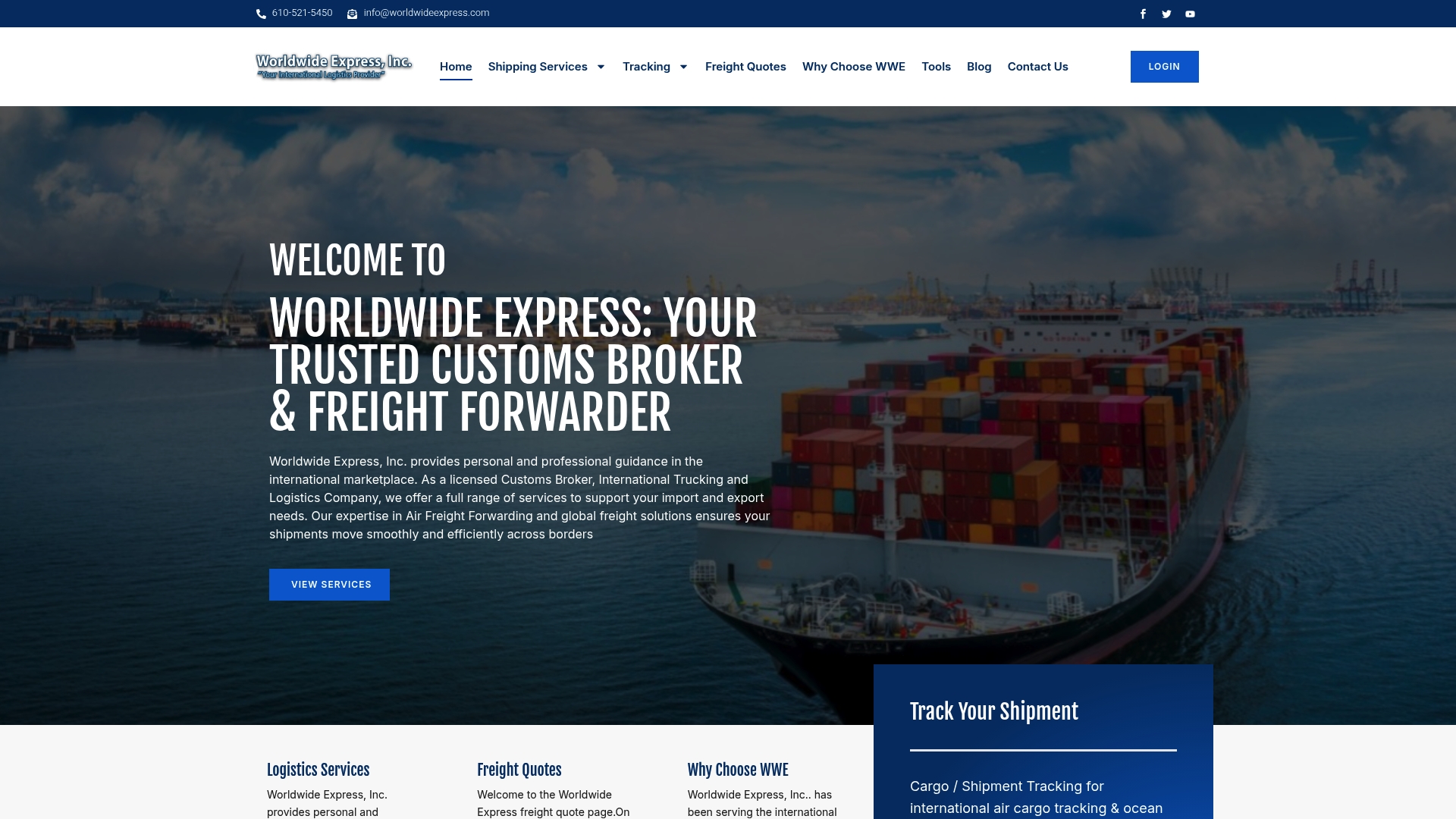
Why wait for costly surprises to disrupt your international trade When you partner with Worldwide Express you gain a trusted logistics expert dedicated to your on-time delivery and compliance success Visit Worldwide Express, Inc. today to explore how our customized international shipping services can help you streamline operations and grow your business with confidence
Frequently Asked Questions
How can I understand key international shipping regulations for my business?
Understanding key international shipping regulations involves researching maritime conventions and treaties, especially those enforced by international agencies. Start by reviewing the documentation requirements and safety conventions relevant to your shipments to avoid unnecessary delays and penalties.
What steps should I take to select the right freight forwarder?
To select the right freight forwarder, identify your specific shipping needs and look for a provider with experience in your trade routes and products. Create a scorecard to evaluate potential candidates against essential criteria like service coverage, technology capabilities, and fee transparency to make an informed choice.
How do I optimize my shipping documentation to prevent customs delays?
Optimizing your shipping documentation starts with ensuring accuracy across all documents, such as the bill of lading and commercial invoice. Implement a master documentation checklist for each product line and regularly review it to ensure compliance with current regulations, reducing the likelihood of customs holds.
What role does cargo insurance play in my shipping strategy?
Cargo insurance protects against financial losses from damaged or lost shipments during transit. Evaluate your average shipment values and select appropriate insurance coverage to mitigate risks; for example, investing around 0.5 to 2 percent of your shipment value can protect against significant losses.
How can I effectively utilize shipment tracking technology?
To effectively utilize shipment tracking technology, ensure that your logistics partner provides real-time tracking capabilities linked to your inventory management system. Set up automated alerts for key milestones such as customs clearance, which helps you proactively manage delays and communicate updates to customers.
What cost-saving strategies can I implement for international shipping?
Implementing cost-saving strategies for international shipping involves analyzing current spending patterns and exploring options like freight consolidation or mode selection. Regularly review your shipping costs and negotiate volume discounts with carriers to potentially reduce expenses by up to 20%.
Recommended
- 7 Essential Steps for Smooth Shipping Abroad Success – Worldwide Express, Inc.
- 7 Essential Steps for Effective Global Ecommerce Shipping – Worldwide Express, Inc.
- Master Ecommerce International Shipping in 5 Steps – Worldwide Express, Inc.
- 7 Essential Tips for Fastest International Shipping Success – Worldwide Express, Inc.
- Small Business Automation Strategies for Faster Growth – Go Online Now