Every cross-border shipment brings its own set of challenges, often leaving logistics teams searching for reliable solutions. For American import and export companies, managing compliance, pricing, and real-time delivery updates can quickly spiral without the right support. A trucking broker’s expertise in connecting shippers to qualified carriers and maintaining Federal Motor Carrier Safety Administration licensing provides vital peace of mind. This article reveals how professional trucking brokers safeguard efficient, compliant shipping while helping logistics managers find solutions tailored to international trade.
Table of Contents
- Defining The Role Of A Trucking Broker
- Types Of Brokers And Freight Arrangements
- How Trucking Brokers Manage Shipments
- Legal Requirements And Compliance Duties
- Cost Structure And Service Value
- Common Pitfalls And How To Avoid Them
Key Takeaways
| Point | Details |
|---|---|
| Role of Trucking Brokers | Trucking brokers are essential intermediaries that connect shippers with carriers to facilitate efficient freight transportation. |
| Types of Brokers | Different types of brokers, such as Customs Brokers and Freight Forwarders, specialize in various aspects of logistics management. |
| Compliance Requirements | Trucking brokers must comply with federal regulations and obtain proper licensing to operate legally and maintain transparency. |
| Pitfalls to Avoid | Common pitfalls include inadequate carrier vetting and poor communication; successful brokers implement proactive strategies to mitigate risks. |
Defining the Role of a Trucking Broker
A trucking broker serves as a critical intermediary in the complex world of transportation logistics, connecting shippers who need to move goods with carriers capable of transporting those shipments. These professionals play a pivotal role in facilitating efficient freight transportation by matching available cargo with appropriate transportation services.
Trucking brokers perform several essential functions in the logistics ecosystem:
- Negotiate shipping rates and contracts with carriers
- Match shipper cargo requirements with appropriate trucking capacity
- Verify carrier credentials and insurance documentation
- Track shipment progress and ensure timely delivery
- Handle invoicing and payment processing between shippers and carriers
To operate legally, these professionals must obtain proper licensing from the Federal Motor Carrier Safety Administration (FMCSA). This regulatory requirement ensures that brokers meet specific professional standards and maintain the integrity of transportation networks.
A trucking broker’s primary value lies in their ability to create efficient connections that minimize transportation costs and maximize logistical effectiveness.
The broker’s workflow typically involves extensive communication and coordination. They utilize specialized load boards, industry connections, and sophisticated logistics software to identify optimal shipping solutions. By understanding market rates, carrier capabilities, and shipper needs, brokers can strategically negotiate pricing and service terms that benefit all parties involved.
Pro tip: When selecting a trucking broker, request references and verify their FMCSA licensing to ensure reliability and compliance.
Types of Brokers and Freight Arrangements
The world of freight logistics encompasses several distinct types of brokers and intermediaries, each playing a unique role in transportation management. Freight logistics professionals operate through specialized arrangements designed to meet diverse shipping requirements and industry challenges.
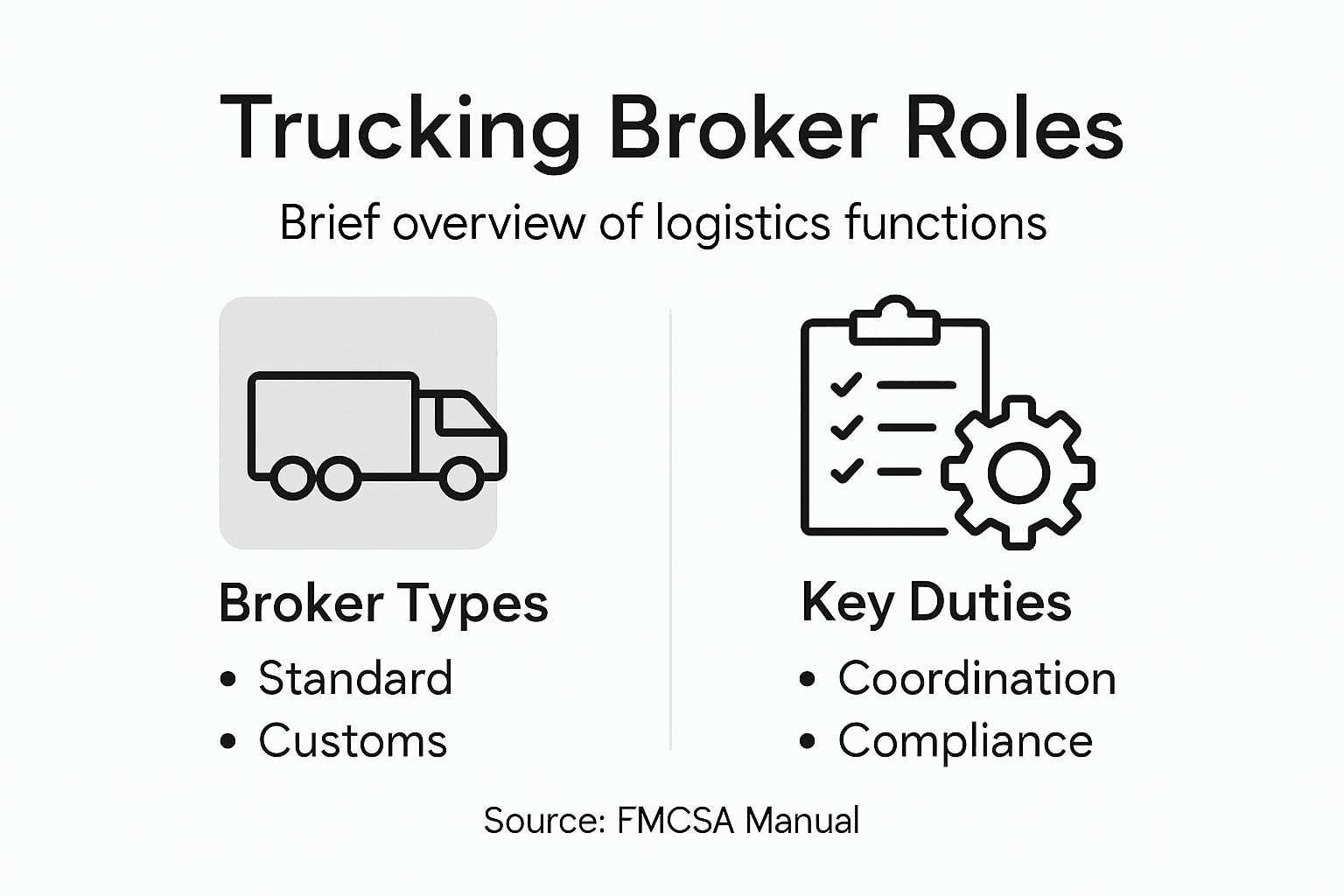
Key types of brokers and freight professionals include:
- Trucking Brokers: Connect shippers with carriers, negotiating transportation services
- Customs Brokers: Manage import/export documentation and regulatory compliance
- Freight Forwarders: Coordinate comprehensive shipping solutions across multiple transportation modes
- Non-Vessel Operating Common Carriers (NVOCC): Provide ocean freight services without owning vessels
- Intermodal Brokers: Specialize in coordinating shipments across different transportation methods
Each broker type serves a specific function within the complex logistics ecosystem. Customs brokers, for instance, focus on ensuring that international shipments meet federal import regulations and complete necessary documentation. They act as critical intermediaries between importers and government agencies, helping businesses navigate complex international trade requirements.
Here’s how broker types differ in scope and regulatory focus:
| Broker Type | Core Responsibility | Main Regulatory Authority |
|---|---|---|
| Trucking Broker | Freight matching & rate negotiation | FMCSA (Federal Motor Carrier Safety) |
| Customs Broker | Import/export compliance | CBP (U.S. Customs and Border Prot.) |
| Freight Forwarder | End-to-end shipment coordination | FMC (Federal Maritime Commission) |
| NVOCC | Ocean freight arrangement (no ships) | FMC |
| Intermodal Broker | Multimodal shipment optimization | FMCSA |
Effective freight arrangements require specialized knowledge of transportation regulations, carrier capabilities, and industry-specific shipping protocols.
Freight forwarders offer more comprehensive services, often managing entire shipping processes from origin to destination. They handle critical aspects such as cargo consolidation, tracking, warehousing, and negotiating freight charges. Unlike traditional brokers, freight forwarders can provide end-to-end logistics solutions that address multiple transportation challenges.
Pro tip: When selecting a logistics broker, verify their specific expertise, licensing credentials, and experience in your particular industry or shipping requirements.
How Trucking Brokers Manage Shipments
Trucking brokers play a critical role in managing complex shipping logistics by coordinating multiple shipment stages with precision and expertise. Their comprehensive approach involves intricate processes that ensure smooth, efficient transportation of goods across various industries and transportation modes.
Key shipment management responsibilities include:
- Identifying and vetting appropriate carriers for specific cargo requirements
- Negotiating competitive shipping rates and contract terms
- Preparing and verifying essential shipping documentation
- Tracking shipment progress in real-time
- Resolving potential logistical challenges proactively
- Ensuring compliance with federal transportation regulations
Carrier selection represents one of the most critical aspects of a trucking broker’s responsibilities. Brokers meticulously evaluate potential carriers based on multiple factors such as safety records, equipment capabilities, insurance coverage, and past performance. This rigorous screening process helps mitigate risks and ensures that shipments are handled by reliable, professional transportation providers.
Effective shipment management requires a strategic blend of technological tools, industry expertise, and proactive problem-solving skills.
Modern trucking brokers leverage advanced technologies like load boards, transportation management systems, and real-time tracking platforms to streamline their operations. These digital tools enable brokers to match shipper requirements with carrier capacities efficiently, monitor shipment progress, and quickly address any unexpected challenges that might arise during transportation.

Pro tip: Always request detailed carrier performance reports and verify licensing credentials before finalizing any shipping arrangements.
Legal Requirements and Compliance Duties
Trucking brokers operate within a highly regulated environment, with strict federal compliance requirements governing their professional conduct. The Federal Motor Carrier Safety Administration (FMCSA) establishes comprehensive guidelines that mandate specific legal and operational standards to ensure the integrity of transportation logistics.
Key legal and compliance obligations include:
- Obtaining official Broker Authority from FMCSA
- Maintaining a mandatory surety bond
- Carrying appropriate cargo insurance
- Maintaining accurate and complete business records
- Adhering to federal transportation safety regulations
- Conducting thorough carrier background checks
- Ensuring all operational documentation meets regulatory standards
Broker Authority represents a critical legal requirement for trucking brokers. This official certification from the FMCSA validates a broker’s legal right to operate and demonstrates their commitment to professional standards. Brokers must submit detailed applications, pay required fees, and prove their financial stability to obtain and maintain this essential credential.
Compliance is not optional – it is the fundamental foundation of trust in transportation logistics.
Recordkeeping stands as another crucial compliance duty. Brokers must meticulously document all transactions, carrier communications, shipment details, and financial interactions. These records serve multiple purposes, including regulatory audits, dispute resolution, and maintaining transparency in transportation operations.
Pro tip: Regularly audit your compliance documentation and schedule annual reviews of your broker authority to prevent unexpected regulatory complications.
Cost Structure and Service Value
Trucking brokers operate within a complex financial landscape, with operational costs significantly impacting industry economics. The average trucking operational expense now reaches $2.27 per mile, creating a challenging environment where strategic pricing and value creation become critical for sustainable business models.
Key cost components for trucking brokers include:
- Carrier payment and freight rate negotiations
- Technology and software infrastructure
- Insurance and liability coverage
- Licensing and compliance expenses
- Marketing and client acquisition costs
- Operational overhead and administrative expenses
- Professional development and training
Freight rate negotiation represents the most dynamic aspect of a broker’s financial strategy. Brokers must balance competitive pricing with maintaining sufficient margins, carefully navigating the thin line between attracting shippers and ensuring carrier profitability. This delicate equilibrium requires deep market knowledge and sophisticated negotiation skills.
Effective brokers transform complex cost structures into streamlined, value-added logistics solutions.
The service value provided by trucking brokers extends far beyond simple transportation coordination. By optimizing freight matches, managing complex logistics challenges, and reducing overall transportation inefficiencies, brokers help shippers and carriers minimize operational expenses and maximize transportation network performance.
This table highlights broker service impacts on shipper and carrier operations:
| Service Area | Shipper Benefit | Carrier Benefit |
|---|---|---|
| Rate Negotiation | Reduced shipping cost | Fair compensation |
| Carrier Vetting | Cargo safety assurance | Trusted business partners |
| Documentation | Smooth customs process | Fewer administrative issues |
| Load Tracking | Shipment visibility | Real-time status updates |
Pro tip: Develop comprehensive cost-tracking mechanisms and regularly analyze your pricing models to maintain competitive yet profitable service offerings.
Common Pitfalls and How to Avoid Them
Trucking brokers navigate a complex landscape where potential risks can significantly impact their business performance. Industry challenges require proactive strategies to mitigate operational and financial risks effectively.
Common pitfalls that trucking brokers must carefully avoid include:
- Inadequate carrier vetting processes
- Poor communication with shippers and carriers
- Insufficient technology and tracking capabilities
- Overlooking compliance and regulatory updates
- Ineffective rate negotiation strategies
- Lack of robust contingency planning
- Neglecting continuous professional development
Carrier selection represents a critical area where brokers can prevent significant operational risks. Thoroughly investigating a carrier’s safety record, insurance coverage, and performance history helps prevent potential shipping disruptions and liability issues. Implementing comprehensive background checks and maintaining an updated carrier database are essential risk management techniques.
Successful brokers transform potential challenges into opportunities for strategic growth and operational excellence.
Technology integration emerges as another crucial strategy for avoiding common industry pitfalls. Advanced transportation management systems enable real-time tracking, automated documentation, and more efficient communication channels. Brokers who invest in sophisticated digital tools can streamline operations, reduce human error, and provide more transparent services to their clients.
Pro tip: Develop a comprehensive risk management framework that includes regular carrier performance reviews, continuous education, and adaptive technological solutions.
Streamline Your Freight with Expert Trucking Brokerage Solutions
Understanding the complexities a trucking broker handles—from carrier vetting and freight rate negotiation to compliance and shipment tracking—can reveal how crucial these services are to smooth logistics. If you are facing challenges with managing these tasks efficiently, you need a partner who specializes in bridging the gap between shippers and reliable carriers. Worldwide Express, Inc. offers comprehensive freight forwarding and brokerage services that ensure your cargo moves seamlessly through every stage of transportation while meeting all regulatory requirements.
Take control of your logistics with industry experts focused on compliance, cost efficiency, and dependable carrier partnerships. Explore how our tailored solutions can simplify your cross-border shipping and trucking needs by visiting our Uncategorized Services page. Ready to optimize your supply chain and reduce operational risks now? Start by connecting with us at Worldwide Express and discover freight solutions that move your business forward.
Frequently Asked Questions
What are the main responsibilities of a trucking broker?
A trucking broker connects shippers with carriers, negotiates shipping rates, verifies carrier credentials, tracks shipments, and manages invoicing and payment processing.
How do trucking brokers ensure compliance with regulations?
Trucking brokers must obtain Broker Authority from the FMCSA, maintain a surety bond, carry cargo insurance, and keep accurate records to meet federal regulations.
What is the difference between a trucking broker and a freight forwarder?
A trucking broker primarily matches shippers with carriers for overland transport, while a freight forwarder coordinates comprehensive shipping solutions across multiple modes of transportation.
How do trucking brokers manage shipping costs effectively?
Brokers negotiate competitive rates with carriers, utilize technology to optimize routes and reduce inefficiencies, and monitor operational costs to ensure profitability.
Recommended
- Broker vs Freight Forwarder: Key Differences Explained – Worldwide Express, Inc.
- What Does a Freight Broker Agent Do – Impact for U.S. Importers – Worldwide Express, Inc.
- Understanding Customs Broker vs Freight Forwarder – Worldwide Express, Inc.
- Freight Forwarding vs Broker: Impact on U.S. Trade Efficiency – Worldwide Express, Inc.