Freight means goods or cargo transported in bulk by truck, rail, ship, or plane, typically shipments too large or heavy for standard parcel carriers to handle economically. If your shipment weighs more than roughly 150 pounds, spans multiple boxes on a pallet, or needs special handling like a liftgate, it almost certainly qualifies as freight rather than parcel.
Here’s the quick test:
- Weight and size: Over 150 lbs, oversized, or awkward to hand-carry
- Packaging: Palletized, crated, or bundled rather than boxed
- Example: A pallet of retail inventory, a shipment of restaurant equipment, or a single sofa moving cross-country
A sofa shipped alone still counts as freight, even though it is one item, because its dimensions and weight put it outside what a parcel network can move efficiently.
Key Takeaways
Freight means goods moved in bulk by truck, rail, ship, or plane once a shipment exceeds parcel carrier limits, and its cost hinges on weight, density, freight class, and documentation accuracy.
| Point | Details |
|---|---|
| Definition | Freight is goods, not passengers, moved in bulk by truck, rail, ship, or plane, typically over 150 lbs. |
| Parcel vs freight | The gray zone runs roughly 100 to 200 lbs; price both parcel and LTL freight before booking. |
| Pricing drivers | Freight class (NMFC), density, lane, and accessorials determine LTL cost; FTL is volume-based. |
| Documentation | The bill of lading functions as both receipt and legal contract, and it decides liability if cargo is damaged. |
| Professional support | Worldwideexpress offers freight forwarding, customs brokerage, and cargo insurance to handle documentation and carrier selection for international shipments. |
Table of Contents
- Freight Meaning in Shipping: The Full Definition
- Which Freight Transport Modes Should You Use?
- When Does a Shipment Count as Freight Instead of Parcel?
- What Determines Freight Cost, and What Is a Bill of Lading?
- How Packaging and Handling Affect Freight Safety and Cost
- How Does Freight Actually Move From Pickup to Delivery?
- When Should You Use a Freight Forwarder or Customs Broker?
- Where Did the Modern Freight System Come From?
- What Do FCL, LCL, and TEU Mean in Freight Shipping?
- Is Cargo the Same Thing as Freight?
- How Do Regulations Affect Freight Shipping?
- What’s the Difference Between a Freight Carrier and a Freight Forwarder?
- Why the Definition of Freight Matters More Than It Seems
- Get Freight Moving Without Managing It Yourself
- Sources
Freight Meaning in Shipping: The Full Definition
Dictionaries keep the definition simple: freight is goods, not passengers, carried in bulk by ship, aircraft, train, or truck. That “goods, not passengers” distinction matters more than it looks. It’s why airlines separate “freight” divisions from ticketed flights, and why a moving truck full of furniture is freight while a taxi full of people is not.
The term carries a second meaning worth knowing. Merriam-Webster defines freight as both the goods being transported and the compensation paid for that transportation. That dual usage explains why you’ll hear “freight rates” (the cost) and “freight shipped” (the cargo) used interchangeably in the same conversation without anyone getting confused. Once you notice it, you’ll spot it everywhere in carrier contracts and invoices.
In practice, “freight” shows up across three places in the industry:
- Contracts and rate agreements, where “freight charges” refer to the transportation fee itself
- Carrier service names, like “LTL freight” or “freight forwarding,” describing a specific mode or service tier
- Invoices and bills of lading, where “freight class” and “freight description” describe what’s actually moving
NetSuite’s operational definition frames freight as the method businesses use once a shipment surpasses parcel size or weight limits, moved by ship, plane, train, or truck. Project44 adds a useful detail: freight shipments typically require pallets, containers, or crates, a packaging signal that separates them from parcel at the moment they leave the warehouse.
Real-world freight looks like this: a furniture retailer sending a container of dining sets to a distribution center, a manufacturer moving a pallet of machined parts to an assembly plant, or a small business restocking inventory with several skids of product. None of these fit inside a parcel box, and none of them travel the way a parcel does.
Trucking alone handles a substantial share of freight movement, and its fuel and capacity costs are a major driver of the rate swings shippers see quarter to quarter. That’s one reason freight pricing feels less predictable than parcel pricing.
Which Freight Transport Modes Should You Use?
Every freight mode trades off speed, cost, and capacity differently, and matching your shipment to the right one is the single biggest lever you control over freight cost.
Ocean freight moves the largest volumes at the lowest cost per pound, but transit times run from two to six weeks depending on the route. It’s the default for full container loads of retail goods, raw materials, and anything where cost matters more than speed.

Air freight is the fastest option and the most expensive, often costing five to ten times more than ocean per pound. It makes sense for perishables, high-value electronics, or anything with a hard deadline that ocean can’t meet.
Truck freight dominates domestic movement in North America. Full truckload (FTL) suits large shipments that fill a trailer; less-than-truckload (LTL) shares trailer space among multiple shippers, lowering cost for smaller freight loads.
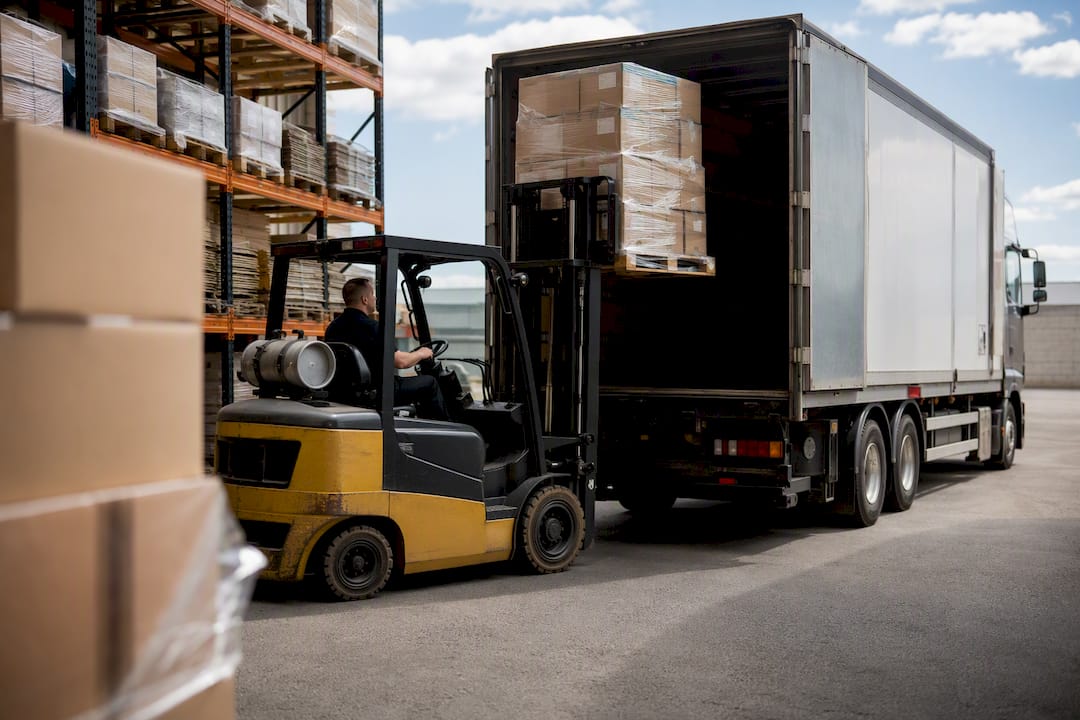
Rail freight carries bulk commodities, containers, and heavy industrial goods over long domestic distances at a lower cost than truck, though it moves slower and needs truck legs on each end to reach an actual dock or warehouse.
Intermodal freight combines two or more of these, most commonly ocean-to-rail-to-truck, letting a shipping container cross an ocean and then ride rail and truck to its final destination without ever being unpacked. This is standard practice for import containers moving from a coastal port to inland cities.
A rough cost-versus-speed hierarchy, cheapest to priciest:
- Ocean freight: slowest, lowest cost per pound
- Rail freight: slow, low cost, best for bulk and long domestic hauls
- LTL truck freight: moderate cost, moderate speed, ideal for partial loads
- FTL truck freight: faster than LTL, priced by the trailer regardless of how full it is
- Air freight: fastest, highest cost, reserved for urgent or high-value cargo
Multimodal routing becomes practical whenever a shipment crosses an ocean or a long domestic distance and needs a final-mile truck leg. It’s less a special case than the normal way international freight moves. Understanding these freight transportation modes in more depth helps when you’re negotiating rates or planning a shipping schedule around seasonal demand.
When Does a Shipment Count as Freight Instead of Parcel?
The line between parcel and freight isn’t arbitrary, but it isn’t always obvious either. Most major parcel carriers draw the boundary around 150 pounds per package, along with length and girth limits that vary by carrier. Cross either threshold and your shipment typically routes into the freight network instead.
Weight alone doesn’t tell the whole story. Parcel carriers calculate dimensional weight (DIM), a formula based on a package’s volume rather than its actual weight. A large, light box, think of a lampshade or a stack of pillows, can get billed at a much higher DIM weight than its scale would suggest, sometimes pushing an otherwise-light shipment into freight pricing territory anyway.
That leaves a gray zone, roughly 100 to 200 pounds, where the right call isn’t clear-cut. Here’s how to handle it:
- Get a parcel quote and an LTL freight quote for the same shipment. The cheaper option genuinely isn’t predictable in advance.
- Check dimensional weight, not just scale weight, before assuming a light package is automatically the cheaper parcel option.
- Factor in accessorials on both sides, since freight liftgate fees and parcel oversize surcharges can each tip the math.
Misclassifying a shipment carries real consequences. A parcel carrier that receives an over-limit package can charge a correction fee, reroute it, or refuse delivery outright, leaving you to rebook as freight anyway, but later and at a worse rate.
Pro Tip: Always price a borderline shipment both ways before booking. The gray zone between parcel and freight is exactly where shippers overpay most often, because DIM rules and accessorial fees interact differently depending on the carrier.
What Determines Freight Cost, and What Is a Bill of Lading?
Freight pricing runs on a different logic than parcel pricing, and understanding it prevents nasty surprises on your invoice.
For LTL (less-than-truckload) freight, cost depends on weight, density, freight class, the specific origin-destination lane, and accessorial charges. For FTL (full truckload) freight, pricing is generally volume-based: you’re paying for the whole trailer regardless of how full it is, so the per-pound math works differently.
Freight class, governed by the National Motor Freight Classification (NMFC) system, is where most new shippers get confused. Class is determined by four factors: density, stowability, handling difficulty, and liability risk. A pallet of dense steel parts might rate a low class number (cheaper), while a pallet of lightweight, fragile lampshades rates a high class number (more expensive) despite weighing less.
Freight class is often the single most confusing cost driver for new shippers. Density, stowability, handling, and liability combine into a number that can swing an LTL rate significantly, and most shippers never see the calculation, only the total on their invoice.
Trucking capacity and fuel costs also ripple through freight pricing directly, which is one reason rates fluctuate more than shippers expect from one quarter to the next.
The document that ties all of this together is the bill of lading (BOL). A BOL functions as both a receipt for the goods and the legal contract of carriage between shipper and carrier. A properly completed BOL typically includes:
- Shipper and receiver names and addresses
- Origin and destination details
- Package count and description of the goods
- Total weight and, where relevant, the NMFC freight class
- Special instructions (hazmat notes, delivery appointment requirements, and similar)
The BOL matters most when something goes wrong. If cargo arrives damaged or short, the BOL is the document that determines liability, whether the carrier failed to deliver what it agreed to carry, and what compensation applies. Reviewing freight contract terms before you sign one is worth the ten minutes it takes, especially for high-value freight.
How Packaging and Handling Affect Freight Safety and Cost
How you package a freight shipment changes both what it costs and what happens if something goes wrong. Palletizing and crating aren’t optional formalities; they’re what lets a forklift move your cargo through a terminal without a human unloading it box by box.
Good palletizing means securing goods with stretch wrap or strapping, keeping the load within the pallet’s footprint, and distributing weight evenly so the pallet doesn’t tip during transit. Crating adds a rigid wood or metal frame around fragile or irregularly shaped items, machinery, glass, artwork, that a standard pallet wrap can’t protect.
Beyond basic packaging, several special services (accessorials) commonly apply to freight and each adds cost:
- Liftgate service, for locations without a loading dock
- Residential delivery, since freight trucks aren’t built for narrow driveways
- Inside delivery, moving goods past the curb and into a building
- Blanket wrap, padded protection for furniture shipped without a box
- Climate-controlled transport, for temperature-sensitive goods
Packaging decisions matter most at claim time. A shipment that arrives damaged with inadequate packaging often gets a reduced claim payout, or none at all, because carriers can point to packaging failure rather than mishandling. Pairing solid packaging with cargo insurance closes that gap.
Pro Tip: Photograph your freight before it leaves your dock, pallet wrap, crate seams, and all. If a claim ever comes up, that photo is your strongest evidence that the damage happened in transit, not before.
How Does Freight Actually Move From Pickup to Delivery?
Freight moves through a more structured sequence than parcel, with fewer scans and more physical handoffs along the way.
- Quote and booking. The shipper provides weight, dimensions, freight class, and origin/destination to get a rate, then books the shipment with a carrier or through a broker.
- Pickup. A driver arrives at the shipper’s dock, loads the freight, and the bill of lading is signed, marking the official start of the carrier’s custody.
- Terminal consolidation. For LTL freight especially, the shipment travels to a terminal where it’s sorted and combined with other freight heading the same direction, rather than driving direct.
- Transit. The freight moves via truck, rail, ocean vessel, or air, sometimes switching modes at a port or rail yard if the route is intermodal.
- Terminal handling at destination. The shipment arrives at a delivery terminal, gets sorted again, and loaded onto a local delivery truck.
- Final delivery. The freight reaches its destination, and the receiver signs the BOL, confirming condition on arrival.
Tracking looks different here than what parcel shippers are used to. Rather than continuous scan-by-scan updates, freight tracking typically shows terminal check-ins, pickup confirmed, arrived at terminal, out for delivery, with real gaps in between. That’s normal, not a sign something’s wrong.
For international freight, customs clearance and brokerage slot in right after the shipment reaches the border or port. This is where commercial invoices, HS codes, and customs entries get filed, a step that adds real time if documentation isn’t prepared before the freight arrives.
When Should You Use a Freight Forwarder or Customs Broker?
Forwarders exist because freight has more moving parts than most shippers can track alone. Worldwideexpress handles freight forwarding, customs brokerage, and cargo insurance specifically to remove the documentation and carrier-selection burden from your shipping process.
Concrete problems a forwarder solves:
- Consolidating multiple smaller shipments into one container to cut per-unit cost
- Managing bills of lading, commercial invoices, and HS code classification for customs
- Choosing between ocean, air, and intermodal routing based on your deadline and budget
If you’re shipping domestically, in small volumes, or with a carrier relationship you already trust, managing it directly often works fine. Once you’re crossing borders, consolidating multiple vendors, or handling high-value cargo, a forwarder’s documentation expertise usually pays for itself.
Where Did the Modern Freight System Come From?
Freight movement stayed physically brutal for most of history: goods loaded and unloaded by hand, ship to dock to cart, at every stop along a route. The shift began in the mid-20th century with a deceptively simple idea: the standardized shipping container.
Before containerization, loading a cargo ship took days and dozens of dockworkers moving individual crates and sacks. Malcolm McLean’s standardized steel container, introduced commercially in 1956, changed the math entirely. A crane could now lift a sealed container straight from a truck chassis onto a ship, no unpacking required, cutting port turnaround from days to hours.
That single innovation created the intermodal system freight relies on today, where the same container moves by ship, rail, and truck without ever being opened in between. The Twenty-foot Equivalent Unit (TEU) became the industry’s standard measure of container capacity as a direct result.
Air freight expanded rapidly through the late 20th century as jet aircraft made high-value, time-sensitive cargo economically viable to fly rather than ship. Meanwhile, digital tracking, electronic bills of lading, and freight-matching platforms have compressed what used to take phone calls and fax machines into online quotes generated in minutes. The mechanics of moving heavy goods haven’t changed as much as the paperwork and visibility around them have.
What Do FCL, LCL, and TEU Mean in Freight Shipping?
Freight comes with its own vocabulary, and a handful of terms show up constantly once you start booking shipments regularly.
FCL (Full Container Load) means your shipment fills an entire ocean container by itself, no sharing space with other shippers’ cargo. It costs more per shipment but simplifies handling since the container isn’t opened until it reaches you.
LCL (Less than Container Load) means your goods share a container with other shippers’ freight, each paying for the space they use. It’s the ocean equivalent of LTL trucking: cheaper for smaller volumes, but with more handling and typically longer transit as freight gets consolidated and later deconsolidated.
TEU (Twenty-foot Equivalent Unit) is the standard unit for measuring container shipping capacity, based on a standard 20-foot container. A 40-foot container counts as two TEUs. Ports and shipping lines report their volume in TEUs, so it’s the number you’ll see in industry capacity reports even if you never book a container that size yourself.
Other terms worth knowing include NMFC (the freight classification system covered earlier), accessorials (extra service fees like liftgate or inside delivery), and consignee (the receiving party named on the bill of lading). A working glossary of logistics terms is worth bookmarking the first time you book freight, since these terms show up on every quote and invoice going forward.
Is Cargo the Same Thing as Freight?
The terms overlap enough that people use them interchangeably, but there’s a real distinction worth knowing. Cargo refers specifically to goods being carried aboard a ship, aircraft, or vehicle at any given moment, it’s a snapshot term describing what’s currently in transit on a specific vessel or plane.
Freight is broader. It describes the entire category of goods movement, including the shipment itself, the pricing, the documentation, and the industry built around moving it. You’ll hear “cargo” used almost exclusively in the context of what’s physically loaded onto a ship or plane right now (“the vessel’s cargo included steel coils and machinery”), while “freight” covers the whole transaction (“freight rates,” “freight forwarder,” “freight class”).
In practice, industry professionals often use both words for the same shipment without confusion, but the words aren’t perfect synonyms. Cargo is what’s on board; freight is the broader system that got it there, priced it, and documented it.
How Do Regulations Affect Freight Shipping?
Regulatory compliance touches almost every stage of freight movement, and the requirements scale up sharply once a shipment crosses a border.
Domestic trucking freight in the United States operates under federal motor carrier safety regulations covering driver hours, vehicle maintenance, and hazardous materials handling. Hazmat freight specifically requires proper labeling, documentation, and often specialized carrier certification, skip any of it and a shipment can be held or refused outright.
International freight adds customs compliance on top of transport regulation. Every cross-border shipment needs accurate commercial invoices, correct Harmonized System (HS) code classification for tariff purposes, and often country-specific import permits depending on what’s being shipped and where it’s headed. Getting HS codes wrong doesn’t just risk delay, it can trigger incorrect duty assessments or penalties.
Environmental and safety regulations layer in as well: ocean carriers face emissions standards on certain trade routes, and specific cargo categories (food, pharmaceuticals, chemicals) carry their own regulatory chains beyond standard freight documentation.
None of this is optional paperwork. A shipment held at customs because of a missing or incorrect document costs real time and real money, often more than the shipping charge itself. That’s the core reason experienced shippers lean on brokers and forwarders once freight starts crossing borders regularly, the compliance side genuinely benefits from someone who does it daily rather than annually.
What’s the Difference Between a Freight Carrier and a Freight Forwarder?
A freight carrier is the company that physically moves your cargo, the trucking company, ocean liner, railroad, or airline actually operating the vehicle or vessel. Carriers own or lease the equipment and employ the drivers, pilots, or crew doing the transporting.
A freight forwarder doesn’t typically own the trucks or ships. Instead, a forwarder acts as an intermediary, booking space with carriers, consolidating shipments from multiple clients, handling documentation, and coordinating multimodal routes on a client’s behalf. Think of a forwarder as a logistics coordinator who knows which carrier fits your lane, deadline, and budget, and who handles the paperwork that comes with it.
The distinction matters practically. Book directly with a carrier and you’re managing documentation, customs, and carrier selection yourself. Work through a forwarder and those responsibilities shift to a party that handles them daily across many clients, often catching problems, like a missing HS code or an incomplete BOL, before they cause a delay.
Some companies operate as both, or as a hybrid, which is common among larger logistics providers offering forwarding, brokerage, and direct carrier relationships under one roof.
Why the Definition of Freight Matters More Than It Seems
Getting the definition of freight right isn’t academic. It’s the first decision in a chain that determines your cost, your speed, and your liability if something goes wrong. Shippers who treat “is this freight or parcel” as a minor classification question often end up overpaying, because the real question underneath it is always cost versus speed versus risk, and each mode answers that question differently.
The gray zone between parcel and freight is where I’d focus the most attention if I were advising a first-time shipper. That’s where assumptions cost money. A deeper look at LTL trucking makes the tradeoffs concrete rather than theoretical.
— Ian
Get Freight Moving Without Managing It Yourself
Understanding freight terminology gets you halfway there. Actually booking a shipment across borders, with the right documentation, the right carrier, and the right insurance, is where most independent shippers hit friction Worldwideexpress is built to remove.
Worldwideexpress handles freight forwarding, customs brokerage, and cargo insurance as one coordinated service, so a single missing HS code or incomplete bill of lading doesn’t stall your shipment at a port for a week. That coordination is the real advantage over piecing together a carrier, a broker, and an insurer separately: one point of accountability instead of three. For a full walkthrough of how the process works end to end, read Understanding Freight Forwarding: A 2026 Guide and request a quote for your next shipment.
Sources
- Cambridge Dictionary — freight
- What Is Freight Shipping and How Does It Work? – NetSuite
- Parcel vs Freight: Weight Limits, Costs, and Rules – LegalClarity
Recommended
- What is a Freight Quote? Understanding Its Importance – Worldwide Express, Inc.
- What is Freight Insurance? Understanding Its Importance – Worldwide Express, Inc.
- 8 Key Freight Terms Definitions Every Importer Should Know – Worldwide Express, Inc.
- Understanding Cargo Freight Forwarders and Their Role – Worldwide Express, Inc.