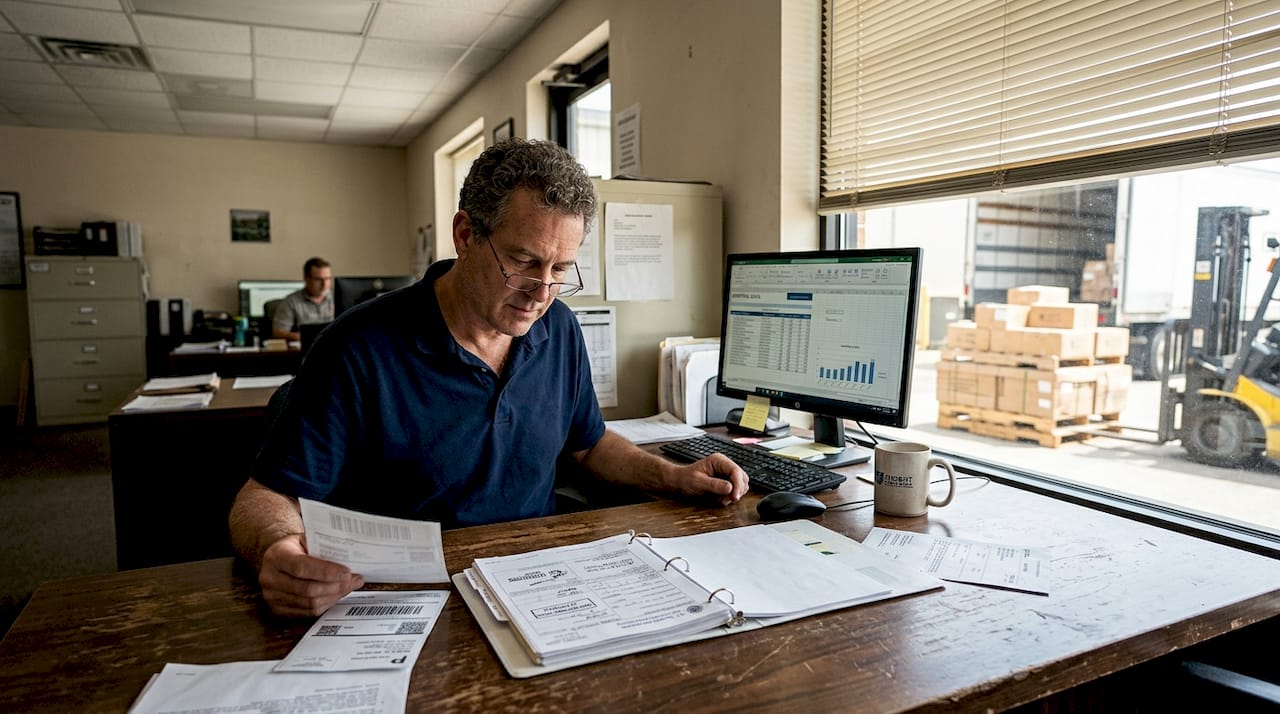

Missed or incomplete paperwork can bring import shipments to a halt, turning routine customs clearance into a source of costly delays. For American compliance officers handling international trade, a validated U.S. Customs Power of Attorney is your legal gateway to seamless entries and regulatory peace of mind. This guide provides actionable steps for gathering, completing, and submitting the precise documents now expected by U.S. Customs and Border Protection, reducing risk and keeping your supply chain moving efficiently.
Table of Contents
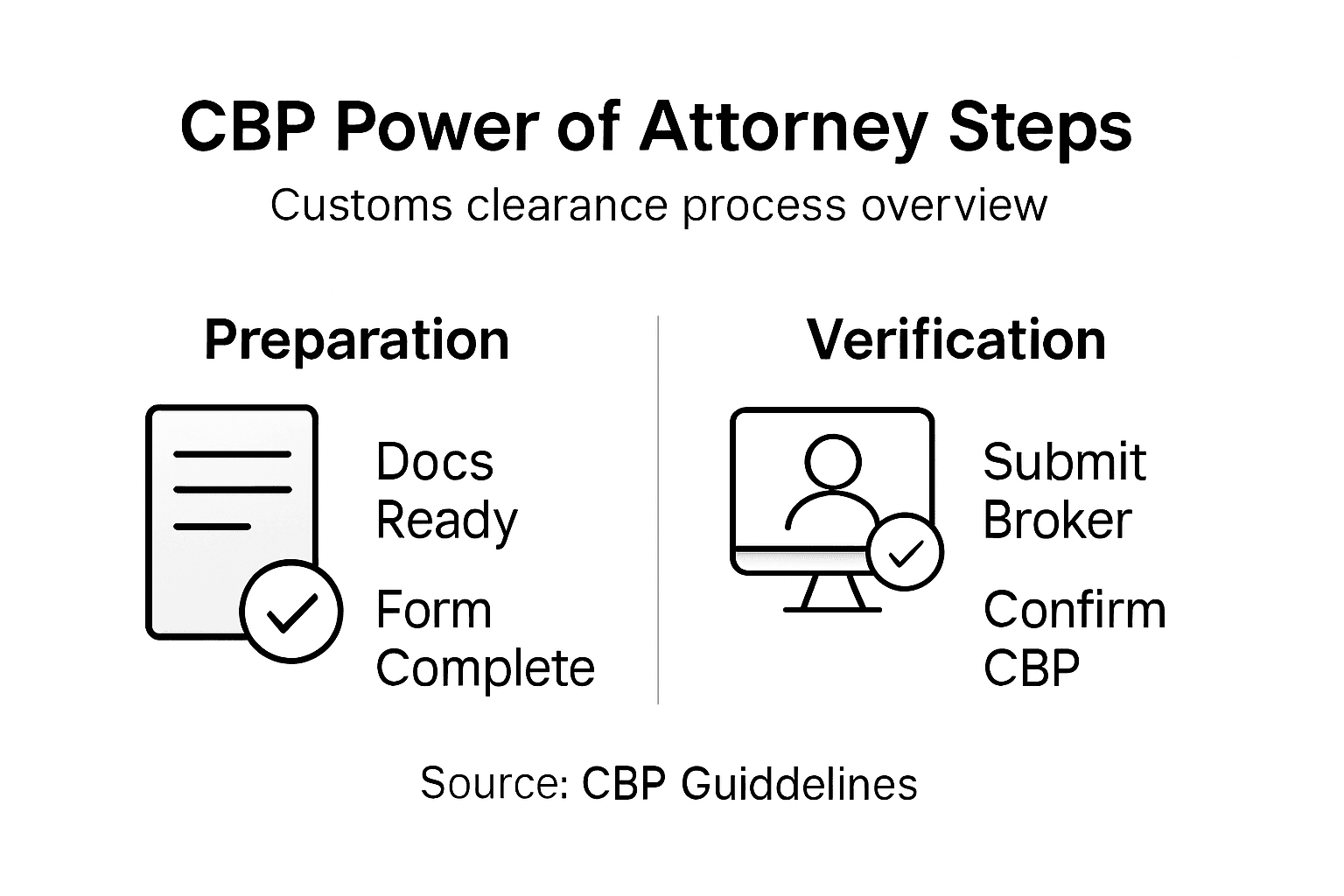
- Step 1: Gather Required Information for CBP Power of Attorney
- Step 2: Complete and Review the CBP Power of Attorney Form
- Step 3: Submit the Power of Attorney to Your Customs Broker
- Step 4: Confirm Authorization with U.S. Customs and Border Protection
- Step 5: Monitor and Verify Successful Customs Transactions
Quick Summary
| Key Point | Explanation |
|---|---|
| 1. Compile Necessary Documentation | Gather business registration documents, federal tax IDs, and identification for signatories to validate authority for customs transactions. |
| 2. Accurately Complete POA Form | Fill out Customs Form 5291 carefully, ensuring all sections are completed accurately to avoid submission errors. |
| 3. Submit to Customs Broker for Processing | Schedule a meeting to submit the signed POA to your broker, ensuring they confirm receipt and processing in writing. |
| 4. Verify with U.S. Customs | Work with your broker to ensure the POA is recognized by Customs and confirm all information is accurate against government records. |
| 5. Monitor Customs Transactions | Use tracking portals to verify the status of customs entries and maintain detailed records of all transactions for compliance. |
Step 1: Gather Required Information for CBP Power of Attorney
Successfully preparing a Customs Power of Attorney (POA) starts with meticulously collecting the right documentation and information. Your goal in this critical first step is to compile all necessary details that will validate your authority to conduct customs transactions.
Begin by collecting official business documentation that demonstrates your legal right to represent your company. This includes your business registration documents, federal tax identification number, and state business licenses. Customs broker verification requirements mandate precise identification information to ensure transaction authenticity. You will need to prepare government issued identification for the individual authorized to sign the POA, typically a company principal or senior executive with legal signing authority.
Gather key corporate details including your complete legal business name, physical address, contact information, and Employer Identification Number (EIN). CBP emphasizes careful examination of these details to validate your POA, so accuracy is paramount. Cross reference all information against your existing customs registration records to prevent potential delays or rejection.
Pro tip: Before submitting your POA, have a second person in your organization review all collected information to catch potential errors or inconsistencies that could interrupt your customs clearance process.
Here’s a summary of the crucial documents and details required for a CBP Power of Attorney:
| Requirement Category | Example Documents | Business Impact |
|---|---|---|
| Legal Authorization | Business registration, licenses | Validates company representation |
| Identification | Government ID of signatory | Establishes authority to sign POA |
| Corporate Details | Address, EIN, contact info | Ensures accurate record validation |
| Federal Numbers | EIN, tax ID | Links entity to customs records |
Step 2: Complete and Review the CBP Power of Attorney Form
Compiling your Customs Power of Attorney (POA) requires precision and attention to critical details. In this step, you will systematically fill out the required documentation to legally authorize your customs transactions.
Begin by obtaining the official Customs Form 5291 which serves as the standard document for establishing power of attorney. You will need to complete several key sections including the principal’s complete legal business name, address, federal tax identification number, and the specific scope of authority you are granting. Pay close attention to the signature blocks and ensure that an authorized company representative with legal signing power completes these sections.
Carefully review each section of the form to confirm accuracy and completeness. CBP guidance documents recommend verifying that all mandatory fields are filled out correctly and that the agent’s identifying information matches your company records. Double check that the effective date and duration of the POA are clearly specified. If you are granting limited authority, explicitly state the specific transactions or activities covered by this power of attorney.
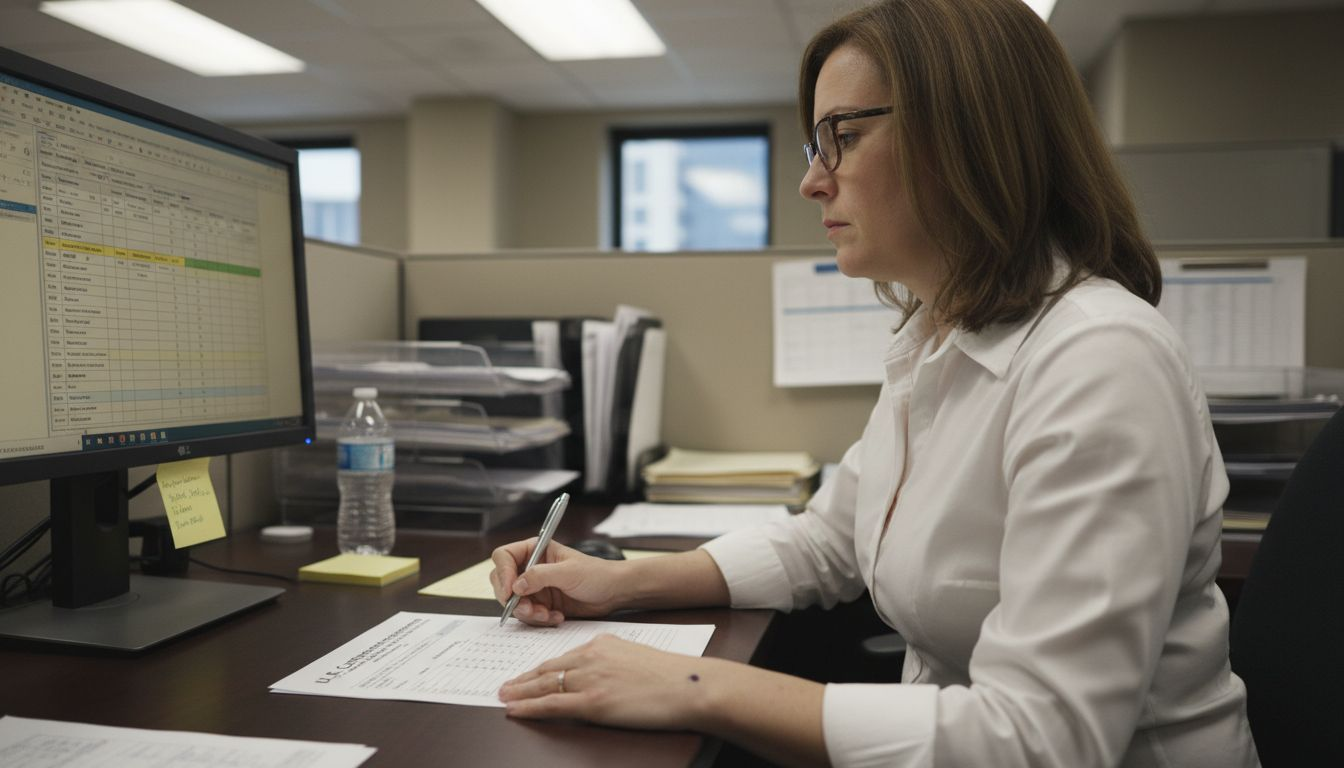
Pro tip: Make digital and physical copies of your completed POA form and store them in secure locations both within your company records and with your customs broker to ensure quick access during future transactions.
Below is a quick comparison of digital versus physical POA records for customs transactions:
| Record Type | Advantages | Risks |
|---|---|---|
| Digital Copy | Fast access, easy sharing | Cybersecurity concerns |
| Physical Copy | Meets legal presentation needs | Potential for misplacement |
Step 3: Submit the Power of Attorney to Your Customs Broker
Submitting your completed Power of Attorney (POA) to your customs broker is a critical step in establishing legal authorization for your import transactions. This process transforms your carefully prepared document into an actionable instrument for conducting customs business.
Begin by scheduling a formal submission meeting with your designated customs broker. When meeting, bring both the original signed POA and additional copies. Customs broker regulations require brokers to retain the original document in their records and make it available for potential CBP review. Verify that the broker carefully examines the document for completeness, ensuring all signature blocks are properly executed and all required identifying information is accurate.
Ensure your customs broker provides written confirmation of POA receipt and processing. This documentation serves as your proof of submission and helps establish a clear record of authorization. According to CBP guidelines, the broker will integrate your POA into their official records, which enables them to legally represent your company in future customs transactions.
Pro tip: Request a digital and physical copy of the submitted POA from your customs broker for your own records and maintain a tracking log of all submissions to ensure comprehensive documentation.
Step 4: Confirm Authorization with U.S. Customs and Border Protection
Verifying your Power of Attorney (POA) authorization with U.S. Customs and Border Protection is the final critical step in establishing your legal ability to conduct customs transactions. This process ensures your documentation is recognized and accepted by federal authorities.
Begin by confirming that your customs broker has properly prepared your documentation for CBP verification. Your broker should help you match the POA information with the Automated Commercial Environment (ACE) records and ensure all identifying details are accurate. This typically involves cross referencing your company information, tax identification numbers, and authorized representative details against official government databases.
Work closely with your customs broker to prepare for potential CBP audits or compliance reviews. According to CBP guidelines, they may request presentation of the POA during routine checks to confirm your authorization status. Maintain multiple copies of the signed document both digitally and physically, and ensure your broker keeps detailed records that can be quickly retrieved if CBP requests documentation verification.
Pro tip: Request a tracking number or confirmation code from your customs broker after submission to easily reference your POA authorization during future interactions with government agencies.
Step 5: Monitor and Verify Successful Customs Transactions
Tracking the progress of your customs transactions is crucial for ensuring smooth import operations and maintaining compliance with U.S. Customs regulations. This final step helps you confirm that all documentation and transactions processed under your Power of Attorney are executed correctly.
Utilize the CBP secure tracking portals to monitor your customs entries in real time. These digital platforms provide comprehensive visibility into entry status, cargo release timelines, and duty payment confirmations. Work closely with your customs broker to access these systems, ensuring you can quickly identify and address any potential issues that might arise during the clearance process.
Establish a systematic approach to transaction verification by reviewing each customs entry thoroughly. This includes confirming the accuracy of declared merchandise values, verifying classification codes, checking duty calculations, and ensuring all required documentation is properly filed. Maintain detailed records of each transaction, including entry numbers, dates, and any communication with customs officials, to create a comprehensive audit trail for your import activities.
Pro tip: Schedule weekly review sessions with your customs broker to proactively track transaction statuses and quickly resolve any potential compliance or documentation discrepancies.
Simplify Your Customs Clearance with Trusted Experts at Worldwide Express
Navigating the complexities of the Customs Power of Attorney process can be challenging and time-consuming. From gathering precise corporate details to confirming authorization with U.S. Customs and Border Protection, every step demands accuracy and compliance. Businesses often face delays, compliance risks, and documentation errors that put their international shipments at risk.
Worldwide Express specializes in customs brokerage and freight forwarding solutions designed to eliminate these pain points. Our experienced team ensures your Power of Attorney documents are prepared, submitted, and verified correctly so your imports clear customs smoothly and on time. We provide end-to-end support including customs clearance, compliance monitoring, documentation management, and real-time shipment tracking to give you peace of mind.
Get the personalized logistics solutions your business needs now. Visit Worldwide Express to learn more about how our customs brokerage and freight forwarding services can streamline your cross-border operations. Don’t risk import delays or regulatory challenges – take control of your international shipping today with a trusted global partner. Connect with us to experience hassle-free customs clearance and reliable shipment delivery.
Frequently Asked Questions
What documents do I need to gather for a CBP Power of Attorney?
To establish a CBP Power of Attorney, collect official business documentation such as your business registration documents, federal tax identification number, and state business licenses. Additionally, gather identification for the authorized signer and ensure that corporate details like your legal business name and contact information are accurate.
How do I complete the CBP Power of Attorney form?
Begin by obtaining the official Customs Form 5291 and fill it out with information about your business and the scope of authority you are granting. Ensure that all required fields are completed accurately, and have an authorized representative sign the form before submitting it.
What is the process for submitting my Power of Attorney to a customs broker?
Schedule a meeting with your customs broker to submit the completed Power of Attorney form along with the original signed document and copies. After submission, request written confirmation from the broker to maintain a record of the authorization.
How can I verify my Power of Attorney with U.S. Customs and Border Protection?
Confirm that your customs broker has properly prepared and submitted your Power of Attorney for verification with U.S. Customs and Border Protection. It is important to work closely with your broker to ensure that your documentation aligns with the Automated Commercial Environment records.
What steps should I take to monitor customs transactions after establishing a Power of Attorney?
Utilize secure tracking portals to keep an eye on your customs entries in real time. Review each transaction for accuracy regarding merchandise values and duty calculations, and maintain detailed records to create an audit trail for your import activities.
How often should I review my customs transactions with my broker?
It’s advisable to schedule weekly review sessions with your customs broker to proactively track the status of your customs transactions. This regular check-in can help quickly address any compliance or documentation discrepancies.
Recommended
- Complete Guide to Customs Power of Attorney Form PDF – Worldwide Express, Inc.
- How to Complete a Customs POA Form for U.S. Imports – Worldwide Express, Inc.
- Power of Attorney for Customs Clearance: Streamline US Imports – Worldwide Express, Inc.
- Complete Guide to Using Customs Power of Attorney PDF – Worldwide Express, Inc.
- Free Florida Power of Attorney Form- Vehicle POA