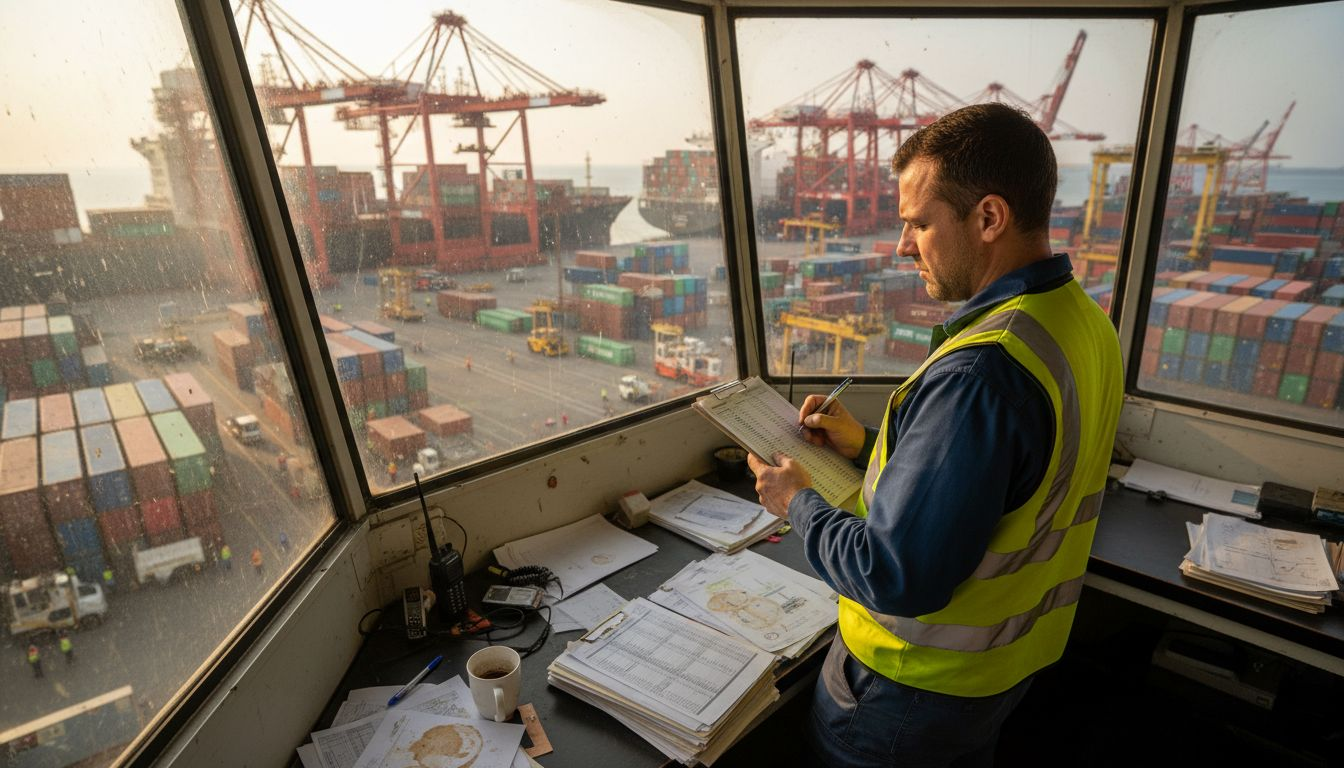

Shipping delays and compliance headaches often disrupt even the best-planned import operations. For logistics managers handling goods across United States borders, keeping up with shifting regulations and paperwork demands can feel overwhelming. Partnering with a licensed United States Customs broker offers critical expertise in classification, admissibility requirements, and electronic filing, helping mid-sized companies stay compliant while moving shipments smoothly through government checkpoints.
Table of Contents
- What Is a Customs Broker in the U.S.?
- Types of Customs Brokers and Their Roles
- How Customs Brokers Facilitate Import Processes
- Legal Requirements and Licensing Standards
- Compliance, Costs, and Common Missteps
Key Takeaways
| Point | Details |
|---|---|
| Role of Customs Brokers | Customs brokers are licensed professionals who facilitate the importation of goods by ensuring compliance with U.S. regulations. They prepare documentation, calculate duties, and communicate with government agencies on behalf of importers. |
| Types of Customs Brokers | There are several types of customs brokers, including individual, corporate, specialty industry, and independent brokerage firms, each serving different needs in international trade. |
| Legal Requirements | To become a customs broker in the U.S., candidates must pass a licensing exam, be a U.S. citizen over 21, and maintain ongoing professional education while adhering to strict regulatory compliance. |
| Importance of Compliance | Customs brokers face significant consequences for compliance failures, including financial penalties and lost licenses, making proactive compliance management crucial for sustained success. |
What Is a Customs Broker in the U.S.?
A customs broker is a critical intermediary in international trade, serving as a licensed professional who navigates the complex landscape of import regulations and government compliance. These specialists are authorized by U.S. Customs and Border Protection to help importers successfully move goods across U.S. borders while meeting all federal requirements.
Customs brokers function as expert navigators through the intricate world of international shipping regulations. Their primary responsibilities include:
- Preparing and submitting precise import documentation
- Calculating and paying required duties and taxes
- Ensuring compliance with Federal import regulations
- Classifying merchandise for appropriate tariff assignments
- Managing communication between importers and government agencies
To become a customs broker in the United States, professionals must meet stringent qualifications. Individuals must pass a specialized licensing exam, be a U.S. citizen over 21 years old, and demonstrate good moral character. This rigorous process ensures that only highly qualified professionals can represent importers in these critical transactions.
The role extends far beyond simple paperwork. Customs brokers must possess deep knowledge of international trade laws, tariff schedules, and evolving government regulations. They act as crucial translators between complex bureaucratic requirements and the practical needs of businesses engaged in international commerce.
Pro tip: Always verify your customs broker’s current licensing status with U.S. Customs and Border Protection to ensure compliance and avoid potential import complications.
Types of Customs Brokers and Their Roles
Customs brokers in the United States operate across various organizational structures, each with unique characteristics and specialized capabilities. Customs brokers can be licensed as individuals, partnerships, corporations, or associations, providing importers with flexible options for navigating complex international trade regulations.
The primary types of customs brokers include:
- Individual Brokers: Licensed professionals who directly handle customs procedures and file entries for clients
- Corporate Brokers: Larger organizations with multiple licensed professionals offering comprehensive trade services
- Specialty Industry Brokers: Experts focused on specific sectors like pharmaceuticals, automotive, or technology imports
- Independent Brokerage Firms: Small to medium-sized businesses providing personalized customs clearance services
Specialized Broker Roles emerge across different trading sectors. International trade professionals often serve multiple functions beyond traditional customs documentation, including:
- Calculating complex duty assessments
- Interpreting intricate tariff classifications
- Managing risk mitigation strategies
- Providing compliance consulting
- Facilitating communication between importers and government agencies
Some customs brokers also expand their services to include freight forwarding, acting as comprehensive logistics partners for businesses engaged in international trade. This multifaceted approach allows companies to streamline their import processes by working with a single, knowledgeable professional who understands the nuanced requirements of cross-border commerce.
Pro tip: When selecting a customs broker, prioritize professionals with specific experience in your industry and a proven track record of successfully navigating complex import regulations.
Here’s a quick comparison of the main types of customs brokers and their unique advantages:
| Broker Type | Primary Clients | Key Advantage |
|---|---|---|
| Individual Broker | Small importers | Personalized service approach |
| Corporate Broker | Large corporations | Full-scale, integrated trade solutions |
| Specialty Industry Broker | Niche industries (e.g., tech) | Deep sector expertise |
| Independent Brokerage Firm | SMEs and startups | Flexible, customized support |
How Customs Brokers Facilitate Import Processes
Customs brokers play a critical role in streamlining international trade by managing complex regulatory requirements and ensuring smooth cargo clearance. Customs brokers facilitate import processes by submitting required documentation and acting as intermediaries between importers and government agencies.
Their key facilitation functions include:
- Preparing comprehensive import documentation
- Calculating and submitting accurate duty and tax payments
- Interpreting complex customs regulations
- Coordinating with multiple federal agencies
- Managing electronic entry submissions
- Ensuring regulatory compliance
Electronic Documentation Management is a crucial aspect of modern import processes. Customs brokers leverage advanced electronic systems to expedite cargo clearance, using specialized platforms like the Automated Commercial Environment (ACE) to submit precise data and streamline government reviews.

Beyond paperwork, customs brokers serve as strategic partners for businesses navigating the intricate landscape of international trade. They provide critical insights into tariff classifications, help mitigate potential compliance risks, and ensure that imported goods meet all necessary regulatory standards across various government agencies.
Pro tip: Develop a collaborative relationship with your customs broker by providing comprehensive and accurate product information upfront to minimize potential clearance delays.
Legal Requirements and Licensing Standards
Customs brokers in the United States operate under strict legal frameworks designed to ensure professional competence and protect international trade integrity. Licensing standards are codified in comprehensive federal regulations, establishing rigorous requirements for professionals entering this critical field.
Key eligibility criteria for becoming a licensed customs broker include:
- Being a United States citizen
- Demonstrating good moral character
- Passing the official Customs Broker License Examination
- Being at least 21 years of age
- Maintaining ongoing professional education
- Submitting to background investigations
Regulatory Compliance is fundamental to a customs broker’s professional responsibilities. CBP mandates strict adherence to legal requirements outlined in Title 19 Code of Federal Regulations (CFR), Part 111, which governs everything from initial licensing to ongoing professional conduct.
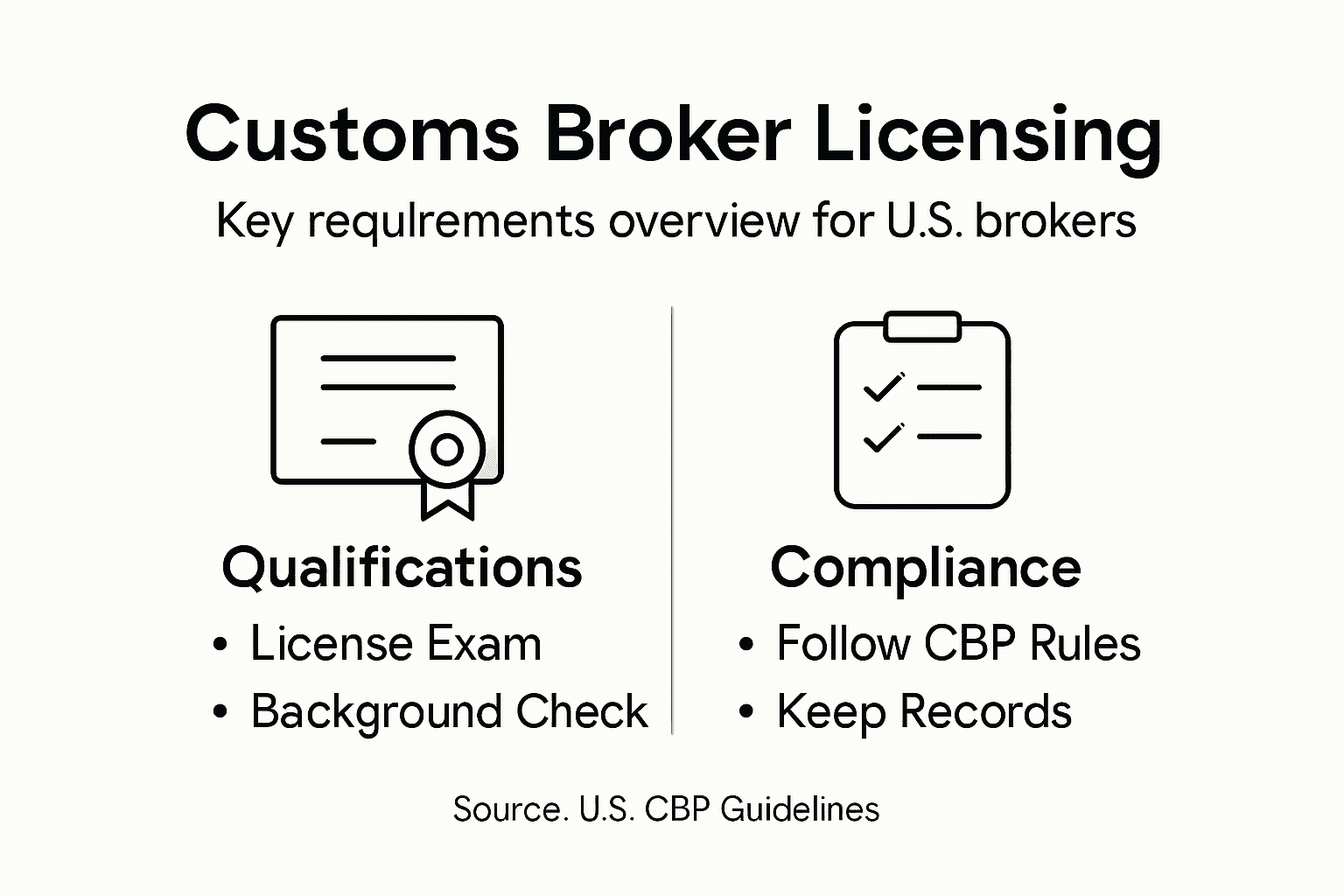
The licensing process involves comprehensive evaluation of an individual’s qualifications, including thorough background checks, professional references, and a rigorous examination that tests knowledge of complex customs regulations, tariff schedules, and import-export protocols. Brokers must continuously demonstrate professional competence, with potential disciplinary actions including license suspension or revocation for significant regulatory violations.
Pro tip: Regularly review the most recent CBP regulatory updates and maintain meticulous documentation to ensure ongoing compliance with licensing standards.
Compliance, Costs, and Common Missteps
Customs brokers must navigate a complex landscape of regulatory requirements and financial obligations that demand meticulous attention to detail. Compliance involves strict adherence to CBP regulations, with potential penalties for even minor infractions that can significantly impact a broker’s professional standing.
Common compliance challenges include:
- Maintaining accurate and up-to-date recordkeeping
- Reporting business changes within specified timeframes
- Ensuring proper employee supervision
- Protecting confidential importer information
- Meeting notification requirements for security breaches
- Tracking and documenting all customs transactions
Financial Considerations play a critical role in a customs broker’s operations. Costs associated with maintaining a brokerage license include:
- Initial license application fees
- Annual permit user fees
- Ongoing professional education expenses
- Technology and compliance management systems
- Potential legal and consulting fees for regulatory compliance
Federal regulations outline specific compliance requirements that brokers must follow meticulously. Failure to comply can result in severe consequences, including substantial financial penalties, temporary suspension, or complete revocation of a customs broker’s license. The stakes are high, making proactive compliance management essential for long-term success in this highly regulated profession.
Pro tip: Implement a robust internal compliance tracking system and conduct quarterly internal audits to identify and address potential regulatory risks before they become serious issues.
Below is a summary of common compliance pitfalls and their business consequences:
| Compliance Pitfall | Potential Business Impact |
|---|---|
| Delayed reporting | Import shipment holdups |
| Poor recordkeeping | Increased audit risk |
| Insufficient employee training | Unintentional regulation breaches |
| Lax data security | Sensitive data exposure |
| Missed regulatory notifications | Fines and penalties |
Simplify Your Imports with Expert Customs Brokerage Support
Navigating complex U.S. customs regulations and ensuring compliance can be overwhelming. This article highlights the critical role customs brokers play in managing documentation, duty calculations, and regulatory adherence so your imports clear quickly and reliably. If you want to avoid costly delays and compliance pitfalls, partnering with an experienced customs broker who understands these challenges is essential.
Discover how Worldwide Express, Inc. can take the stress out of your import process. Our licensed customs brokerage services combine expert knowledge with personalized support to handle every detail from accurate documentation to seamless communication with government agencies. Benefit today from our comprehensive logistics solutions designed to streamline your supply chain. Explore our Uncategorized page and visit Worldwide Express to get started on easing your customs clearance and maintaining full regulatory compliance. Act now to protect your shipments and ensure smooth U.S. imports.
Frequently Asked Questions
What is the role of a customs broker?
A customs broker is a licensed professional who facilitates the import process for businesses, ensuring compliance with U.S. customs regulations and preparing necessary documentation.
How do I become a customs broker in the U.S.?
To become a customs broker, you must pass a licensing exam, be a U.S. citizen over 21, and demonstrate good moral character. Ongoing professional education is also essential for maintaining your license.
What are the different types of customs brokers?
Customs brokers can be individual brokers, corporate brokers, specialty industry brokers, or independent brokerage firms, each offering unique services tailored to different importer needs.
What are common compliance challenges faced by customs brokers?
Common compliance challenges include maintaining accurate records, timely reporting of business changes, protecting confidential information, and ensuring proper employee supervision to avoid regulatory breaches.
Recommended
- Understanding the Role of a Customs Import Broker – Worldwide Express, Inc.
- 7 Essential FAQs About Customs Brokers for Importers – Worldwide Express, Inc.
- 7 Steps to Advance Your Knowledge of Custom Broker Jobs – Worldwide Express, Inc.
- Understanding Customs Broker Near Me: What You Need to Know – Worldwide Express, Inc.