Shipments getting held up at the border can quickly turn a routine delivery into a cash drain for small import/export businesses. For logistics managers, tracking customs clearance status is not just about paperwork—it is the front line that decides if inventory moves or stalls. Understanding each stage of the process helps you spot potential slowdowns, plan smarter, and keep customers satisfied with timely updates. Customs clearance status is your early warning system for avoiding costly delays.
Table of Contents
- Understanding Customs Clearance Process Status
- Types of Customs Entries and Compliance Requirements
- Key Documents and Steps in U.S. Customs Clearance
- Risks, Delays, and Common Mistakes
- Cost Implications and How to Expedite Clearance
Key Takeaways
| Point | Details |
|---|---|
| Customs Clearance Status | Understanding the customs clearance status helps you track your shipment and anticipate delays for better inventory management and customer communication. |
| Risks of Documentation Errors | Common mistakes in documentation like incorrect tariff classifications can lead to significant delays and added costs. |
| Importance of Accurate Paperwork | Submitting precise and complete documentation upfront helps avoid compliance violations and reduces processing time. |
| Cost of Delays | Each day your shipment is delayed in customs can incur substantial costs, including storage fees and demurrage charges that impact your bottom line. |
Understanding Customs Clearance Process Status
Customs clearance status tells you exactly where your shipment stands in the approval process. It tracks your cargo through multiple checkpoints—from arrival notification through final release. Understanding these stages helps you anticipate delays, plan inventory, and communicate with customers.
What “Clearance in Progress” Actually Means
When you see this status, your shipment is actively moving through U.S. Customs and Border Protection review. The cargo has arrived at the port and entered the system, but hasn’t received final approval yet. This is the critical window where inspections, documentation checks, and compliance verification happen.
The process typically includes several key stages:
- Arrival and entry filing – Your broker submits the entry documents
- Cargo examination – CBP may physically inspect or use scanning technology
- Duty assessment – Tariffs and fees are calculated based on the goods
- Compliance verification – Confirming all regulations are met
- Final release – Approval to pick up your goods
Why This Status Matters for Your Business
Every day your shipment sits in customs clearance costs you money. Storage fees, demurrage charges, and delayed deliveries add up quickly. Knowing your shipment is actively being processed—rather than stuck in a queue—helps you manage customer expectations and warehouse capacity.
When clearance is in progress, the next 24-48 hours are critical; this is when most examinations occur and decisions get made.
Your shipment might be flagged for closer inspection if the paperwork has discrepancies, the product category requires additional verification, or random security protocols trigger a physical exam. Understanding what triggers delays helps you prepare.
What Happens During This Stage
Customs officials are verifying that your shipment meets all regulatory requirements. They’re checking that your declared goods match what’s actually in the container, the tariff classifications are correct, and all necessary licenses or permits are in place.
Your customs clearance company monitors this progress and flags any issues that need attention. Communication with your broker during this phase can make the difference between a one-day clearance and a week-long delay.
Pro tip: Set up automated tracking notifications with your customs broker so you receive alerts the moment your shipment status changes—this gives you time to address any documentation issues before they cause major delays.
Types of Customs Entries and Compliance Requirements
Not all shipments enter the U.S. the same way. The entry type you use determines what paperwork you file, how quickly clearance happens, and what compliance rules apply. Choosing the right entry type saves time and reduces the risk of costly penalties.
Formal vs. Informal Entries
The two main categories split based on shipment value and complexity. Formal entries handle higher-value goods and require complete documentation, bond filings, and thorough examination protocols. Informal entries work for smaller shipments under specific dollar thresholds and streamline the approval process.
Most small to mid-sized importers deal with a mix of both depending on individual shipments. The value threshold determines which path your cargo takes, but the commodity type also matters.
Key Entry Types You’ll Encounter
Use this quick reference for major U.S. customs entry types:
| Entry Type | Purpose | Typical Time to Clearance |
|---|---|---|
| Immediate Delivery | Fast pickup, urgent use | Same or next day |
| Warehouse Entry | Deferred duty storage | Days to weeks |
| Consumption Entry | Standard import process | 2–5 days |
| In-Bond Entry | Move to another facility | 3–7 days |
| FTZ Entry | Duty-deferred zone | Variable, often longer |
- Immediate Delivery – Allows quick pickup before formal entry completion, ideal for time-sensitive goods
- Warehouse Entry – Defers duties and formal entry while goods stay in bonded storage
- Consumption Entry – Standard entry where duties are paid and goods clear for immediate use
- In-Bond Entry – Used when goods will be transported to another port or facility
- Foreign Trade Zone Entry – Special handling for goods in FTZ facilities with deferred duty treatment
What Compliance Actually Requires
Regardless of entry type, you must submit accurate information under Title 19 of the CFR governing customs entry procedures and documentation. This includes correct tariff classification, proper product valuation, country of origin statements, and any required permits or licenses.
Noncompliance carries serious consequences. CBP can assess penalties, delay releases, or even seize goods. The key is accuracy in your initial filing.
Your entry type determines your bond requirements, examination likelihood, and timeline to release—choosing correctly on the front end prevents delays later.
Documentation That Must Be Perfect
Every entry requires commercial invoices, bills of lading, packing lists, and proof of origin. Depending on the commodity, you might also need certificates of analysis, import permits, or product testing reports.
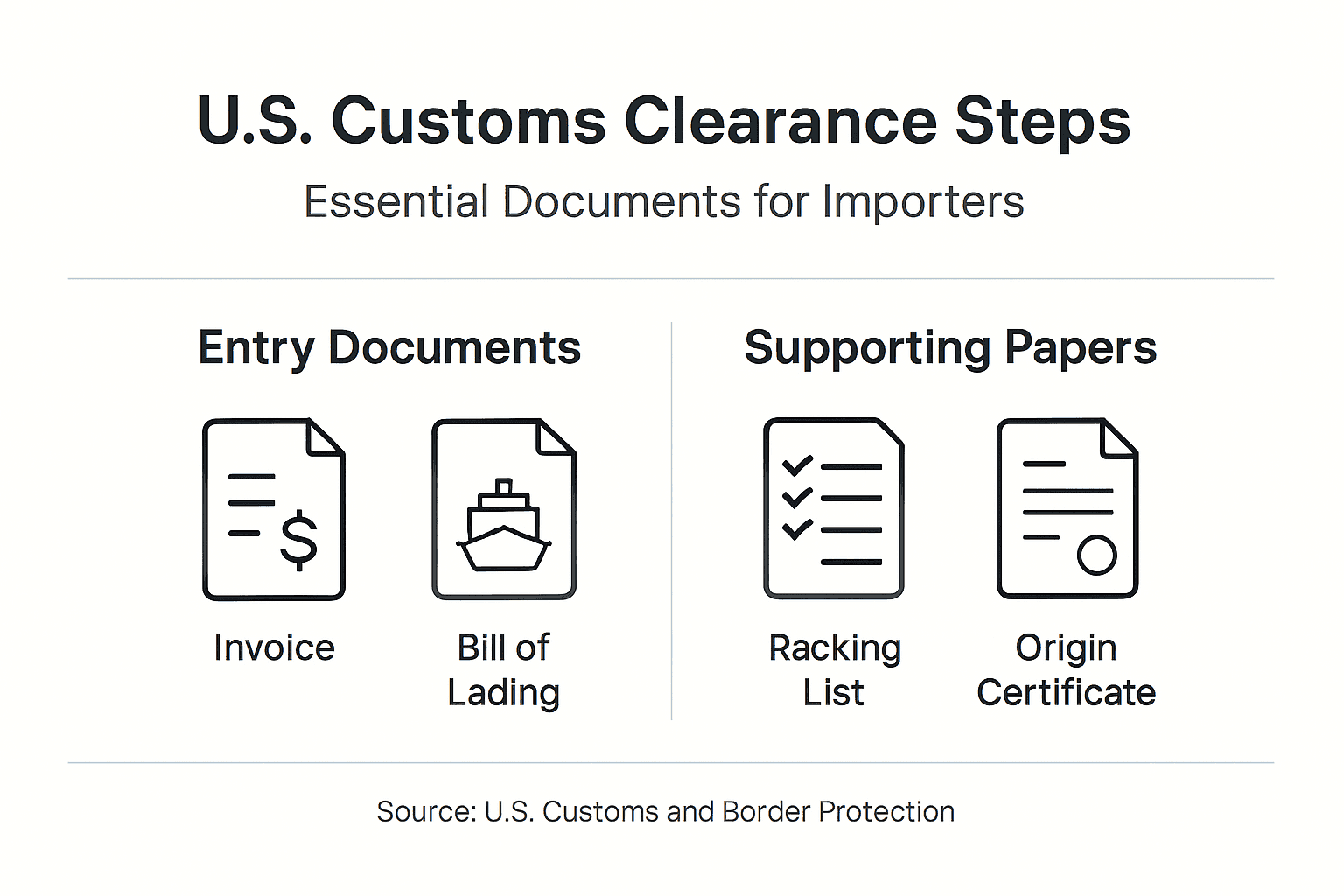
Your customs broker reviews all documents before submission. This is where catching errors saves days of processing time.
Pro tip: Work with your broker to pre-classify products before your first shipment arrives; this ensures correct entry type selection and prevents delays when customs reviews your documentation.
Key Documents and Steps in U.S. Customs Clearance
Your shipment won’t clear customs without the right paperwork in the right order. The documents you submit and the sequence you follow determine whether clearance takes days or weeks. Getting this wrong costs money and delays inventory.
The Essential Documents You Need
Every import requires a core set of paperwork that CBP reviews. Without these, your shipment sits in limbo. The basics never change, but additional requirements depend on what you’re importing.
Your standard documentation checklist includes:
- Commercial Invoice – Seller’s official invoice with pricing and product details
- Bill of Lading – Proof of shipment and carrier information
- Packing List – Itemized breakdown of what’s in each container
- Country of Origin Certificate – Documentation proving where goods were made
- CBP Form 3461 – Entry/Immediate Delivery form filed with CBP
- Entry Summary (Form 7501) – Filed within 10 days of cargo release for duty assessment
Missing or incorrect documents trigger holds and examination requests.
The Clearance Process Timeline
Understanding the sequence prevents confusion and delays. CBP follows a specific process from arrival through final release.
- Cargo arrives and entry declaration is filed
- CBP reviews documents and determines if inspection is needed
- Physical or documentary examination occurs (if required)
- Cargo Release is issued for pickup
- Entry Summary Form 7501 must be filed within 10 days
- Duties and fees are assessed and payment collected
- Final clearance and goods released for use
The 10-day window after cargo release is critical—missing the Entry Summary deadline creates compliance violations and blocks future shipments.
What CBP Actually Examines
Not every shipment gets inspected, but CBP targets high-risk categories. They verify that your declared goods match what’s actually in containers, check tariff classifications, and confirm duty payments are correct.
Documentation examination happens first. Physical inspection only occurs if documents raise questions or goods fall into flagged categories.
Getting Power of Attorney Right
Most importers authorize a customs broker using power of attorney for customs clearance so the broker can file entries and handle CBP communications on your behalf. This document must be properly executed and on file with CBP before clearance can proceed.
Without valid authorization, you must personally handle all CBP interactions.
Pro tip: Submit your Entry Summary and duty payment 5 days before the 10-day deadline, not on day 10—this gives CBP time to process and prevents last-minute complications that could delay your next shipment.
Risks, Delays, and Common Mistakes
One documentation error or missed deadline can stop your entire shipment. The stakes are real—delays cost thousands, penalties damage your compliance record, and serious violations can trigger seizures. Understanding what goes wrong helps you avoid it.
The Biggest Documentation Errors
Most delays stem from preventable paperwork mistakes. These aren’t minor issues—they trigger CBP holds and examination requests that compound the problem.
The most common culprits include:
- Incorrect tariff classification – Wrong product codes mean wrong duty rates and compliance violations
- Undervalued goods – Declaring lower prices to avoid duties triggers penalties and seizures
- Missing country of origin – CBP rejects entries without proof of where goods were made
- Incomplete invoicing – Missing pricing details, quantities, or product descriptions halt clearance
- Late Entry Summary filing – Missing the 10-day deadline after cargo release creates legal violations
- Mismatched documents – Invoice quantities don’t match packing lists or bills of lading
Each mistake adds days to clearance and costs money in storage and demurrage fees.
Why Delays Actually Happen
When CBP says “in progress,” delays occur when inspections reveal discrepancies or when your documentation needs revision. Physical examinations take time—CBP may need to open containers, count items, and verify product specifications.
Your shipment also gets delayed if regulatory compliance is unclear. Products like electronics, chemicals, or textiles often require additional permits or certifications that CBP verifies before release.
Documentation problems cause 70% of customs delays; incorrect tariff classification and missing permits are the leading culprits.
Compliance Violations and Their Consequences
Ignoring customs laws isn’t a gray area. Customs violations including false statements and undervaluation carry serious penalties—fines up to thousands of dollars, cargo seizure, or loss of import privileges.
Repeat violations damage your business. CBP tracks your compliance history and may require enhanced scrutiny on every future shipment, turning routine clearances into extended examinations.
How to Prevent Delays
Accuracy upfront prevents problems downstream. Work with your broker to verify classifications before your first shipment. Double-check all document quantities and values. Submit Entry Summaries early, not on deadline day.
Maintain clear communication with your supplier about country of origin documentation and any required certifications. The cost of getting it right the first time is minimal compared to delay costs.
Pro tip: Create a pre-shipment checklist with your customs broker that includes tariff codes, document verification, and permit requirements specific to your products; use this checklist for every shipment to catch errors before CBP does.
Cost Implications and How to Expedite Clearance
Every day your shipment sits in customs clearance costs real money. Storage fees, demurrage charges, and tied-up capital add up fast. Understanding these costs and knowing how to speed up the process directly impacts your bottom line.
What Customs Clearance Actually Costs
Clearance expenses go far beyond duties and taxes. Most importers underestimate the total financial impact, which includes multiple line items that compound over time.
Your typical clearance costs break down like this:
- Customs duties – Tariffs based on product classification and declared value
- Brokerage fees – Customs broker charges for filing entries and handling CBP communication
- Port storage fees – Daily charges for cargo sitting at the port during clearance
- Demurrage – Equipment charges if containers remain at port beyond free time
- Examination fees – CBP may charge for physical inspections of certain goods
- Warehouse fees – In-bond storage costs if goods move to off-dock facilities
A 10-day clearance delay on a standard container can cost $2,000 to $5,000 in combined fees alone.
Here’s a comparison of cost implications for common customs clearance delays:
| Delay Type | Typical Added Cost | Business Impact |
|---|---|---|
| 10-day clearance delay | $2,000–$5,000 fees | Inventory shortages |
| Missed documentation | Storage + penalties | Customer dissatisfaction |
| Incorrect tariff code | Duties + CBP fines | Loss of import privileges |
How Proper Classification Reduces Costs
Tariff rates vary dramatically by product classification. Getting this right on day one saves thousands. Import tariffs and fees depend on accurate classification and country of origin documentation.
Wrong classification means overpaying duties. But worse—CBP catches classification errors during examination, which triggers additional holds and penalty assessments. Verifying your tariff codes with your broker before shipping prevents expensive corrections.
Correct tariff classification on your first shipment saves 15-25% on duty costs compared to corrections made after CBP examination.
Strategies to Speed Up Clearance
Faster clearance directly reduces your carrying costs. The fastest path uses documented preparation and proactive communication with your broker.
Key expediting tactics include:
- Pre-file entry documents with your broker before cargo arrives
- Provide complete, accurate documentation that requires zero corrections
- Use licensed brokers familiar with ACE (Automated Commercial Environment) systems
- Arrange duties and fees payment in advance to avoid payment-related delays
- Request Immediate Delivery entry when eligible for faster pickup
- Maintain consistent compliance to avoid enhanced CBP scrutiny
Working With Your Broker to Reduce Delays
Your customs broker is your primary tool for expediting clearance. Professional brokers know which inspections CBP prioritizes and can anticipate examination requests before they happen.
Communicate with your broker at least 3 days before arrival. Provide all documentation in advance so they can file entries early and catch errors before CBP review. This single step can cut your clearance timeline by half.
Pro tip: Build a “fast track” shipment profile with your broker that pre-positions all standard documentation and tariff classifications for your regular products; this allows same-day entry filing when cargo arrives and cuts average clearance time from 5-7 days to 1-2 days.
Take Control of Your Customs Clearance Journey Today
Navigating the complex stage when your “Customs Clearance Is in Progress” can be a major challenge for U.S. importers facing delays, documentation errors, or unexpected fees. Understanding the importance of accurate entry filings, timely communication, and compliance with regulatory requirements is critical to avoiding costly storage fees and shipment hold-ups. At Worldwide Express, we specialize in simplifying this process through expert customs brokerage and seamless international shipping solutions tailored to your unique import needs.
Don’t let unclear customs status stall your business growth. Leverage our proven expertise to fast-track your clearance, reduce risks associated with incorrect tariff classification and late filings, and gain real-time shipment tracking with personalized support. Visit Worldwide Express now to learn how our comprehensive services ensure your shipments clear customs efficiently and securely. Start optimizing your global logistics today and keep your supply chain moving without interruption.
Frequently Asked Questions
What does it mean when my customs clearance status shows “Clearance in Progress”?
This status indicates that your shipment is actively being reviewed by customs officials. It means that your cargo has arrived at the port, and it’s undergoing inspections and documentation checks, but hasn’t received final approval yet.
How long does the customs clearance process take?
The customs clearance process can vary, but typically, it ranges from a few hours to several days. The time required often depends on the type of entry, the documentation accuracy, and whether your shipment is flagged for additional inspections.
What can cause delays in the customs clearance process?
Delays can occur due to incorrect tariff classifications, undervalued goods, missing country of origin documentation, incomplete invoices, or late submission of necessary forms. A shipment may also be delayed if it is selected for a physical examination or if regulatory compliance needs verification.
Why is it important to choose the right type of customs entry?
Choosing the right customs entry type is crucial because it directly impacts the clearance process, including the associated paperwork, timelines, and compliance requirements. Incorrect entry selection can lead to delays, fines, and increased costs, making it essential for smooth import operations.
Recommended
- Customs Attorney: Ensuring Smooth U.S. Import Clearance – Worldwide Express, Inc.
- Customs Broker Explained: Ensuring Smooth U.S. Imports – Worldwide Express, Inc.
- Power of Attorney for Customs Clearance: Streamline US Imports – Worldwide Express, Inc.
- Understanding Customs Clearance Companies and Their Role – Worldwide Express, Inc.