
TL;DR:
- A single documentation error can cause customs holds leading to spoilage and significant losses.
- Proper understanding of agency requirements and selecting specialized brokers can streamline perishable cargo clearance.
- Proactive monitoring, pre-clearance, and quality preparation are essential to prevent delays and protect business reputation.
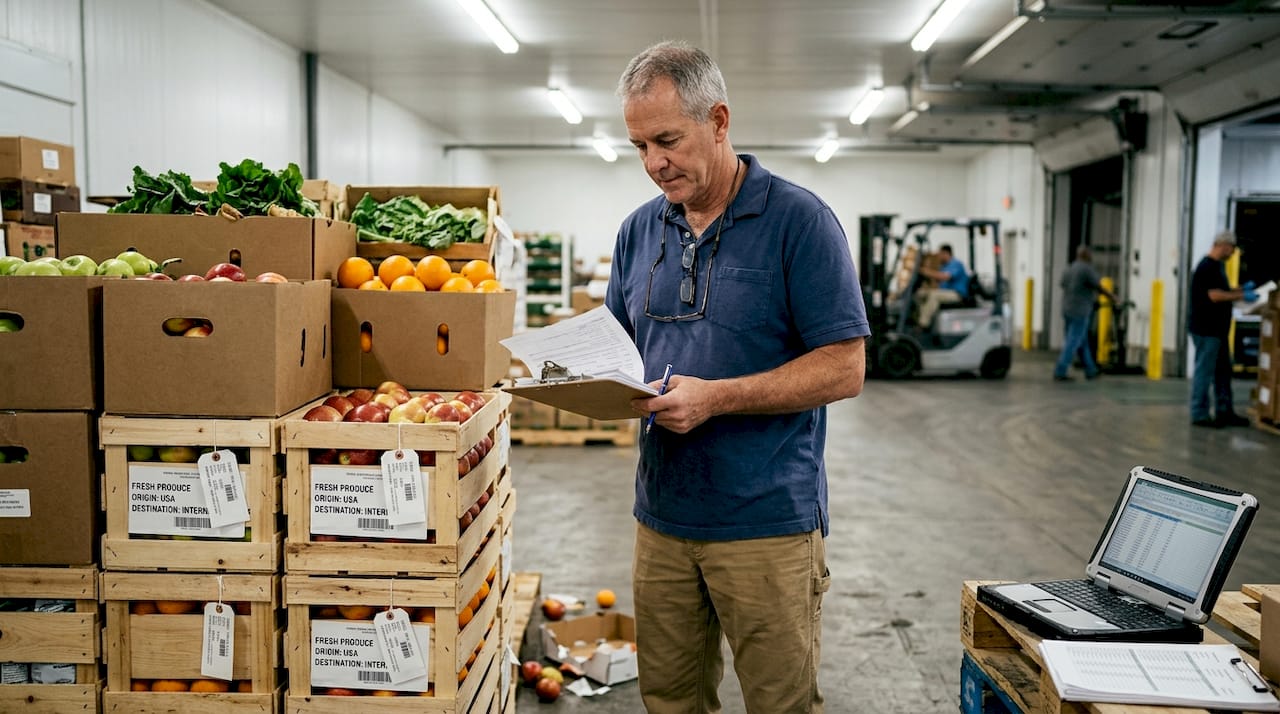
A single documentation error can turn a profitable shipment into a total loss. One real-world case saw erroneous documents trigger a three-month customs hold, resulting in the full spoilage of an imported kiwi fruit consignment. For businesses handling perishable goods, that is not just a financial hit. It is a supply chain crisis, a client relationship shattered, and a reputation bruised. This article breaks down the agencies, documents, and operational strategies that determine whether your perishable cargo clears customs in hours or sits in limbo for weeks. You will walk away with actionable tools to protect your shipments, your margins, and your business.
Table of Contents
- The essentials: What drives customs clearance for perishables
- Common pitfalls: Avoidable errors that cripple perishable shipments
- Best practices for smooth customs clearance
- How to stay ahead: Real-time strategies to prevent delays and spoilage
- Perspective: Why over-reliance on reactive strategies can cost you everything
- Next steps: Unlock efficient customs and shipping solutions
- Frequently asked questions
Key Takeaways
| Point | Details |
|---|---|
| Compliance is crucial | Missing key documents or inaccurate filings can cause costly shipment holds and spoilage. |
| Best practices boost speed | Specialized brokers, cold-storage ports, and real-time monitoring greatly reduce customs delays. |
| Prevention beats reaction | Proactive preparation is always more effective than relying on insurance or courts after losses. |
| Choose the right partners | Experienced customs brokers and logistics providers can make or break perishable shipments. |
The essentials: What drives customs clearance for perishables
Having seen the costs of a single mistake, let’s break down exactly what makes customs clearance for perishables unique.
Perishable goods face a fundamentally different regulatory environment compared to general cargo. Where a container of machine parts might wait days without consequence, a pallet of fresh produce or chilled seafood has a biological clock ticking from the moment it leaves origin. That urgency shapes every layer of the clearance process.
Three primary federal agencies govern perishable imports into the United States:
- U.S. Customs and Border Protection (CBP): The lead agency coordinating multi-agency clearance and verifying all import documentation at the port of entry.
- USDA Animal and Plant Health Inspection Service (APHIS): Responsible for inspecting plant-based products, issuing import permits, and verifying phytosanitary certificates to prevent the entry of pests and diseases.
- USDA Food Safety and Inspection Service (FSIS): Oversees meat, poultry, and egg products, requiring reinspection at U.S. ports before products can enter commerce.
Per the FSIS Import Inspection Student Notebook, USDA agencies such as APHIS and FSIS require permits, phytosanitary certificates, and reinspection for perishables, while CBP coordinates the multi-agency clearance process. This layered oversight is necessary, but it also multiplies the opportunities for delay.
Here is a quick reference for the core documents you need:
| Document | Governing agency | Purpose |
|---|---|---|
| Import permit | APHIS / FSIS | Authorizes entry of specific commodity |
| Phytosanitary certificate | APHIS | Confirms product is pest and disease free |
| Commercial invoice | CBP | Establishes value and origin |
| Bill of lading | CBP | Proof of shipment and ownership |
| Reinspection records | FSIS | Verifies product safety at U.S. port |
“Multi-agency oversight is not a bureaucratic inconvenience. It is the system designed to protect public health and agricultural integrity. Understanding each agency’s role is the first step toward working with the system, not against it.”
The complexity multiplies when you factor in that different commodities trigger different agency requirements. Fresh fruit may only require APHIS involvement, while chilled beef requires both FSIS reinspection and CBP clearance. Knowing which agencies apply to your specific commodity before the shipment departs is critical. Businesses that work with experienced US customs brokerage services are far better positioned to navigate this multi-agency landscape without costly surprises.
Common pitfalls: Avoidable errors that cripple perishable shipments
Now that you know who’s involved and what’s required, let’s expose the costly mistakes you can avoid. Most businesses get tripped up here.
The frustrating reality is that most perishable shipment failures are preventable. The kiwi fruit case is a stark reminder that erroneous documents can cause holds and total spoilage. Here are the five most common errors importers make:
- Incomplete or inaccurate documentation. Missing fields on commercial invoices, incorrect commodity descriptions, or expired phytosanitary certificates are the leading causes of customs holds.
- Wrong port of entry selection. Not all ports have cold storage or USDA inspection facilities. Routing a temperature-sensitive shipment through a port without these capabilities is a recipe for spoilage.
- Failure to pre-notify agencies. FSIS and APHIS require advance notice before a shipment arrives. Missing this window delays the inspection queue and extends hold times.
- Mislabeling or packaging errors. Labels must comply with both country-of-origin rules and U.S. import standards. Discrepancies between label claims and actual contents trigger immediate holds.
- Underestimating transit time buffers. Importers sometimes schedule arrivals without accounting for potential inspection delays, leaving no buffer before product shelf life expires.
The consequences are severe. Beyond product loss, businesses face fines, increased scrutiny on future shipments, and potential suspension of import privileges. Legal recourse through courts is possible, but it recovers money at best. It does not recover spoiled product, lost client contracts, or damaged supplier relationships.
Pro Tip: Before any perishable shipment departs origin, run a full pre-shipment document audit. Check every field on every form against the specific requirements of the destination port and the relevant agencies. A 30-minute review can prevent a 30-day hold. Reviewing tips for avoiding customs delays and applying customs compliance tips before filing can dramatically reduce your exposure.
One critical but often overlooked factor is the relationship between filing accuracy and inspection priority. Shipments with clean, complete documentation are flagged as lower risk and often move through inspection queues faster. Errors, even minor ones, can trigger manual review, which adds hours or days to clearance time.

Best practices for smooth customs clearance
Avoiding pitfalls is half the equation. Here is what the most successful importers do for seamless perishable clearance.
The businesses that consistently clear perishable shipments without delays share a set of deliberate operational habits. These are not shortcuts. They are systems built through experience and refined over time.
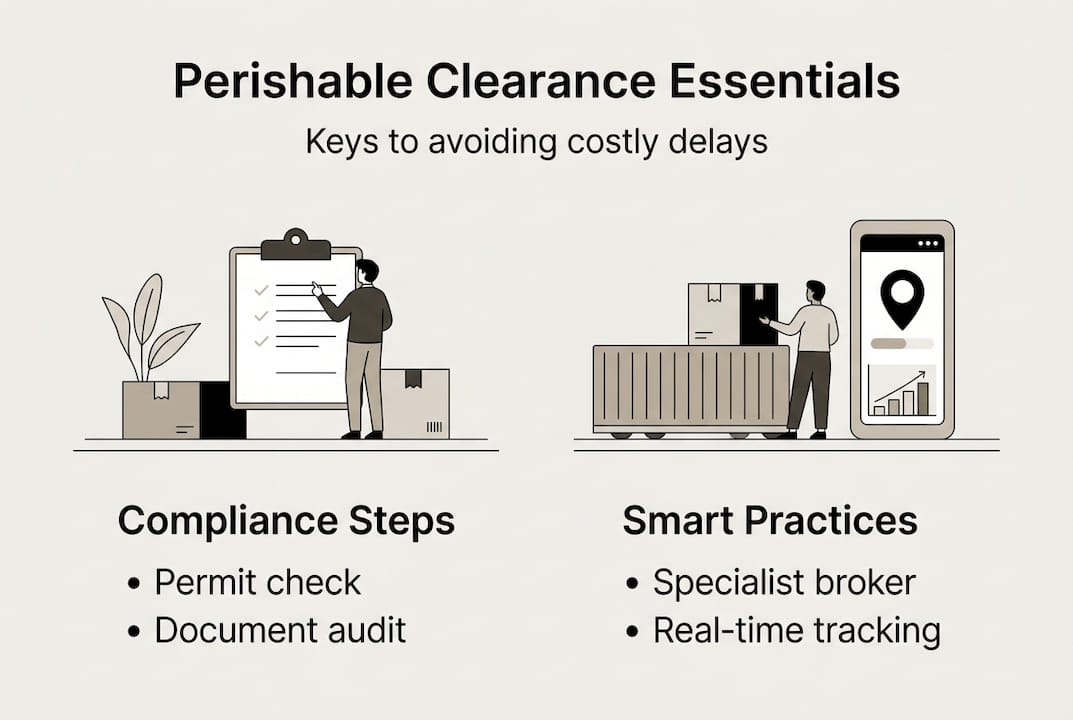
First, the choice of customs broker matters enormously. A general broker may handle the paperwork, but a broker who specializes in perishables understands the nuances of APHIS and FSIS requirements, knows which ports move faster, and has established relationships with inspection staff. Per CBP’s agriculture trade guidance, best practices include using specialized brokers, pre-clearance filings, customs-friendly ports, cold storage, monitoring technology, and active government relationships.
Here is a comparison of port types for perishable imports:
| Port type | Cold storage available | USDA inspection on-site | Recommended for |
|---|---|---|---|
| Designated cold storage port | Yes | Yes | High-value, temperature-sensitive cargo |
| NARP-approved port | Varies | Yes | Low-risk, pre-approved commodities |
| General cargo port | No | Limited | Non-perishable or ambient goods only |
Key operational best practices include:
- Pre-clearance filings: Submit all documentation before the shipment arrives. This allows agencies to review paperwork in advance and schedule inspections efficiently.
- Cold chain continuity planning: Identify cold storage facilities at the port of entry before the shipment departs. Confirm availability and reserve capacity.
- Technology-enabled monitoring: Use real-time temperature and location tracking to detect deviations during transit and respond before product integrity is compromised.
- Government liaison programs: Establish direct communication channels with APHIS and FSIS inspectors at your primary ports of entry.
Pro Tip: When choosing a customs broker for perishables, ask specifically about their experience with your commodity type and the ports you use. A broker who has cleared 500 shipments of fresh produce through Miami is a fundamentally different asset than one who handles general cargo. Also, review expedited shipping steps and strategies for faster airport clearance to build speed into your process from day one.
How to stay ahead: Real-time strategies to prevent delays and spoilage
Beyond best practices, here is how leading shippers build real-time resilience into their perishable supply chains.
Proactive operations beat reactive ones every time. The difference between a shipment that clears in four hours and one that sits for four days often comes down to what happened before the cargo reached the port.
The National Agriculture Release Program (NARP) is one of the most powerful tools available to importers of low-risk commodities. NARP expedites low-risk commodities through customs by allowing pre-approved shipments to bypass lengthy inspection queues. To qualify, importers must meet specific compliance history requirements and work with NARP-designated ports. The time savings can be significant, often reducing clearance from days to hours.
Here is a practical three-step process to minimize spoilage risk in real time:
- Monitor documentation status continuously. Use a digital document management system that flags missing or expiring certificates before the shipment departs. Set automated alerts for any filing gaps.
- Track shipment location and temperature in real time. Deploy IoT-enabled sensors on high-value perishable loads. If a temperature excursion occurs during transit, you can alert the receiving facility and adjust inspection scheduling before the cargo arrives.
- Maintain a port-specific contingency plan. Know in advance which alternative ports have cold storage and USDA inspection capacity. If your primary port experiences congestion or equipment failure, you need a pre-approved rerouting option ready to execute within hours.
Data plays an increasingly important role here. Importers who track clearance times by port, commodity, and broker are able to identify patterns, such as a specific port consistently running two days slower for a particular product category, and adjust routing decisions accordingly. This kind of operational intelligence is what separates businesses that manage delays from those that prevent them.
Working with brokers who understand how to streamline global trade through technology and agency relationships gives importers a measurable edge in speed and reliability.
Perspective: Why over-reliance on reactive strategies can cost you everything
After learning the practical solutions, it is time for a frank, experience-based perspective on what really safeguards your business.
Too many importers treat customs holds and spoilage as risks to manage after the fact. They carry cargo insurance, they know their legal options, and they assume that compensation will cover the damage if something goes wrong. That thinking is dangerously incomplete.
Insurance pays out in dollars. Courts may award compensation. But neither gives back a spoiled shipment, a missed delivery window, or a client who found another supplier while waiting. The reputational cost of a single high-profile spoilage incident can far exceed the financial loss on that specific cargo.
The businesses that thrive in perishable logistics are the ones that build compliance and monitoring into their standard operating procedures, not their emergency response plans. They invest in specialized brokers, technology, and pre-clearance systems because they understand that prevention is always cheaper than crisis management. Partnering with experts who help cut costs with customs brokers is not an overhead expense. It is a core business protection strategy. The shift from reactive to proactive is not just operational. It is a mindset that defines which businesses grow and which ones absorb preventable losses.
Next steps: Unlock efficient customs and shipping solutions
With the right strategies in place, your next step is to ensure your execution is just as efficient. Here is how to get started with expert partners.
Worldwide Express brings deep expertise to perishable logistics, from documentation management and agency coordination to cold chain continuity and real-time shipment tracking. For businesses that cannot afford delays or spoilage, having a seasoned partner makes all the difference.
Explore how our customs brokerage services can streamline your perishable import and export operations. Whether you are navigating multi-agency clearance for the first time or optimizing an established supply chain, our team is ready to help. Start with our freight forwarding guide to understand how integrated logistics solutions can reduce your risk and improve your clearance times from day one.
Frequently asked questions
What documents are mandatory for customs clearance of perishables?
USDA agencies APHIS and FSIS require import permits, phytosanitary certificates, and completed reinspection paperwork, while CBP requires commercial invoices and bills of lading for all perishable shipments.
How can I avoid spoilage during customs clearance?
Advance preparation, accurate filings, real-time shipment monitoring, and routing through customs-friendly ports with dedicated cold storage are the most effective steps to protect product integrity during clearance.
What is NARP and how does it help importers of perishables?
NARP is a fast-track program that allows low-risk commodities to bypass standard inspection queues, significantly reducing hold times and the risk of spoilage for pre-approved importers.
Who is responsible if perishables spoil during a customs hold?
Importers bear primary responsibility because accurate and compliant filings are the importer’s obligation, though courts may award some compensation in cases where agency error contributed to the delay.
Why choose a specialized customs broker for perishable goods?
Specialized brokers with perishable experience can prevent filing errors, navigate multi-agency requirements efficiently, and minimize shipment delays in ways that general brokers typically cannot.
Recommended
- Streamline airport customs clearance for faster shipping – Worldwide Express, Inc.
- How to Avoid Customs Delays for Smooth International Shipping – Worldwide Express, Inc.
- Master customs compliance tips for smoother shipping – Worldwide Express, Inc.
- Airport Customs Clearance 2026: 40% Faster Processing – Worldwide Express, Inc.