

Improper export packing costs businesses millions annually through damaged shipments, rejected cargo, and compliance failures. A single poorly packed container can result in thousands of dollars in losses, strained customer relationships, and regulatory penalties. This comprehensive guide walks you through proven packing techniques, compliance requirements, and cost optimization strategies that protect your goods throughout their international journey. You’ll learn how to select appropriate materials, execute professional packing methods, verify effectiveness, and partner with logistics experts who ensure your exports arrive intact and on time.
Table of Contents
- Key takeaways
- Preparing for export packing: materials, standards, and compliance
- Executing export packing: best practices, techniques, and protection methods
- Verifying and optimizing export packing: damage prevention and cost savings
- How Worldwide Express supports your export shipping and packing needs
- FAQ
Key Takeaways
| Point | Details |
|---|---|
| Match packaging to cargo | Proper packaging should align with cargo type, risks, and regulatory requirements to prevent damage and delays. |
| Industrial grade materials | Use moisture and shock resistant materials like wood crates, moisture barriers, and desiccants to protect goods. |
| Follow ISPM 15 and D6251 | Verify compliance with ISPM 15 heat treatment and D6251 crate standards before purchase to avoid customs rejection and penalties. |
| Optimize packaging size | Design packaging to minimize weight and volume while maintaining protection to reduce shipping costs. |
| Certified packers and tests | Work with certified packers and test packaging for route specific risks to improve reliability and claims outcomes. |
Preparing for export packing: materials, standards, and compliance
Successful export packing begins long before you seal the first box. Understanding materials, regulatory standards, and compliance requirements prevents costly mistakes and ensures your shipments clear customs without delays. Export managers must navigate a complex landscape of international regulations while selecting packaging that withstands the rigors of global transportation.
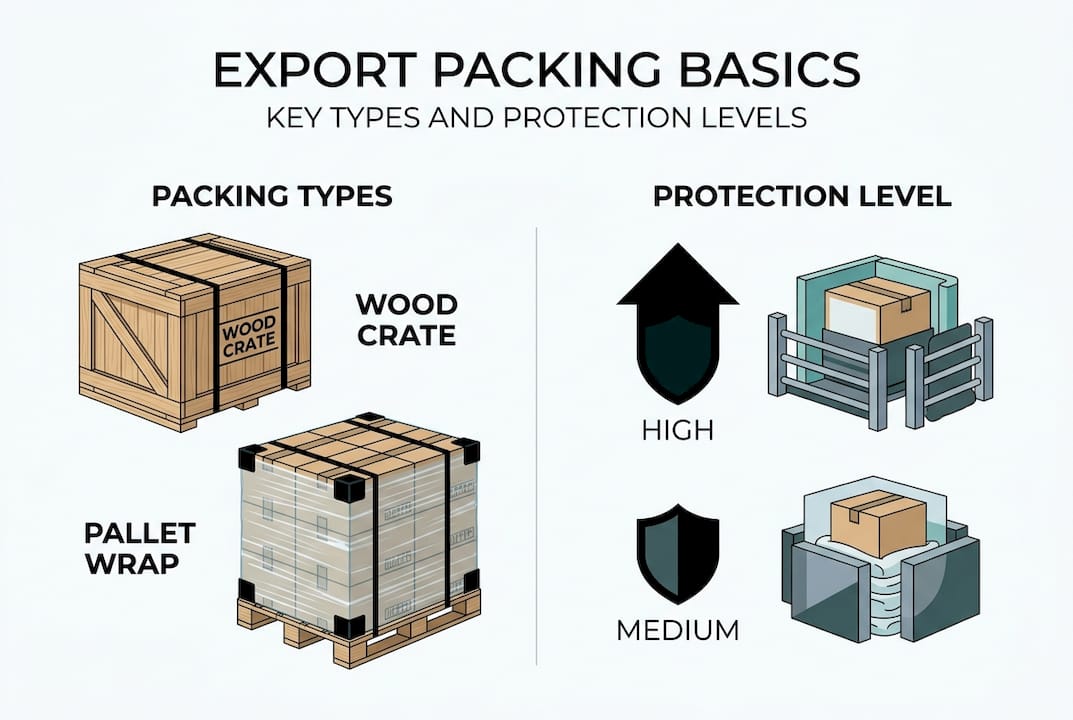
Your material selection directly impacts shipment safety and compliance. Wood crates provide superior protection for heavy machinery and delicate equipment, while pallets with shrink wrap suit lighter consumer goods. Moisture barriers become critical for ocean freight, where humidity and salt air threaten cargo integrity. Industrial-grade corrugated boxes must meet specific Edge Crush Test (ECT) ratings based on your product weight. A box rated at 32 ECT handles up to 65 pounds, while 44 ECT supports loads up to 80 pounds. Selecting inadequate materials invites damage and rejected shipments.
Regulatory compliance separates professional exporters from amateurs. ISPM 15 mandates heat treatment and stamping for wood pallets and crates to prevent pest transmission across borders. This international standard requires certified treatment facilities to heat wood to 56°C for 30 minutes, then apply an official mark proving compliance. Skipping this step results in cargo rejection at destination ports and expensive return shipping. ASTM D6251 establishes strength requirements for wood crates, specifying nail spacing, board thickness, and structural integrity standards that ensure your packaging survives handling.
Verify these certifications before purchasing packaging materials:
- ISPM 15 heat treatment stamps on all wood components
- ASTM D6251 compliance certificates for wooden crates
- ECT ratings matching or exceeding your cargo weight
- UN certification for hazardous materials packaging
- ISO 3394 dimensional standards for pallet compatibility
Pro Tip: Ocean freight demands moisture-resistant materials beyond standard packaging. Invest in vapor barrier films, desiccant packets, and volatile corrosion inhibitors (VCI) to protect metal components during multi-week sea voyages. These additions cost pennies per shipment but prevent thousands in corrosion damage.
Create a comprehensive packing list documenting every material specification and certification. This documentation proves compliance to customs officials and provides evidence if damage claims arise. Your preparation phase determines whether your cargo arrives safely or becomes a costly insurance claim.
Executing export packing: best practices, techniques, and protection methods
Execution transforms preparation into protected cargo ready for international transit. Professional packing techniques prevent the movement, moisture, and shock that destroy shipments during handling and transportation. Each cargo type demands specific approaches that balance protection with cost efficiency.
Follow these steps when packing different cargo categories:
- Heavy machinery: Build custom wood crates meeting ASTM D6251 standards, install rubber vibration mounts, secure equipment with lag bolts, fill voids with expanding foam
- Delicate electronics: Use anti-static bubble wrap, create 2-inch cushioning on all sides, place moisture indicators inside sealed bags, mark fragile on all six surfaces
- Perishable goods: Select insulated containers with temperature monitoring, add gel packs or dry ice, seal with tamper-evident tape, document cold chain procedures
- Hazardous materials: Use UN-certified packaging matching your material classification, include proper placards and documentation, verify compatibility with transportation modes
Blocking and bracing prevent cargo movement that causes damage during transit. Install wood blocks along container walls to eliminate shifting space. Add diagonal braces that transfer shock loads to the container frame rather than your products. The goal is zero movement when handlers shake or tilt your packaging. Even minor shifts during a 10,000-mile journey compound into significant displacement and damage.
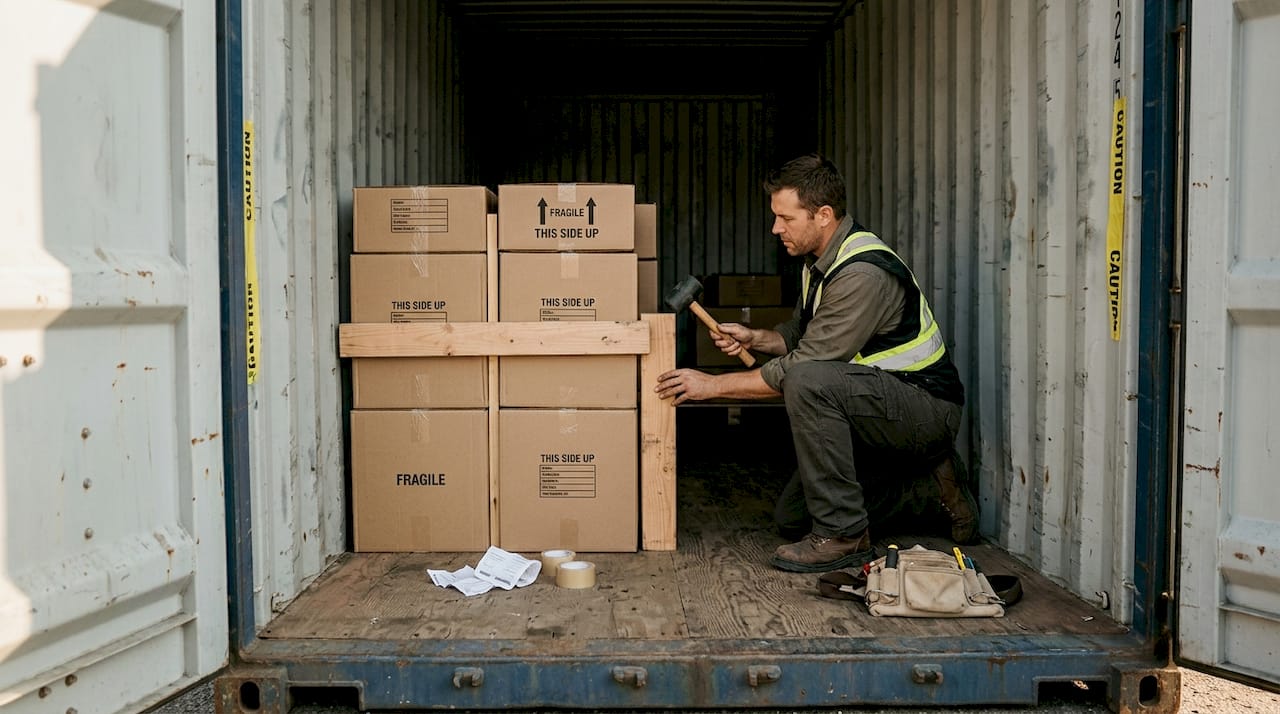
Moisture protection requires multiple defense layers for ocean freight. Wrap products in vapor barrier films that block humidity penetration. Place desiccant packets throughout the container to absorb ambient moisture. For metal components, use VCI paper or chips that release corrosion-inhibiting vapors. These materials create a protective atmosphere inside your packaging that prevents rust and degradation during multi-week sea voyages.
Shock absorption materials cushion impacts from handling equipment and transportation vibrations. High-density foam provides excellent protection for electronics and glass products. Rubber mounts isolate heavy machinery from vibration damage. Air pillows fill voids in boxes to prevent product movement. The industry standard calls for 2 inches of cushioning material between products and packaging walls. This distance absorbs impacts without transmitting force to your cargo.
Apply the H-taping technique when sealing corrugated boxes. Run tape along the center seam and both edges, creating an H pattern that reinforces the weakest closure points. This simple method increases box strength by 40% compared to single-strip taping. Use pressure-sensitive tape rated for your shipping environment, as standard office tape fails in cold or humid conditions.
| Packaging Type | Best For | Protection Level | Cost Range | Compliance Notes |
|---|---|---|---|---|
| Wood crates | Heavy machinery, delicate equipment | Highest | $50-500 | Requires ISPM 15, ASTM D6251 |
| Palletized loads | Consumer goods, boxed products | Medium | $15-75 | ISPM 15 for wood pallets |
| Corrugated boxes | Lightweight items, documents | Low to medium | $2-20 | ECT rating must match weight |
| Plastic containers | Liquids, chemicals, reusable needs | Medium to high | $25-200 | UN certification for hazmat |
Pro Tip: Never ship products in original manufacturer packaging designed for retail display. These boxes lack the structural integrity and protection needed for international freight handling. Repack items in industrial-grade materials that withstand fork lifts, conveyor systems, and rough handling.
Partner with experienced packers who understand how to optimize logistics for efficient global shipping. Professional services ensure compliance while implementing protection methods that match your specific cargo and route challenges. Compare international shipping solutions to find providers with proven export packing expertise.
Verifying and optimizing export packing: damage prevention and cost savings
Verification separates assumptions from reality in export packing effectiveness. Measuring damage rates, testing packaging integrity, and implementing cost reduction strategies transform good packing into optimized operations that protect profits while ensuring cargo safety.
Damage benchmarks provide context for your performance. Typical US shipment damage averages 3-4%, though containerized ocean freight shows significantly lower rates when properly packed. Air freight experiences higher damage rates due to increased handling touchpoints and time pressure at cargo facilities. Ground transportation damage varies by route quality and handling procedures. Track your damage rates by transportation mode, destination, and product category to identify improvement opportunities.
Verify packing effectiveness through systematic inspection before shipment:
- Shake test: Lift and gently shake packages to detect internal movement or loose components
- Drop test: Drop packages from 6 inches onto a hard surface to simulate handling impacts
- Compression test: Stack maximum expected weight on packages for 24 hours to verify structural integrity
- Moisture test: Seal packages with humidity indicators to confirm barrier effectiveness
- Documentation review: Verify all compliance marks, certifications, and required labels appear correctly
Cost reduction techniques deliver immediate financial benefits without compromising protection. Carton set packaging reduces shipping costs by 5-7% by standardizing box dimensions that maximize container utilization. Right-sizing eliminates wasted space that carriers charge for through dimensional weight pricing. A product shipped in a box 20% too large can cost 30% more due to dimensional weight calculations that penalize inefficient packaging.
| Packing Method | Average Damage Rate | Cost per Unit | Container Efficiency | Sustainability Score |
|---|---|---|---|---|
| Professional crating | 0.5-1.5% | High | 75-85% | Medium |
| Optimized palletizing | 1.5-3% | Medium | 85-95% | High |
| Standard boxing | 3-5% | Low | 60-70% | Medium |
| Minimal packaging | 6-10% | Very low | 95-100% | Low |
Sustainability initiatives increasingly drive packaging decisions as customers demand environmental responsibility. Paper-based packaging materials now replace plastic alternatives in many applications, reducing waste while maintaining protection standards. Molded pulp cushioning provides shock absorption comparable to foam at lower environmental cost. Biodegradable films offer moisture protection without persistent plastic pollution. These sustainable options often reduce shipping costs through lighter weights and improved container utilization.
Implement these cost optimization strategies:
- Standardize packaging dimensions across product lines to improve container loading efficiency
- Negotiate volume discounts with packaging suppliers for commonly used materials
- Invest in reusable containers for regular routes with return logistics
- Automate packaging processes to reduce labor costs and improve consistency
- Analyze damage patterns to identify and eliminate recurring packing failures
Pro Tip: Partner with certified packing specialists who conduct route-specific testing before implementing new packaging designs. They simulate actual transportation conditions including vibration profiles, temperature cycles, and handling scenarios unique to your shipping lanes. This testing identifies weaknesses before they become expensive damage claims, ensuring your packaging performs in real-world conditions rather than just meeting theoretical standards.
Data-driven optimization separates industry leaders from competitors. Track packaging costs as a percentage of product value to identify opportunities for improvement. Monitor damage rates by packer, route, and season to detect patterns. Calculate total cost of ownership including materials, labor, damage claims, and disposal to make informed decisions about packaging investments.
How Worldwide Express supports your export shipping and packing needs
Navigating export packing complexity demands experienced partners who understand international logistics from documentation through final delivery. Worldwide Express provides comprehensive freight forwarding and customs brokerage services tailored for mid-sized exporters seeking efficient, compliant shipping solutions. Our team guides you through material selection, compliance verification, and cost optimization strategies that protect your cargo and your bottom line.
Our logistics experts help you implement the packing techniques and compliance frameworks discussed throughout this guide. We connect you with certified packing facilities, verify ISPM 15 and ASTM compliance, and optimize container loading for maximum efficiency. Whether you need guidance on understanding freight forwarding or want to choose the right freight forwarder for your specific needs, our experience across industries and trade lanes ensures your exports succeed.
Worldwide Express offers:
- Customs brokerage handling compliance documentation and clearance procedures
- Freight forwarding across air, ocean, and ground transportation modes
- Cargo insurance protecting your shipments against damage and loss
- Supply chain management tools providing real-time tracking and visibility
- Industry-specific solutions tailored for your products and destinations
Explore our complete logistics services to discover how we streamline your export operations while reducing costs and damage rates. Our global network and decades of experience position us as your strategic partner for international shipping success.
FAQ
What are ISPM 15 requirements, and why do they matter?
ISPM 15 mandates heat treatment and stamping for wood pallets and crates used in international shipping to prevent pest transmission across borders. Certified facilities heat wood to 56°C for 30 minutes, then apply official marks proving compliance. Without proper ISPM 15 certification, customs officials reject your cargo at destination ports, resulting in expensive delays, storage fees, and return shipping costs that can exceed your original freight charges.
How do I choose the right packaging type for different cargo?
Wooden crates suit heavy or delicate items requiring maximum protection, while pallets with shrink wrap work well for lighter boxed goods. Hazardous materials require UN-certified packaging matching your specific material classification. Consider your product’s weight, fragility, environmental sensitivity, and destination regulations when selecting packaging. Professional freight forwarders assess these factors and recommend appropriate materials that balance protection with cost efficiency for your specific shipping needs.
What are effective strategies to reduce export packing damage and costs?
Damage rates can be minimized through proper material selection, professional packing techniques, and systematic testing before shipment. Right-sizing packaging and using carton sets cuts shipping costs by 5-7% by eliminating wasted space that carriers charge for through dimensional weight pricing. Implement blocking and bracing to prevent movement, use adequate cushioning materials, and verify packaging integrity through shake and drop tests. Track damage rates by route and packer to identify improvement opportunities.
How much cushioning material should I use around products?
Industry standards recommend 2 inches of cushioning material between products and packaging walls to absorb handling impacts and transportation vibrations. This distance provides adequate protection for most items without excessive material costs. Fragile or high-value products may require additional cushioning, while durable goods can sometimes use less. The key is preventing any product movement inside packaging, as even minor shifts during long-distance transportation compound into significant displacement and damage.
What documentation do I need for export packing compliance?
Maintain detailed records documenting material specifications, compliance certifications, packing procedures, and inspection results for every shipment. Include ISPM 15 stamps for wood materials, ASTM certificates for crates, ECT ratings for boxes, and UN certification for hazardous materials. Create comprehensive packing lists describing contents, weights, dimensions, and special handling requirements. This documentation proves compliance to customs officials, supports insurance claims if damage occurs, and provides evidence of professional packing standards that protect your business reputation.
Recommended
- 8 Packing List Essentials for International Trade Success – Worldwide Express, Inc.
- Master Exporting Food Products: A Step-by-Step Approach – Worldwide Express, Inc.
- How to Import Goods: A Step-by-Step Guide for Success – Worldwide Express, Inc.
- Master Export Shipping Documentation for Success – Worldwide Express, Inc.
- Wat is luchtvracht: complete gids voor professionals 2026