

Delays and compliance headaches can turn international shipping into a costly challenge for American logistics managers. With strict documentation requirements and fast-changing carrier options, every decision impacts delivery speed and legal adherence. This guide equips you with proven techniques and highlights the importance of investigating each potential carrier’s strengths, ensuring your cargo moves quickly while meeting all regulatory demands across borders.
Table of Contents
- Step 1: Assess Shipment Requirements And Select Optimal Carriers
- Step 2: Prepare Critical Documentation And Ensure Compliance
- Step 3: Book Priority Transport And Confirm Pick-Up Schedules
- Step 4: Facilitate Smooth Customs Clearance And Cargo Tracking
- Step 5: Verify Shipment Arrival And Complete Post-Delivery Checks
Quick Summary
| Key Insight | Explanation |
|---|---|
| 1. Assess Shipment Characteristics | Document key attributes like weight, type, and urgency to align with carrier capabilities. |
| 2. Research Carrier Strengths | Investigate potential carriers’ global coverage, handling expertise, and compliance to choose the best fit. |
| 3. Ensure Accurate Documentation | Create a thorough package including invoices and licenses to avoid delays and compliance issues. |
| 4. Book with Priority Transport | Confirm transport type and pick-up details to enhance delivery efficiency and reliability. |
| 5. Conduct Post-Delivery Verification | Inspect cargo and documentation upon arrival to ensure compliance and protect shipment value. |
Step 1: Assess shipment requirements and select optimal carriers
Successfully navigating international shipping demands a strategic approach to evaluating your cargo’s specific needs and matching those requirements with the most suitable carrier. This process involves carefully analyzing your shipment’s characteristics and understanding the complex logistics landscape.
Begin by comprehensively documenting your shipment’s key attributes. Freight transportation modeling tools can help streamline this assessment by providing insights into carrier capabilities. Critical factors to evaluate include:
- Shipment weight and dimensions
- Cargo type (fragile, hazardous, temperature-sensitive)
- Destination country and specific regional requirements
- Urgency of delivery
- Budget constraints
Carrier selection requires methodical research. Investigate each potential carrier’s strengths by examining their:
- Global network coverage
- Specialized handling capabilities
- Transit time performance
- Pricing structures
- Compliance with international shipping regulations
Choosing the right carrier can mean the difference between a smooth delivery and a logistical nightmare.
When comparing carriers, request detailed quotes and service level agreements that outline precise delivery timelines and handling protocols. Air transport cargo preparation guidelines can provide additional insights into carrier-specific requirements.

Here’s a comparison of major international shipping carrier attributes for strategic selection:
| Attribute | Carrier A | Carrier B | Carrier C |
|---|---|---|---|
| Global Network | Extensive coverage | Moderate coverage | Niche regions focus |
| Handling Expertise | Advanced (fragile/hazardous) | Standard | Temperature-sensitive specialty |
| Transit Speed | Fast delivery times | Average speed | Slow but predictable |
| Pricing Model | Premium rates | Economy options | Flexible pricing tiers |
| Compliance Support | Full customs services | Basic compliance handling | Specialized product expertise |
This table provides a concise carrier comparison to optimize your selection process.
Pro tip: Always maintain a flexible carrier strategy and build relationships with multiple logistics providers to ensure consistent shipping reliability.
Step 2: Prepare critical documentation and ensure compliance
Accurate and comprehensive documentation serves as the backbone of successful international shipping, transforming complex logistics challenges into seamless global operations. Mastering the documentation process requires meticulous attention to detail and a systematic approach to regulatory compliance.
Start by gathering and organizing all essential shipping documents, focusing on critical documentation practices that ensure legal and regulatory adherence. Your documentation package should typically include:
- Commercial invoice with detailed product descriptions
- Packing list specifying exact contents and quantities
- Certificate of origin for customs clearance
- Export/import licenses (if applicable)
- Specialized certificates for restricted or sensitive goods
Verify document accuracy and completeness by cross-referencing each requirement with destination country regulations. Pay special attention to:
- Precise commodity descriptions
- Correct harmonized tariff codes
- Accurate valuation of shipped goods
- Compliance with international trade agreements
- Specific regulatory requirements for different product categories
Incomplete or inaccurate documentation can result in costly delays, potential fines, and shipment rejections.
Utilize digital documentation tools and platforms that support good documentation practices to streamline your compliance process. These tools can help automate validation, reduce human error, and maintain comprehensive audit trails.
Pro tip: Develop a standardized document checklist and review process to ensure consistent compliance across all international shipments.
Step 3: Book priority transport and confirm pick-up schedules
Securing priority transport and establishing precise pick-up schedules are critical components of expedited international shipping that can significantly impact your delivery timelines and overall logistics efficiency. Mastering this process requires strategic planning and clear communication with your transportation providers.
Begin by researching transportation pickup protocols that align with your specific shipping requirements. Your booking strategy should include:
- Identifying appropriate priority transport options
- Confirming exact vehicle and cargo compatibility
- Determining specific pick-up windows
- Verifying driver credentials and availability
- Understanding site-specific loading requirements
Initiate direct communication with logistics providers to negotiate and confirm critical transport details. Key elements to discuss and document include:
- Precise pick-up location coordinates
- Estimated time of arrival and departure
- Special handling instructions
- Cargo loading and securing procedures
- Contingency plans for potential delays
Successful priority transport booking hinges on meticulous planning and proactive coordination.
Utilize digital scheduling platforms that support efficient transport reservation systems to streamline your booking process. These tools can help automate scheduling, reduce communication errors, and provide real-time tracking capabilities.
Pro tip: Always maintain a 30-minute buffer in your pick-up schedule to accommodate unexpected logistical variations and ensure smooth transport operations.
Step 4: Facilitate smooth customs clearance and cargo tracking
Navigating the complex landscape of international shipping requires a strategic approach to customs clearance and cargo tracking, transforming potential logistical challenges into seamless global operations. Your ability to efficiently manage these critical processes can significantly reduce delays and minimize potential compliance risks.
Leverage advanced digital platforms like the Automated Commercial Environment system to streamline your customs documentation and tracking workflows. Your comprehensive customs clearance strategy should encompass:
- Preparing accurate and complete electronic documentation
- Understanding specific import/export regulations
- Classifying goods with precise harmonized tariff codes
- Calculating accurate duties and taxes
- Anticipating potential inspection requirements
Develop a proactive compliance approach by integrating key tracking and clearance elements:
- Real-time shipment status monitoring
- Digital documentation management
- Automated compliance checks
- Instant communication channels with customs authorities
- Comprehensive digital audit trails
Effective customs management is the difference between smooth international shipping and costly operational disruptions.
Utilize international customs standards frameworks to establish robust global shipping protocols that ensure consistent and reliable cargo movement across borders.
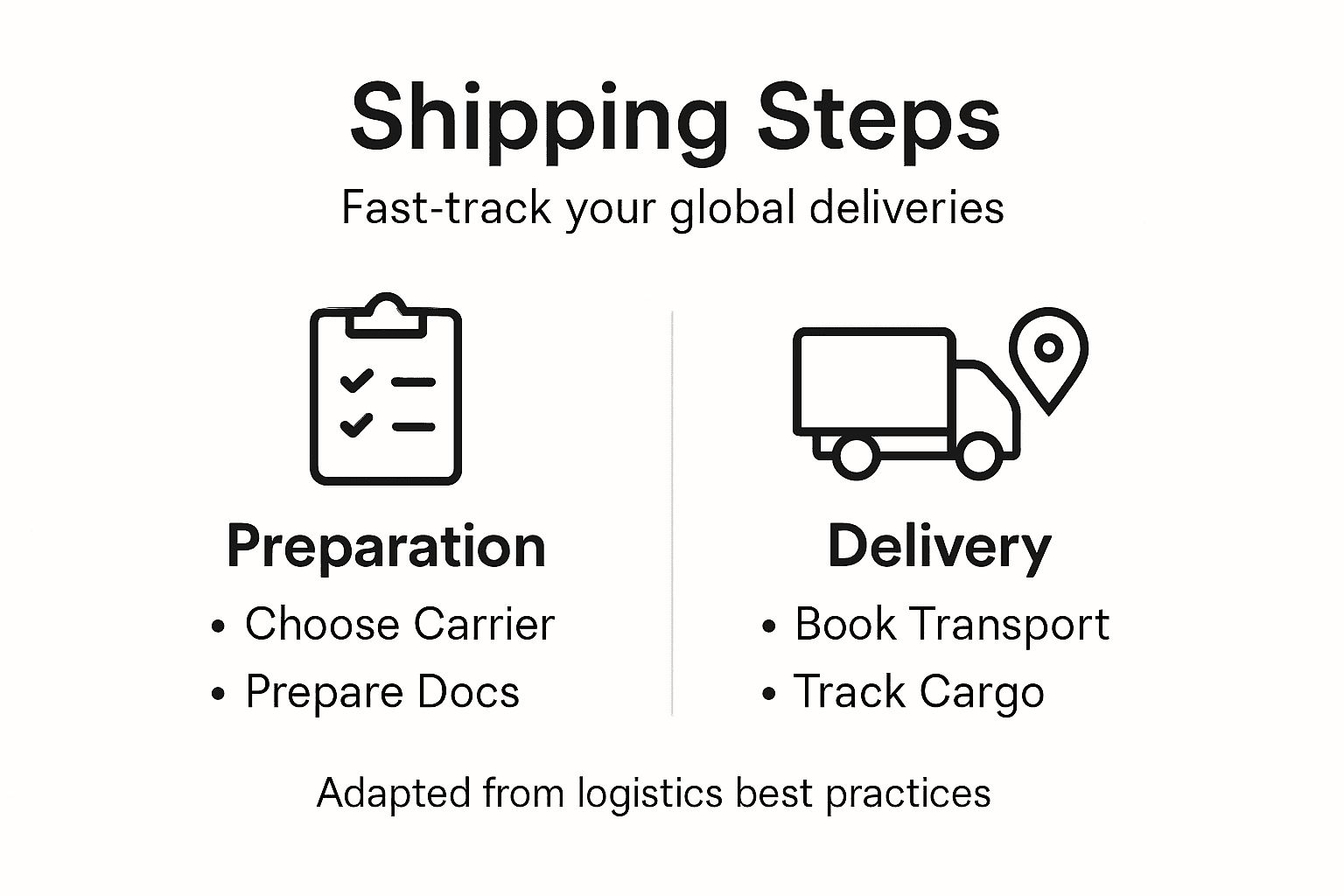
Pro tip: Invest in integrated logistics software that provides end-to-end visibility and automated compliance verification to minimize potential customs clearance complications.
Step 5: Verify shipment arrival and complete post-delivery checks
The final stage of international shipping requires meticulous verification and thorough documentation to ensure your cargo has arrived safely and meets all contractual and regulatory requirements. Successful post-delivery validation protects your investment and provides critical insights into your supply chain performance.
Utilize comprehensive port state control checklists to systematically assess your shipment upon arrival. Your post-delivery inspection should include:
- Verifying physical condition of cargo
- Checking packaging integrity
- Comparing received goods against original manifest
- Documenting any potential damage or discrepancies
- Recording precise receiving timestamps
Execute a methodical verification process by examining:
- Quantity and quality of delivered items
- Compliance with original shipping specifications
- Cross-referencing delivery documentation
- Assessing potential customs or import irregularities
- Tracking chain of custody details
Thorough post-delivery verification is your final defense against logistical errors and potential financial losses.
Review official arrival notice documentation to confirm all critical shipment details and initiate any necessary follow-up actions with your logistics provider.
Pro tip: Create a standardized digital checklist and photograph key aspects of cargo upon arrival to establish an immediate and comprehensive record of delivery condition.
For quick reference, here’s a summary of key post-delivery checks to ensure supply chain integrity:
| Verification Area | Business Impact | Recommended Action |
|---|---|---|
| Cargo Condition | Protects shipment value | Inspect for visible damage |
| Packaging Integrity | Prevents losses | Evaluate seal and materials |
| Manifest Match | Ensures accuracy | Cross-check item count |
| Documentation Review | Avoids compliance issues | Confirm all paperwork matches |
| Arrival Timestamp | Traces chain of custody | Record time and date precisely |
This table supports robust post-delivery verification for international shipments.
Accelerate Your Global Deliveries with Expert International Shipping Solutions
Navigating the complexities of expedited international shipping demands precision and expertise in carrier selection, documentation accuracy, and customs compliance. If you have faced challenges like shipment delays, costly customs hold-ups, or inefficient cargo tracking, you are not alone. Businesses need reliable partners that understand the importance of a flexible carrier strategy and seamless customs clearance to keep shipments moving swiftly and confidently.
At Worldwide Express, Inc., we specialize in providing tailored logistics solutions that address these exact pain points. Whether you require comprehensive freight forwarding, expert customs brokerage, or real-time global tracking, our experienced team works closely with you to design efficient, cost-effective shipping plans. Explore our Uncategorized – Worldwide Express, Inc. page to learn how we integrate advanced compliance support and priority transport booking to fast-track your deliveries.
Don’t let international shipping challenges slow your business down. Partner with Worldwide Express today and gain access to a global network committed to smooth, compliant, and expedited freight movement. Visit https://worldwideexpress.com now to request a custom freight quote and experience trusted international shipping solutions built for your success.
Frequently Asked Questions
What factors should I assess for expedited international shipping?
To ensure effective expedited international shipping, evaluate your shipment’s weight, dimensions, cargo type, destination, urgency, and budget. Document these attributes thoroughly, as they guide the selection of the most suitable carrier.
How can I verify that my shipping documentation is compliant?
To confirm compliance, gather essential documents like the commercial invoice, packing list, and certificate of origin, then check against destination country regulations. Develop a standardized checklist to ensure all requirements are met before shipping.
What steps should I take to book priority transport?
To book priority transport, identify suitable options, confirm cargo and vehicle compatibility, and establish specific pick-up windows. Clearly communicate these details with your logistics provider to streamline the booking process and ensure timely transport.
How do I facilitate smooth customs clearance for my shipment?
To ensure smooth customs clearance, prepare complete electronic documentation, understand import/export regulations, and use precise harmonized tariff codes. Proactively monitor your shipment’s status and maintain communication with customs authorities to avoid delays.
What should I do to verify shipment arrival after international shipping?
Upon arrival, thoroughly inspect the cargo for damage and confirm that it matches the original manifest. Document any discrepancies or damages immediately to protect your investment and maintain supply chain integrity.
How can I track my expedited international shipment?
To track your expedited international shipment effectively, utilize real-time shipment status monitoring tools or apps provided by your logistics partner. Set up notifications for updates on your shipment, allowing you to address any issues as they arise.