

Every american business involved in global trade faces strict rules that shape what can leave the country. More than 5,000 items are restricted by export controls, affecting everything from advanced technology to specialized materials. These regulations protect national security and help prevent sensitive information or products from falling into the wrong hands. Understanding how export controls work can make the difference between successful international business and costly compliance mistakes.
Table of Contents
- Export Controls Basics Explained For U.S. Trade
- Types Of Export Controls And Classification
- Key U.S. Legal Framework And Agencies
- Obtaining Export Licenses And Documentation
- Compliance Responsibilities And Common Pitfalls
- Risks, Penalties, And Mitigation Strategies
Key Takeaways
| Point | Details |
|---|---|
| Understanding Export Controls | Export controls regulate the international transfer of goods, technologies, and sensitive information to protect national security and economic interests. |
| Compliance Requirements | Businesses must adhere to strict documentation, end-user screening, and licensing obligations to ensure compliance with export regulations. |
| Legal and Regulatory Framework | The U.S. export control system is supported by key legislation, including the Export Control Reform Act of 2018 and regulations from agencies like the Department of Commerce. |
| Risks of Non-Compliance | Violating export control regulations can lead to severe penalties, including fines, criminal charges, and revocation of export privileges. |
Export Controls Basics Explained for U.S. Trade
Export controls represent a critical regulatory framework governing the international transfer of goods, technologies, and sensitive information from the United States. As defined by University of Illinois Springfield, these federal laws regulate the export of commodities, technologies, services, and monetary transactions, requiring special permissions for certain categories of exports.
At its core, export control management involves monitoring and controlling the transfer of strategic assets that could potentially impact national security or economic interests. Export controls encompass a broad range of restrictions affecting multiple industries, including manufacturing, technology, aerospace, defense, and research institutions. The primary goal is to prevent sensitive technologies, materials, or information from reaching unauthorized parties or potentially hostile nations.
Key components of export controls typically include:
- Strict documentation requirements
- Comprehensive screening of end-users and destinations
- Mandatory licensing for specific categories of goods
- Detailed tracking of technological transfers
- Compliance mechanisms with federal regulations
According to University of Maryland Center for Environmental Science, export controls are not just about physical shipments but also encompass the transfer of controlled information and potential disclosures to foreign nationals. This means businesses and researchers must be vigilant about understanding and implementing proper protocols to ensure compliance with complex regulatory standards.
Mastering Your Export License Application Process provides additional resources for companies navigating these intricate requirements. Understanding and implementing robust export control strategies is essential for businesses engaged in international trade, helping them avoid potential legal penalties and maintaining national security standards.
Types of Export Controls and Classification
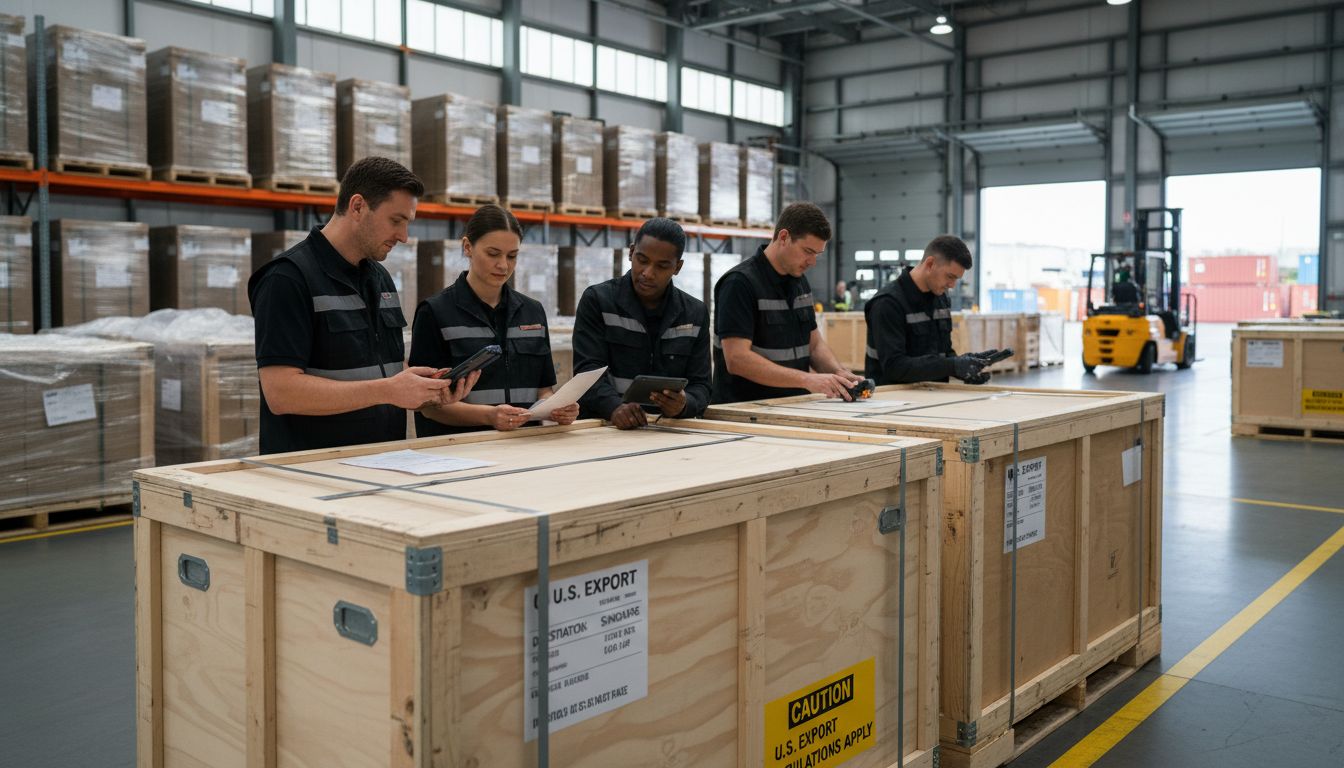
Export controls in the United States involve a complex system of categorization and regulation that impacts multiple industries and technological sectors. MIT’s Office of the Vice President for Research provides a comprehensive framework for understanding these controls, specifically highlighting the Commerce Control List (CCL), which categorizes controlled items into 10 distinct categories and 5 distinct groups.
The primary types of export controls encompass several critical areas of regulatory oversight. California State University San Marcos identifies key export activities subject to controls, which include:
- Physical shipment of controlled items
- Electronic transmissions of sensitive information
- Visual inspections of technological assets
- Oral exchanges of technical data
- Digital transfers of regulated technologies
These control mechanisms are designed to prevent the unauthorized transfer of strategic technologies, defense-related materials, and sensitive information that could potentially compromise national security. The classification system plays a crucial role in determining which items require special licensing, monitoring, or potential restriction before international transfer.
Streamline Your Exports with the Automated Export System offers additional resources for businesses navigating these intricate regulatory requirements. Understanding the nuanced classification system is essential for companies engaged in international trade, as misclassification can result in significant legal and financial consequences.
Key U.S. Legal Framework and Agencies
The U.S. export control system is anchored by a robust legal framework designed to protect national security and economic interests. U.S. Department of Commerce plays a pivotal role through the Bureau of Industry and Security (BIS), which administers the Export Administration Regulations (EAR). These regulations provide comprehensive guidelines for controlling the export of sensitive technologies, commercial and dual-use items that could potentially impact national security.
Critical legal foundations for export controls include several key legislative acts and regulatory mechanisms:
- Export Control Reform Act of 2018: Authorizes presidential control over exports
- Export Administration Regulations (EAR)
- International Traffic in Arms Regulations (ITAR)
- Commerce Control List (CCL)
- Comprehensive sanctions programs
Export Control Reform Act of 2018 serves as the statutory basis for export control regulations, explicitly empowering the U.S. President to manage export activities for national security and foreign policy objectives. This legislation provides a comprehensive framework that enables government agencies to monitor and restrict the transfer of sensitive technologies and materials across international borders.
Understanding International Trade Compliance Basics offers additional insights for businesses navigating these complex regulatory landscapes. The intricate network of agencies, including the Department of Commerce, Department of State, and Department of Treasury, work collaboratively to enforce these critical export control mechanisms, ensuring that sensitive technologies remain protected and national security interests are maintained.
Obtaining Export Licenses and Documentation
University of Oklahoma highlights the critical importance of understanding export licensing requirements for businesses engaged in international trade. Obtaining the appropriate export licenses is a complex process that involves careful assessment of the item being exported, its destination, and potential end-use. Companies must navigate a intricate system of regulatory requirements that vary depending on the specific type of goods, technologies, or information being transferred.
The export license application process typically involves several key steps:
- Identifying the specific export control classification number (ECCN)
- Determining the licensing requirements for the specific item
- Conducting a comprehensive end-user and end-use screening
- Preparing detailed documentation
- Submitting the license application to the appropriate government agency
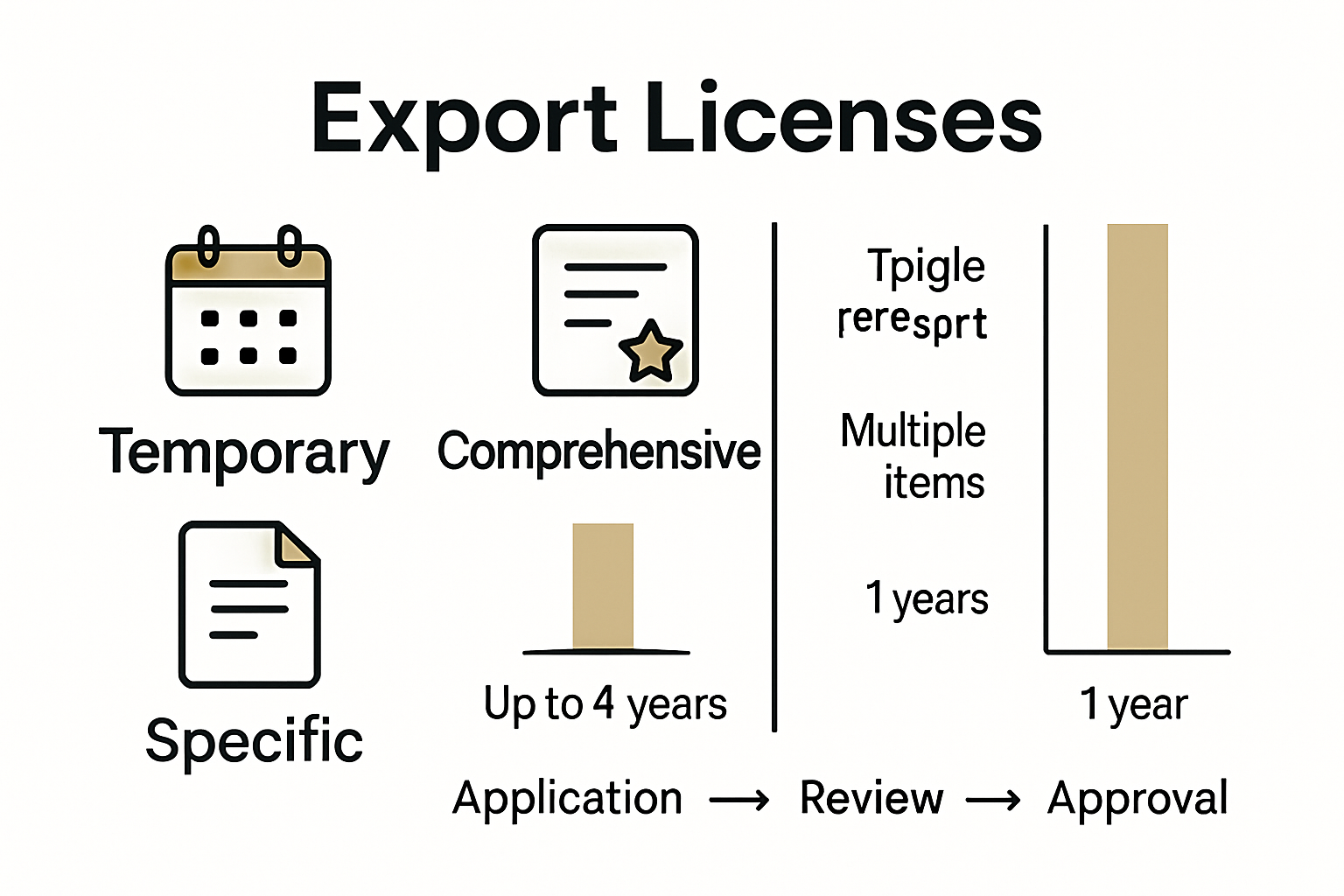
Different types of export licenses exist to accommodate various scenarios, including:
- Temporary licenses: For short-term export activities
- Comprehensive licenses: Covering multiple shipments
- Specific licenses: Tailored to unique export scenarios
- Presumptive denial licenses: For high-risk destinations
Master Export Shipping Documentation for Success provides additional guidance for businesses navigating this complex process. Successful export licensing requires meticulous attention to detail, a thorough understanding of regulatory requirements, and proactive compliance management to ensure smooth international trade operations while maintaining national security standards.
Compliance Responsibilities and Common Pitfalls
UMass Dartmouth emphasizes the critical importance of proper classification and compliance in export control regulations. Organizations must recognize that export control responsibilities extend far beyond simple shipping procedures, encompassing a comprehensive approach to managing sensitive technologies, information, and materials across international boundaries.
Common compliance pitfalls that businesses frequently encounter include:
- Inadequate screening of end-users and destinations
- Incorrect item classification
- Incomplete or inaccurate documentation
- Lack of employee training on export control regulations
- Failure to monitor changes in export control laws
- Insufficient record-keeping practices
California State University San Marcos highlights that export activities are not limited to physical shipments, but also encompass electronic transmissions, visual inspections, and oral exchanges of technical information. This broad definition means that organizations must maintain vigilance across multiple communication and transfer channels to ensure full compliance.
Master AES Filing Requirements for International Trade Success provides additional insights for businesses seeking to navigate these complex regulatory landscapes. Successful compliance requires a proactive approach, including regular internal audits, comprehensive staff training, and robust documentation processes that anticipate and address potential regulatory challenges before they become significant issues.
Risks, Penalties, and Mitigation Strategies
University of Oklahoma reveals the severe consequences of export control violations, underscoring the critical importance of comprehensive compliance strategies. Export control violations can result in devastating legal and financial repercussions for businesses, ranging from substantial monetary fines to potential criminal prosecution and permanent loss of export privileges.
The potential risks and penalties associated with export control violations include:
- Substantial monetary fines (potentially millions of dollars)
- Criminal prosecution and potential imprisonment
- Permanent revocation of export privileges
- Significant reputational damage
- Civil penalties and administrative sanctions
- Potential international trade restrictions
University of Maryland Center for Environmental Science highlights the complex concept of deemed exports, which extends regulatory scrutiny beyond physical shipments to include technical information exchanges, visual demonstrations, and even verbal communications. This expansive definition means organizations must implement comprehensive risk mitigation strategies that go far beyond traditional shipping protocols.
Master the Export Documentation Process in 2025 offers additional resources for businesses seeking to navigate these challenging regulatory environments. Effective mitigation requires a proactive approach, including robust compliance training, sophisticated screening processes, continuous monitoring of regulatory changes, and maintaining meticulous documentation to demonstrate ongoing commitment to export control regulations.
Simplify Compliance and Secure Your International Shipments Today
Navigating the complexities of U.S. export controls can feel overwhelming with strict documentation, licensing, and compliance responsibilities. You want to avoid costly penalties and delays while ensuring your sensitive shipments and data meet all federal regulations. Understanding terms like ECCN classification and deemed exports is one thing, but putting them into practice while managing logistics is another challenge entirely.
Worldwide Express, Inc. offers trusted logistics and freight forwarding solutions designed to keep your global trade operations seamless and compliant. From customs brokerage to expert compliance guidance and real-time shipment tracking, we help you master every step of the export process so you can focus on growing your business. Explore our comprehensive services in the Uncategorized – Worldwide Express, Inc. to discover how we simplify complex requirements.
Take control of your export compliance now with our tailored logistics support. Visit Worldwide Express to get started and ensure every export license, document, and shipment moves smoothly across borders with confidence.
Frequently Asked Questions
What are export controls?
Export controls are U.S. federal laws regulating the export of goods, technologies, and information to prevent sensitive items from reaching unauthorized parties or potentially hostile nations.
How do I determine if my product requires an export license?
To determine if your product requires an export license, you must identify its export control classification number (ECCN) and assess the licensing requirements based on the item’s specifications and intended destination.
What are some common compliance pitfalls in exporting?
Common compliance pitfalls include inadequate screening of end-users and destinations, incorrect item classification, incomplete documentation, lack of employee training on regulations, and failure to keep up with changes in export control laws.
What are the potential penalties for violating export control regulations?
Potential penalties for violating export control regulations can include significant monetary fines, criminal prosecution, permanent revocation of export privileges, reputational damage, and administrative sanctions.
Recommended
- Top Trading Partners USA: Complete Guide for 2025 – Worldwide Express, Inc.
- Mastering Your Export License Application Process – Worldwide Express, Inc.
- Understanding Import Export Basics for Global Trade – Worldwide Express, Inc.
- Master Importing Food Products: Step-by-Step US Guide – Worldwide Express, Inc.