Freight on board, universally abbreviated FOB, is a shipping term that fixes the exact point where risk of loss shifts from seller to buyer. Under the International Chamber of Commerce’s Incoterms® 2020 rules, that point is the moment goods are loaded on board the vessel at a named port of shipment.
Three things matter most:
- It applies to sea and inland waterway transport only. Trucked, rail, or containerized cargo usually falls under a different rule.
- Risk and ownership are not the same thing. FOB decides who bears the risk of damage; the sales contract and bill of lading decide who owns the goods.
- The named place is everything. “FOB” without a precise port, dock, or terminal invites disputes that end up in arbitration.
Outside international trade, FOB shows up again in U.S. domestic contracts under the Uniform Commercial Code, where it works differently and covers trucked freight, not vessels. Confusing the two frameworks is one of the most common and costly mistakes shippers make.
Key Takeaways
Freight on board fixes the point where risk transfers from seller to buyer, and that point depends entirely on whether you’re working under Incoterms or the UCC.
| Point | Details |
|---|---|
| FOB applies to vessels only | Under Incoterms® 2020, FOB covers sea and inland waterway transport, not containerized or trucked freight. |
| Risk and title are separate | FOB decides who bears risk of loss; the sales contract and bill of lading decide ownership. |
| Named place must be precise | Vague terms like “FOB Chicago” invite disputes; specify the exact dock or berth. |
| Origin vs. Destination changes everything | FOB Origin shifts risk at the seller’s dock; FOB Destination keeps it with the seller until arrival. |
| FCA fits containers better | For containerized or multimodal shipments, FCA avoids the on board notation problem FOB creates. |
Table of Contents
- What Does Freight on Board Mean in Practice?
- FOB Origin vs. FOB Destination: Who Pays and Who Bears Risk?
- What Costs and Responsibilities Fall Under FOB?
- How Does FOB Compare to CIF, EXW, DDP, and FCA?
- What Documentation and Accounting Steps Does FOB Trigger?
- Two Practical FOB Scenarios You Can Model
- What Mistakes Cause Most FOB Disputes?
- How Do You Write FOB Terms That Avoid Disputes?
- What Do Logistics Professionals Recommend for FOB Shipments?
- Get FOB Terms Right With Experienced Support
- The Real Problem With Most FOB Explanations
- Frequently Asked Questions
- Sources
What Does Freight on Board Mean in Practice?
Freight on board is a delivery term, not a pricing term. It draws a line: everything before that line is the seller’s cost and risk, everything after belongs to the buyer. That distinction sounds simple until you apply it to a real shipment moving from a factory in Vietnam to a warehouse in Ohio.
Under Incoterms, FOB works only for sea or inland waterway shipments. If your cargo travels by container and gets handed to a carrier at an inland depot before ever touching a vessel, FOB is the wrong term. The ICC Academy recommends FCA instead, because FCA covers handover to a carrier at any point, not just loading onto a ship. This matters because many shippers default to “FOB” out of habit even when their cargo never gets an on board bill of lading at the named port.
Ownership is a separate question entirely. FOB terms do not automatically transfer title. Title passes according to whatever the underlying sales contract and shipping documents say, often marked by when the buyer receives a negotiable bill of lading.
Here’s what FOB actually controls, and what it leaves untouched:
- Controls: the point risk of loss transfers, who arranges main carriage, who handles export clearance.
- Does not control: ownership/title of goods, payment terms, product warranty, or dispute resolution venue.
FOB Origin vs. FOB Destination: Who Pays and Who Bears Risk?
The two variants of FOB produce opposite outcomes for cost and liability, and mixing them up in a purchase order is a fast way to end up paying for damage you never agreed to cover. FOB Origin (also called FOB Shipping Point) shifts risk to the buyer the moment goods leave the seller’s dock. FOB Destination keeps that risk with the seller until the goods physically arrive at the buyer’s location.
Under the Uniform Commercial Code, both are recognized delivery terms, and the choice between them changes who has legal standing to file a claim after transit damage, according to LegalClarity’s analysis of FOB liability.
| Factor | FOB Origin (Shipping Point) | FOB Destination |
|---|---|---|
| Risk transfers | At seller’s dock/loading point | Upon arrival at buyer’s location |
| Who pays freight | Buyer (unless “prepaid” is specified) | Seller |
| Who arranges insurance | Buyer, from pickup onward | Seller, until delivery |
| Loading/unloading responsibility | Seller loads; buyer typically unloads | Seller loads; seller often unloads |
| Customs/clearance shift | At export, seller clears; buyer handles import | Seller may retain more clearance duties |
Sample contract phrasing keeps this from turning into a guessing game later. A seller quoting an export sale might write “FOB Port of Long Beach, seller delivers on board” to fix the exact transfer point. A domestic buyer might specify “FOB Shipping Point, Dallas, TX warehouse dock 4” rather than just “FOB Dallas,” which leaves too much room for interpretation.
- FOB Origin generally favors sellers, since risk and often freight cost pass to the buyer earlier.
- FOB Destination generally favors buyers, who don’t assume risk until goods are in hand.
What Costs and Responsibilities Fall Under FOB?
FOB assigns cost buckets almost as precisely as it assigns risk, but the two allocations don’t always match, and that’s where confusion creeps in. Export customs clearance, port handling fees, and loading onto the vessel typically fall to the seller under Incoterms FOB. Inland transport to the port is also the seller’s job before the loading point.
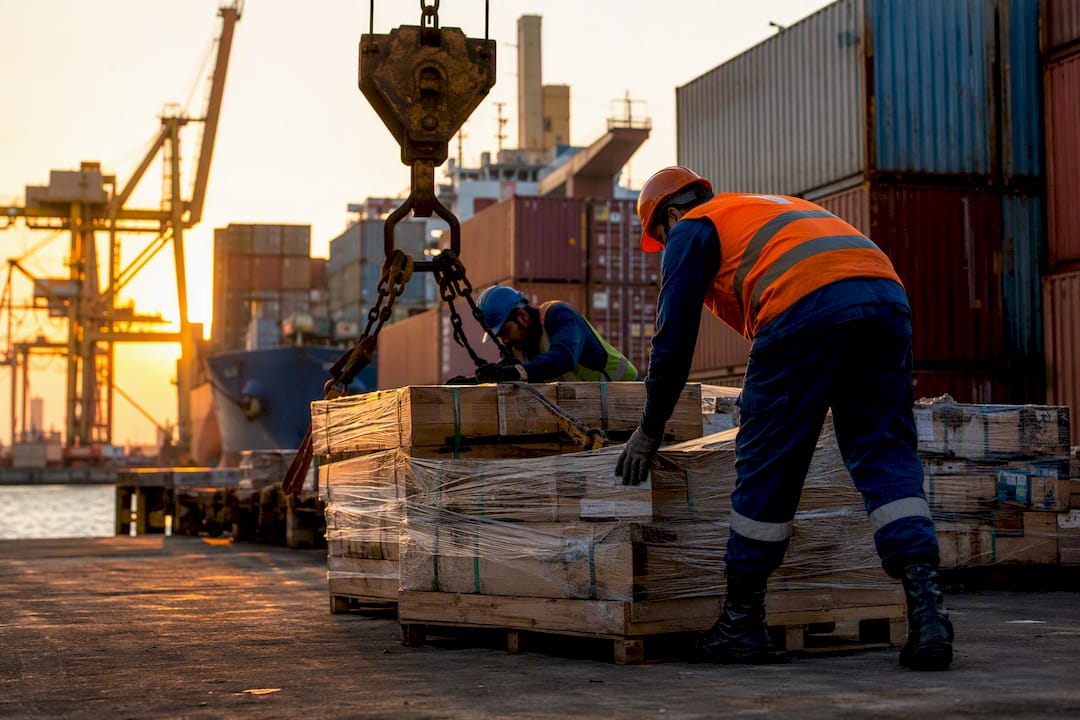
Freight payment terms add another layer. “Prepaid” means the seller pays the freight bill; “collect” means the buyer does. Crucially, this is independent of risk transfer. A shipment can be FOB Origin with freight prepaid, meaning the seller writes the check for freight even though the buyer already owns the risk of damage in transit.
Insurance should track the risk transfer point, not the payment structure. Whoever holds the risk at any given moment should be the one holding a policy that covers it, and gaps between “who paid for freight” and “who’s actually insured” are where claims fall apart.
- Export clearance and port fees: usually seller (FOB Origin and Destination alike)
- Main ocean or inland freight: depends on prepaid/collect designation
- Insurance during transit: should follow risk, not payment terms
- Import clearance and unloading at destination: usually buyer, unless the contract states otherwise
Pro Tip: Specify exact cutoff times and demurrage responsibility in writing. A vague clause like “buyer arranges pickup” invites delays that turn into per-day storage charges nobody budgeted for.
How Does FOB Compare to CIF, EXW, DDP, and FCA?
FOB sits in the middle of a spectrum of Incoterms rules that range from minimal seller obligation to maximum seller obligation. Knowing where FOB falls helps you pick the right term instead of defaulting to the one you’ve always used.
CIF (Cost, Insurance, and Freight) asks more of the seller: the seller pays freight and insurance to the destination port, even though risk still transfers at loading, much like FOB. Buyers sometimes assume CIF means the seller bears risk the whole way, which is wrong; only cost and insurance obligations extend further, not risk. A closer look at how CIF allocates cost and risk makes the distinction clearer.
EXW (Ex Works) sits at the opposite extreme, with the seller’s obligation ending at their own factory door. DDP (Delivered Duty Paid) puts nearly everything on the seller, including destination duties and taxes. FCA (Free Carrier) is the rule the ICC Academy points to for containerized freight, since it doesn’t require an on board notation the way FOB does.
- Choose FOB for breakbulk or bulk cargo loaded directly onto a vessel.
- Choose FCA for containerized shipments handed to a carrier before reaching the ship.
- Choose CIF when the buyer wants the seller to arrange and pay for insurance and freight to the destination port.
- Avoid FOB for any shipment that never physically crosses a ship’s rail under a bill of lading.
What Documentation and Accounting Steps Does FOB Trigger?
The bill of lading is the single most important document in an FOB transaction, and specifically the on board notation stamped onto it. That notation is the documentary proof that goods were loaded, which is the trigger event for risk transfer under Incoterms. Trade Finance Global notes that the phrase “on board” now functions as a clean legal milestone, replacing the older and messier standard of whether cargo crossed the ship’s rail.
The commercial invoice, packing list, and any export declaration round out the paper trail. For U.S. surface carriers, liability for damage in transit is generally governed by the Carmack Amendment, but FOB Origin versus Destination determines which party actually has standing to file that claim, as outlined by O Trucking’s guide to FOB claims.
Accounting teams need to track the same transfer point. Inventory and cost of goods sold typically move onto the buyer’s books once risk passes, not necessarily when payment clears. A bill of lading review before closing the books avoids mismatched revenue recognition.
- Bill of lading with on board notation
- Commercial invoice matching the FOB terms stated
- Export declaration and customs paperwork
- Insurance certificate showing coverage start date
Two Practical FOB Scenarios You Can Model
Seeing FOB applied to a real shipment clears up more confusion than any definition. Here are two scenarios, one international and one domestic.
Export sale, Incoterms FOB, Port of Rotterdam:
- Seller in Antwerp prepares goods and arranges inland trucking to Rotterdam.
- Seller completes export customs clearance before the goods reach the terminal.
- Goods are loaded on board the nominated vessel; the carrier issues an on board bill of lading.
- Risk transfers to the buyer at the moment of loading, per Incoterms® 2020.
- Buyer arranges and pays for ocean freight and import clearance in the destination country.
Domestic sale, UCC FOB Shipping Point, small manufacturer in Ohio:
Buyer’s trucking company picks up pallets at the seller’s dock in Columbus. The moment the driver signs the bill of lading, risk shifts to the buyer, even though the goods haven’t left the parking lot. If the shipment arrives damaged, the buyer, not the seller, files the claim against the carrier.
- Sample export clause: “FOB Port of Rotterdam, Incoterms® 2020, seller to deliver on board nominated vessel.”
- Sample domestic clause: “FOB Shipping Point, Columbus, OH facility, buyer assumes risk upon carrier pickup.”
What Mistakes Cause Most FOB Disputes?
Nearly every FOB dispute traces back to one of three failures: vague place names, using FOB where FCA belongs, or missing paperwork. “FOB Chicago” without a specific terminal or dock address leaves room for the seller to pick whichever point suits them, a problem the ICC’s own explanatory notes warn against directly.
Applying FOB to containerized cargo is another recurring error. Since containers are typically handed off at an inland depot rather than loaded ship-side by the seller, no on board notation gets issued at the right moment, and risk allocation becomes murky. Late vessel nomination by the buyer and unclear demurrage responsibility round out the usual suspects behind claims disputes, an issue Worldwide Express has documented among common international shipping errors.
- Ambiguous named place (“FOB Chicago” vs. “FOB 123 Terminal Rd, Chicago, IL”)
- FOB used for containerized freight instead of FCA
- Missing on board notation on the bill of lading
- No agreed timeline for vessel nomination
Pro Tip: Require a precise named place down to the dock or berth number, and set a hard deadline for vessel nomination in the contract. Vague geography and open-ended timelines are what turn a routine shipment into a legal dispute.
How Do You Write FOB Terms That Avoid Disputes?
A short checklist pasted into a purchase order eliminates most of the ambiguity that causes FOB disputes down the line.
- Name the exact terminal, port, or dock, not just the city.
- State who nominates the vessel and by what date.
- Specify who pays for export clearance and any inland trucking to the port.
- Define the freight payment term: prepaid or collect.
- Assign insurance responsibility and coverage start date explicitly.
- Require an on board notation on the bill of lading as proof of delivery.
Sample clause: “FOB Berth 12, Port of Savannah, seller delivers on board vessel nominated by buyer no later than 10 days before laycan.” Coordinating this language with your carrier and customs broker before signing prevents the kind of mismatch that shows up only after cargo is already at sea, and reviewing freight contract wording with your logistics team catches gaps early.
What Do Logistics Professionals Recommend for FOB Shipments?
Operational teams at Worldwide Express consistently point to three habits that prevent FOB headaches before they start. Coordinate export clearance early, ideally before the vessel is even booked, so customs delays don’t push your loading window past the agreed date. Confirm terminal access windows directly with the port rather than relying on the carrier’s estimate, since berth congestion shifts fast.
Cargo insurance should always match the actual risk transfer point in your contract, not a generic policy period. And build in earlier cutoffs than you think you need. A vessel arriving late can quietly shift risk onto the buyer sooner than expected if the contract language isn’t airtight.
Pro Tip: Set your internal cutoff dates at least 48 hours ahead of the carrier’s stated deadline. That buffer absorbs the paperwork delays that otherwise turn into disputed risk transfer dates.
Get FOB Terms Right With Experienced Support
Getting FOB language wrong on a single purchase order can mean absorbing costs you never intended to carry, or losing standing to file a claim after cargo arrives damaged. Worldwide Express works with importers and exporters to structure Incoterms and freight terms correctly from the first quote, and its freight forwarding services cover everything from vessel nomination to on-time export clearance. For shipments where FOB isn’t the right fit, the team can also walk through ocean freight forwarding steps and recommend FCA or CIF terms that better match your cargo type and route.
The Real Problem With Most FOB Explanations
Most explanations of freight on board spend all their energy on the definition and almost none on the contract language that actually prevents disputes. That’s backward. The definition takes one sentence. The named place, the vessel nomination deadline, the insurance start date, those details take actual drafting effort, and they’re where real money gets lost.
The conventional advice to “just specify FOB” undersells how much room that phrase leaves for disagreement. A term that works perfectly for bulk cargo loaded at a single berth becomes a liability the moment someone applies it to a container that never touches a ship until it’s already at sea. If there’s one habit worth building, it’s treating FCA as the default question for any multimodal shipment, and reserving FOB strictly for cargo that goes on board a vessel under your own eyes. Precision in the named place and the nomination timeline matters more than which Incoterm you pick.
Frequently Asked Questions
What is the simplest freight on board definition?
Freight on board, or FOB, is a shipping term specifying the exact point where risk of loss and delivery responsibility transfer from seller to buyer, typically when goods are loaded on board a vessel at a named port.
Is freight on board the same as free on board?
Yes. “Free on board” and “freight on board” refer to the same term, though “free on board” is the technically correct phrasing under Incoterms.
Does FOB determine who owns the goods during transit?
No. FOB determines risk of loss, not ownership. Title passes according to the sales contract and shipping documents, often tied to when a negotiable bill of lading changes hands.
When should I use FCA instead of FOB?
Use FCA for any containerized or multimodal shipment where goods are handed to a carrier before being loaded onto a vessel, since FOB requires an on board bill of lading that inland handovers typically can’t produce.
Who pays for insurance under FOB terms?
Whoever holds the risk at that point in the shipment should carry the insurance. Under FOB, that’s the buyer once goods are loaded on board, regardless of who pays the freight bill.
Sources
Recommended
- 8 Key Freight Terms Definitions Every Importer Should Know – Worldwide Express, Inc.
- Freight surcharge explained: essential guide for international trade – Worldwide Express, Inc.
- What Does a Freight Broker Agent Do – Impact for U.S. Importers – Worldwide Express, Inc.
- Understanding Cargo Freight Forwarders and Their Role – Worldwide Express, Inc.