

The american logistics industry is on the verge of a major digital shift, with experts predicting the global logistics market will surpass $18 trillion by 2030. For logistics managers in mid-sized manufacturing firms, expanding an online presence is no longer just an option. It is crucial for meeting customer expectations and handling complex international shipping demands. This guide reveals actionable strategies to strengthen digital operations and help American businesses thrive in the fast-changing logistics market.
Table of Contents
- Defining Online Business Growth In Logistics
- Key Digital Strategies For U.S. Logistics Firms
- Enhancing Online Customer Experience
- Boosting Efficiency With Logistics Technology
- Common Pitfalls And How To Avoid Them
Key Takeaways
| Point | Details |
|---|---|
| Digital Transformation is Essential | Logistics firms must adopt advanced digital technologies to enhance efficiency and customer service, integrating tools like AI and IoT for improved operations. |
| Customer Experience is Key | A multifaceted approach to online customer interactions is necessary, incorporating real-time tracking, personalized communication, and user-friendly interfaces. |
| Address Common Pitfalls | Proactively tackling challenges such as outdated technology and inefficient communication is critical for maintaining competitiveness in the logistics sector. |
| Embrace Continuous Improvement | Firms should implement ongoing training and audits of their logistics infrastructure to identify and address potential vulnerabilities before they escalate. |
Defining Online Business Growth in Logistics
Online business growth in logistics represents a strategic transformation beyond traditional operational methods, focusing on leveraging digital technologies to enhance efficiency, reach, and competitive positioning. The logistics industry is experiencing unprecedented expansion, with market value projected to surpass $18 trillion by 2030, driven by technological innovation and shifting global economic dynamics.
At its core, online business growth in logistics involves integrating advanced digital solutions that optimize supply chain processes, improve customer experiences, and enable more agile business models. These strategies include implementing artificial intelligence for predictive analytics, adopting cloud-based management systems, utilizing real-time tracking technologies, and developing data-driven decision-making frameworks. The goal is not merely digitization but creating intelligent, responsive logistics ecosystems that can quickly adapt to changing market demands.
The acceleration of e-commerce has fundamentally reshaped logistics growth strategies. E-commerce volumes are now driving significant transformations in air cargo and global shipping operations, compelling logistics companies to reimagine their service delivery models. Successful online business growth now requires a holistic approach that combines technological prowess, customer-centric design, and sustainable operational practices.
Pro Tip: Invest in scalable digital infrastructure that allows seamless integration of emerging technologies and supports rapid adaptation to market changes.
Key Digital Strategies for U.S. Logistics Firms
U.S. logistics firms are rapidly transforming their operational frameworks through strategic digital initiatives designed to enhance efficiency, visibility, and competitive advantage. Advanced supply chain visibility tools have become critical mechanisms for addressing complex challenges in global trade, enabling companies to navigate increasingly complex economic and geopolitical landscapes with unprecedented precision.
The core digital strategies employed by leading U.S. logistics firms encompass several key technological interventions. These include implementing robust data analytics platforms, developing AI-powered predictive modeling systems, integrating Internet of Things (IoT) sensors for real-time tracking, and creating standardized digital platforms for information sharing across multinational supply chain networks. By leveraging these technologies, logistics organizations can dramatically reduce operational inefficiencies, minimize shipment delays, and create more transparent, responsive transportation ecosystems.
Moreover, digital transformation in logistics extends beyond technological implementation. It requires a holistic approach that involves redesigning organizational structures, retraining workforce capabilities, and developing agile technological infrastructures capable of rapid adaptation. Successful U.S. logistics firms are investing not just in tools, but in comprehensive digital strategies that align technological capabilities with strategic business objectives, ensuring they remain competitive in an increasingly digital global marketplace.
Here is a comparison of essential digital technologies shaping U.S. logistics firms:
| Technology | Main Function | Business Impact |
|---|---|---|
| AI & Predictive Modeling | Forecasts demand and optimizes routes | Reduces delays, increases accuracy |
| IoT Sensors | Enables real-time tracking | Improves shipment visibility |
| Data Analytics Platforms | Analyzes supply chain performance | Identifies inefficiencies quickly |
| Digital Information Sharing | Standardizes data across partners | Boosts transparency, streamlines communication |
Pro Tip: Develop a comprehensive digital transformation roadmap that includes continuous skills training, technology investment, and iterative performance evaluation to maintain technological relevance.
Enhancing Online Customer Experience
The landscape of online customer experience in logistics has undergone a radical transformation, driven by increasing consumer expectations and technological advancements. Last-mile delivery innovations have become a critical differentiator, with e-commerce delivery volumes surging by 25% in 2020, compelling logistics companies to reimagine their customer interaction strategies.

Successful online customer experiences in logistics now demand a multifaceted approach that integrates real-time transparency, personalized communication, and seamless digital interfaces. This involves implementing advanced tracking systems that provide customers with precise shipment updates, developing user-friendly mobile applications with intuitive navigation, and creating customizable delivery options that accommodate individual preferences. Personalized service technologies enable logistics firms to anticipate customer needs, offer proactive communication, and create more engaging, responsive delivery experiences that build long-term customer trust and loyalty.
Technology plays a pivotal role in enhancing customer experience, with artificial intelligence and machine learning algorithms enabling more sophisticated interactions. These technologies facilitate predictive delivery estimations, automated problem resolution, and intelligent routing that minimizes delays. By leveraging data analytics and customer feedback loops, logistics companies can continuously refine their service models, creating more agile, customer-centric operational frameworks that adapt quickly to changing consumer expectations and market dynamics.
Pro Tip: Implement a comprehensive customer feedback mechanism that integrates artificial intelligence to analyze sentiment and quickly identify areas for service improvement.
Boosting Efficiency With Logistics Technology
Logistics technology has become a transformative force in modern supply chain management, offering unprecedented opportunities for operational optimization and strategic advancement. Advanced AI and automation technologies are revolutionizing how logistics firms approach complex operational challenges, enabling more precise, responsive, and intelligent decision-making processes that dramatically enhance overall efficiency.
The core technological interventions driving logistics efficiency include sophisticated predictive analytics, real-time tracking systems, and intelligent automation platforms. These technologies enable logistics organizations to develop more nuanced demand forecasting capabilities, minimize operational waste, and create more adaptive supply chain frameworks. Standardized electronic platforms facilitate seamless data exchange between multiple stakeholders, reducing communication barriers and eliminating potential errors that traditionally slow down logistics operations.
Implementing these advanced technologies requires a strategic, holistic approach that goes beyond mere technological acquisition. Successful logistics firms are developing comprehensive digital transformation strategies that integrate cutting-edge technologies with human expertise, creating synergistic systems that leverage both machine intelligence and human insight. This approach involves continuous training, iterative technological implementation, and a culture of innovation that views technology as a collaborative tool for enhancing operational capabilities rather than a replacement for human skills.
Pro Tip: Create a dedicated technology integration team that combines technical experts with experienced logistics professionals to ensure seamless adoption of new technological solutions.
Common Pitfalls and How to Avoid Them
Navigating the complex landscape of online logistics requires strategic awareness of potential operational challenges that can derail business growth. Fragmented supply chain management represents one of the most significant risks for logistics businesses, creating inefficiencies that can erode competitive advantage and reduce overall operational responsiveness.
Key pitfalls that logistics firms must proactively address include technological obsolescence, inadequate infrastructure, and inflexible operational frameworks. These challenges often manifest through inefficient customs procedures, communication breakdowns, and inability to adapt to rapid market changes. Global logistics performance indicators highlight that businesses struggling with these issues face increased costs, delayed shipments, and diminished customer satisfaction, ultimately undermining their market positioning.
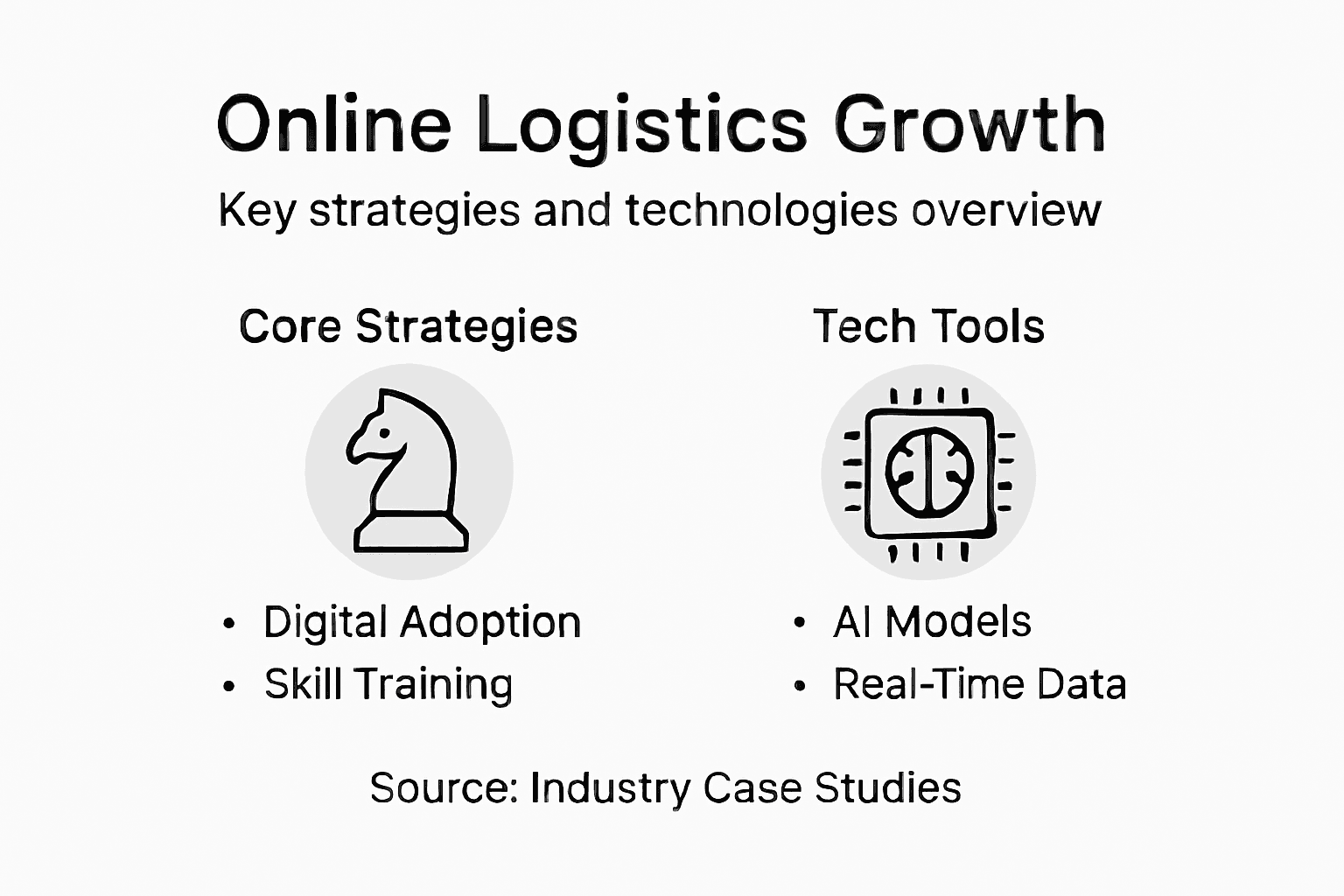
Successful logistics businesses mitigate these risks through continuous investment in technological infrastructure, developing robust digital transformation strategies, and cultivating a culture of adaptability. This involves implementing comprehensive training programs, investing in advanced tracking and communication technologies, and creating flexible organizational structures that can quickly respond to geopolitical shifts, economic fluctuations, and emerging market demands. By anticipating potential disruptions and building resilient systems, logistics firms can transform potential pitfalls into opportunities for innovation and growth.
The following table summarizes typical pitfalls in online logistics and ways firms can address them:
| Common Pitfall | Resulting Challenge | Strategic Solution |
|---|---|---|
| Outdated Technology | Slower operations, higher costs | Ongoing tech investment, training |
| Inflexible Frameworks | Poor adaptation to changes | Agile, responsive structures |
| Inefficient Communication | Missed updates, errors | Digital interaction platforms |
| Lack of Transparency | Customer dissatisfaction | Real-time tracking, feedback tools |
Pro Tip: Conduct quarterly comprehensive audits of your logistics infrastructure to identify potential vulnerabilities and proactively develop mitigation strategies before they become critical problems.
Accelerate Your Online Logistics Growth with Trusted International Solutions
Growing your logistics business online comes with challenges like integrating advanced technologies, ensuring transparency, and maintaining agility in changing markets. The article highlights key pain points such as fragmented supply chains, inefficient communication, and the need for real-time tracking to boost customer satisfaction. At Worldwide Express, Inc., we understand these demands and offer tailored international shipping solutions that streamline customs clearance, optimize freight forwarding, and provide comprehensive supply chain management tools designed to keep your business competitive and responsive.
Take control of your logistics growth by partnering with experts who provide:
- Seamless global tracking and compliance support
- Customized cargo insurance and freight options
- Efficient air, ocean, and trucking transportation
Start transforming your logistics operations today with Worldwide Express. Experience how our decades of expertise can help you avoid costly pitfalls and deliver superior customer experiences.
Are you ready to elevate your online business growth with reliable, efficient logistics solutions?
Visit Worldwide Express now for a free consultation or request a freight quote to see how our comprehensive international services can empower your business to succeed in the digital logistics era.
Frequently Asked Questions
What are the key digital strategies for enhancing logistics operations?
Key digital strategies include implementing data analytics platforms, using AI for predictive modeling, integrating IoT sensors for real-time tracking, and creating standardized digital platforms for information sharing across supply chains.
How can technology improve the online customer experience in logistics?
Technology can enhance the online customer experience through advanced tracking systems providing real-time updates, user-friendly mobile apps for easier navigation, and personalized communication that meets individual preferences.
What are the common pitfalls in online logistics management?
Common pitfalls include outdated technology, inflexible operational frameworks, inefficient communication, and lack of transparency, all of which can lead to higher costs, delays, and reduced customer satisfaction.
How can logistics firms boost efficiency using technology?
Logistics firms can boost efficiency by leveraging predictive analytics for better demand forecasting, using real-time tracking systems for visibility, and embracing automation platforms to streamline operations.
Recommended
- Business Networking Strategies for Logistics Managers – Worldwide Express, Inc.
- Understanding Sustainability in Logistics: Key Insights – Worldwide Express, Inc.
- How to Optimize Logistics for Efficient Global Shipping – Worldwide Express, Inc.
- Supply Chain Digitalization: Transforming Global Logistics – Worldwide Express, Inc.
- Understanding What is a Digital Strategy for Small Businesses – BizDev Strategy