

Managing international cargo deliveries requires knowing exactly where your trucks are at every moment. Without reliable delivery truck tracking, you face costly delays, frustrated customers, and inefficient supply chain operations that eat into your bottom line. Modern GPS technology and telematics systems offer logistics managers powerful tools to monitor fleet movements in real time, predict accurate arrival times, and respond quickly to route deviations. This guide walks you through proven tracking methods, implementation steps, and troubleshooting strategies to ensure your international deliveries arrive on schedule every time.
Table of Contents
- Understanding Delivery Truck Tracking: Essentials And Prerequisites
- Step-By-Step Guide To Tracking A Delivery Truck In International Logistics
- Common Challenges And Troubleshooting In Delivery Truck Tracking
- Evaluating Tracking Methods: Comparison Of Popular Technologies And Approaches
- Discover Worldwide Express’s Logistics And Freight Forwarding Solutions
- Frequently Asked Questions About Tracking Delivery Trucks
Key takeaways
| Point | Details |
|---|---|
| Technology foundation | Effective tracking combines GPS devices, telematics systems, and centralized software platforms for comprehensive visibility. |
| Preparation matters | Success requires proper hardware installation, staff training, and clear data usage protocols before deployment. |
| Structured execution | Following step-by-step monitoring procedures ensures consistent real-time oversight and proactive communication. |
| Problem resolution | Addressing signal loss, hardware failures, and data accuracy issues maintains tracking reliability across international routes. |
| Strategic selection | Comparing GPS, cellular, satellite, and radio methods helps you choose the right technology mix for your operations. |
Understanding delivery truck tracking: essentials and prerequisites
Delivery truck tracking relies on GPS and telematics devices that transmit location data, speed, route history, and vehicle diagnostics to centralized management platforms. GPS technology uses satellite signals to pinpoint truck coordinates with remarkable accuracy, while telematics systems collect additional operational data like fuel consumption, engine performance, and driver behavior. Together, these technologies create a comprehensive picture of your fleet’s status across international borders.
Hardware requirements include GPS tracking units mounted in each truck, cellular or satellite communication modules for data transmission, and optional sensors for monitoring cargo conditions like temperature or door status. Software platforms aggregate this data into dashboards where logistics managers can view real-time locations, analyze historical routes, and generate performance reports. Communication methods vary by region and budget. Cellular networks offer cost-effective coverage in populated areas, satellite systems provide global reach including remote territories, and radio communication serves as a reliable backup when digital networks fail.
Before deploying tracking systems, you need to complete several essential preparations:
- Equip every delivery truck with compatible GPS and telematics hardware, ensuring proper installation and testing
- Integrate tracking devices with your existing transportation management system or logistics software platform
- Establish data governance policies that define who accesses tracking information and how it informs operational decisions
- Train drivers and dispatchers on system usage, privacy considerations, and procedures for responding to tracking alerts
- Set up automated reporting schedules that deliver actionable insights to stakeholders without overwhelming them with raw data
Staff training deserves special attention because even the most sophisticated tracking technology fails without proper human oversight. Your team needs to understand how to interpret location data, recognize abnormal patterns, and take corrective action when trucks deviate from planned routes. Clear protocols prevent confusion during emergencies and ensure everyone knows their role in maintaining supply chain visibility. When drivers understand that tracking improves safety and efficiency rather than micromanaging their work, they become partners in optimizing delivery performance.
Step-by-step guide to tracking a delivery truck in international logistics
Implementing delivery truck tracking requires a systematic approach that transforms raw location data into actionable supply chain intelligence. Follow these steps to establish reliable monitoring across your international fleet.
First, install GPS and telematics devices on every truck in your delivery network. Mount hardware in locations that ensure strong satellite signal reception while protecting equipment from weather and tampering. Verify that each device activates properly and begins transmitting location data to your central platform. Test connections during stationary periods and short test drives before committing trucks to long-haul international routes.
Second, connect all tracking devices to your centralized software platform or transportation management system. Configure the platform to display real-time locations on interactive maps, set up geofencing alerts for critical waypoints like border crossings or distribution centers, and establish baseline performance metrics for route efficiency. Real-time GPS tracking paired with centralized software creates the foundation for data-driven logistics decisions that improve on-time delivery rates.
Third, assign dedicated personnel to monitor live tracking data during business hours and establish on-call procedures for after-hours emergencies. Dispatchers should review fleet status at regular intervals, checking for trucks running behind schedule, unexpected stops, or route deviations that could indicate problems. Clear assignment of monitoring responsibilities prevents gaps in oversight that allow small issues to escalate into major delays.
Fourth, leverage your tracking software to analyze routes, calculate estimated arrival times, and identify exceptions requiring immediate attention. Modern platforms use historical data and current traffic conditions to predict delivery windows with impressive accuracy. When actual performance diverges from predictions, your system should flag these exceptions so you can investigate causes and communicate proactively with customers.
Fifth, maintain regular communication with drivers to gather context that raw tracking data cannot provide. A truck stopped for two hours might indicate a breakdown, a mandatory rest period, or a customs inspection. Drivers provide the human intelligence that transforms location points into meaningful operational insights. Establish communication protocols that balance the need for information with respect for driver focus and safety.
Sixth, record all deviations, delays, and incidents immediately in your tracking system with detailed notes explaining causes and resolutions. This documentation builds an institutional knowledge base that helps you identify recurring problems, evaluate driver performance fairly, and demonstrate due diligence to customers and regulatory authorities. Prompt recording ensures accuracy while details remain fresh.
Pro Tip: Configure automated alerts that notify relevant stakeholders when trucks deviate from planned routes by more than a specified distance or time threshold, reducing the manual effort required to maintain constant oversight while ensuring critical exceptions receive immediate attention.
Common challenges and troubleshooting in delivery truck tracking
Even well-designed tracking systems encounter obstacles that can compromise visibility and decision-making quality. Understanding common problems and their solutions helps you maintain reliable fleet monitoring.
Signal loss represents the most frequent tracking challenge, especially in mountainous terrain, dense urban areas with tall buildings, or remote regions with limited cellular coverage. GPS devices require clear lines of sight to satellites, while cellular-based systems depend on network infrastructure that varies dramatically across international routes. When trucks enter signal dead zones, your platform may show stale location data or gaps in the tracking history that create uncertainty about current positions.

GPS drift occurs when atmospheric conditions, satellite geometry, or electronic interference cause location readings to fluctuate or appear inaccurate. You might see a truck’s position jumping erratically or showing the vehicle off-road when it is actually following the planned highway route. Hardware failures stem from improper installation, physical damage during loading operations, or simple equipment aging that degrades performance over time. Data overload happens when systems generate more alerts and reports than your team can effectively process, leading to important exceptions getting buried in noise.
Connectivity issues and inaccurate data undermine tracking effectiveness when logistics managers do not proactively address root causes through regular system maintenance and staff training.
Troubleshooting begins with identifying whether problems originate from hardware, software, network connectivity, or user error. Check that tracking devices have current firmware updates and sufficient power supply. Verify cellular or satellite subscriptions remain active and cover your operational territories. Review installation quality to ensure antennas have unobstructed views and mounting hardware remains secure. When signal loss patterns emerge in specific geographic areas, consider supplementing GPS with alternative technologies like radio communication or satellite tracking that offer better coverage in those regions.
Establish backup communication systems so you maintain contact with drivers even when primary tracking fails. Traditional radio solutions for mixed fleets provide reliable voice communication that does not depend on cellular networks or internet connectivity. Drivers can report positions manually and receive routing instructions while your technical team diagnoses and repairs tracking system issues.
Pro Tip: Create a standardized monthly audit checklist that verifies tracking hardware functionality, confirms software settings align with current operational needs, reviews alert thresholds for continued relevance, and validates staff adherence to monitoring protocols, catching small problems before they disrupt operations.
Accurate tracking is not just about knowing where trucks are, it is about ensuring cargo security, regulatory compliance, and the safety of drivers navigating challenging international routes where timely assistance can prevent minor incidents from becoming major crises.
Evaluating tracking methods: comparison of popular technologies and approaches
Selecting the right tracking technology requires understanding how different methods perform across key operational dimensions. This comparison helps you match capabilities to your specific international logistics needs.
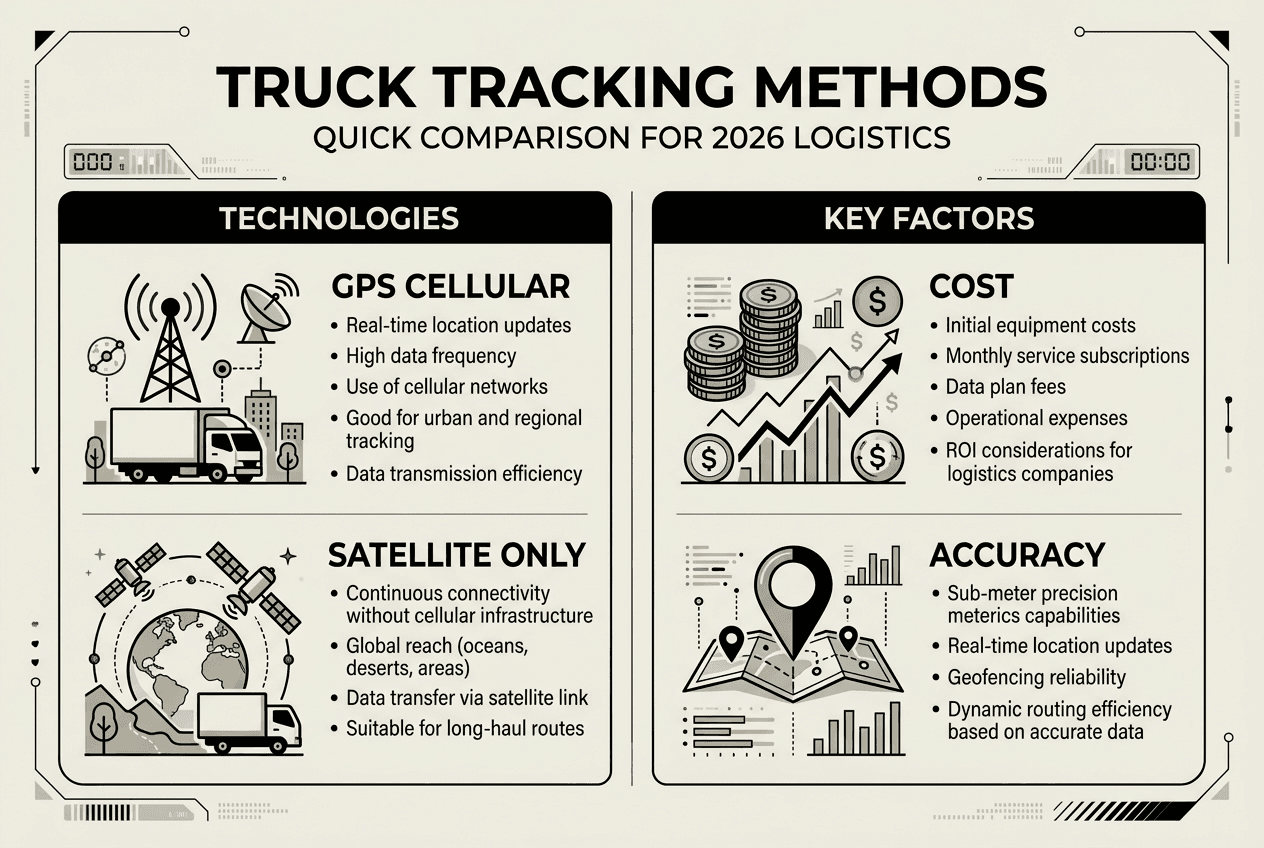
| Method | Installation Complexity | Monthly Cost per Truck | Real-Time Accuracy | Global Coverage | Best Use Case |
| — | — | — | — | — |
| GPS Cellular | Low to moderate | $25 to $50 | High (updates every 30 to 60 seconds) | Good in populated areas, limited in remote regions | Standard routes through developed countries with reliable cellular networks |
| Satellite Tracking | Moderate | $50 to $100 | Moderate (updates every 5 to 15 minutes) | Excellent worldwide including oceans and deserts | Remote territories, cross-continental routes, areas with poor cellular infrastructure |
| Cellular Triangulation | Low | $15 to $30 | Moderate (accuracy within 100 to 300 meters) | Good where cellular towers exist | Budget-conscious operations in urban and suburban areas |
| Radio Communication | Moderate to high | $10 to $25 plus infrastructure | Low (manual position reports) | Limited to radio range (typically 25 to 50 miles) | Backup system or short-haul regional deliveries |
| Hybrid GPS and Satellite | Moderate | $60 to $120 | High | Excellent | International fleets requiring maximum reliability across diverse terrains |
Different tracking methods vary in cost, accuracy, and global reliability, making it essential to evaluate your route characteristics, budget constraints, and visibility requirements before committing to a single technology.
GPS cellular tracking offers the best balance of cost and performance for most logistics operations, delivering frequent position updates through affordable hardware and service plans. However, international routes that traverse remote areas benefit from satellite backup that maintains connectivity where cellular networks do not reach. Hybrid systems automatically switch between GPS cellular and satellite modes, using the most cost-effective option available at each location while ensuring you never lose visibility.
Installation complexity affects deployment speed and ongoing maintenance requirements. Simple plug-and-play GPS cellular devices require minimal technical expertise and can be installed by drivers themselves, while satellite systems may need professional installation to optimize antenna positioning. Consider total cost of ownership including hardware purchase, monthly service fees, installation labor, and replacement expenses over a typical three to five year equipment lifecycle.
Real-time accuracy determines how quickly you can respond to route deviations and delivery delays. Systems updating every 30 to 60 seconds enable immediate intervention when problems arise, while 15-minute update intervals suit less time-sensitive operations where general location awareness suffices. Match update frequency to your operational tempo and customer service commitments, recognizing that more frequent updates consume more power and may increase service costs.
Discover Worldwide Express’s logistics and freight forwarding solutions
Effective delivery truck tracking forms just one component of comprehensive international logistics management. Worldwide Express brings decades of freight forwarding expertise to help you optimize every aspect of cross-border shipping, from customs clearance and documentation to cargo insurance and supply chain visibility. Our integrated approach ensures your tracking data translates into smoother operations and satisfied customers.
Explore our comprehensive freight forwarding guide for 2026 to understand how professional logistics partners streamline international shipping complexity. Compare leading freight forwarding services to identify solutions matching your tracking needs and operational requirements. Discover our full range of logistics services designed to support businesses managing international trade across air, ocean, and ground transportation networks. When you partner with experienced freight forwarders who understand tracking technology and supply chain optimization, you gain confidence that your cargo moves efficiently from origin to final destination.
Frequently asked questions about tracking delivery trucks
How can GPS tracking improve international delivery accuracy?
GPS tracking provides real-time visibility into truck locations, enabling logistics managers to calculate precise arrival times and proactively address delays before they impact customer commitments. Accurate position data also helps optimize routes based on actual traffic conditions, border crossing wait times, and road closures, reducing fuel costs while improving on-time delivery rates.
What are the best communication tools for real-time truck updates?
Cellular-based tracking platforms offer the most cost-effective real-time updates in areas with reliable network coverage, transmitting location data every 30 to 60 seconds. For international routes crossing remote territories, satellite communication systems ensure continuous connectivity regardless of cellular infrastructure availability, though at higher monthly service costs.
How do I handle tracking system failures during transit?
Maintain backup communication methods like radio systems or satellite phones so drivers can report positions manually when primary tracking fails. Establish clear protocols requiring drivers to contact dispatch at predetermined intervals when they notice tracking device malfunctions, ensuring you maintain situational awareness even during technical problems.
Is it necessary to train drivers on tracking technology?
Yes, driver training is essential for successful tracking implementation. Drivers need to understand how devices work, recognize signs of malfunction, follow procedures for reporting technical issues, and appreciate how tracking data improves safety and operational efficiency rather than serving as punitive surveillance.
Can integrating multiple tracking methods enhance cargo security?
Combining GPS tracking with geofencing alerts, door sensors, and driver communication creates layered security that detects unauthorized stops, cargo access, or route deviations immediately. This multi-method approach enables rapid response to potential theft or hijacking situations, significantly reducing cargo loss rates on high-value international shipments.
Recommended
- How to track post office parcels internationally in 2026 – Worldwide Express, Inc.
- How to Track Any Order for Reliable Shipping Updates – Worldwide Express, Inc.
- 5 Best global freight tracking tools – Expert Comparison 2025 – Worldwide Express, Inc.
- How to Use Global Order Tracking and Track and Trace Worldwide
- [2024] Radio Communications Hire Fleet – Smye-Rumsby – Experts in Two-Way Radios and Marine Electronics
- How AI Automation Is Reshaping Enterprise Operations in 2026 — SimplyAI