

More than 90 percent of American businesses engaged in international trade encounter confusion about how import tariffs actually work. The relationship between tariffs and the American economy influences prices, business strategies, and even global diplomacy. By breaking down misconceptions and exploring the true functions and financial impacts of import tariffs, this guide helps you make smarter decisions whether you import goods occasionally or operate within complex, multi-country supply chains.
Table of Contents
- Defining Import Tariffs And Common Misconceptions
- Types Of Import Tariffs And Global Variations
- How Countries Set And Adjust Tariffs
- Tariff Compliance And Documentation Requirements
- Financial Impacts And Common Cost Pitfalls
Key Takeaways
| Point | Details |
|---|---|
| Import Tariffs | Import tariffs are taxes levied on foreign goods, influencing domestic market dynamics and international trade relations. |
| Types of Tariffs | Understanding the differences between specific, ad valorem, and compound tariffs is crucial for effective trade strategies. |
| Tariff Compliance | Adhering to tariff compliance requires meticulous documentation to avoid financial and legal repercussions. |
| Financial Implications | Tariffs create complex economic impacts, necessitating flexible financial strategies to manage direct and indirect costs effectively. |
Defining Import Tariffs and Common Misconceptions
Import tariffs represent a critical financial mechanism through which governments regulate international trade by imposing taxes on goods entering their national borders. These government-imposed charges are strategically designed to generate revenue and provide economic protection for domestic industries. A tariff is essentially a form of taxation applied to imported products, making foreign goods more expensive and potentially less competitive in the local marketplace.
Understanding tariffs requires recognizing their complex economic implications. Tariffs are taxes imposed by governments on imported goods that serve multiple strategic purposes. They function not just as revenue generators but also as tools for economic policy, influencing trade dynamics between nations. Governments might implement tariffs to shield domestic producers from foreign competition, generate national income, or address perceived trade imbalances. For international traders and businesses, comprehending these nuanced financial instruments becomes crucial for accurate pricing and strategic planning.
Common misconceptions about import tariffs often stem from oversimplified economic thinking. Many assume tariffs automatically benefit domestic industries, when in reality, they can create complex economic ripple effects. Higher tariffs might protect certain domestic manufacturers but simultaneously increase consumer prices and potentially trigger retaliatory trade measures from other countries. Some businesses mistakenly view tariffs as straightforward barriers, overlooking their potential to reshape entire supply chain strategies and international economic relationships.
Pro Tip for Trade Professionals: Always conduct comprehensive cost-benefit analyses before making international trade decisions, considering not just immediate tariff rates but potential long-term economic and diplomatic implications of your import strategies.
Key Takeaways:
- Import tariffs are government-imposed taxes on foreign goods
- Tariffs serve multiple economic and strategic purposes
- They can impact domestic prices, international relations, and industrial competitiveness
- Effective trade management requires nuanced understanding of tariff structures
Types of Import Tariffs and Global Variations
Import tariffs represent a complex system of international trade regulation, with multiple classification methods that reflect diverse economic strategies. Tariffs are classified into specific categories that fundamentally shape global trade dynamics, each designed to serve unique economic objectives. The primary classifications include specific tariffs, ad valorem tariffs, and compound tariffs, each offering governments distinct mechanisms for economic management and trade policy implementation.
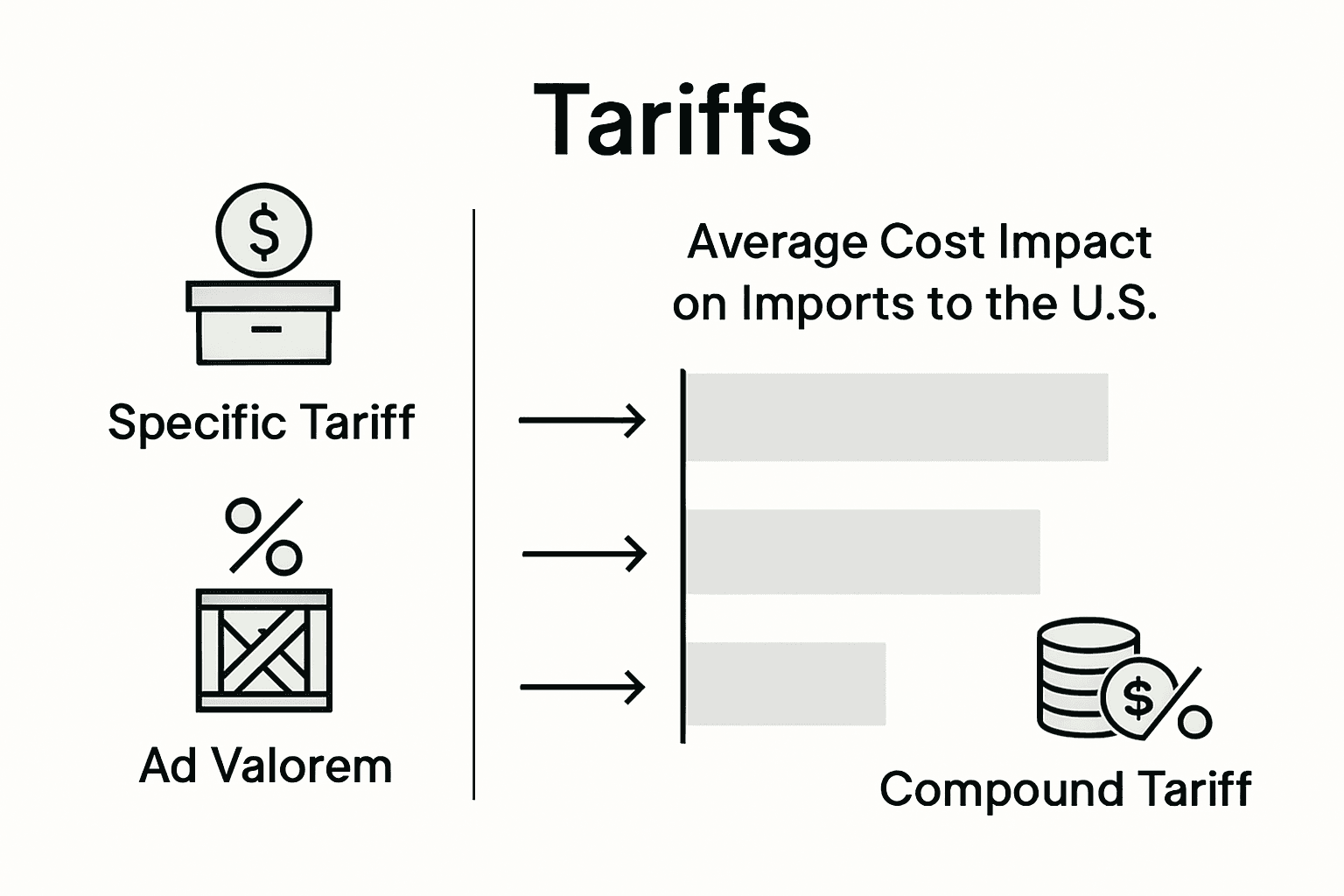
Specific Tariffs are fixed monetary charges applied per unit of imported goods, providing a straightforward approach to taxation. For instance, a government might impose a $5 fee on every imported television, regardless of the product’s actual market value. Ad Valorem Tariffs operate differently, calculating taxes as a percentage of the imported item’s total value. This approach allows for more flexible and proportional taxation, with tariff amounts directly scaling with the merchandise’s worth. Compound Tariffs combine both methods, applying a fixed per-unit charge alongside a percentage-based value assessment, creating a more nuanced taxation strategy.

Globally, countries adopt dramatically different tariff structures based on their unique economic philosophies and strategic objectives. Some nations implement high tariffs to shield domestic industries from international competition, effectively creating economic barriers that protect local manufacturers. Conversely, other countries maintain low tariff rates to encourage free trade, believing that open markets stimulate economic growth and international collaboration. The Harmonized Tariff Schedule plays a critical role in standardizing these complex international trade regulations, providing a comprehensive framework for understanding and implementing tariff structures.
Here’s a concise comparison of major import tariff types and their typical business impact:
| Tariff Type | How It’s Calculated | Example Impact on Business |
|---|---|---|
| Specific Tariff | Fixed fee per imported unit | Predictable cost per product |
| Ad Valorem Tariff | Percentage of item value | Cost fluctuates with price |
| Compound Tariff | Fixed fee plus percentage | Complex, may distort pricing |
Pro Tip for Trade Professionals: Develop a comprehensive understanding of tariff classifications and country-specific regulations to optimize your international trade strategies and minimize unexpected financial complications.
Key Takeaways:
- Tariffs are classified into specific, ad valorem, and compound types
- Different countries employ unique tariff strategies based on economic goals
- Tariff structures significantly impact international trade dynamics
- Understanding global tariff variations is crucial for effective international business planning
How Countries Set and Adjust Tariffs
Tariff establishment represents a complex political and economic process involving multiple stakeholders and strategic considerations. Countries establish and modify tariffs through intricate legislative processes, trade agreements, and carefully crafted economic policies, reflecting their national economic interests and global trade objectives. These decisions are never arbitrary but result from comprehensive analysis of domestic industrial needs, international economic trends, and strategic national priorities.
Historically, governments have used tariff adjustments as powerful economic tools. The McKinley Tariff of 1890 exemplifies how legislative bodies can dramatically reshape trade landscapes, demonstrating the direct connection between political mechanisms and international economic policy. Modern tariff-setting involves complex negotiations considering factors like domestic industry protection, revenue generation, diplomatic relationships, and potential retaliatory actions from trading partners. Policymakers must balance protecting local manufacturers with maintaining international trade competitiveness, often navigating delicate economic and diplomatic considerations.
The tariff-setting process typically involves multiple governmental institutions, including legislative bodies, economic ministries, and trade commissions. These entities analyze extensive economic data, including import/export volumes, domestic production capabilities, global market trends, and potential economic impacts. Some countries employ adaptive tariff strategies that allow for rapid adjustments based on changing economic conditions, while others maintain more rigid tariff structures. The understanding of customs entry types plays a crucial role in implementing these complex tariff frameworks, providing essential mechanisms for precise trade regulation.
Pro Tip for Trade Professionals: Continuously monitor international trade policy developments and maintain flexible supply chain strategies to quickly adapt to potential tariff modifications.
Key Takeaways:
- Tariff establishment involves complex political and economic considerations
- Legislative bodies play a critical role in setting and adjusting tariffs
- Multiple factors influence tariff decisions, including economic and diplomatic considerations
- Successful international trade requires understanding dynamic tariff mechanisms
Tariff Compliance and Documentation Requirements
Navigating tariff compliance requires meticulous attention to detail and a comprehensive understanding of complex international trade regulations. Compliance with tariffs involves adhering to stringent regulations set by national customs authorities, encompassing precise classification of goods, accurate valuation, and timely payment of applicable duties. Importers must demonstrate exceptional organizational skills and technical knowledge to successfully navigate these intricate requirements.
Documentation represents the critical backbone of tariff compliance. Importers must prepare and maintain a comprehensive suite of paperwork that provides transparent and detailed information about each shipment. Beyond traditional tariff considerations, businesses must also navigate complex non-tariff barriers like import licensing, customs procedures, and technical standards, which can vary dramatically between different countries and product categories. Essential documents typically include commercial invoices, certificates of origin, detailed product descriptions, harmonized tariff code classifications, and precise valuation statements.
The consequences of non-compliance can be severe, ranging from financial penalties to potential legal challenges and shipment delays. International trade professionals must develop robust compliance strategies that incorporate thorough understanding of international trade regulations, ensuring every aspect of their documentation meets governmental requirements. This involves continuous education, staying updated on changing regulations, maintaining meticulous record-keeping systems, and developing proactive verification processes that anticipate potential compliance challenges.
To clarify the complexities of complying with import tariffs, here is a summary of key documentation requirements and their purpose:
| Document Type | Purpose for Compliance | Typical Business Consequence |
|---|---|---|
| Commercial Invoice | Verifies value and contents | Ensures proper tax calculation |
| Certificate of Origin | Proves product’s source | May affect tariff and trade status |
| Tariff Code Listing | Identifies tax category | Avoids misclassification penalties |
| Valuation Statement | Details pricing method used | Supports transparency for audits |
Pro Tip for Trade Professionals: Implement a comprehensive digital documentation management system that automatically tracks and updates compliance requirements across different international jurisdictions.
Key Takeaways:
- Tariff compliance requires precise documentation and detailed record-keeping
- Non-compliance can result in significant financial and legal risks
- Understanding both tariff and non-tariff trade barriers is crucial
- Proactive compliance strategies are essential for successful international trade
Financial Impacts and Common Cost Pitfalls
Tariff implications represent a complex financial landscape that extends far beyond simple import taxes. The effective rate of protection reveals nuanced economic mechanisms that can significantly impact domestic industries, often producing counterintuitive financial outcomes. Businesses must recognize that tariffs are not merely straightforward additional costs but intricate financial instruments with multifaceted economic consequences that can dramatically alter competitive strategies and pricing structures.
Tariffs frequently result in unexpected economic challenges, including higher consumer prices and potential inefficiencies, creating complex ripple effects throughout entire supply chains. The financial burden frequently extends beyond immediate import costs, potentially triggering retaliatory trade measures, disrupting established international business relationships, and forcing companies to redesign their procurement and manufacturing strategies. Manufacturers and importers must carefully analyze not just the direct tariff expenses but also the broader economic implications, including potential shifts in competitive dynamics, supply chain restructuring costs, and long-term market positioning.
Understanding the financial landscape requires sophisticated economic analysis that goes beyond surface-level calculations. Companies must develop comprehensive financial models that account for direct tariff expenses, potential market shifts, and strategic adaptation costs. This involves creating flexible pricing strategies, exploring alternative sourcing options, and maintaining robust financial reserves to navigate potential economic turbulence. The understanding of customs entry types becomes crucial in developing nuanced financial strategies that can mitigate potential economic risks associated with international trade tariffs.
Pro Tip for Trade Professionals: Develop dynamic financial modeling capabilities that can rapidly simulate different tariff scenarios and their potential economic impacts across your entire supply chain.
Key Takeaways:
- Tariffs create complex economic impacts beyond simple import taxes
- Financial strategies must account for direct and indirect tariff consequences
- Flexible supply chain approaches are essential for managing tariff-related risks
- Comprehensive economic modeling can help predict and mitigate potential financial challenges
Navigate Import Tariffs with Confidence and Precision
Import tariffs can create complex challenges for businesses engaged in U.S. trade by increasing costs and complicating compliance. This article highlights the importance of understanding tariff types, documentation requirements, and the financial impact of fluctuating tariffs. If you are grappling with navigating these hurdles, such as managing precise tariff classifications or adapting to changing customs regulations, you are not alone. Ensuring smooth customs clearance and maintaining compliance with documentation demands are critical goals to avoid costly delays and penalties.
Worldwide Express specializes in simplifying these complexities through expert customs brokerage and compliance services tailored to your unique international trade needs. Our experienced team helps businesses optimize supply chains while mitigating risks associated with tariffs and documentation errors. Leverage our global logistics solutions backed by years of industry experience to keep your shipments moving efficiently regardless of shifting tariff landscapes.
Take control of your import operations today and turn tariff challenges into competitive advantages.
Streamline your import processes with Worldwide Express. Visit Worldwide Express now to request a freight quote, explore our comprehensive freight forwarding options, and access industry-specific solutions designed to help you thrive in a complex global market.
Frequently Asked Questions
What are import tariffs and why are they important?
Import tariffs are taxes imposed by governments on goods entering their national borders. They serve to regulate international trade, generate revenue, and protect domestic industries by making foreign goods more expensive.
How do different types of import tariffs affect pricing?
Different types of import tariffs—specific, ad valorem, and compound—impact pricing in various ways. Specific tariffs are fixed fees per unit, ad valorem tariffs are percentages of the value, and compound tariffs combine both methods, which can create varied costs for businesses.
What factors influence how countries set and adjust tariffs?
Countries set and adjust tariffs based on multiple factors, including domestic industry needs, international economic trends, diplomatic relationships, and the desire to protect local manufacturers while maintaining competitiveness in global markets.
What are the compliance requirements for import tariffs?
Compliance with import tariffs involves adhering to regulations set by national customs authorities, which include accurate classification of goods, valuation, and maintaining proper documentation such as commercial invoices and certificates of origin.
Recommended
- Top Trading Partners USA: Complete Guide for 2025 – Worldwide Express, Inc.
- Harmonized Tariff Schedule: Impact on U.S. Importers – Worldwide Express, Inc.
- How to Avoid Customs Penalties: A Step-by-Step Guide – Worldwide Express, Inc.
- Complete Guide to Export Controls Basics for U.S. Trade – Worldwide Express, Inc.