

Managing cross-border shipments into the United States can feel overwhelming when every detail carries the risk of delays or penalties. With U.S. Customs and Border Protection requiring an ISF Bond for all ocean freight, compliance is not optional—it is a financial guarantee that safeguards both cargo and your business. Understanding the difference between Single Transaction and Continuous Bonds, along with the steps for timely filing, empowers you to protect shipments and avoid fines of up to $5,000 per violation while strengthening your reputation in global trade.
Table of Contents
- What Is An ISF Bond And Why It Matters
- Types Of ISF Bonds For U.S. Imports
- Key Data And Filing Process Steps
- Legal Obligations And Compliance Risks
- Cost Structure And Common Pitfalls
Key Takeaways
| Point | Details |
|---|---|
| ISF Bond Importance | An ISF Bond is essential for U.S. importers to ensure compliance with customs regulations and avoid penalties. |
| Types of ISF Bonds | Businesses can choose between a Single Transaction Bond for occasional shipments and a Continuous Transaction Bond for frequent imports. |
| Compliance Risks | Timely and accurate ISF filing is crucial to avoid significant fines and shipment delays. |
| Cost Considerations | Bond costs vary by frequency and type, making it vital to select the right bond to align financial protection with shipping strategies. |
What Is an ISF Bond and Why It Matters
An ISF Bond is a critical financial instrument that plays a crucial role in safeguarding U.S. import processes. Mandated by U.S. Customs and Border Protection (CBP), this bond serves as a financial guarantee ensuring importers comply with complex customs regulations, particularly for ocean freight shipments. ISF bonding process represents a fundamental mechanism to protect national security and streamline international trade.
The primary purpose of an ISF Bond is to provide CBP with assurance that importers will submit accurate and timely Importer Security Filing (ISF) documentation before goods arrive in the United States. This requirement applies to all ocean shipments and involves providing 10 specific data points about incoming cargo. Failure to comply can result in significant financial penalties, with fines potentially reaching up to $5,000 per violation.
Key aspects of an ISF Bond include:
- Guarantees timely and accurate ISF filing
- Protects national security interests
- Enables smoother customs clearance processes
- Prevents costly import delays
- Demonstrates importer’s commitment to regulatory compliance
Detailed ISF bond regulations highlight the bond’s importance in maintaining transparent and secure international shipping practices. By requiring this financial instrument, CBP ensures that importers have a vested interest in providing comprehensive and accurate shipment information well in advance of cargo arrival.
Pro tip: Work with a customs broker who understands ISF bond requirements to minimize potential compliance risks and streamline your import processes.
Types of ISF Bonds for U.S. Imports
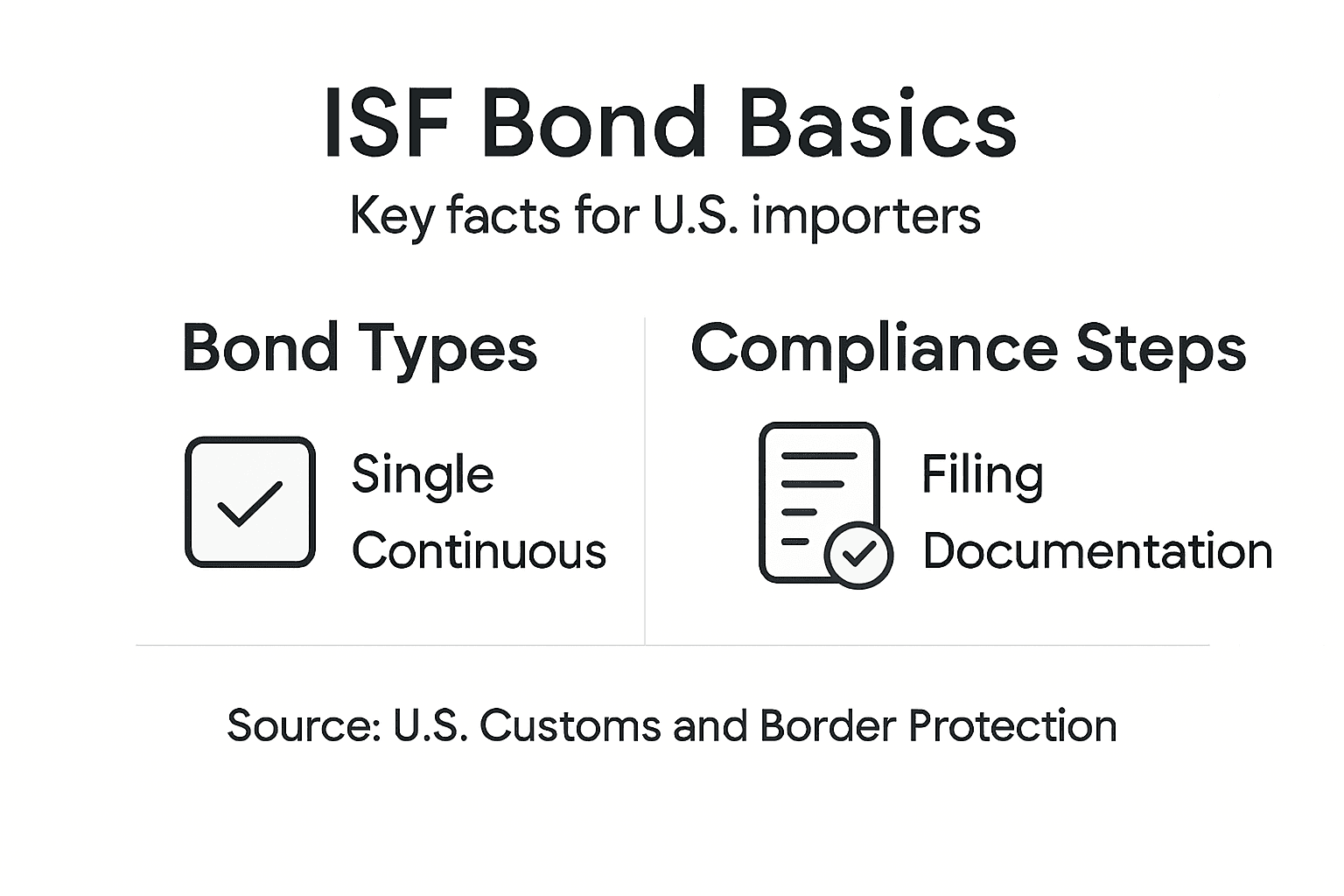
Importers navigating U.S. customs regulations have two primary ISF Bond options tailored to different shipping frequencies and business needs. ISF bond types provide flexible solutions for maintaining compliance with U.S. Customs and Border Protection (CBP) requirements.
The two main types of ISF Bonds are:
- Single Transaction Bond: Designed for occasional importers
- Continuous Transaction Bond: Ideal for frequent international shippers
A Single Transaction Bond covers a specific import shipment and expires immediately after customs clearance. This option works best for businesses that import goods infrequently or have sporadic international shipping needs. The bond ensures compliance for that particular shipment and provides a cost-effective solution for one-time or rare import activities.
In contrast, a Continuous Transaction Bond offers comprehensive coverage for all shipments within a one-year period. Customs bond regulations demonstrate that frequent importers can benefit significantly from this bond type. It provides ongoing protection, reduces administrative overhead, and often proves more cost-efficient for businesses with regular international shipping schedules.

Key considerations when selecting an ISF Bond include:
Here’s a quick reference guide to help you determine which ISF bond type aligns with your shipping needs:
| Criterion | Single Transaction Bond | Continuous Transaction Bond |
|---|---|---|
| Best for | Occasional importers | High-frequency shippers |
| Coverage period | One shipment only | All shipments in 1 year |
| Upfront cost | Lower per shipment | Higher annual cost |
| Administrative simplicity | Minimal paperwork per shipment | Less paperwork annually |
| Cost-effectiveness | Small-scale, one-off shipments | Regular shipments, bulk savings |
- Total number of annual shipments
- Shipping frequency
- Budget constraints
- Complexity of import operations
- Long-term business shipping strategies
Pro tip: Consult with a customs broker to analyze your specific shipping patterns and determine the most cost-effective ISF Bond type for your business needs.
Key Data and Filing Process Steps
The Importer Security Filing (ISF) requires precise documentation and strategic preparation to ensure smooth customs clearance. ISF file creation involves gathering comprehensive shipment information well in advance of vessel departure.
Crucial data points required for ISF filing include:
- Seller information
- Buyer details
- Importer of record
- Consignee identification
- Manufacturer data
- Ship-to party address
- Country of origin
- Harmonized Tariff Schedule (HTS) code
- Container stuffing location
- Consolidator information
Importers have three primary methods for completing the ISF filing:
- Utilize a licensed customs broker
- Self-file using CBP-approved software
- Work through a freight forwarder
The filing process requires electronic submission at least 24 hours before vessel departure, with meticulous attention to detail to prevent potential penalties or shipping delays. Importers must verify submission confirmation and maintain accurate records throughout the process.
Timely and accurate ISF filing is not just a regulatory requirement, but a critical component of maintaining smooth international shipping operations.
Pro tip: Develop a standardized checklist for ISF data collection to streamline your filing process and minimize the risk of errors.
Legal Obligations and Compliance Risks
U.S. Customs and Border Protection (CBP) enforces stringent legal requirements for Importer Security Filing (ISF), with significant consequences for non-compliance. ISF compliance requirements mandate precise documentation and timely submission to protect national security and facilitate smooth international trade.
Key legal obligations for importers include:
- Filing complete and accurate data
- Submitting ISF at least 24 hours before cargo loading
- Maintaining up-to-date shipping records
- Ensuring data accuracy across all 10 required data points
- Promptly addressing any CBP communication or request
The potential penalties for non-compliance are substantial and can severely disrupt business operations. CBP can impose fines up to $5,000 per violation, which may include:
- Incomplete ISF documentation
- Late filing beyond the 24-hour requirement
- Inaccurate shipment information
- Failure to update or correct filing errors
Proactive compliance is not just a legal requirement, but a critical strategy for maintaining uninterrupted international shipping operations.
Beyond financial penalties, non-compliance risks include shipment delays, cargo holds, potential denial of entry, and long-term reputational damage with customs authorities. Importers must develop robust internal processes to monitor, validate, and submit ISF information accurately and consistently.
The following table highlights the main compliance risks vs. consequences to help you manage ISF obligations:
| Compliance Risk | Possible Penalty | Business Impact |
|---|---|---|
| Late ISF filing | Up to $5,000 fine | Shipment delay or hold |
| Inaccurate data | Monetary penalty | Customs scrutiny, reputation |
| Missing documentation | Additional fines | Potential entry denial |
| Failure to update records | Cumulative fines | Loss of importer privileges |
Pro tip: Implement a comprehensive internal tracking system to monitor ISF filing deadlines and maintain meticulous documentation to mitigate compliance risks.
Cost Structure and Common Pitfalls
The ISF Bond pricing structure varies significantly depending on shipment frequency and business needs. ISF bond costs represent a critical financial consideration for importers navigating U.S. customs regulations.
Two primary bond types with distinct cost profiles exist:
- Single Transaction Bond
- Cost: Approximately $50-$100 per shipment
- Best for infrequent importers
- Continuous Bond
- Cost: Around $450-$550 annually
- Ideal for frequent importers
- Covers multiple shipments within one year
Factors influencing bond pricing include:
- Total shipment volume
- Cargo value
- Importer’s compliance history
- Surety company’s underwriting policies
- Risk assessment of the importing business
Common pitfalls that can dramatically increase costs or create compliance challenges include:
- Selecting incorrect bond type
- Missing critical filing deadlines
- Submitting incomplete shipment documentation
- Failing to update bond coverage
- Overlooking changes in import frequency
Choosing the right ISF bond is not just about cost, but about aligning financial protection with your specific shipping strategies.
Pro tip: Conduct a quarterly review of your shipping patterns to determine whether your current bond type remains the most cost-effective solution for your business.
Simplify ISF Bond Compliance with Expert Logistics Support
Navigating complex Importer Security Filing (ISF) bond requirements can be overwhelming. The risk of costly penalties and shipment delays due to inaccurate or late ISF filings puts your business at a disadvantage. You need a trusted partner who understands the importance of timely, precise customs documentation and can help you manage single transaction or continuous bonds tailored to your shipping needs.
Experience peace of mind with Worldwide Express, Inc., a leader in international shipping and customs brokerage. Our expert team streamlines ISF bond compliance, manages critical documentation, and supports every phase of your import process. Act now to protect your shipments from avoidable risks and accelerate your supply chain efficiency by partnering with us. Discover how we customize solutions that meet your business goals and simplify your cross-border logistics at Worldwide Express. Learn more about our customs brokerage services and reliable freight forwarding expertise to keep your imports moving smoothly.
Frequently Asked Questions
What is an ISF Bond?
An ISF Bond is a financial guarantee required by U.S. Customs and Border Protection (CBP) to ensure that importers comply with customs regulations, particularly for ocean freight shipments. It ensures the timely and accurate filing of Importer Security Filing (ISF) documentation before goods arrive in the U.S.
What are the types of ISF Bonds available for importers?
There are two main types of ISF Bonds: a Single Transaction Bond, which covers a specific shipment and is best for occasional importers, and a Continuous Transaction Bond, which covers all shipments for a year and is ideal for frequent importers.
What are the key data points required for ISF filing?
The ISF filing requires ten critical data points, including the seller and buyer information, importer of record, consignee, manufacturer details, ship-to party address, country of origin, Harmonized Tariff Schedule (HTS) code, container stuffing location, and consolidator information.
What are the penalties for non-compliance with ISF regulations?
Non-compliance can result in financial penalties up to $5,000 per violation. Common violations include late filings, incomplete documentation, and inaccurate data, which can also lead to shipment delays and reputational damage.
Recommended
- What Is ISF and Its Role in U.S. Import Compliance – Worldwide Express, Inc.
- Understanding Customs Bond Types for International Trade – Worldwide Express, Inc.
- How to Complete the ISF 10 2 Form PDF for Compliance – Worldwide Express, Inc.
- 7 Essential Importer Security Filing Tips for Success – Worldwide Express, Inc.
- Understanding Shipping Electronics Internationally – buy2fix