

Ocean freight transit times are not fixed, and that assumption alone has cost many logistics managers dearly. Transit times range from 14 to 45 days on major international routes, depending on route selection, vessel type, and service level. That is a staggering spread. For import/export businesses managing tight production schedules or seasonal demand, the difference between 16 days and 45 days is not a minor inconvenience. It is a supply chain crisis waiting to happen. This article breaks down what drives those variations, how to read the numbers, and what practical steps logistics managers can take to consistently shorten transit durations and improve cross-border shipping efficiency.
Table of Contents
- Understanding transit times in international freight
- Key factors affecting international freight transit times
- Strategies to optimize transit times and improve shipping efficiency
- Common challenges and how to address delays in international freight
- Unlock faster transit times with expert logistics solutions
- Frequently asked questions
Key Takeaways
| Point | Details |
|---|---|
| Transit times vary widely | International freight transit durations change based on route, mode, and external events. |
| Optimization reduces delays | Strategic planning, digital tools, and expedited shipping help minimize transit times. |
| Common delays are preventable | Most delays stem from port congestion and customs issues, which can be mitigated with proactive strategies. |
| Data-driven decision making | Using historic transit data and local intelligence empowers logistics leaders to improve reliability. |
Understanding transit times in international freight
Transit time in international freight refers to the total time a shipment spends moving from origin to destination. But that definition splits into two distinct measurements that logistics managers must understand clearly.
Port-to-port transit time covers only the ocean leg, from the moment cargo is loaded at the origin port to when it is discharged at the destination port. Door-to-door transit time includes everything: inland pickup, export customs clearance, the ocean leg, import customs clearance, and final delivery. Door-to-door timelines can add 5 to 15 days on top of port-to-port figures, depending on inland distances and customs efficiency.
Route selection plays a massive role in port-to-port durations. The Shanghai to Rotterdam route averages 24 to 28 days on a direct service, while Shanghai to Los Angeles averages just 14 to 16 days. Choosing between the Suez Canal route and the Cape of Good Hope route on Asia-Europe lanes can add 10 or more days. Air freight compresses these timelines dramatically, typically delivering in 3 to 7 days, but at a significantly higher cost. Rail freight on Eurasian corridors sits in between, averaging 14 to 18 days from China to Europe.
Understanding ocean freight charges alongside transit times helps logistics managers make smarter cost-versus-speed tradeoffs. Knowing which shipping modes optimized for your cargo type can also reshape your planning entirely.
| Route | Mode | Average transit time |
|---|---|---|
| Shanghai to Los Angeles | Ocean | 14 to 16 days |
| Shanghai to Rotterdam | Ocean | 24 to 28 days |
| Shanghai to Rotterdam (Cape) | Ocean | 35 to 45 days |
| China to Europe | Rail | 14 to 18 days |
| Asia to North America | Air | 3 to 5 days |
| Asia to Europe | Air | 5 to 7 days |
These figures represent standard, uncongested conditions. Real-world performance often diverges from these baselines, which is exactly why understanding the variables matters so much.
Key factors affecting international freight transit times
Transit times are not simply a product of distance. Several interconnected variables push shipments off schedule, and logistics professionals who understand these factors can take proactive steps to manage them.
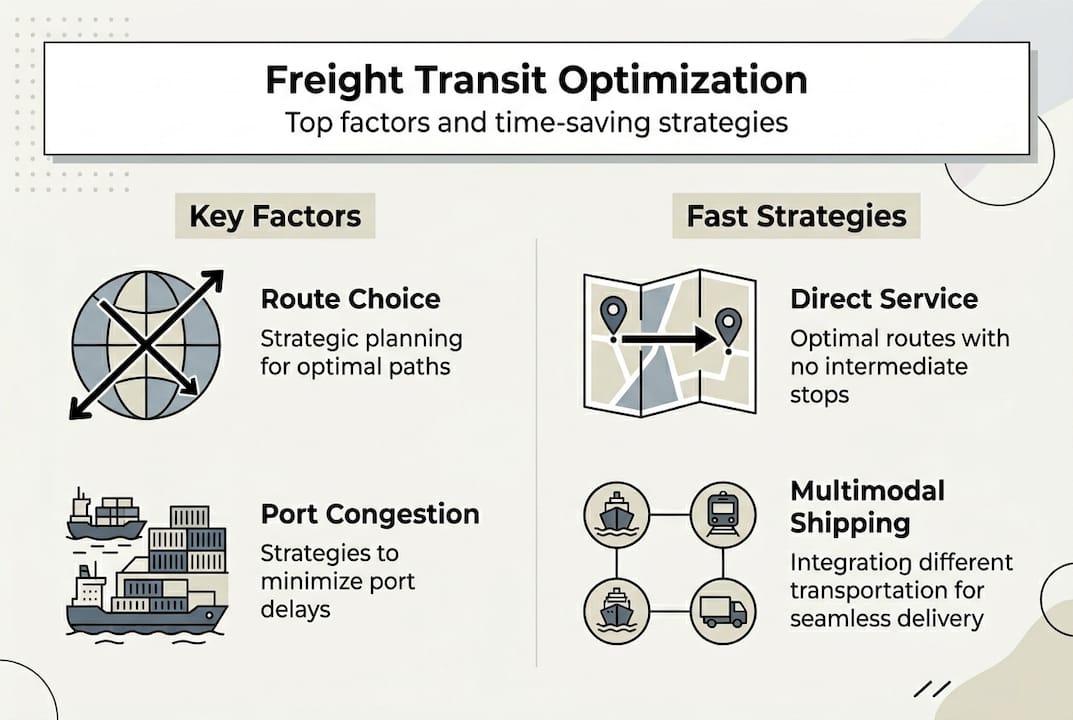
Route and vessel selection are the first levers. Direct services are faster but often more expensive and less frequent. Transshipment services, which involve cargo being transferred at an intermediate hub port, can add 3 to 7 days and introduce additional risk of delay at the hub.
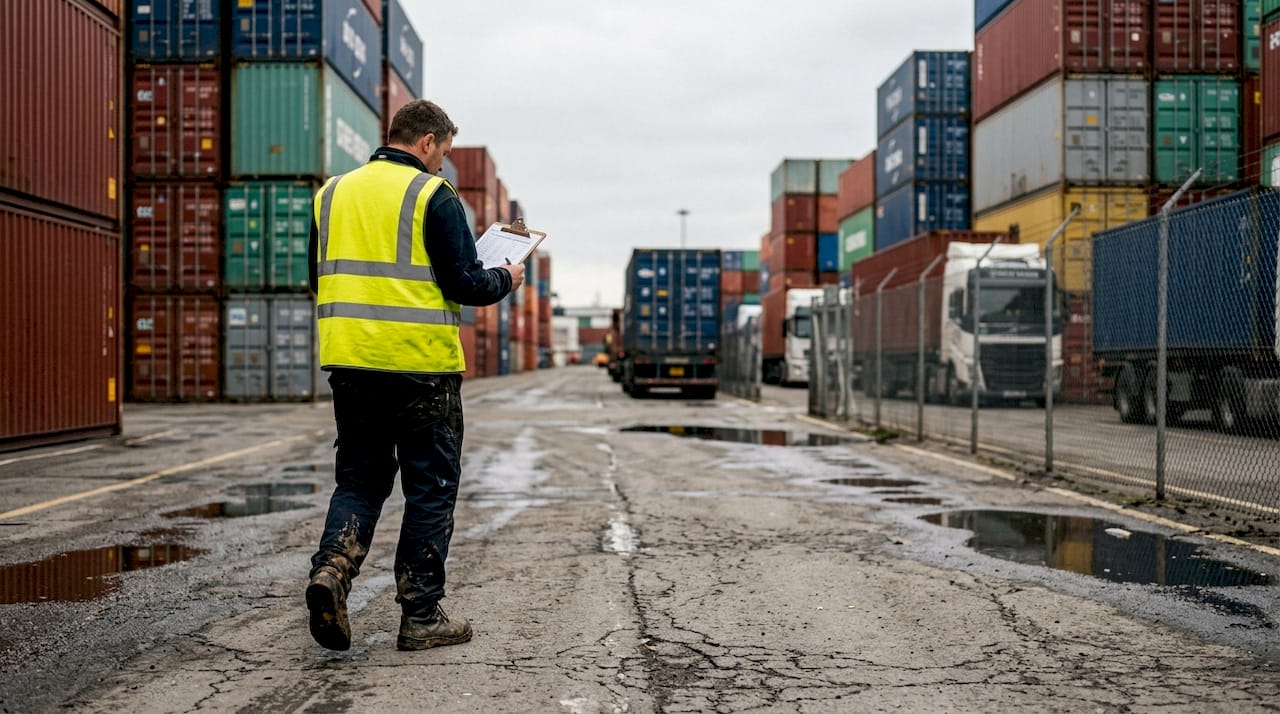
Port congestion is one of the most disruptive forces in global shipping. When major ports experience vessel backlogs, ships wait at anchor for days before berths become available. Staying current on port congestion updates is essential for accurate delivery forecasting. Per freight industry data, transit times can extend significantly due to port congestion or customs delays, sometimes adding a week or more to expected schedules.
Customs clearance and documentation accuracy are equally critical. A single missing certificate of origin or an incorrect HS code can hold a shipment in customs for days. Logistics managers who invest in avoiding customs delays through pre-clearance and accurate documentation consistently outperform those who treat customs as an afterthought. Reviewing customs compliance tips before each major shipment is a practice that pays dividends.
Weather events and geopolitical disruptions add another layer of unpredictability. Typhoon seasons in the Pacific, Red Sea security concerns, and canal closures have all demonstrated how quickly a stable trade lane can become unreliable. Airport customs clearance processes have also evolved in 2026, with faster processing at key hubs reducing air freight delays.
Key delay triggers logistics managers should monitor:
- Port labor strikes and terminal closures
- Vessel schedule changes and blank sailings
- Incomplete or inaccurate shipping documentation
- Seasonal demand surges causing equipment shortages
- Geopolitical events affecting key trade corridors
- Adverse weather disrupting port operations
“A single customs documentation error can cascade into a 5 to 10 day delay, affecting downstream production schedules and customer commitments. The businesses that treat documentation as a strategic function, not an administrative one, consistently achieve faster clearance times.” — Freight operations specialist, international trade sector
Pro Tip: Build relationships with local port agents at your most frequently used ports. They provide real-time intelligence on congestion, labor actions, and berth availability that no public data source can match.
Strategies to optimize transit times and improve shipping efficiency
With a clear picture of what drives transit time variation, logistics managers can now apply targeted strategies to consistently improve performance.
Optimizing logistics starts with data. Digital freight platforms now offer real-time vessel tracking, predictive estimated time of arrival updates, and historical performance data by carrier and route. Using this data to select carriers with strong on-time records on your specific lanes is far more effective than defaulting to the lowest quoted rate.
Multimodal shipping strategies, combining ocean, rail, and road transport, can shorten total door-to-door times on certain corridors. For example, routing cargo from Asia via ocean to a West Coast port, then by rail to inland destinations, often beats all-ocean routing to East Coast ports on total transit time. Reviewing an expedited shipping guide can help identify when premium services justify the cost.
Choosing optimal routes and expedited shipping can significantly reduce transit times, particularly for time-sensitive cargo. Understanding the tradeoffs between courier vs freight options is also valuable for smaller, urgent shipments. For broader guidance, fast international shipping tips offer practical frameworks for high-priority cargo.
| Shipping option | Typical transit time | Relative cost |
|---|---|---|
| Standard ocean freight | 14 to 45 days | Low |
| Premium ocean (direct) | 14 to 28 days | Medium |
| Expedited air freight | 3 to 7 days | High |
| Rail freight (Asia-Europe) | 14 to 18 days | Medium |
| Courier services | 1 to 5 days | Very high |
Steps to optimize your shipping process:
- Audit your current carrier performance data by lane and identify underperforming routes.
- Establish pre-clearance arrangements with customs brokers at key destination ports.
- Standardize documentation templates to eliminate recurring errors.
- Implement real-time tracking tools to catch delays early and trigger contingency plans.
- Negotiate service level agreements with carriers that include transit time guarantees.
- Review routing options quarterly as new direct services and alliances emerge.
Pro Tip: Historical transit time data from your own shipments is more reliable than carrier-published schedules. Build a simple tracking log over 6 months and you will quickly identify which carriers and routes consistently deliver on time.
Common challenges and how to address delays in international freight
Even the best-planned shipments encounter obstacles. Understanding the most common delay sources and having response protocols ready separates resilient supply chains from fragile ones.
Various factors, including port congestion and documentation issues, can create unexpected delays that ripple through entire supply chains. Port strikes, in particular, can materialize with little warning and halt cargo movement for days or weeks. Monitoring port congestion updates and maintaining alternative routing options is essential contingency planning.
Documentation errors remain a leading cause of avoidable delays. Incorrect commodity descriptions, missing phytosanitary certificates for agricultural goods, and mismatched invoice values are among the most common triggers for customs holds. Investing in avoiding customs delays through systematic pre-shipment document checks eliminates a large share of these issues before they occur.
Effective solutions for managing freight delays:
- Maintain pre-approved alternative carriers and routing options for critical lanes
- Use digital documentation platforms to reduce manual entry errors
- Engage local customs agents who understand destination country requirements
- Build strategic inventory buffers for high-velocity, time-sensitive products
- Establish clear escalation protocols so teams respond quickly when delays are detected
- Conduct post-shipment reviews to identify recurring delay patterns
Pro Tip: Always build 3 to 5 buffer days into your supply chain schedules for ocean freight, and 1 to 2 days for air freight. Communicating realistic timelines to internal stakeholders and customers prevents the downstream chaos that comes from overpromising on delivery dates.
Future-proofing your logistics operation means treating delay management as an ongoing discipline, not a reactive scramble. Businesses that invest in carrier diversification, digital visibility tools, and strong customs partnerships consistently absorb disruptions with far less damage to their operations.
Unlock faster transit times with expert logistics solutions
Managing international freight transit times effectively requires more than good intentions. It demands the right partners, the right tools, and deep expertise across customs, routing, and carrier management. Worldwide Express brings all of that together for import/export businesses navigating complex global trade lanes.
Whether you are looking to understand the full scope of freight forwarding, need a step-by-step breakdown of ocean freight forwarding steps, or want to protect your cargo with the right cargo insurance coverage, Worldwide Express offers tailored solutions built for businesses that cannot afford delays. Connect with the team to explore how specialized freight forwarding, customs brokerage, and real-time tracking can transform your shipping performance.
Frequently asked questions
What are average transit times for ocean freight on Asia-Europe routes?
Asia-Europe transit times typically range from 16 to 45 days depending on route selection, vessel type, and whether the shipment travels via the Suez Canal or the Cape of Good Hope.
How can logistics managers reduce freight transit times?
By optimizing routes, selecting direct services over transshipment options, and using expedited shipping options alongside digital tracking tools, managers can meaningfully shorten transit durations on most trade lanes.
What are the main causes of international freight delays?
Delays are most commonly caused by port congestion, customs clearance issues from documentation errors, adverse weather events, and geopolitical disruptions affecting key trade corridors.
How does expedited shipping compare with standard shipments?
Expedited shipping typically delivers cargo in 3 to 7 days via air freight compared to 14 to 45 days for standard ocean freight, but at a substantially higher cost per kilogram.
Recommended
- Expedited International Shipping: Fast-Track Your Global Deliveries – Worldwide Express, Inc.
- How to Optimize Logistics for Efficient Global Shipping – Worldwide Express, Inc.
- 7 Essential Tips for Fastest International Shipping Success – Worldwide Express, Inc.
- How to Reduce Shipping Costs: Effective Strategies for 2025 – Worldwide Express, Inc.