Most american import violations stem from misclassified or undisclosed prohibited goods, putting millions in annual shipments at risk. For customs compliance officers, navigating the complex tangle of international trade regulations is a daily challenge. Knowing exactly which items are forbidden to enter the United States provides a decisive advantage, helping prevent shipment delays and costly penalties while supporting safer global commerce.
Table of Contents
- Defining Prohibited Goods In International Trade
- Major Categories Of Prohibited Goods
- U.S. Legal Restrictions And Governing Agencies
- Common Prohibited Items By Industry Sector
- Liabilities, Penalties, And Compliance Risks
Key Takeaways
| Point | Details |
|---|---|
| Understanding Prohibited Goods | Prohibited goods are strictly forbidden items in international trade that can pose risks to national security, public health, and ethical standards. Familiarity with these items is essential for compliance. |
| Categories of Risks | Major categories include biological materials, firearms, controlled substances, technology products, and counterfeit goods, each monitored by specific U.S. agencies. |
| Legal Consequences | Violations of prohibited goods regulations can lead to severe penalties, including monetary fines and operational sanctions, affecting business reputation and functionality. |
| Proactive Compliance Measures | Businesses should implement comprehensive compliance protocols and conduct regular training to avoid regulatory breaches and associated risks. |
Defining Prohibited Goods in International Trade
International trade operates under complex regulatory frameworks designed to protect national security, public health, and economic interests. Prohibited goods represent a critical category of merchandise strictly forbidden from crossing national borders due to potential risks or legal restrictions. These items encompass a wide range of products that could threaten societal well-being, ranging from dangerous materials to items that violate ethical and legal standards.
The United States government maintains stringent guidelines for classifying prohibited goods, focusing on multiple dimensions of potential harm. These classifications cover items threatening national security, public morality, and human safety. The categories typically include weapons, narcotics, endangered species, sensitive technologies, counterfeit products, and materials that could compromise public health. Each prohibited item falls under specific legal statutes that outline precise restrictions and potential penalties for attempted importation.
Understanding prohibited goods requires recognizing their multifaceted nature. Beyond physical dangers, these restrictions also address economic protection, intellectual property rights, and global ethical standards. Customs officials utilize comprehensive databases and advanced screening technologies to identify and intercept prohibited merchandise before it enters national boundaries. Businesses engaged in international trade must develop robust compliance protocols to avoid inadvertently attempting to transport restricted items, which could result in significant legal and financial consequences.
Pro tip: Always consult official U.S. Customs and Border Protection documentation and maintain updated compliance training to stay current on prohibited goods regulations.
Major Categories of Prohibited Goods
U.S. Customs and Border Protection maintains comprehensive guidelines for classifying goods that cannot enter the United States. These prohibited categories span multiple domains, each designed to protect national security, public health, economic interests, and societal welfare. Understanding these classifications is crucial for businesses and individuals engaged in international trade to ensure compliance and avoid potential legal consequences.
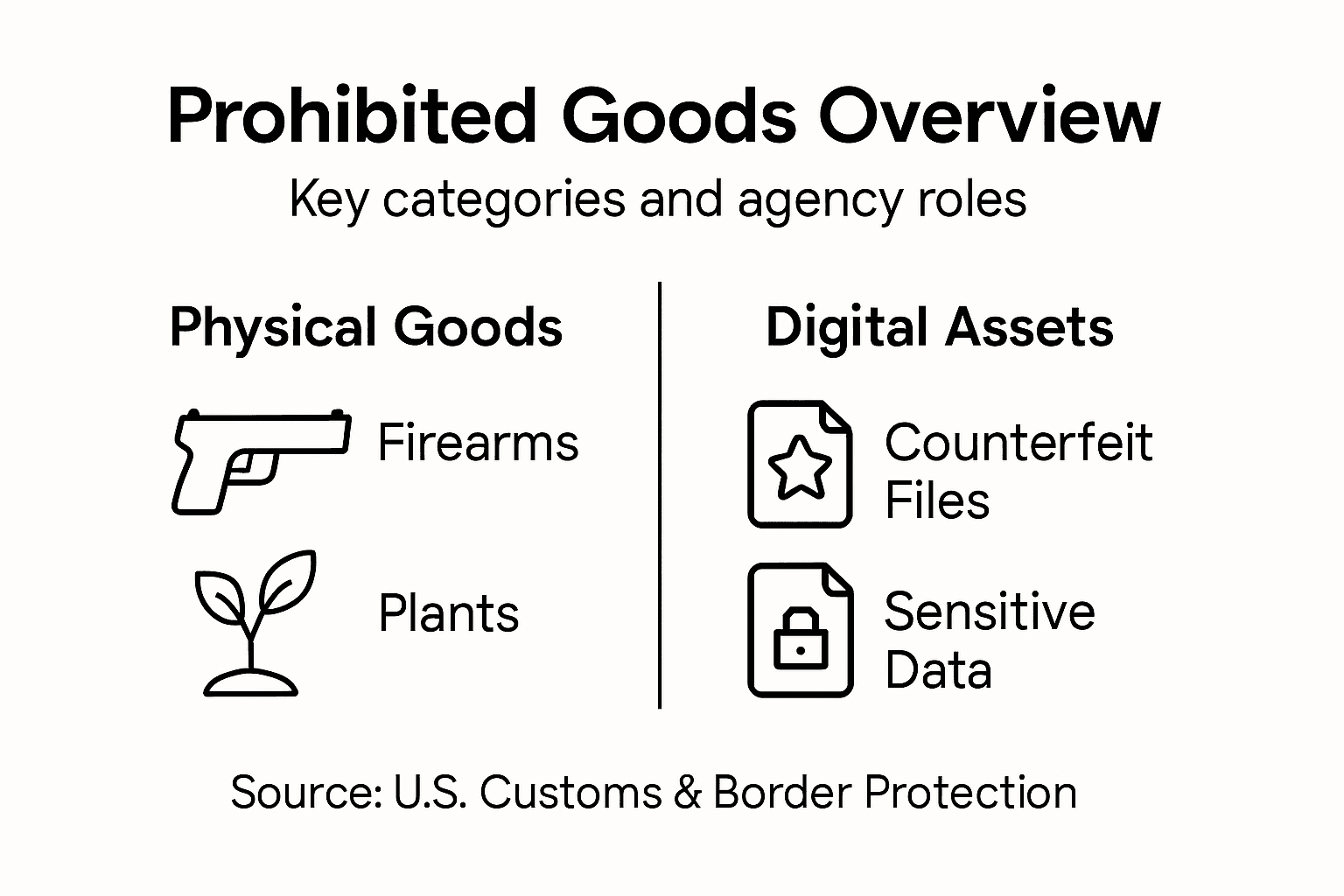
The primary categories of prohibited goods include biological materials, firearms, controlled substances, agricultural products, and items that threaten intellectual property rights. Detailed restrictions cover a wide range of potentially dangerous or illegal merchandise. Specific subcategories encompass endangered species products, counterfeit goods, obscene materials, unsafe consumer products, and technologies with potential national security implications. Each category has unique regulations that dictate absolute prohibition or require special permits and extensive documentation.
Beyond physical restrictions, prohibited goods also include digital and intellectual assets that could compromise national interests. This encompasses sensitive technologies, unauthorized software, certain cryptographic tools, and materials that might facilitate economic espionage. Federal agencies like the Department of Agriculture, Homeland Security, and the State Department collaborate to create and enforce these intricate regulations, ensuring that only safe and legally compliant items enter the national supply chain.

Pro tip: Develop a comprehensive compliance checklist that maps your specific import categories against current U.S. Customs prohibited goods regulations to minimize potential shipping interruptions.
Here’s a summary of major prohibited goods categories, their key risks, and which U.S. agencies oversee them:
| Category | Key Risks | Primary Governing Agency | Example Items |
|---|---|---|---|
| Biological Materials | Disease, ecosystem disruption | USDA, EPA | Unprocessed plants, live animals |
| Firearms & Weapons | Violence, security threats | ATF, Homeland Security | Handguns, explosives |
| Controlled Substances | Drug abuse, legal violations | DEA, FDA | Narcotics, certain medications |
| Technology Products | Espionage, security breaches | Dept. of Commerce | Encryption software, microchips |
| Counterfeit Goods | IP theft, consumer harm | CBP, Dept. of Commerce | Fake designer items |
U.S. Legal Restrictions and Governing Agencies
U.S. Customs and Border Protection coordinates with multiple federal agencies to enforce complex import regulations that safeguard national interests. This intricate regulatory ecosystem involves over 40 different government entities, each responsible for monitoring specific aspects of international trade. The collaborative approach ensures comprehensive oversight of goods entering the United States, with each agency bringing specialized expertise to protect public health, economic stability, and national security.
Regulatory Agencies and Their Primary Responsibilities:
- Department of Agriculture (USDA): Prevents agricultural pest and disease introduction
- Food and Drug Administration (FDA): Monitors food, pharmaceutical, and medical product safety
- Bureau of Alcohol, Tobacco, Firearms and Explosives (ATF): Regulates weapons and controlled substances
- Environmental Protection Agency (EPA): Controls hazardous material imports
- Department of Commerce: Manages technology and intellectual property restrictions
Federal regulations under Title 19 provide the comprehensive legal framework that defines prohibited merchandise. These regulations establish precise guidelines for what can and cannot enter the country, detailing specific restrictions on items that might compromise national security, public safety, or economic interests. The legal structure is deliberately complex, requiring importers to navigate multiple layers of governmental oversight and obtain necessary permits and documentation.
The enforcement mechanism relies on a sophisticated system of inspections, documentation reviews, and interagency communication. Customs officials have the authority to detain, inspect, or completely reject shipments that do not meet the stringent requirements established by these federal agencies. This multilayered approach ensures that only compliant goods enter the national supply chain, protecting domestic industries and citizen safety.
Pro tip: Maintain detailed documentation for every international shipment and consult with a customs broker who understands the specific regulations of each governing agency.
Common Prohibited Items by Industry Sector
U.S. Customs and Border Protection identifies critical import restrictions across multiple industry sectors, reflecting the complex landscape of international trade regulations. These sector-specific prohibitions are designed to protect domestic markets, ensure public safety, and maintain national security. Understanding these restrictions is crucial for businesses engaged in cross-border commerce, as violations can result in significant legal and financial penalties.
Key Industry Sector Prohibited Items:
Agriculture Sector:
- Fresh meats from countries with documented disease risks
- Unprocessed plant materials
- Fruits and vegetables without proper phytosanitary certificates
- Seeds and agricultural products that might introduce invasive species
Pharmaceutical and Medical Sector:
- Unapproved medications
- Controlled substances without proper documentation
- Medical devices lacking FDA certification
- Generic drug samples without explicit authorization
Technology and Electronics Sector:
- Advanced cryptographic technologies
- Sensitive semiconductor components
- Unauthorized encryption software
- Military-grade communication equipment
The complexity of these prohibitions extends beyond simple product categories. Each industry faces unique regulatory challenges that require detailed understanding of both federal regulations and international trade agreements. Customs officials employ sophisticated screening processes to identify and intercept prohibited merchandise, utilizing advanced technological tools and comprehensive databases to ensure compliance.
Pro tip: Develop a comprehensive compliance matrix that maps your specific industry’s prohibited items against current U.S. Customs regulations to proactively manage import risks.
Liabilities, Penalties, and Compliance Risks
U.S. Customs and Border Protection administers strict penalties for import regulation violations, creating a comprehensive enforcement framework that deters noncompliance. These penalties range from monetary fines to complete seizure of merchandise, with potential legal consequences that can devastate businesses unprepared for regulatory scrutiny. The financial and operational risks associated with import violations extend far beyond immediate financial penalties, potentially damaging a company’s reputation and future trading capabilities.
Penalty Categories and Potential Consequences:
-
Monetary Fines
- Civil penalties ranging from $100 to $250,000 per violation
- Percentage-based fines calculated on shipment value
- Cumulative penalties for repeated or intentional violations
-
Operational Sanctions
- Merchandise seizure and forfeiture
- Import license suspension or revocation
- Mandatory compliance audits
- Increased inspection rates for future shipments
-
Legal Ramifications
- Criminal prosecution for serious violations
- Potential imprisonment for intentional smuggling
- Permanent import restrictions
- Exclusion from government contracts
Compliance risks extend beyond immediate financial penalties, encompassing long-term strategic implications for businesses engaged in international trade. Companies must develop robust internal control systems that proactively identify and mitigate potential regulatory violations. This requires continuous training, comprehensive documentation processes, and sophisticated risk management strategies that anticipate potential compliance challenges across different industry sectors and regulatory environments.
Pro tip: Implement a comprehensive compliance management system that includes regular internal audits, staff training, and real-time regulatory tracking to minimize potential import violation risks.
This table highlights how penalties for prohibited imports increase with severity and frequency of the violation:
| Penalty Type | Description | Business Impact |
|---|---|---|
| Monetary Fines | Fines per violation, value-based | Revenue loss, budget impact |
| License Action | Suspension or permanent revocation | Halted operations, lost sales |
| Legal Prosecution | Criminal charges, possible prison | Reputation damage, shutdown |
| Increased Audits | Higher frequency of inspections | Delays, administrative costs |
Simplify Compliance and Shipping of Prohibited Goods with Expert Logistics Support
Navigating stringent U.S. import laws and the complexities of prohibited goods can feel overwhelming. From managing customs clearance, understanding specific agency regulations, to avoiding costly penalties, businesses face critical challenges every day. At Worldwide Express, Inc., we specialize in comprehensive international shipping solutions designed to keep your cargo compliant and moving smoothly across borders. Our expertise includes customs brokerage, freight forwarding, and supply chain management tailored to your unique needs.
Take control of your international shipments today by partnering with a trusted logistics provider experienced in handling delicate compliance issues related to prohibited and restricted items. Visit Worldwide Express to explore how our custom solutions can protect your business from costly delays and legal risks. Start your journey toward efficient, worry-free global shipping now by requesting a freight quote or contacting our specialists for personalized guidance.
Frequently Asked Questions
What types of goods are considered prohibited when importing into the U.S.?
Prohibited goods include biological materials, firearms, controlled substances, counterfeit products, and items that threaten national security or public health. Specific examples encompass unprocessed agricultural materials, certain medications, and advanced technologies with encryption capabilities.
How can businesses ensure compliance with U.S. import laws regarding prohibited goods?
Businesses should develop a comprehensive compliance checklist that aligns specific import categories with current U.S. Customs regulations. Regular training, detailed documentation, and consulting with customs brokers can also help mitigate risks.
What are the potential penalties for importing prohibited goods?
Penalties for importing prohibited goods can include monetary fines, operational sanctions such as merchandise seizure, and legal ramifications including criminal prosecution. The severity of penalties increases with the frequency and intention behind violations.
Which agencies enforce regulations on prohibited goods in the U.S.?
Multiple federal agencies, including U.S. Customs and Border Protection (CBP), the Department of Agriculture (USDA), the Food and Drug Administration (FDA), and the Bureau of Alcohol, Tobacco, Firearms and Explosives (ATF), collaborate to enforce import regulations and monitor prohibited goods.
Recommended
- Import License Requirements: Ensuring U.S. Trade Compliance – Worldwide Express, Inc.
- How to Avoid Customs Penalties: A Step-by-Step Guide – Worldwide Express, Inc.
- Master Importing Food Products: Step-by-Step US Guide – Worldwide Express, Inc.
- Complete Guide to Export Controls Basics for U.S. Trade – Worldwide Express, Inc.
- Le Misure Doganali | Studio Legale Coviello | Italia