

Protecting intellectual property in international trade has never demanded more attention from American customs compliance teams. The expansion of global commerce and intricate Regional Trade Agreements mean intellectual assets face greater risks of infringement and unauthorized use. Understanding the four primary categories of intellectual property—patents, copyrights, trademarks, and trade secrets—is vital for securing organizational value and maintaining a competitive edge. This article shares actionable strategies to address the evolving challenges of intellectual property protection in cross-border operations.
Table of Contents
- Defining Intellectual Property in International Trade
- Types of Intellectual Property Rights
- Legal Protections for U.S. Exporters Abroad
- Managing Risks and Pitfalls in Cross-Border Shipping
- Best Practices for Ongoing IP Protection
Key Takeaways
| Point | Details |
|---|---|
| Understanding IP Importance | Intellectual property is essential for competitive advantage in global trade, requiring businesses to navigate complex legal protections. |
| Categories of IP | The main types of intellectual property include patents, copyrights, trademarks, and trade secrets, each with unique protections and durations. |
| Navigating International Markets | U.S. exporters must be proactive in their IP strategies, considering varying protections and legal frameworks across countries. |
| Ongoing Risk Management | Effective IP protection involves regular assessments and strategic documentation to safeguard assets during cross-border operations. |
Defining Intellectual Property in International Trade
Intellectual property (IP) represents a critical cornerstone of global commerce, encompassing intangible assets created by human creativity and innovation. Unique legal protections safeguard these non-physical creations, enabling businesses to secure their competitive advantages across international markets.
At its core, intellectual property includes inventions, designs, trademarks, logos, artistic works, and trade secrets that possess economic value. The World Trade Organization and international agreements recognize four primary categories of intellectual property: patents, copyrights, trademarks, and trade secrets. Each category provides distinct legal frameworks that protect different types of intellectual assets, ensuring creators can monetize and control their innovations.
In the context of international trade, intellectual property rights become exponentially more complex. Regional Trade Agreements frequently expand traditional protections, creating nuanced legal landscapes that businesses must carefully navigate. Customs compliance officers must understand these intricate regulations to prevent unauthorized use, reproduction, or distribution of protected intellectual assets across global supply chains.
Pro tip: Develop a comprehensive IP tracking system that documents the origin, registration, and protection status of all intellectual assets your organization manages internationally.
Types of Intellectual Property Rights
Intellectual property rights represent a complex framework of legal protections designed to safeguard different forms of creative and innovative assets. Four primary categories dominate the intellectual property landscape: patents, copyrights, trademarks, and trade secrets. Each category provides unique mechanisms for protecting distinct types of intellectual contributions across international trade environments.
Patents offer exclusive rights to inventors, preventing others from manufacturing, using, or selling their inventions without authorization. These protections typically last 20 years from the filing date and require public disclosure of the innovative technology. Copyrights, by contrast, protect original artistic and literary works, including software, music, writings, and visual designs. Unlike patents, copyright protection begins immediately upon creation and can last for decades, often extending to the creator’s lifetime plus an additional 70 years.

Legal frameworks for trademarks and trade secrets differ significantly from patents and copyrights. Trademarks protect distinctive symbols, names, and designs that identify specific brands or products, allowing companies to prevent consumer confusion and protect their commercial reputation. Trade secrets encompass confidential business information that derives economic value from not being generally known, such as manufacturing processes, customer lists, or strategic algorithms.
Pro tip: Develop a systematic approach to documenting and classifying your organization’s intellectual property assets, ensuring each type receives appropriate legal protection and monitoring.
Here’s a quick reference to the key differences among the main types of intellectual property rights:
| Type of IP | What It Protects | Duration of Protection | Business Impact |
|---|---|---|---|
| Patent | New inventions/technologies | Up to 20 years | Enables exclusive market advantage |
| Copyright | Artistic and literary works | Creator’s life plus 70 years | Protects brand assets and creativity |
| Trademark | Logos, names, symbols | Renewable indefinitely | Prevents consumer confusion |
| Trade Secret | Confidential business info | As long as secrecy is maintained | Preserves competitive strategies |
Legal Protections for U.S. Exporters Abroad
U.S. exporters face complex challenges when protecting intellectual property across international markets, requiring sophisticated legal strategies and proactive management. Global intellectual property protections vary dramatically between countries, creating significant risks for American businesses seeking to expand their international commercial footprint.
The United States Patent and Trademark Office (USPTO) plays a critical role in supporting American innovators through international collaboration and strategic legal frameworks. Intellectual property enforcement mechanisms are negotiated through free trade agreements, bilateral treaties, and multilateral international conventions, providing U.S. exporters with crucial legal backstops in foreign jurisdictions. These agreements typically establish minimum standards for IP protection, create dispute resolution pathways, and outline specific mechanisms for preventing unauthorized use of American intellectual assets.
Navigating international IP protection requires a comprehensive approach that combines legal preparation, strategic documentation, and continuous monitoring. Exporters must conduct thorough research into each target country’s specific intellectual property laws, registration requirements, and enforcement mechanisms. This involves understanding local legal nuances, potential registration timelines, and the specific procedural steps needed to secure and defend intellectual property rights in different global markets.
Pro tip: Develop a comprehensive international IP protection strategy that includes country-specific legal assessments, proactive registration processes, and ongoing monitoring of potential infringement risks.
This table summarizes major international IP protection frameworks relevant to U.S. exporters:
| Framework | Description | Business Importance |
|---|---|---|
| Free Trade Agreements | Bilateral deals that standardize IP rules | Simplifies cross-border protection |
| Multilateral Conventions | Global treaties setting IP standards | Reduces compliance complexity |
| Bilateral Treaties | Direct agreements between two countries | Enables tailored legal solutions |
Managing Risks and Pitfalls in Cross-Border Shipping
Cross-border shipping presents a complex landscape of potential intellectual property risks that demand strategic and proactive management. Supply chain risk management requires a comprehensive approach that anticipates and mitigates potential vulnerabilities throughout the international shipping process.
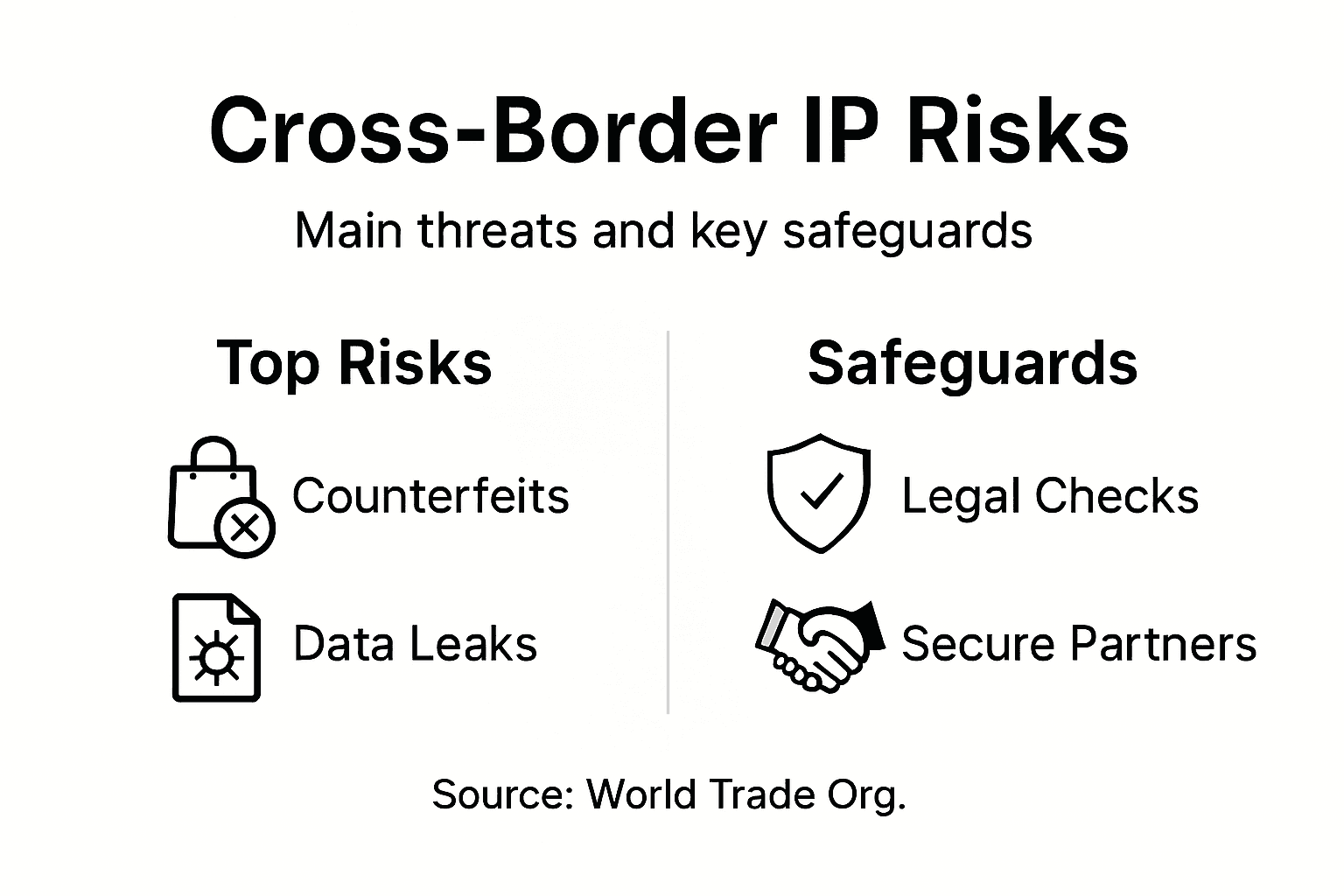
Companies must develop robust risk assessment protocols that systematically evaluate potential IP exposure at each stage of international transportation. This involves conducting thorough due diligence on shipping partners, implementing stringent confidentiality agreements, and creating clear documentation protocols that protect sensitive intellectual assets. Cross-border trade risk strategies should include detailed tracking mechanisms, secure packaging requirements, and carefully controlled access to proprietary information during transit.
Effective IP protection in cross-border shipping demands a multilayered defense strategy. This includes technical safeguards like encrypted digital documentation, physical security measures for sensitive shipments, and legal frameworks that clearly define ownership and transmission rights. Exporters must also develop contingency plans for potential IP breaches, including rapid response protocols, international legal recourse strategies, and comprehensive insurance coverage that specifically addresses intellectual property risks during global transportation.
Pro tip: Create a comprehensive IP protection checklist that maps potential vulnerabilities at each stage of international shipping, and implement a rigorous pre-shipment review process.
Best Practices for Ongoing IP Protection
Maintaining robust intellectual property protection requires a systematic and dynamic approach that anticipates emerging risks and evolves with changing technological landscapes. Security and privacy controls must be comprehensive, integrating technical, administrative, and legal safeguards that comprehensively protect intellectual assets throughout their entire lifecycle.
Corporate IP strategies demand a proactive, multidimensional approach that extends beyond traditional defensive mechanisms. Organizations should implement regular internal audits, conduct thorough supplier assessments, and establish cross-functional teams dedicated to monitoring and protecting intellectual property. This involves creating detailed documentation protocols, implementing strict access controls, and developing comprehensive tracking systems that can rapidly identify and respond to potential IP vulnerabilities.
Effective ongoing IP protection requires a holistic approach that combines technological solutions, legal frameworks, and organizational culture. Companies must invest in continuous employee training, develop clear communication protocols for handling sensitive information, and create robust incident response plans that enable swift action in the event of potential IP breaches. This includes implementing advanced encryption technologies, maintaining detailed digital logs of IP access and transmission, and establishing clear escalation procedures for addressing potential security threats.
Pro tip: Develop a quarterly IP risk assessment framework that systematically reviews and updates your organization’s intellectual property protection strategies, incorporating emerging technological and legal considerations.
Protect Your Intellectual Property with Trusted Global Shipping Solutions
Safeguarding intellectual property in international trade requires more than just legal strategies. Managing risks during cross-border shipments, customs compliance, and detailed documentation are critical to maintaining your competitive advantage. Common challenges such as unauthorized use of trademarks, trade secret exposure in transit, and navigating complex international IP regulations demand a reliable logistics partner who understands these complexities.
At Worldwide Express, we specialize in comprehensive international shipping services designed to protect your valuable intellectual assets every step of the way. Our expertise in customs brokerage, compliance, cargo insurance, and global tracking ensures your shipments meet all regulatory requirements while minimizing risk. From air and ocean freight forwarding to warehousing and trucking, we create tailored supply chain solutions that provide you with peace of mind and operational control.

Take control of your intellectual property protection today by partnering with a global logistics leader. Explore our customs clearance and compliance services to reduce IP exposure risks. Visit Worldwide Express now and secure your innovation with trusted shipping solutions tailored for international trade.
Frequently Asked Questions
What are the main types of intellectual property rights in international trade?
The main types of intellectual property rights include patents, copyrights, trademarks, and trade secrets. Each type provides distinct legal protections for different forms of creative and innovative assets, essential for businesses operating globally.
How can U.S. exporters protect their intellectual property abroad?
U.S. exporters can protect their intellectual property by leveraging international agreements, engaging in proactive registration processes, and navigating local laws effectively. They should also develop comprehensive IP protection strategies tailored to each foreign market.
What are the best practices for managing intellectual property risks during cross-border shipping?
Best practices include conducting thorough due diligence on shipping partners, implementing confidentiality agreements, ensuring secure packaging, and creating tracking mechanisms. Additionally, companies should have contingency plans to address potential intellectual property breaches during transit.
How can businesses maintain ongoing intellectual property protection?
Businesses can maintain ongoing intellectual property protection by conducting regular internal audits, implementing strict access controls, investing in employee training, and developing incident response plans for potential breaches. A proactive, multidimensional strategy is essential for protecting intellectual assets.
Recommended
- Prohibited Goods Examples: Navigating U.S. Import Laws – Worldwide Express, Inc.
- Understanding International Trade Compliance Basics – Worldwide Express, Inc.
- Understanding Trade Finance Solutions: A Clear Guide – Worldwide Express, Inc.
- Supply Chain Risk Management: Safeguarding Global Trade – Worldwide Express, Inc.
- Protezione del marchio: comprendere l’importanza e il funzionamento • Gio Talente
- Trademark Usage Guidelines | OMNI Intel