

Over 80 percent of American small businesses trading globally face unexpected tax hurdles that can affect their bottom line. For those involved in imports and exports, tax planning is not just about compliance but also about protecting profits in an ever-changing regulatory world. This guide offers American business owners practical strategies to minimize liabilities, maximize available tax incentives, and keep ahead of key law changes impacting international transactions.
Table of Contents
- Defining Small Business Tax Planning In International Trade
- Key U.S. Tax Incentives For Exporters
- Understanding 2026 International Tax Rules (obbba)
- Tax Compliance And Documentation For Cross-Border Transactions
- Managing Risks And Reducing Tax Liabilities
Key Takeaways
| Point | Details |
|---|---|
| Effective Tax Planning | Small businesses should proactively manage cross-border tax liabilities by understanding international regulations and exploring tax incentives like IC-DISC and FDII. |
| Upcoming Legislative Changes | The OBBBA will alter key international tax provisions starting in 2026, requiring businesses to reassess their tax strategies to maintain compliance and efficiency. |
| Importance of Documentation | Maintaining meticulous records is crucial for compliance with IRS reporting requirements and to substantiate international transactions to avoid severe penalties. |
| Risk Management Strategies | Implementing comprehensive tax risk management strategies is essential for reducing liabilities and ensuring adaptability in the evolving landscape of international trade. |
Defining Small Business Tax Planning in International Trade
Small business tax planning in international trade represents a strategic approach to managing financial obligations and optimizing tax efficiency for companies engaged in cross-border transactions. At its core, this process involves understanding complex regulatory frameworks, identifying potential tax incentives, and developing proactive strategies to minimize tax liabilities while maintaining full compliance with U.S. export regulations.
The fundamental objective of international trade tax planning is to help small businesses navigate the intricate landscape of global commerce by understanding legal and taxation frameworks. This involves analyzing various elements such as business structures, international tax treaties, and specific regulations that impact export activities. Small businesses must consider multiple factors including income classification, deduction eligibility, and potential credits related to foreign-derived transactions.
Key components of effective small business tax planning in international trade include comprehensive documentation, strategic entity structuring, and proactive compliance management. Businesses need to track transactions meticulously, understand foreign-derived deduction eligible income (FDDEI) rules, and develop strategies that align with current legislative requirements. This might involve leveraging specific tax provisions, managing transfer pricing, and maintaining detailed records that substantiate international business activities.
Pro tip: Consult with a specialized international tax professional who understands both your industry sector and current export regulations to develop a customized tax planning strategy that maximizes your financial efficiency.
Key U.S. Tax Incentives for Exporters
U.S. small businesses engaged in international trade have access to several powerful tax incentives designed to encourage export activities and reduce overall tax burdens. These strategic tax provisions are critical tools that can significantly enhance a company’s financial performance and global competitiveness by providing meaningful tax relief and encouraging international business expansion.

Two primary tax incentives stand out for U.S. exporters: the Interest Charge Domestic International Sales Corporation (IC-DISC) and Foreign Derived Intangible Income (FDII) regimes. These tax incentives offer substantial benefits across multiple industries, including manufacturing, technology, agriculture, and service-based sectors. The IC-DISC mechanism allows export profits to be treated as qualified dividends, which are taxed at a lower rate, effectively reducing the income tax burden for businesses with significant export activities.
The Foreign Derived Intangible Income (FDII) provision represents another critical tax strategy for U.S. exporters. This incentive allows companies to claim a deduction on income derived from intangible assets used in foreign markets, effectively lowering the corporate tax rate on international transactions. By providing a tax advantage for businesses expanding globally, the FDII regime encourages companies to develop and leverage intellectual property, invest in research and development, and pursue international market opportunities.
Here’s a concise comparison of two major U.S. tax incentives for exporters and their business impacts:
| Tax Incentive | Key Benefit | Business Impact | Typical Users |
|---|---|---|---|
| IC-DISC | Export profits as dividends | Lowers income tax rate on exports | Manufacturers, Service firms |
| FDII (pre-2026) | Deduction on foreign IP use | Reduces tax on intangible income | Tech, R&D, IP-driven sectors |
Pro tip: Consult with a specialized international tax professional to precisely calculate and maximize your eligibility for IC-DISC and FDII tax incentives, ensuring your small business captures every available tax benefit.
Understanding 2026 International Tax Rules (OBBBA)
The One Big Beautiful Bill Act (OBBBA) represents a significant overhaul of U.S. international tax regulations, introducing comprehensive changes that will fundamentally reshape how small businesses approach international taxation starting in 2026. These legislative modifications will require careful strategic planning and proactive adaptation by U.S. exporters to maintain financial efficiency and regulatory compliance.
The OBBBA introduces substantial modifications to existing international tax frameworks, including critical changes to key tax regimes. Notably, the legislation renames and restructures important tax provisions such as transforming Foreign Derived Intangible Income (FDII) into Foreign-Derived Deduction Eligible Income (FDDEI) and Global Intangible Low-Taxed Income (GILTI) into Net CFC Tested Income (NCTI). These changes come with significant reductions in available deductions, with the section 250 deduction for FDDEI being reduced to 33.34% and the NCTI deduction limited to 40%.
The most critical implications of the OBBBA for small businesses involve permanent alterations to international tax provisions that will directly impact tax planning strategies. The legislation eliminates the qualified business asset investment (QBAI) exclusion, adjusts foreign tax credit limitations, and establishes a permanent Base Erosion and Anti-Abuse Tax (BEAT) rate of 10.5%. These changes mean that U.S. exporters will need to comprehensively review their current international tax structures, reassess their global income strategies, and potentially restructure their international operations to optimize tax outcomes.
The following summary highlights the most significant upcoming changes under OBBBA and their practical effects for small business exporters:
| OBBBA Change | Description | Business Effect |
|---|---|---|
| FDII renamed FDDEI | New rules and reduced deduction (to 33.34%) | Higher taxable foreign income |
| GILTI renamed NCTI | Deduction capped at 40% | Increased tax liability |
| QBAI exclusion eliminated | Cannot exclude certain asset investments | Less tax sheltering option |
| BEAT rate set to 10.5% | Permanent minimum tax for base erosion | Less room for avoidance |
Pro tip: Engage a specialized international tax consultant before 2026 to conduct a comprehensive review of your current tax structure and develop a proactive strategy that aligns with the new OBBBA regulations.
Tax Compliance and Documentation for Cross-Border Transactions
Tax compliance and documentation for cross-border transactions represent complex but critical processes for U.S. small businesses engaged in international trade. The intricate landscape of international tax regulations requires meticulous attention to detail, comprehensive record-keeping, and a proactive approach to meeting reporting requirements across multiple jurisdictions.
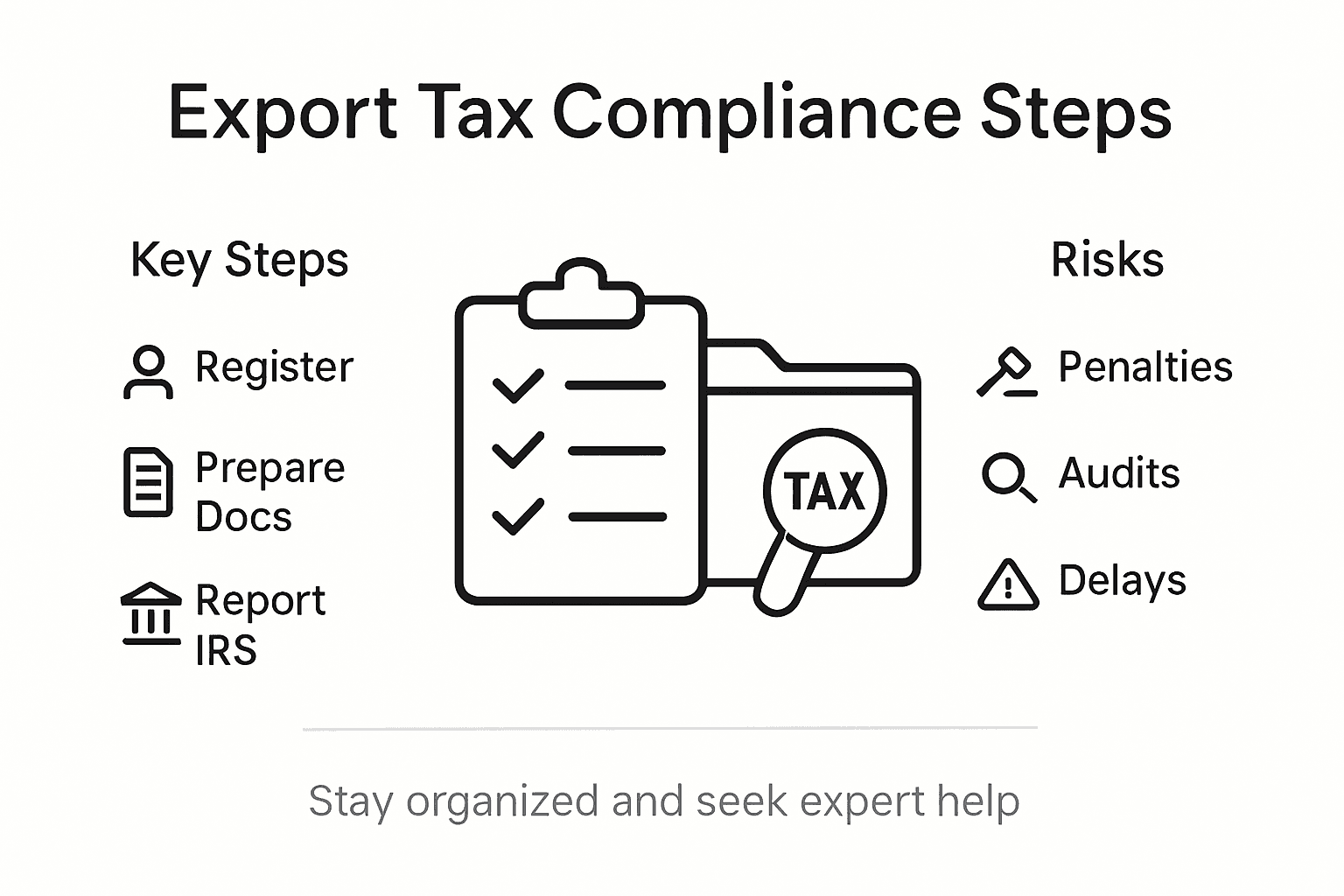
U.S. businesses must navigate a complex web of IRS reporting mandates for international transactions, which involve multiple specialized forms and precise documentation standards. Key reporting requirements include Forms 5471, 5472, and 8865, each designed to capture specific details about foreign business interests, ownership structures, and intercompany financial transactions. These forms demand comprehensive disclosure of financial activities, including detailed information about foreign corporation holdings, transfer pricing arrangements, and monetary exchanges between related international entities.
The consequences of non-compliance can be severe, with potential penalties that can significantly impact a small business’s financial health. Companies must maintain extensive documentation that demonstrates the arm’s length nature of international transactions, verifies transfer pricing methodologies, and provides transparent evidence of business rationales behind cross-border financial movements. This documentation should include comprehensive records of intercompany agreements, financial statements, transaction histories, and supporting evidence that substantiates the economic substance of international business activities.
Pro tip: Implement a centralized digital documentation management system that automatically tracks and archives all cross-border transaction records, ensuring you can quickly retrieve and submit required IRS forms with minimal administrative burden.
Managing Risks and Reducing Tax Liabilities
Managing tax risks and reducing liabilities represent critical strategic imperatives for small businesses engaged in international trade. Successfully navigating the complex landscape of cross-border transactions requires a multifaceted approach that combines proactive planning, sophisticated financial structuring, and comprehensive risk mitigation strategies.
Small businesses can significantly optimize their tax positions by implementing tax-efficient structures and strategic planning mechanisms, particularly through specialized instruments like the Interest Charge Domestic International Sales Corporation (IC-DISC). These strategic tools enable businesses to defer income recognition, access more favorable tax treatment on foreign income, and create meaningful opportunities for tax optimization. Effective risk management involves carefully analyzing tariff structures, understanding customs duties, and strategically leveraging foreign tax credits to minimize overall tax burdens.
Risk reduction strategies extend beyond simple tax planning and require a holistic approach to international business operations. Companies must develop robust compliance frameworks that anticipate potential regulatory challenges, maintain meticulous documentation of international transactions, and continuously monitor changing international tax landscapes. This involves implementing sophisticated transfer pricing methodologies, conducting regular internal audits, and maintaining flexible financial structures that can adapt to evolving regulatory environments and potential geopolitical shifts affecting international trade.
Pro tip: Develop a comprehensive international tax risk management dashboard that provides real-time tracking of potential tax liabilities, regulatory changes, and compliance requirements across different jurisdictions.
Simplify Your Small Business Tax Planning with Expert International Shipping Solutions
Small businesses involved in U.S. export activities face complex tax challenges such as navigating FDII and IC-DISC incentives, managing cross-border compliance documentation, and preparing for sweeping 2026 international tax changes like OBBBA. These demand precision and proactive strategies to reduce liabilities and maintain compliance. At Worldwide Express, we understand that efficient logistics and customs management directly impact your ability to execute these tax strategies confidently.
Partnering with Worldwide Express means:
- Seamless customs brokerage to ensure accurate documentation for IRS reporting
- Reliable freight forwarding that aligns with international tax planning deadlines
- Comprehensive supply chain visibility and cargo insurance to mitigate risks
Don’t let complex international tax rules slow your export growth. Explore how our tailored logistics and global transportation services support your tax planning and compliance needs today at Worldwide Express. Visit Worldwide Express Shipping Solutions now to get started and experience hassle-free international trade management that strengthens your small business tax position.
Frequently Asked Questions
What is small business tax planning for exporters?
Small business tax planning for exporters involves strategies to efficiently manage tax obligations related to international trade, ensuring compliance with regulations while minimizing tax liabilities.
What are key tax incentives available for U.S. small businesses engaged in international trade?
U.S. small businesses can benefit from tax incentives like the Interest Charge Domestic International Sales Corporation (IC-DISC) and Foreign Derived Intangible Income (FDII), which help reduce tax burdens on export profits and income from intangible assets used in foreign markets.
How will the One Big Beautiful Bill Act (OBBBA) impact small business tax planning in 2026?
The OBBBA will introduce significant changes, including reduced deductions for foreign-derived intangible income and limitations on foreign tax credits, requiring small businesses to reassess their tax structures and strategies to maintain compliance and optimize tax outcomes.
What are the compliance requirements for U.S. businesses engaged in cross-border transactions?
U.S. businesses must adhere to various IRS reporting mandates, including filing specific forms to report foreign business interests and intercompany transactions, maintaining extensive documentation to support these filings, and ensuring compliance with transfer pricing regulations.
Recommended
- Complete Guide to Export Controls Basics for U.S. Trade – Worldwide Express, Inc.
- Mastering Your Export License Application Process – Worldwide Express, Inc.
- Master the Export Documentation Process in 2025 – Worldwide Express, Inc.
- Import License Requirements: Ensuring U.S. Trade Compliance – Worldwide Express, Inc.
- Complete Guide to the Role of Tax Planning