

Every decision in international shipping can feel like a balancing act between efficiency, cost, and environmental responsibility. As mid-sized American import and export companies respond to rising regulatory pressure and customer expectations, the call for truly sustainable business practices in logistics is stronger than ever. This overview highlights practical ways green logistics principles translate into streamlined operations, lower emissions, and transparent compliance while helping you keep your competitive edge.
Table of Contents
- Defining Sustainable Business Practices In Logistics
- Key Strategies For Eco-Friendly Shipping
- Emerging Green Technologies And Solutions
- Regulations Shaping Sustainable Logistics
- Measuring Impact And Avoiding Common Pitfalls
Key Takeaways
| Point | Details |
|---|---|
| Sustainable Practices Improve Profitability | Adopting sustainability in logistics can lower costs through reduced fuel consumption and waste management, directly benefiting the bottom line. |
| Focus on Incremental Changes | Companies can start with targeted improvements like optimizing transportation routes or enhancing packaging to gradually build a sustainable operation. |
| Regulatory Compliance is Essential | Understanding and adhering to environmental regulations helps avoid penalties and ensures that sustainability practices align with legal requirements. |
| Measurement is Key | Establishing baseline metrics and regularly monitoring progress allows businesses to track real improvements in sustainability efforts. |
Defining Sustainable Business Practices in Logistics
Sustainable business practices in logistics mean running your operations with a clear eye toward environmental impact. Green logistics is fundamentally about building a supply chain that considers environmental consequences while meeting regulatory requirements. For mid-sized import/export companies, this isn’t about grand gestures. It’s about making deliberate choices in how you move goods from point A to point B.
The core of sustainable logistics involves three interconnected areas: reducing your environmental footprint, cutting operational waste, and maintaining compliance with environmental regulations. When you’re shipping containers across oceans or coordinating trucking networks across the country, every decision multiplies. A slightly more efficient routing saves fuel. Better warehouse management reduces storage waste. Choosing lower-emission transportation methods compounds benefits across thousands of shipments annually.
What makes this practical for your business is that sustainability often improves your bottom line simultaneously. Lower fuel consumption means reduced shipping costs. Waste reduction cuts warehousing expenses. Companies that adopt supply chain practices focused on sustainability typically discover they’re spending less while improving their environmental profile. This dual benefit is why major retailers and manufacturers increasingly require sustainable logistics partners.
Your implementation doesn’t require overhauling everything at once. Understanding sustainability principles in logistics helps you identify where your biggest opportunities lie. Some companies start with transportation optimization. Others begin with packaging improvements or warehouse efficiency. The key is establishing a baseline, setting realistic targets, and measuring progress systematically.
Compliance matters too. Environmental safety regulations vary by region, industry, and shipment type. Your sustainable practices must align with these requirements to avoid penalties and delays. This is where experienced logistics partners prove invaluable. They understand which regulations apply to your specific operations and can help you design processes that exceed minimum standards.
Pro tip: Start by auditing your top 10 shipping routes and quantifying their current fuel consumption and emissions, then pilot one improvement (different mode, optimized waypoints, or consolidated shipments) to measure savings before rolling out company-wide changes.
Key Strategies for Eco-Friendly Shipping
Eco-friendly shipping isn’t a single solution. It’s a combination of tactical decisions that work together to cut emissions and costs simultaneously. For mid-sized import/export companies, implementing these strategies means examining every part of your operation and identifying where incremental changes compound into meaningful results.
Transportation mode selection forms the foundation of any eco-friendly strategy. Ocean freight produces far fewer emissions per ton of cargo than air freight, while consolidating shipments reduces the number of trips needed. Rail and truck options occupy the middle ground, with efficiency depending heavily on load optimization. Energy-efficient fuel adoption directly addresses one of shipping’s biggest environmental costs. When your carriers switch to cleaner fuels or optimize vessel operations, your carbon footprint shrinks without requiring you to overhaul your entire logistics network.

Port infrastructure and operations deserve attention too. Choosing ports equipped with modern cargo handling systems reduces vessel idle time and fuel consumption. Some facilities offer cold ironing technology, allowing docked ships to draw power from shore instead of running their engines. These infrastructure improvements multiply across all your shipments using those ports.
Sustainable packaging solutions complement your transportation choices. Lighter packaging reduces shipment weight and fuel requirements. Recyclable or compostable materials appeal to customers and align with retailer requirements. Many companies overlook packaging as part of their sustainability strategy, missing an easy win.
Measurement and tracking create accountability. Establish baseline metrics for your current operations, then set realistic reduction targets. Monitor improvements quarterly and adjust tactics based on what actually works for your operation. What works for a company shipping electronics differs from one moving perishables, so customize your approach.
Partnership matters more than you might expect. Working with carriers and logistics providers committed to sustainability ensures your entire supply chain moves in the same direction. Your suppliers increasingly view sustainable partners as competitive advantages.
Pro tip: Conduct a carbon footprint audit of your top 20 shipping lanes, identify the highest-emission routes, and negotiate with carriers for lower-emission alternatives or consolidation opportunities before committing to contracts.
Emerging Green Technologies and Solutions
Green technology in logistics has moved beyond concept phase. Real solutions exist now, and they’re becoming more accessible for mid-sized operators. The challenge isn’t finding innovations anymore. It’s deciding which ones make financial sense for your specific operation.
Electrification of transport fleets represents one of the most tangible shifts happening today. Electric trucks now handle shorter regional routes efficiently, with improving battery ranges making longer distances feasible. While initial purchase costs remain higher than diesel vehicles, total operating expenses drop significantly over time due to lower fuel and maintenance costs. Your long-haul international routes still rely on maritime transport, but your last-mile delivery network can increasingly go electric.
Alternative fuels like hydrogen and sustainable biofuels are scaling up in the shipping industry. These options reduce emissions without requiring complete fleet replacement. Some carriers already operate vessels using cleaner fuel blends, making it easier for you to align with sustainability goals simply by selecting the right partners.
Digital tools deserve serious attention. Real-time emissions tracking shows exactly where your carbon footprint originates. Route optimization algorithms identify the most efficient paths, cutting fuel consumption and delivery times simultaneously. Digital technologies including IoT and AI monitoring systems enable you to track performance across your entire network, not just individual shipments. These tools transform sustainability from a vague goal into measurable, manageable metrics.
Circular supply chain thinking closes the loop on waste. Instead of disposal, returned packaging gets refurbished or recycled directly into new shipments. Some companies are experimenting with reusable container systems that cut packaging waste dramatically while reducing shipping weight.
The technology adoption timeline matters. You don’t need everything simultaneously. Start with digital tracking tools and route optimization, which deliver quick returns. Layer in alternative fuels through carrier partnerships next. Plan fleet electrification investments based on your specific routes and equipment lifecycle.
Here’s a summary of major sustainable logistics technologies and their impacts:
| Technology | Main Benefit | Typical Use Case | Financial Impact |
|---|---|---|---|
| Electric Trucks | Lower emissions, fuel savings | Regional delivery routes | Reduces fuel and maintenance |
| Hydrogen/Biofuels | Cleaner shipping, flexible adoption | Maritime and long-haul fleets | Cuts carbon, avoids retrofitting |
| Digital Tracking Tools | Data-driven efficiency | Route and shipment monitoring | Rapid operational ROI |
| Reusable Containers | Less waste, reduced material cost | Circular supply chains | Saves on packaging spend |
Pro tip: Request emissions data and green technology capabilities from your current carriers to understand what’s already available before investing in new solutions yourself.
Regulations Shaping Sustainable Logistics
Regulations are the foundation driving sustainable logistics adoption across the industry. You cannot ignore them, and frankly, you shouldn’t want to. Environmental regulations provide a clear roadmap for what your competitors must also accomplish, leveling the playing field while pushing everyone toward cleaner operations.
Emissions limits form the core of most sustainability regulations. The United States Environmental Protection Agency sets standards for vehicle emissions, while international maritime rules restrict sulfur content in ship fuel. These aren’t suggestions. Violating them costs fines, operational delays, and damage to your reputation. Understanding which regulations apply to your specific routes and shipments prevents costly compliance mistakes.
National and international frameworks increasingly mandate cleaner transport modes and environmental standards as part of broader climate commitments. European Union regulations like the Carbon Border Adjustment Mechanism affect American exporters shipping to European markets. These policies create incentives and sometimes requirements to use lower-emission transportation options. You may find that your European customers demand sustainability certifications before accepting shipments.
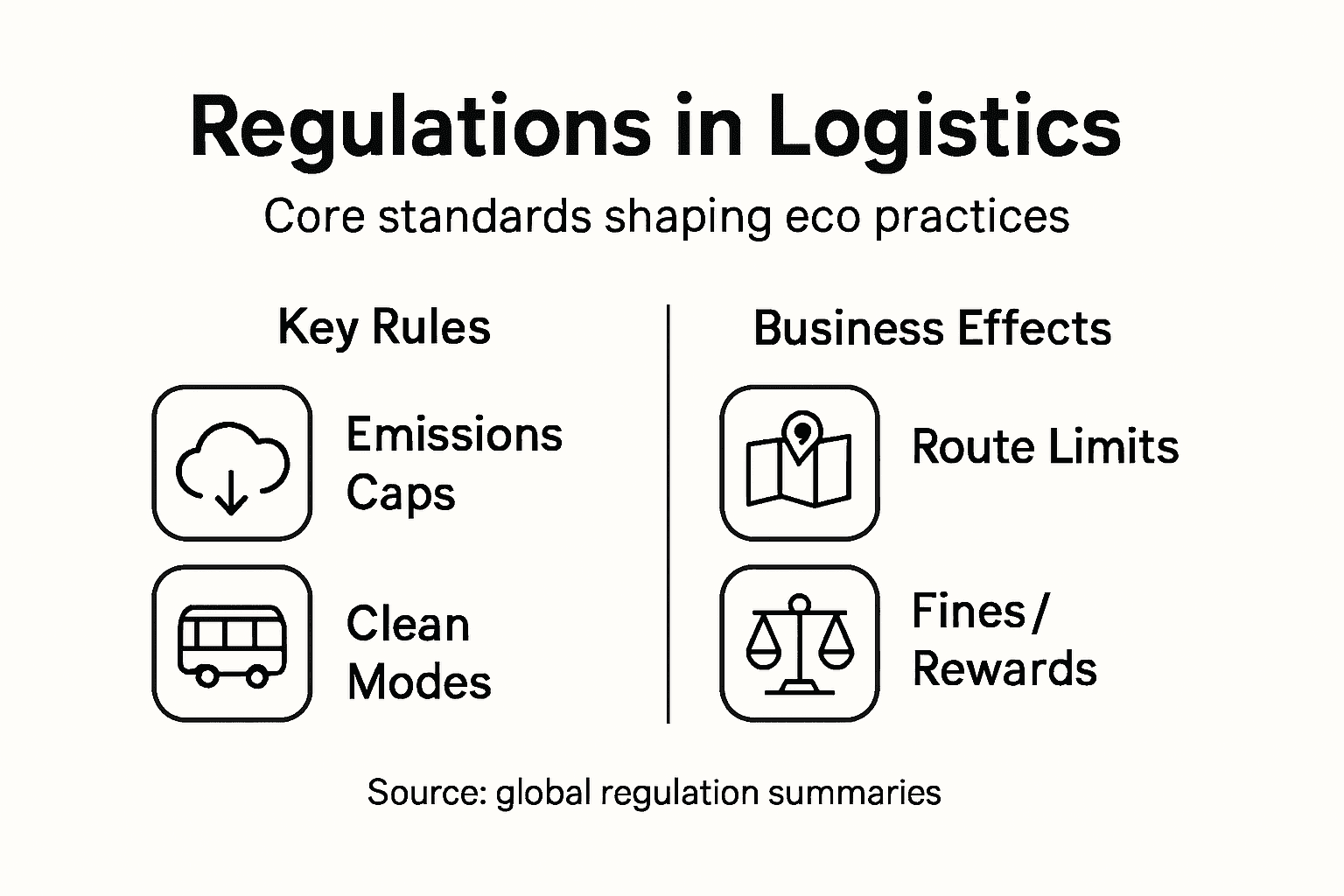
Regional variations complicate compliance. California’s Clean Air Standards differ from federal Environmental Protection Agency rules. Port authorities impose their own requirements. Container ports often charge fees for high-emission vessels while offering discounts for cleaner ships. Your logistics strategy must account for these local variations across your service areas.
The regulatory landscape continues evolving. Global frameworks like the UN Decade of Sustainable Transport outline policies encouraging innovation and harmonized regulations across regions. This international coordination means regulations your American operation follows today may become stricter tomorrow as global standards align.
Staying compliant requires active monitoring. Regulations change regularly, and your carriers may not automatically notify you when new requirements affect your shipments. Building relationships with customs brokers and compliance experts keeps you informed without diverting internal resources.
Compare key regulatory frameworks affecting sustainable logistics:
| Regulation Type | Geographic Scope | Main Focus | How It Affects Businesses |
|---|---|---|---|
| EPA Emissions Limits | United States | Vehicle and fuel emissions | Requires cleaner fleets |
| EU Carbon Border Protocol | European Union | Import carbon accounting | Drives supply chain transparency |
| California Clean Air | California | Stricter than federal rules | Mandates regional upgrades |
| UN Sustainable Transport | Global | Harmonized future standards | Encourages long-term planning |
Pro tip: Subscribe to regulatory update services from your logistics carriers and maintain a quarterly review schedule to identify how new regulations affect your primary trade lanes before they impact operations.
Measuring Impact and Avoiding Common Pitfalls
You cannot improve what you don’t measure. This principle drives every successful sustainability initiative in logistics. Without concrete data, your efforts remain theoretical. You need numbers that show real progress, not marketing claims that sound good but lack substance.
Start by establishing baseline metrics for your current operations. Calculate carbon emissions across your primary shipping lanes. Measure waste generated at your warehouses. Document energy consumption at distribution centers. These baselines become your starting point for measuring improvement. Without them, you cannot claim any progress at all.
Quantifying carbon footprints and pollution alongside assessing logistics performance reveals a critical insight: improving efficiency alone doesn’t guarantee environmental benefits. A company might reduce delivery times while increasing fuel consumption. You need integrated metrics that track both operational performance and environmental outcomes simultaneously. This dual focus prevents you from optimizing in one area while degrading another.
Greenwashing represents the biggest pitfall in sustainability reporting. This happens when companies tout environmental progress without backing claims with actual data. Your customers increasingly demand transparency. Authentic measurement requires continuous auditing, clear goals, and stakeholder engagement to demonstrate genuine commitment rather than public relations gestures. Third-party verification adds credibility that internal reporting alone cannot provide.
Common mistakes include setting vague targets, ignoring scope boundaries, and cherry-picking favorable metrics. Saying you’ll “reduce emissions” means nothing without specifying by how much and when. Scope matters tremendously. Are you measuring only direct operations, or including carrier emissions and supplier impacts? Inconsistent scope definitions allow companies to claim success while actual environmental impact remains unchanged.
Regular reporting cadences keep you accountable. Quarterly reviews catch problems early. Annual reports document progress for stakeholders. Monthly tracking reveals trends before they become expensive problems. This consistent measurement discipline separates genuine sustainability efforts from hollow initiatives.
Pro tip: Use ISO 14064 standards for carbon accounting to ensure your measurement methodology matches industry practices, allowing apples-to-apples comparison with competitors and carrier performance benchmarks.
Drive Your Sustainable Logistics Forward with Expert Support
Mid-sized import and export companies face complex challenges in reducing environmental footprints, optimizing routes, and ensuring compliance with ever-changing regulations. The article highlights how cutting emissions, adopting green technologies, and carefully measuring impact are critical to building truly sustainable supply chains. Navigating these demands while maintaining cost efficiency and operational excellence can create uncertainty and strain internal resources.
Worldwide Express is here to partner with you in overcoming these hurdles. With deep expertise in international shipping, customs brokerage, and supply chain management, we help you implement sustainable logistics strategies tailored to your business needs. Our global reach and technology-driven solutions make compliance and eco-friendly shipping achievable without sacrificing speed or reliability.
Take the first step to transform your logistics operation into a sustainable powerhouse.
Explore how our customs brokerage team manages regulatory complexity so you stay ahead of environmental mandates. Discover how our air and ocean freight forwarding services integrate greener transport modes and innovative packaging solutions. Visit Worldwide Express today and request a customized quote to start reducing your carbon footprint while expanding your global reach.
Frequently Asked Questions
What are sustainable business practices in logistics?
Sustainable business practices in logistics focus on running operations with a mindful approach to environmental impact. This includes reducing the environmental footprint, cutting operational waste, and ensuring compliance with environmental regulations while meeting the needs of the supply chain.
How can mid-sized companies implement eco-friendly shipping strategies?
Mid-sized companies can adopt eco-friendly shipping strategies by optimizing transportation modes, improving packaging solutions, and enhancing warehouse efficiency. Starting with a carbon footprint audit of shipping routes can help determine the best areas for improvement.
What role do regulations play in sustainable logistics?
Regulations set the standards for emissions and environmental practices that logistics companies must abide by. They provide a framework for compliance and can push the entire industry toward cleaner, more sustainable operations by mandating cleaner transport methods and greater environmental transparency.
How can companies measure their progress in sustainability efforts?
Companies can measure their sustainability progress by establishing baseline metrics such as carbon emissions, waste generation, and energy consumption. Regular audits, tracking improvements, and transparent reporting help ensure accountability and reveal genuine advancements in sustainability.
Recommended
- Understanding Sustainability in Logistics: Key Insights – Worldwide Express, Inc.
- Sustainable Supply Chain Practices for US Manufacturing – Worldwide Express, Inc.
- Growing Your Business Online: Strategies for Logistics – Worldwide Express, Inc.
- Business Networking Strategies for Logistics Managers – Worldwide Express, Inc.
- Sustainable Food Packaging: Ensuring Healthier Choices – naturessoulshop
- Sustainable IT Practices: Complete Guide for Enterprises –