
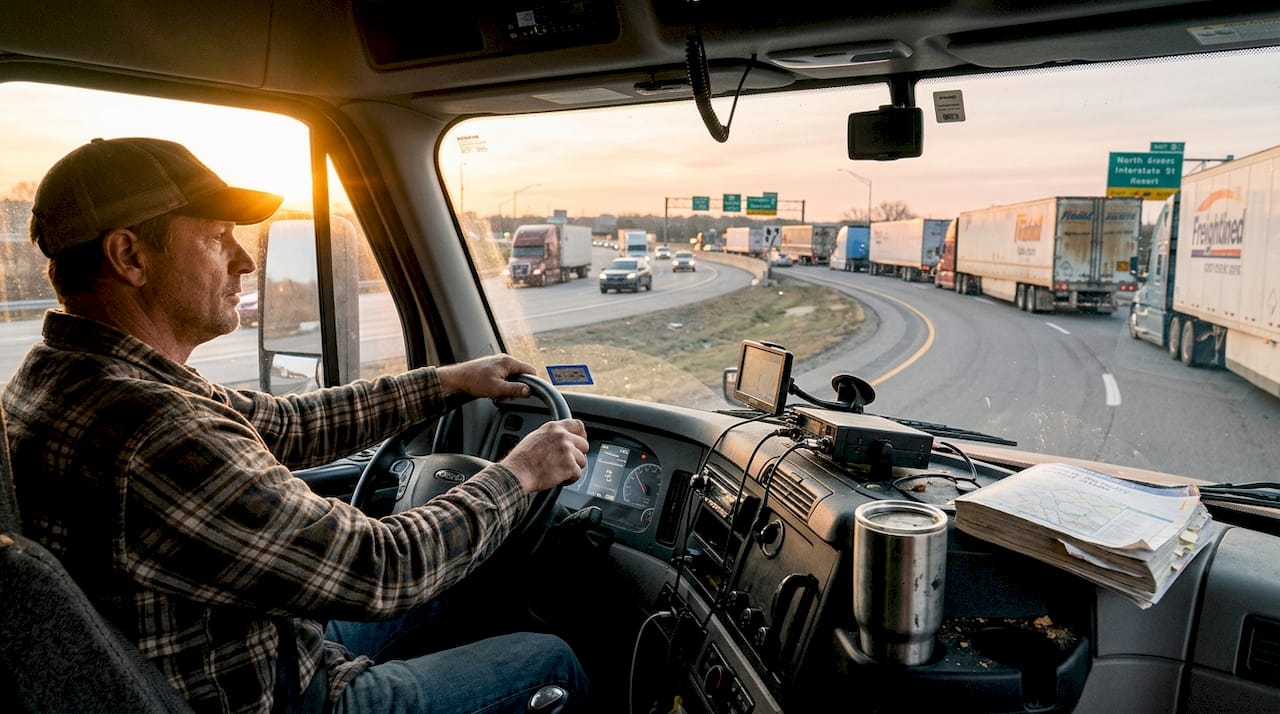
The trucking industry in 2025 presents logistics professionals with a complex mix of challenges and innovations that demand strategic evaluation. Freight demand weakness, driver shortages, autonomous vehicle progress, and rising operational costs are reshaping how carriers and shippers approach freight transport. This article examines the critical trends you need to understand to make informed operational decisions and strengthen your supply chain strategy. By analyzing market dynamics, workforce issues, technology adoption, and economic pressures, you’ll gain actionable insights to navigate the evolving trucking landscape and position your organization for competitive advantage in an uncertain market.
Table of Contents
- Key takeaways
- Understanding the trucking industry landscape in 2025
- Addressing driver shortages and workforce challenges
- Innovations in automation and electrification transforming trucking
- Rising costs, cargo theft, and strategic market responses
- Explore solutions with Worldwide Express
- Frequently asked questions
Key Takeaways
| Point | Details |
|---|---|
| Weak freight demand | Freight demand remains weak and capacity is contracting, making carrier selection and pricing leverage critical for profitability. |
| Driver shortages and turnover | Widespread driver shortages and high turnover threaten service continuity and raise recruiting costs for carriers. |
| Tech adoption hurdles | Autonomous and electric trucks are progressing but deployment faces regulatory, cost, and integration hurdles. |
| Rising costs and aging fleets | Tariffs on imported equipment and higher truck costs are delaying fleet modernization, raising fleet age, and squeezing margins. |
Understanding the trucking industry landscape in 2025
The trucking market in 2025 operates under significant stress from weak freight demand and structural overcapacity. Freight volume dropped 20-30% year-over-year, creating intense pressure on carriers to maintain profitability while rates stabilized near 2024 levels. The tender rejection rate hovers around 5%, indicating shippers have abundant capacity options and strong negotiating leverage. This environment forces carriers into defensive operational modes, cutting costs and selectively exiting unprofitable lanes.
Tariffs imposed on imported equipment increased costs for new trucks and trailers, distorting replacement cycles and delaying fleet modernization. Many carriers deferred capital investments, extending the life of aging equipment rather than absorbing higher acquisition costs. This creates a paradox where capacity appears abundant but quality and reliability may decline as fleets age without renewal.
The industry entered what analysts describe as a defensive adaptation phase, where survival trumps growth. Margin compression became the norm as carriers competed aggressively for limited freight. Strategic rebalancing accelerated, with smaller operators exiting the market and larger players consolidating share. Capacity contraction finally began emerging as bankruptcies and voluntary exits reduced the active carrier pool, setting the stage for potential market tightening later in the year.
“In 2025, the trucking industry faced prolonged weak freight demand, excess capacity, tariff-driven costs, and margin compression, marking a defensive adaptation phase with structural capacity contraction beginning.”
For logistics professionals, this landscape demands careful carrier selection and relationship management. Evaluate your carrier vs freight forwarder shipping costs to optimize procurement strategies in this buyer’s market. Monitor carrier financial health closely, as the risk of service disruption from carrier failures remains elevated. Build contingency plans that account for sudden capacity shifts if the contraction accelerates faster than freight demand recovers.
Key market indicators to track include:
- Tender rejection rates as early signals of capacity tightening
- Carrier operating ratios to assess financial stability
- Spot rate trends relative to contract rates for pricing leverage
- Equipment utilization metrics indicating efficiency improvements
Addressing driver shortages and workforce challenges
Workforce issues remain the trucking industry’s most persistent operational challenge in 2025. Over half of drivers actively seek new jobs, signaling high turnover risk that threatens service continuity and increases recruitment costs. Nearly 70% of carriers report ongoing difficulties attracting and retaining qualified drivers, making workforce stability a competitive differentiator. The driver shortage isn’t just about raw numbers but also about quality, experience, and reliability.

The aging driver population compounds these challenges, with 48% of professional drivers now over age 56. This demographic reality creates a looming succession crisis as experienced drivers retire faster than younger workers enter the profession. The physical demands of long-haul trucking, combined with lifestyle sacrifices and compensation concerns, make the job less attractive to younger generations who have alternative career options.
Turnover rates in some trucking segments exceed 90%, creating a constant churn that undermines operational efficiency and customer relationships. High turnover drives up training costs, increases accident risk from inexperienced drivers, and makes it difficult to maintain consistent service quality. Carriers that fail to address retention systematically face perpetual recruitment cycles that drain resources and management attention.
Operational predictability emerges as a powerful retention tool. Drivers value schedules they can plan around, home time guarantees, and transparent communication about route assignments. Carriers investing in driver-friendly policies like predictable schedules, modern equipment, and respect for work-life balance see measurably better retention outcomes. Technology that optimizes routes for driver preferences while meeting customer commitments creates win-win scenarios.
Pro Tip: Strengthen your logistics partnerships by prioritizing carriers with demonstrated driver retention programs and lower turnover rates. Stable driver pools correlate directly with service reliability and fewer disruptions.
For shippers, understanding carrier workforce challenges helps you become a preferred customer. Provide accurate pickup and delivery windows, minimize detention time, and communicate changes promptly. These practices make your freight more attractive to carriers and their drivers. Consider business networking strategies logistics approaches that build collaborative carrier relationships focused on mutual success rather than purely transactional interactions.
Workforce solutions gaining traction include:
- Apprenticeship programs targeting younger demographics
- Enhanced benefits packages including health insurance and retirement plans
- Technology investments reducing physical strain and improving job satisfaction
- Regional and dedicated routes offering better home time
Innovations in automation and electrification transforming trucking
Autonomous trucking technology advanced significantly in 2025 but remains in early commercial deployment stages. Kodiak logged 10 driverless trucks and 3 million autonomous miles, demonstrating technical feasibility in controlled environments like hub-to-hub transfers on major highways. However, broader adoption faces substantial barriers including regulatory uncertainty, safety validation requirements, and integration challenges with existing transportation management systems.
The value proposition for autonomous trucks is shifting from simple cost per mile reduction to value per mile optimization. Early deployments focus on specific use cases where automation delivers clear advantages such as consistent overnight highway runs, predictable routes with minimal complexity, and applications where driver availability limits capacity. The technology excels in structured environments but struggles with unpredictable urban conditions, complex loading dock navigation, and adverse weather scenarios.
Electric vehicle adoption in heavy-duty trucking shows environmental promise but economic challenges. Battery-electric heavy-duty vehicles reduce carbon footprint by 61% through energy optimization and lower emissions intensity of electricity versus diesel. However, these vehicles currently carry 46% higher private operating costs due to battery expenses, charging infrastructure requirements, and range limitations that constrain operational flexibility.
Carbon-optimized routing algorithms amplify electrification benefits by selecting paths that minimize total emissions beyond just vehicle choice. These systems account for terrain, traffic patterns, charging availability, and grid carbon intensity to maximize environmental impact reduction. The combination of electric vehicles and intelligent routing can achieve emissions reductions exceeding what either approach delivers independently.
| Technology | Deployment Status | Primary Benefit | Main Barrier |
|---|---|---|---|
| Autonomous trucks | Limited commercial pilots | Labor cost reduction, 24/7 operation | Safety validation, regulatory approval |
| Electric heavy-duty vehicles | Early adoption phase | 61% emissions reduction | 46% higher operating costs |
| Carbon-optimized routing | Commercially available | Enhanced sustainability metrics | Integration complexity |
| Platooning systems | Testing stage | Fuel efficiency gains | Vehicle communication standards |
Pro Tip: Evaluate automation and electrification investments based on specific operational contexts rather than industry hype. Calculate ROI using realistic timelines and account for infrastructure costs, not just vehicle acquisition.
For logistics professionals, these technologies represent long-term strategic considerations rather than immediate operational solutions. Monitor pilot programs and regulatory developments to time adoption appropriately. Consider supply chain digitalization initiatives that prepare your organization to integrate autonomous and electric vehicles when they reach commercial viability for your specific use cases.
Rising costs, cargo theft, and strategic market responses
Economic pressures intensified across the trucking industry in 2025, forcing both shippers and carriers to adapt strategies. Transport costs rose for 74% of shippers, driven by tariffs, fuel price volatility, insurance premium increases, and carrier efforts to restore margins after years of compression. Rate hikes affected over 80% of market participants, fundamentally altering cost structures and requiring budget adjustments across supply chains.
Cargo theft emerged as a critical risk factor, with incidents increasing nearly 48% compared to previous periods. Organized theft rings target high-value loads, exploiting vulnerabilities in parking areas, transfer points, and less-secure facilities. The financial impact extends beyond direct cargo loss to include supply chain disruptions, customer relationship damage, and increased insurance premiums. Shippers transporting electronics, pharmaceuticals, food products, and other high-value goods face elevated exposure.
Carriers responded to market pressures through strategic diversification, expanding service offerings beyond traditional truckload operations into logistics management, warehousing, and intermodal coordination. This broadening allows carriers to capture more value per customer relationship and reduces dependence on volatile spot market rates. Larger carriers leverage scale advantages to offer integrated solutions that smaller competitors cannot match.
Capacity tightening accelerated as regulatory changes, insurance requirements, and financial stress forced marginal operators from the market. The Safety Fitness Determination rule and other compliance measures raised operational barriers, while insurance carriers became more selective about which trucking companies they would cover. These factors combined to reduce the active carrier pool even as freight demand remained soft, creating potential for rapid rate increases when demand eventually recovers.
| Cost Factor | Impact Scope | Mitigation Strategy |
|---|---|---|
| Rate increases | 84% of shippers affected | Negotiate longer-term contracts, diversify carrier base |
| Cargo theft | 48% incident increase | Enhanced security protocols, comprehensive insurance |
| Tariff-driven equipment costs | Industry-wide | Extend equipment lifecycles, explore leasing options |
| Insurance premiums | Carrier operating costs up 15-25% | Improve safety scores, consider captive insurance programs |
Strategic responses for shippers include:
- Building deeper partnerships with financially stable carriers
- Investing in cargo security technology like GPS tracking and geofencing
- Diversifying transportation modes to reduce single-carrier dependence
- Implementing dynamic routing to avoid high-risk theft corridors
Protect your shipments with comprehensive cargo insurance basics us shipments coverage that addresses the elevated theft environment. Understand how global shipping 2026 tariff volatility affects your total landed costs and build flexibility into your logistics network. The logistics industry overview provides broader context for how these trucking trends fit into overall supply chain evolution.
Explore solutions with Worldwide Express
Navigating the complex trucking landscape in 2025 requires expert logistics partners who understand market dynamics and can deliver reliable, cost-effective solutions. Worldwide Express offers comprehensive freight forwarding services designed to help you adapt strategically to industry challenges while optimizing your supply chain performance.
Our logistics services provide the flexibility and expertise you need to manage rising costs, capacity constraints, and operational risks effectively. From customs brokerage to multimodal transportation coordination, we deliver integrated solutions that streamline your freight operations. Protect your valuable shipments against the rising threat of cargo theft with our cargo insurance solutions that provide comprehensive coverage and peace of mind. Partner with Worldwide Express to turn 2025’s trucking challenges into competitive advantages through strategic logistics management.
Frequently asked questions
What are the main trucking challenges in 2025?
The primary challenges include weak freight demand causing 20-30% volume declines, persistent driver shortages with 70% of carriers reporting recruitment difficulties, rising operational costs affecting 74% of shippers, and cargo theft incidents up 48%. Capacity overcapacity and margin compression force carriers into defensive strategies while shippers navigate cost increases and service reliability concerns.
How is autonomous trucking impacting the industry?
Autonomous trucking remains in limited commercial deployment, with companies like Kodiak operating 10 driverless trucks in controlled hub-to-hub applications. The technology shows promise for specific use cases but faces adoption barriers including safety validation requirements, regulatory uncertainty, and integration challenges. Widespread deployment remains years away, though pilot programs continue advancing the technology.
What strategies help firms manage rising transport costs?
Effective cost management strategies include negotiating longer-term contracts to lock in rates, diversifying your carrier base to maintain competitive leverage, optimizing shipment consolidation to improve load efficiency, and leveraging track delivery truck effectively technology for better visibility. Building collaborative carrier relationships rather than purely transactional interactions also helps secure capacity at favorable rates.
How can shippers protect against increasing cargo theft?
Protect shipments by implementing GPS tracking and geofencing technology, using vetted carriers with strong security protocols, avoiding high-risk parking areas and transfer points, and maintaining comprehensive cargo insurance coverage. Route planning should consider theft risk corridors, and real-time monitoring enables rapid response to suspicious activity. Security investments pay for themselves through reduced loss exposure.
What role does electrification play in trucking sustainability?
Electric heavy-duty vehicles reduce carbon emissions by 61% compared to diesel trucks through cleaner energy sources and efficiency gains. However, adoption faces economic barriers with 46% higher current operating costs due to battery expenses and charging infrastructure. Strategic electrification focuses on routes with predictable distances, available charging, and sustainability mandates. Optimize logistics efficient global shipping by evaluating where electric vehicles fit your specific operational profile and sustainability goals.
Recommended
- Freight transportation modes: optimize shipping in 2026 – Worldwide Express, Inc.
- Global Shipping 2026: 72% Face Tariff Volatility – Worldwide Express, Inc.
- How to track a delivery truck effectively in 2026 – Worldwide Express, Inc.
- Understanding freight forwarding: a 2026 guide – Worldwide Express, Inc.
- Essential Tips for Long Road Trips in 2025