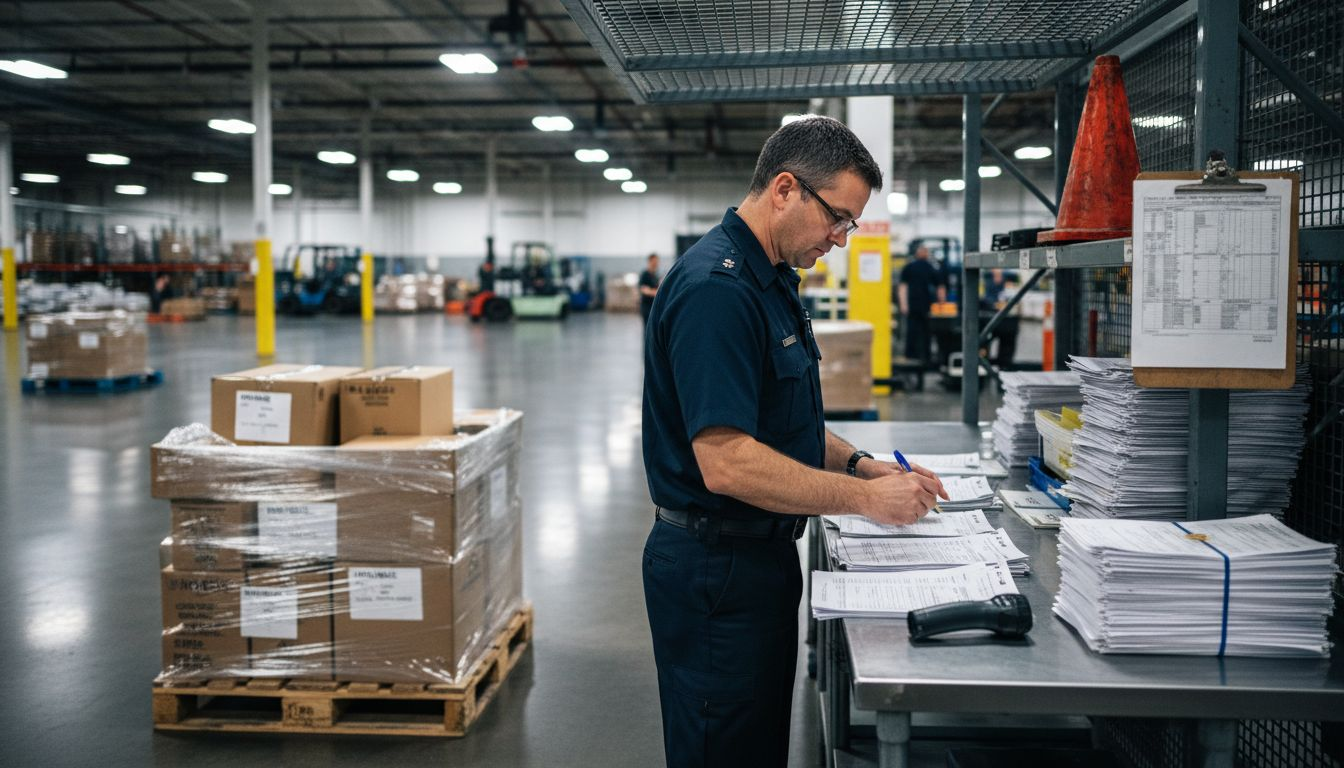

Trade wars force every American logistics manager to rethink daily operations as new tariffs and regulations upend international shipping norms. Disruptions ripple across supply chains, with over 60 percent of U.S. companies reporting increased shipping costs and delays during recent trade tensions. Understanding how shifting trade barriers impact shipping routes, customs compliance, and freight expenses helps logistics teams make more informed decisions as global rules keep evolving.
Table of Contents
- What Are Trade War Impacts?
- Types of Trade Barriers and Retaliation
- How Tariffs Affect Supply Chains
- Customs Compliance and Operational Delays
- Financial Risks and Cost Management Strategies
Key Takeaways
| Point | Details |
|---|---|
| Impacts of Trade Wars on Logistics | Trade wars disrupt shipping patterns and increase operational costs, necessitating rapid strategy adaptations for logistics companies. |
| Types of Trade Barriers | Governments employ various trade barriers, including tariffs and non-tariff obstacles, which complicate international logistics and require ongoing compliance adjustments. |
| Financial Risk Management Strategies | Companies should diversify supply bases and implement robust financial risk assessments to enhance operational resilience during trade conflicts. |
| Customs Compliance Challenges | Increased regulatory complexity leads to operational delays, emphasizing the need for dedicated compliance teams and sophisticated monitoring systems. |
What Are Trade War Impacts?
Trade wars represent complex economic conflicts where countries impose restrictive tariffs, trade barriers, and import/export regulations that fundamentally disrupt international commerce. These conflicts create substantial ripple effects across global logistics networks, causing significant operational challenges for U.S. shipping and transportation companies. The logistical disruptions generated by trade tensions extend far beyond simple economic calculations, impacting shipping routes, freight volumes, and strategic transportation planning.
The primary impacts of trade wars on U.S. logistics include dramatic shifts in shipping patterns, increased transportation costs, and complex reconfiguration of established supply chains. Companies must rapidly adapt their strategies, often rerouting shipments, identifying alternative supplier networks, and absorbing unexpected expenses. Freight carriers experience reduced capacity utilization, while import/export businesses face heightened uncertainty about trade regulations, customs procedures, and potential tariff escalations.
Specifically, trade wars trigger multifaceted logistical challenges that demand sophisticated strategic responses. Shipping companies must quickly reassess their transportation modes, potentially shifting from ocean freight to air transportation or domestic trucking to mitigate escalating international trade barriers. These adaptations require significant investments in route optimization, contract renegotiations, and technological systems that can provide real-time tracking and flexible routing capabilities.
Pro tip: Develop multiple contingency logistics plans that include alternative shipping routes and suppliers to maintain operational flexibility during trade war uncertainties.
Types of Trade Barriers and Retaliation
Trade barriers represent strategic mechanisms governments employ to protect domestic industries and influence international economic interactions. These complex instruments range from traditional tariffs to more sophisticated non-tariff obstacles that can significantly disrupt global supply chains. International research from the IMF reveals three primary forms of trade retaliation that countries strategically deploy in response to economic pressures: reciprocal tariffs, industrial subsidies, and policy-driven trade diversion.
The most common trade barriers include direct tariffs, which impose additional taxes on imported goods, making them more expensive and less competitive in the domestic market. Non-tariff barriers are equally impactful, encompassing complex regulatory requirements, stringent product standards, extended customs procedures, and administrative obstacles that effectively limit market access. Quantitative restrictions like import quotas, licensing requirements, and specific technical regulations can create substantial challenges for international logistics companies seeking to maintain seamless cross-border operations.
Industrial subsidies represent a sophisticated form of trade retaliation where governments provide financial support to domestic industries, enabling them to compete more effectively against foreign competitors. These subsidies can manifest through direct financial assistance, tax incentives, preferential loans, or government procurement policies that favor local manufacturers. Such strategic interventions can dramatically alter international trade dynamics, forcing logistics companies to continuously adapt their operational strategies and supply chain configurations to navigate evolving economic landscapes.
Here’s a summary of common trade barriers and their practical effects on U.S. logistics:
| Trade Barrier Type | Main Objective | Effect on Logistics |
|---|---|---|
| Tariffs | Raise import costs to protect industry | Increase shipping prices |
| Non-tariff Obstacles | Restrict market access indirectly | Delay and complicate shipments |
| Import Quotas | Limit quantity of goods imported | Cause supply shortages |
| Industrial Subsidies | Boost domestic producers’ competitiveness | Shift sourcing and supplier strategies |
| Licensing Requirements | Control entry through regulations | Create compliance hurdles |
Pro tip: Develop comprehensive market intelligence systems that provide real-time insights into changing trade regulations and potential barrier implementations across different international markets.
How Tariffs Affect Supply Chains
Tariffs fundamentally transform supply chain architectures by introducing unprecedented complexity and economic uncertainty for logistics professionals. Rigorous academic modeling demonstrates how suddenly imposed tariffs disrupt established global supply chains, forcing companies to rapidly recalibrate their sourcing strategies and supplier relationships. The immediate consequences include higher transaction costs, increased operational risks, and substantial strategic realignments across manufacturing and transportation networks.
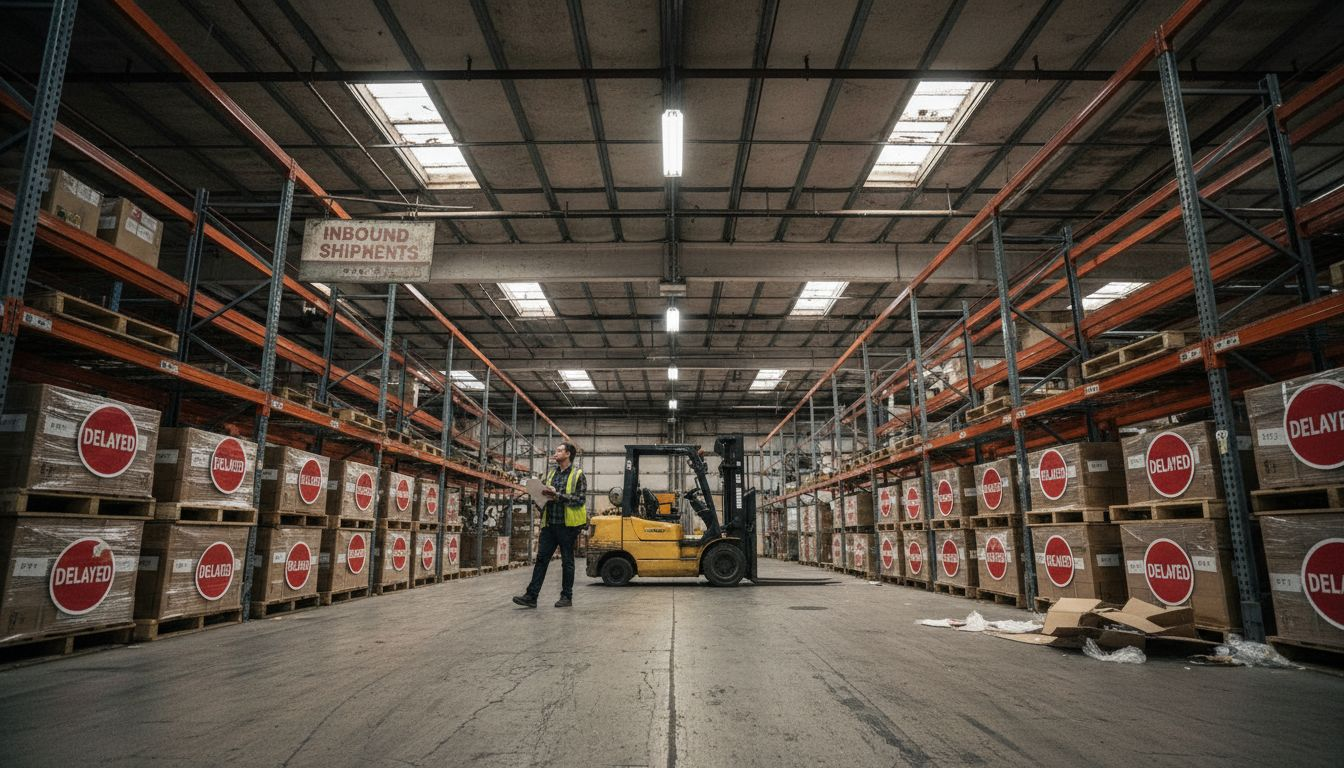
The economic impact of tariffs extends beyond simple price adjustments, compelling businesses to undertake comprehensive supply chain restructuring. Logistics managers must navigate complex challenges such as identifying alternative supplier networks, renegotiating existing contracts, and absorbing unexpected financial burdens. Companies often experience significant disruptions in their procurement processes, with some industries facing more dramatic transformations than others. Manufacturing, technology, and agricultural sectors typically encounter the most pronounced supply chain reconfigurations when trade barriers emerge.
Understanding the multifaceted implications of tariffs requires a nuanced approach to supply chain management. The Michigan State University study highlights how tariffs create cascading effects across different economic sectors, emphasizing the need for robust contingency planning and adaptive logistics strategies. Successful organizations develop sophisticated risk mitigation frameworks that include diversified sourcing options, flexible contract structures, and advanced predictive analytics to anticipate and respond to potential trade barrier implementations.
Pro tip: Implement a comprehensive supply chain mapping strategy that identifies multiple alternative suppliers across different geographic regions to minimize disruption risks during trade conflicts.
Customs Compliance and Operational Delays
Increased trade war complexities have dramatically transformed customs operations, introducing unprecedented challenges for U.S. logistics professionals. The regulatory landscape has become significantly more intricate, with frequent rule changes creating substantial uncertainty and operational bottlenecks. Logistics managers now face heightened scrutiny, more complex documentation requirements, and rapidly evolving compliance standards that demand constant vigilance and adaptive strategies.
Customs enforcement has become exponentially more complicated during trade tensions, with agencies implementing more rigorous inspection protocols and documentation reviews. Companies must now invest heavily in compliance infrastructure, including advanced tracking systems, detailed record-keeping mechanisms, and specialized personnel trained to navigate the increasingly complex regulatory environment. The additional administrative burdens translate directly into increased operational delays, with shipments frequently experiencing extended processing times and higher risks of potential penalties.
The emerging compliance landscape requires a multifaceted approach to managing international shipping challenges. Tariff regimes have expanded compliance demands beyond traditional goods to include digital and service-related transactions, forcing logistics organizations to develop more sophisticated risk management frameworks. Successful companies are implementing comprehensive compliance strategies that integrate real-time regulatory monitoring, predictive analytics, and agile response protocols to mitigate potential disruptions and minimize financial risks associated with customs complications.
Pro tip: Develop a dedicated compliance team with ongoing training programs to stay current on rapidly changing customs regulations and international trade policies.
Financial Risks and Cost Management Strategies
The National Economic Council’s policy framework highlights critical strategies for managing escalating financial risks during trade conflicts, requiring U.S. logistics organizations to develop sophisticated risk mitigation approaches. Companies must now implement comprehensive financial strategies that go beyond traditional cost management, focusing on resilience, adaptability, and proactive risk assessment. The evolving economic landscape demands a dynamic approach to financial planning that anticipates and neutralizes potential disruptions before they impact operational efficiency.
Financial risk management in trade-impacted logistics involves multiple strategic dimensions. Organizations must diversify their supply bases, create robust stockpiling mechanisms, and develop granular cost analysis frameworks that identify potential vulnerabilities. This approach requires significant investment in advanced tracking technologies, predictive analytics, and flexible contractual structures that can quickly adapt to changing trade regulations. Companies that successfully navigate these challenges are those capable of rapidly recalibrating their financial strategies in response to emerging economic pressures.
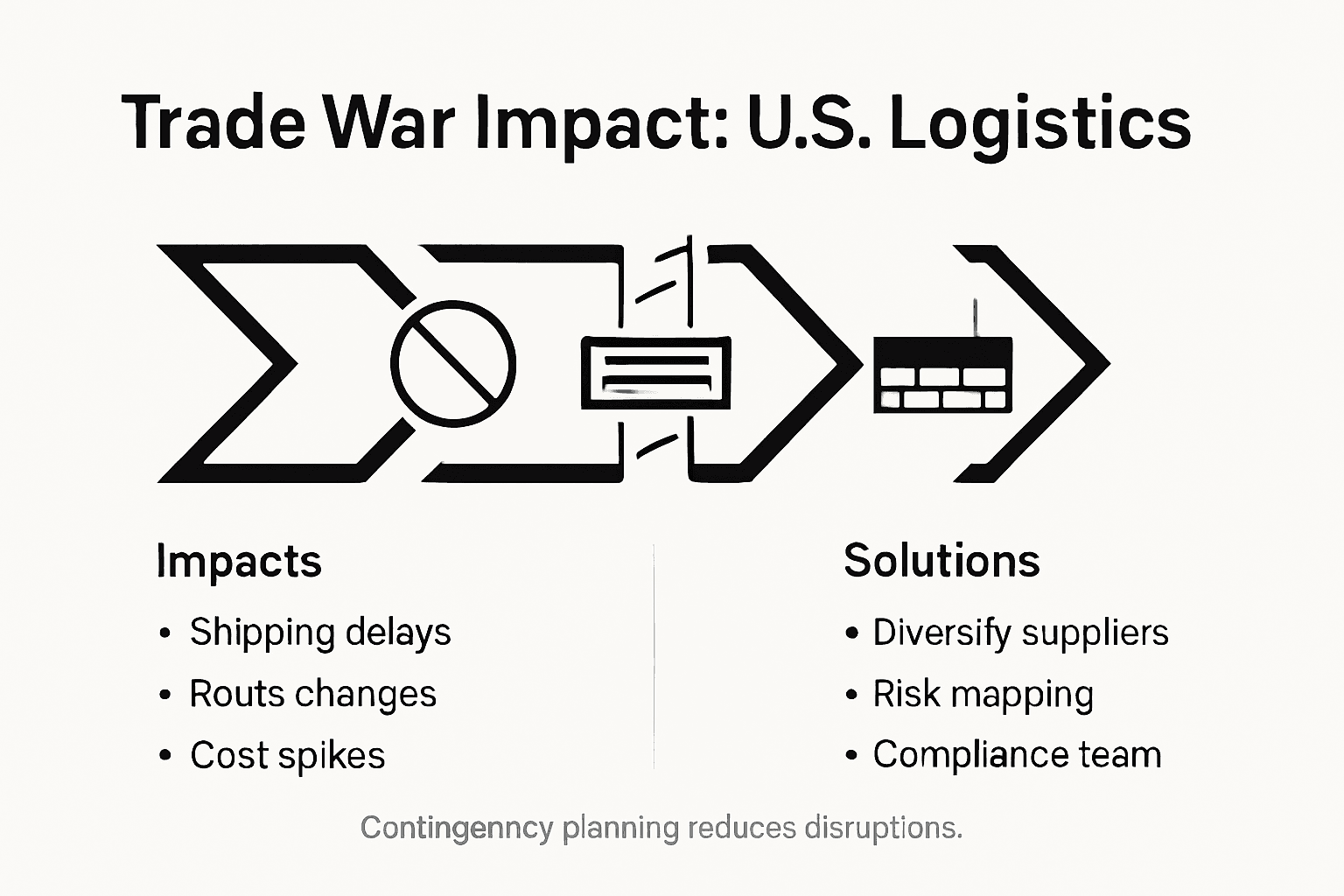
The Department of Defense Supply Chain Risk Management Guidebook recommends comprehensive approaches to mitigating financial uncertainties, emphasizing the importance of scenario planning and technological integration. Successful risk management now involves continuous monitoring of cost drivers, implementing advanced scenario analysis techniques, and developing contractual mechanisms that transfer and distribute potential financial risks. Logistics firms must create multi-layered financial strategies that combine technological innovation, strategic supplier relationships, and adaptive budgeting approaches to maintain financial stability during volatile trade environments.
The following table contrasts key financial risk management strategies for logistics firms during trade conflicts:
| Strategy | Core Function | Business Value |
|---|---|---|
| Supply Base Diversification | Reduce dependence on one region | Improves operational flexibility |
| Stockpiling Mechanisms | Build inventory buffers | Minimizes disruption risk |
| Advanced Cost Analytics | Identify hidden vulnerabilities | Enhances cost control and forecasting |
| Scenario Planning | Model impact of various scenarios | Enables proactive decision-making |
| Flexible Contract Structures | Allow rapid adjustment to policies | Reduces financial exposure |
Pro tip: Implement quarterly financial risk assessments that integrate real-time economic data, trade policy updates, and comprehensive scenario modeling to proactively identify and mitigate potential financial vulnerabilities.
Secure Your Logistics Amid Trade War Challenges
Navigating the complexities of trade war impacts requires more than just awareness of tariffs, customs compliance, and shifting supply chains. The operational delays and financial risks described in the article highlight the urgent need for flexible, reliable shipping solutions that adapt to evolving trade barriers. If your business struggles with increased transportation costs, complex customs procedures, or uncertainty in supply routes, partnering with an expert logistics provider can transform these challenges into competitive advantages.
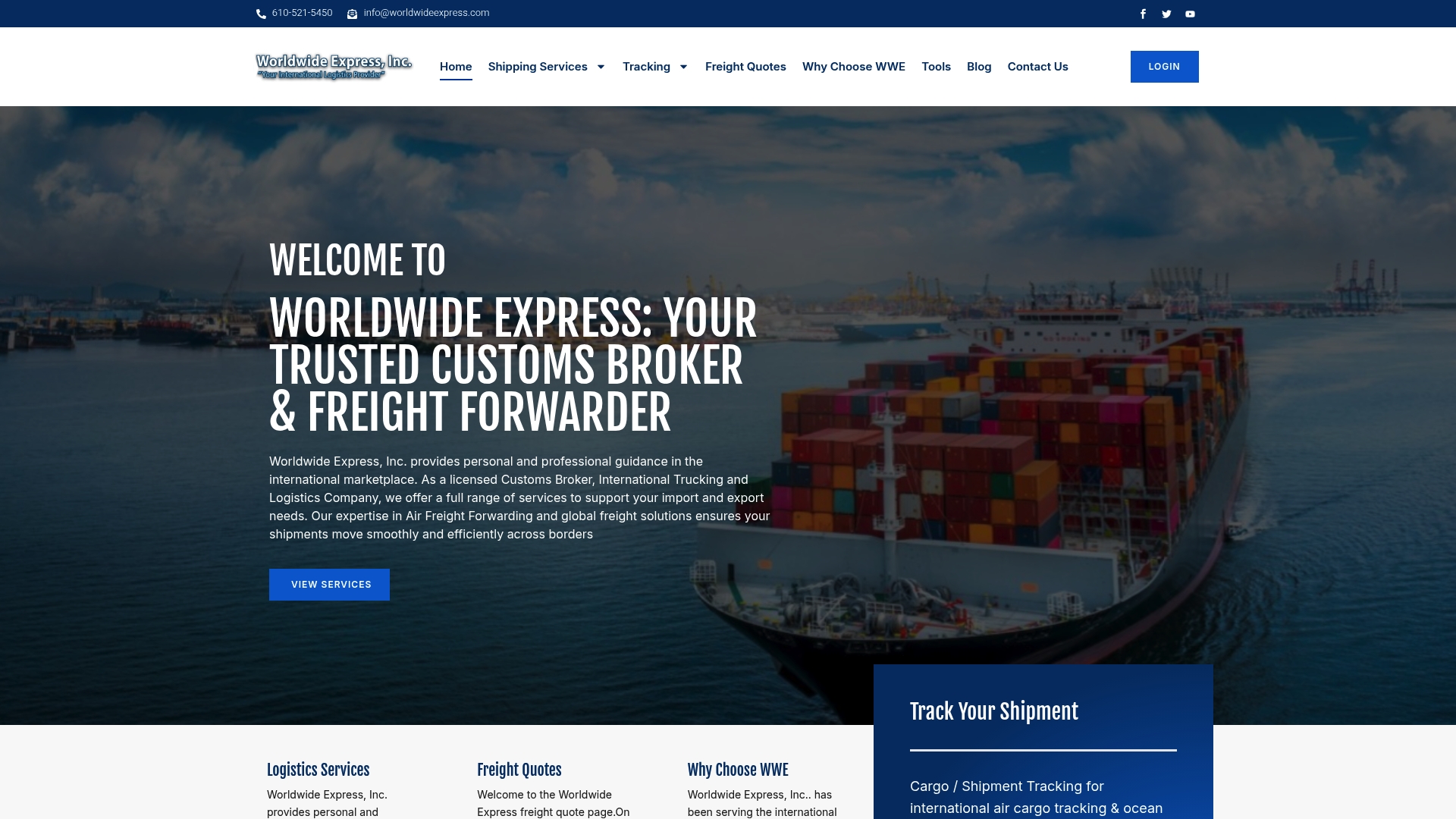
At Worldwide Express, we specialize in international freight forwarding, customs brokerage, and supply chain management designed to keep your shipments moving smoothly despite trade uncertainties. Our tailored logistics plans focus on real-time tracking, compliance expertise, and diversified transportation options to reduce delays and control costs. Take control of your logistics now and safeguard your business from the unpredictable effects of global trade tensions. Discover how our comprehensive services can help you adapt and thrive by visiting our air and ocean transportation solutions and exploring our proactive customs clearance services. Act today to build resilience into your supply chain with a trusted logistics partner.
Frequently Asked Questions
What are the main impacts of trade wars on U.S. logistics?
Trade wars primarily impact U.S. logistics through significant shifts in shipping patterns, increased transportation costs, and the complex reconfiguration of established supply chains.
How do tariffs influence supply chain management?
Tariffs transform supply chain architectures by introducing higher transaction costs and operational risks, compelling companies to recalibrate sourcing strategies and supplier relationships to navigate increased complexities.
What are the different types of trade barriers that affect logistics?
Common types of trade barriers include tariffs, non-tariff obstacles, import quotas, industrial subsidies, and licensing requirements, each impacting logistics by either raising costs or complicating market access.
What strategies can logistics companies employ to mitigate financial risks during trade conflicts?
Logistics companies can mitigate financial risks by diversifying their supply bases, building inventory buffers, implementing advanced cost analytics, and developing flexible contract structures to adapt to changing trade regulations.
Recommended
- Top Trading Partners USA: Complete Guide for 2025 – Worldwide Express, Inc.
- Import Tariffs by Country: Impact on U.S. Trade – Worldwide Express, Inc.
- Understanding What is Transloading in Logistics and Trade – Worldwide Express, Inc.
- What Is Drayage and Why It Matters in U.S. Shipping – Worldwide Express, Inc.
- Essential Guide to Preparing for International Shipping 2025 | Schott Removals