

Managing global shipments can quickly become overwhelming when customs requirements keep changing and each package faces different regulations from country to country. For American logistics managers, staying ahead with reliable USPS international shipping solutions is essential for keeping goods moving and operations efficient. This guide explains how to tackle customs clearance, meet precise documentation standards, and leverage the most effective USPS services for smooth cross-border delivery.
Table of Contents
- What USPS International Shipping Involves
- Comparing USPS International Service Types
- Recent Regulatory and Compliance Updates
- Requirements for Customs Clearance and Documentation
- Risks, Costs, and Common Shipping Mistakes
Key Takeaways
| Point | Details |
|---|---|
| Understanding Shipping Options | USPS offers various international shipping services tailored to different needs, including fast delivery and cost-effective choices. Choosing the right option is crucial for efficiency and cost management. |
| Customs Compliance Is Essential | Precise documentation and adherence to customs regulations are critical to prevent shipping delays or rejections. Always ensure electronic forms are accurately completed. |
| Evaluate Risks and Costs | Businesses must identify potential risks, such as documentation errors and prohibited items, to minimize financial implications and ensure smooth logistics. |
| Stay Informed on Regulations | Regularly updating compliance practices in line with USPS regulatory changes is necessary to maintain operational efficiency in international shipping. |
What USPS International Shipping Involves
The United States Postal Service (USPS) provides comprehensive international postal services to over 180 countries worldwide, offering businesses and individuals multiple shipping options tailored to different needs and budgets. These international shipping services represent a complex network of logistics, customs compliance, and global delivery strategies designed to facilitate cross-border package transportation.
USPS international shipping involves several key components that logistics managers must understand to ensure smooth global delivery:
- Priority Mail Express International: Fastest international shipping option with guaranteed delivery times
- Priority Mail International: Standard international shipping with moderate delivery speeds
- First-Class Package International Service: Most economical option for smaller packages
- Customized Customs Documentation: Detailed item descriptions required for all international packages
Each shipping service requires specific preparation and adherence to international regulations. Businesses must carefully select their shipping method based on factors like package weight, destination country, delivery urgency, and budget constraints. Customs compliance represents a critical aspect of international shipping, demanding precise documentation and accurate item descriptions to prevent potential delays or package rejection.
The shipping process involves multiple strategic steps, including:
- Selecting the appropriate international shipping service
- Preparing accurate customs forms
- Packaging items securely for international transit
- Printing online postage and shipping labels
- Tracking package progress through international checkpoints
International shipping success depends on understanding detailed USPS regulations and meticulously following packaging and documentation requirements.
Pro tip: Always verify the specific import regulations of your destination country before shipping to prevent potential customs complications.
Comparing USPS International Service Types
The United States Postal Service offers multiple international shipping service types designed to meet diverse shipping needs, ranging from expedited delivery to economical options for businesses and individuals. Understanding the nuanced differences between these services is critical for selecting the most appropriate shipping method for specific international logistics requirements.
USPS International Service Types include:
- Priority Mail Express International: Fastest option with 3-5 business day delivery
- Money-back delivery guarantee to select destinations
- Highest priority international shipping service
- Priority Mail International: Economical standard shipping
- 6-10 business day delivery timeframe
- Flat-rate and weight-based pricing options
- First-Class Package International Service: Most cost-effective for lightweight packages
- Best for documents and small merchandise
- Lowest-cost international shipping alternative
When comparing these services, logistics managers must evaluate critical factors such as delivery speed, package weight limitations, tracking capabilities, and overall shipping costs. Shipping insurance and package tracking represent additional considerations that can significantly impact service selection, with each service offering different levels of protection and monitoring.
For quick reference, here’s how major USPS international shipping services differ in key areas:
| Service Type | Typical Delivery Time | Best For | Tracking & Insurance Level |
|---|---|---|---|
| Priority Mail Express International | 3–5 business days | Urgent, high-value shipments | Full tracking, strongest guarantee |
| Priority Mail International | 6–10 business days | Standard parcels, cost-conscious | Limited tracking, moderate coverage |
| First-Class Package International | Varies by country | Documents, lightweight items | Basic tracking, minimal insurance |
Selecting the right USPS international shipping service requires careful analysis of your specific shipping requirements, budget constraints, and destination country regulations.
Comparing USPS with global competitors reveals interesting distinctions. While international shipping comparisons demonstrate that services like DHL might offer faster express options, USPS remains competitive through cost-effective pricing and reliable delivery to residential and commercial addresses across numerous countries.
Pro tip: Always calculate total shipping costs, including potential customs fees and insurance, before selecting your international shipping service to avoid unexpected expenses.
Recent Regulatory and Compliance Updates
The United States Postal Service continues to evolve its regulatory framework, with recent audit reports highlighting significant challenges in international mail processing and compliance for 2026. These ongoing modifications aim to address operational inefficiencies, enhance tracking capabilities, and ensure more robust security protocols for global shipping.
Key regulatory developments include:
- Scanning Compliance Enhancements
- Stricter requirements for package tracking documentation
- Improved scanning protocols at international processing facilities
- Safety and Security Policy Updates
- Enhanced verification procedures for international shipments
- More comprehensive screening processes for high-risk packages
- Operational Performance Monitoring
- Increased oversight of mail processing timelines
- Mandatory reporting of delivery performance metrics
The Postal Service Reform Act of 2022 continues to play a crucial role in shaping international shipping regulations. Competitive pricing adjustments and operational cost management remain critical focus areas for USPS, particularly as global shipping dynamics continue to evolve. Logistics managers must stay attuned to these regulatory shifts to maintain compliance and optimize their international shipping strategies.
Successful international shipping in 2026 requires proactive adaptation to increasingly complex regulatory environments and technological advancements.
Financial considerations are equally important, with the Postal Regulatory Commission’s fiscal reports indicating ongoing challenges in maintaining operational efficiency while meeting international shipping demands. These reports underscore the need for continuous improvement in regulatory frameworks and service delivery mechanisms.
Pro tip: Develop a comprehensive compliance checklist that incorporates the latest USPS international shipping regulations to prevent potential shipping delays and penalties.
Requirements for Customs Clearance and Documentation
Navigating the complex landscape of international shipping requires meticulous attention to customs documentation requirements, with USPS mandating comprehensive electronic reporting for all international packages. Logistics managers must understand the intricate details of customs compliance to ensure smooth, uninterrupted global shipping operations.
Key documentation requirements include:
- Electronic Customs Forms
- Detailed item descriptions
- Precise quantity reporting
- Accurate monetary valuation
- Packaging Specifications
- Compliant addressing formats
- Secure packaging techniques
- Clear labeling protocols
- Regulatory Compliance
- Adherence to destination country regulations
- Comprehensive item classification
- Accurate declarations of shipped contents
The federal regulations governing international mail importation are stringent and multifaceted. Mail importation regulations specify that USPS must transmit advance electronic data to U.S. Customs and Border Protection, enabling thorough inspection and verification processes. Customs examination rights and associated fees are critical components that shippers must anticipate and incorporate into their international shipping strategies.
Successful international shipping demands precision, preparation, and a comprehensive understanding of both U.S. and destination country regulatory frameworks.
Logistics professionals must recognize that handwritten customs forms are no longer acceptable, with electronic documentation now being the standard. Compliance is not optional but mandatory, with potential penalties for incomplete or inaccurate submissions. Understanding these nuanced requirements is essential for businesses engaged in global trade.

Below is a summary of critical compliance points to minimize international shipping issues:
| Compliance Requirement | Why It Matters | Potential Consequence |
|---|---|---|
| Electronic customs forms | Enables customs data accuracy | Delays or returned shipments |
| Precise item description | Meets country import regulations | Package rejection, fines |
| Proper monetary valuation | Ensures correct duties | Additional fees, legal issues |
| Secure packaging and labeling | Protects contents, expedites transit | Damage or misrouted deliveries |
Pro tip: Invest in comprehensive customs documentation training and develop a standardized checklist to minimize errors and expedite international shipping processes.
Risks, Costs, and Common Shipping Mistakes
Navigating international shipping requires a comprehensive understanding of the complex risks and potential financial implications. USPS financial challenges underscore the critical need for businesses to develop strategic shipping approaches that minimize potential losses and operational disruptions.
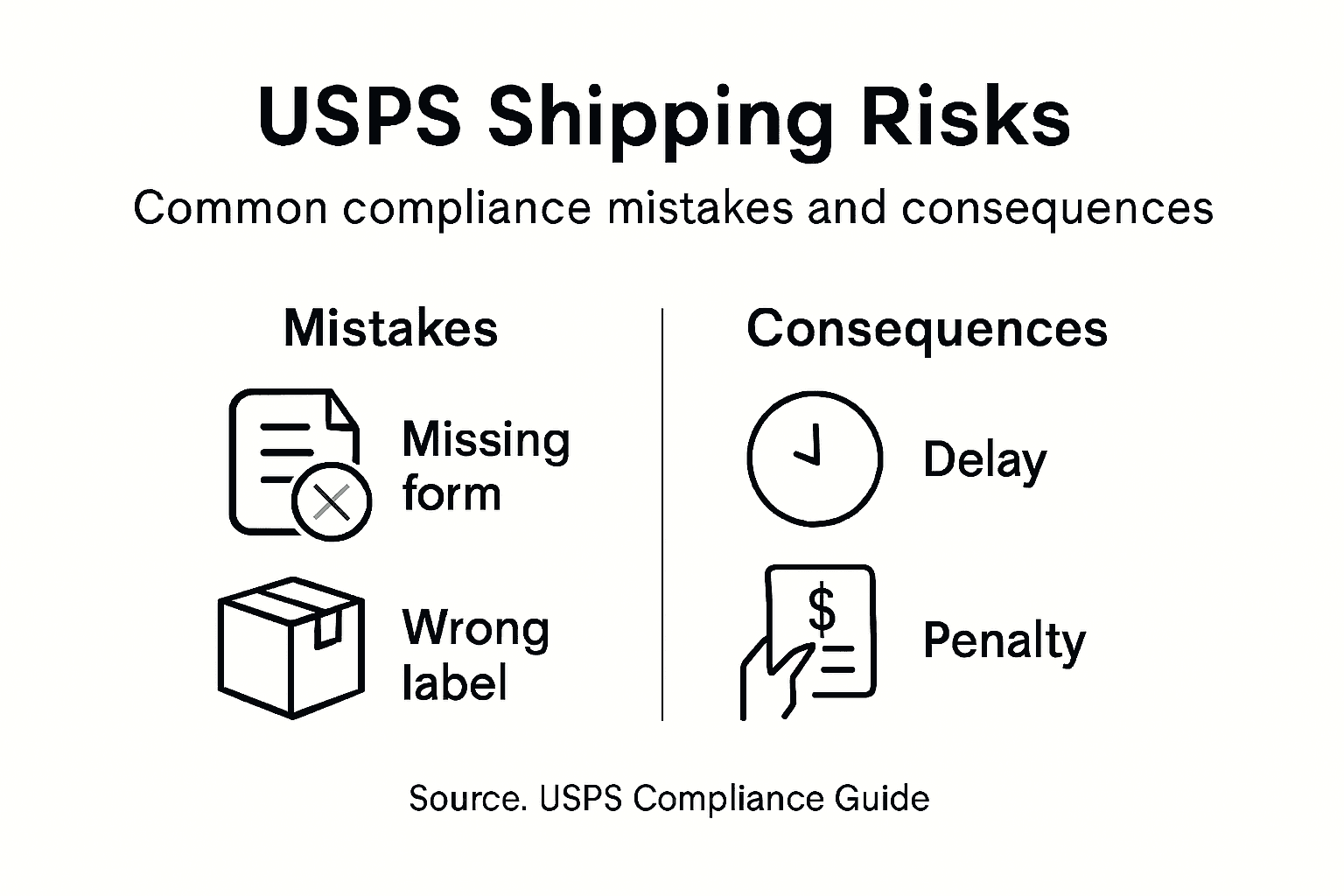
Common international shipping risks include:
- Documentation Errors
- Incomplete customs declarations
- Incorrect item classifications
- Inaccurate monetary valuations
- Prohibited Item Shipping
- Unintentional transportation of restricted goods
- Potential package confiscation
- Legal and financial penalties
- Operational Disruption Risks
- Unexpected service suspensions
- Delayed or returned shipments
- Country-specific transportation challenges
Businesses must carefully evaluate the financial landscape of international shipping. Operational costs continue to rise, with regulatory compliance and logistics expenses creating significant financial pressure. The potential for unexpected fees, package returns, and service interruptions demands a proactive and strategic approach to international shipping management.
Successful international shipping requires meticulous planning, comprehensive understanding of regulatory requirements, and robust risk mitigation strategies.
Shipping mistakes can have substantial consequences, as service alerts highlight ongoing international shipping challenges. Businesses must remain vigilant about potential service disruptions, particularly with Priority Mail Express International and other critical shipping services. Understanding these risks is essential for maintaining efficient global logistics operations.
Pro tip: Develop a comprehensive pre-shipping checklist that includes thorough document verification, item classification review, and destination-specific shipping restrictions to minimize potential shipping risks.
Master USPS International Shipping Compliance with Trusted Logistics Support
Navigating the complex landscape of USPS international shipping compliance in 2026 can be challenging. From electronic customs documentation to adhering to stringent regulatory updates, businesses face risks like shipment delays and costly fines. Understanding terms such as customs clearance, package tracking, and regulatory compliance is essential—but managing these details alone can be overwhelming.
Partner with Worldwide Express, Inc. to simplify your international shipping needs. Our expertise in customs brokerage, comprehensive freight forwarding, and documentation management helps your business stay ahead of evolving USPS regulations. Explore tailored solutions designed to reduce compliance risks, streamline cross-border shipments, and ensure your packages arrive on time and intact. Start today by visiting our Uncategorized resources or connect directly at Worldwide Express for a customized strategy that fits your business goals. Don’t let complicated USPS compliance hold your business back—take control now with trusted global logistics on your side.
Frequently Asked Questions
What are the key components of USPS international shipping?
USPS international shipping involves various services such as Priority Mail Express International, Priority Mail International, and First-Class Package International Service, along with customized customs documentation, packaging, and tracking processes.
What documentation is required for customs clearance when shipping internationally?
You must provide electronic customs forms that include detailed item descriptions, precise quantity reporting, and accurate monetary valuations. Additionally, proper packaging and addressing formats are essential for compliance.
How can businesses ensure compliance with USPS international shipping regulations?
Businesses can ensure compliance by staying updated on USPS regulatory developments, using electronic documentation, and preparing a comprehensive compliance checklist to avoid issues such as delays or penalties.
What are common mistakes to avoid in international shipping?
Common mistakes include documentation errors, such as incomplete customs declarations and incorrect item classifications, as well as shipping prohibited items, which can lead to package confiscation or legal penalties.
Recommended
- 7 Key Tips for Mastering Post Office International Shipping – Worldwide Express, Inc.
- 7 Essential Tips for Royal Mail International Shipping Success – Worldwide Express, Inc.
- 7 Essential Steps for Smooth Shipping Abroad Success – Worldwide Express, Inc.
- 7 Key Steps for SingPost International Shipping Success – Worldwide Express, Inc.