

A single missed detail in your Importer Security Filing can lead to costly shipment delays and unexpected penalties. For logistics managers overseeing ocean imports to the United States, strict compliance with the “10+2 Rule” means providing critical data electronically at least 24 hours before your cargo leaves a foreign port. This article breaks down the essentials of ISF, highlighting best practices and practical steps to keep your shipments moving smoothly while ensuring American customs compliance.
Table of Contents
- Defining ISF In International Shipping
- Types Of ISF Filings And 10+2 Rule
- ISF Filing Requirements And Process For Importers
- Legal Obligations And Compliance Risks
- Penalties, Financial Impact, And Best Practices
Key Takeaways
| Point | Details |
|---|---|
| ISF Overview | Importer Security Filing (ISF), or the “10+2 Rule,” requires importers to submit specific data electronically 24 hours before loading cargo onto a vessel heading to the U.S. |
| Filing Types | ISF-10 and ISF-5 are the two filing types, with ISF-10 covering standard maritime imports and ISF-5 for specialized situations such as in-bond cargo. |
| Compliance Requirements | Accurate and timely ISF submission is crucial; compliance mistakes can lead to significant penalties, delays, and legal liabilities. |
| Financial Implications | Importers face costs associated with filing fees, potential fines, and increased operational overhead when managing ISF compliance effectively. |
Defining ISF in International Shipping
Importer Security Filing (ISF), also known as the “10+2 Rule,” is a critical U.S. Customs and Border Protection (CBP) regulation that plays a crucial role in international maritime shipping security. Electronic cargo data submission is at the heart of this regulatory framework, designed to enhance border protection and risk assessment strategies.
Under this regulation, importers must electronically submit specific shipment details at least 24 hours before cargo is loaded onto a vessel bound for the United States. The ISF mandates the disclosure of key information about the shipment, cargo, and transportation process. This advanced notification allows U.S. Customs to conduct comprehensive risk evaluations and identify potential security threats before goods arrive at American ports.
The primary components of an ISF filing include:
- Manufacturer or supplier details
- Ship of origin
- Container stuffing location
- Consolidator information
- Buyer and seller identification
- Shipping routing details
- Harmonized Tariff Schedule (HTS) number for imported goods
Important exemptions exist within the ISF framework. Bulk cargo and certain breakbulk shipments are typically excluded from these requirements. However, for most containerized maritime imports, compliance is mandatory and failure to file can result in significant penalties.
Pro tip: Maintain meticulous electronic records and submit ISF documentation well in advance of shipping to avoid potential customs delays and financial penalties.
Types of ISF Filings and 10+2 Rule
The Importer Security Filing (ISF) regulation introduces two primary filing types that importers must understand: ISF-10 and ISF-5 forms. These filing categories address different shipping scenarios and cargo transportation requirements, providing U.S. Customs and Border Protection (CBP) with critical advance information about incoming maritime shipments.
The standard ISF-10 filing encompasses ten essential data elements that importers must submit electronically before cargo is loaded onto a vessel. These comprehensive details include:
- Seller information
- Buyer details
- Importer of record number
- Consignee identification
- Manufacturer data
- Ship-to party information
- Country of origin
- Harmonized Tariff Schedule (HTSUS) number
- Container stuffing location
- Consolidator information
In contrast, the ISF-5 filing serves a more specialized purpose, specifically designed for foreign cargo that remains onboard or requires in-bond transportation. This alternative filing includes fewer data elements and provides flexibility for specific shipping scenarios that do not fit the standard ISF-10 requirements.
The “10+2” designation refers to the comprehensive data submission process, where importers provide 10 specific data points, and ocean carriers contribute an additional 2 elements: the vessel stow plan and container status messages. These supplementary carrier-provided details enable U.S. Customs to conduct thorough risk assessments and enhance maritime security protocols.

Pro tip: Carefully verify each data element’s accuracy and completeness before submission to prevent potential customs delays or penalties associated with incomplete ISF documentation.
Here’s a comparison of ISF-10 and ISF-5 filings to clarify their main differences:
| Filing Type | Main Purpose | Number of Data Elements | Cargo Types Covered |
|---|---|---|---|
| ISF-10 | Most containerized imports | 10 (plus 2 from carrier) | Standard maritime shipments |
| ISF-5 | In-bond or cargo remaining on board | 5 (plus 2 from carrier) | Special shipping scenarios |
ISF Filing Requirements and Process for Importers
Importers must navigate a complex set of electronic filing requirements when preparing Importer Security Filing (ISF) documentation. U.S. Customs and Border Protection (CBP) mandates strict protocols for submitting cargo information, with specific timelines and data submission standards that must be precisely followed to ensure compliance.
The ISF filing process involves several critical steps:
- Submit documentation at least 24 hours before cargo loading
- Provide 10 specific data elements from the importer
- Include 2 additional data elements from ocean carriers
- Use CBP-approved electronic systems like Automated Broker Interface (ABI)
- Ensure complete and accurate information submission
- Prepare supporting commercial documentation
Mandatory Electronic Submission requires importers to utilize approved electronic platforms such as the Automated Commercial Environment (ACE). These systems facilitate the comprehensive data transfer, allowing CBP to conduct thorough risk assessments before shipments depart foreign ports.
While importers bear ultimate responsibility for filing accuracy, many choose to work with licensed customs brokers or freight forwarders to manage the complex documentation process. These professionals understand the nuanced requirements and can help prevent potential customs delays or penalties associated with incomplete or incorrect submissions.
Pro tip: Maintain a detailed digital record of all ISF submissions and cross-reference commercial invoices to ensure maximum accuracy and compliance.
Summary of common ISF compliance mistakes and their business impact:
| Common Mistake | Business Impact | How to Avoid |
|---|---|---|
| Late ISF submission | Cargo delays and fines | File 24+ hours in advance |
| Incomplete data entry | Increased customs scrutiny | Double-check all entries |
| Relying solely on third parties | Legal liability remains on importer | Maintain oversight and records |
| Ignoring exemptions | Unnecessary administration | Confirm shipment status |
Legal Obligations and Compliance Risks
The Importer Security Filing (ISF) imposes rigorous legal compliance standards that extend far beyond simple documentation requirements. Importers face substantial legal risks if they fail to meet U.S. Customs and Border Protection (CBP) regulations, with potential consequences ranging from financial penalties to shipment delays and increased cargo inspections.
Key compliance risks for importers include:
- Monetary penalties up to $5,000 per violation
- Mandatory targeted customs inspections
- Extended cargo hold times
- Potential denial of cargo entry into the United States
- Increased scrutiny of future shipments
- Potential suspension of importing privileges
U.S. law under 19 CFR §149.2 explicitly defines the legal framework for ISF submissions. Importer of Record responsibilities are comprehensive, requiring not just timely filing but also ensuring the absolute accuracy of submitted information. This means verifying every data element, from seller details to shipping routes, before electronic submission.
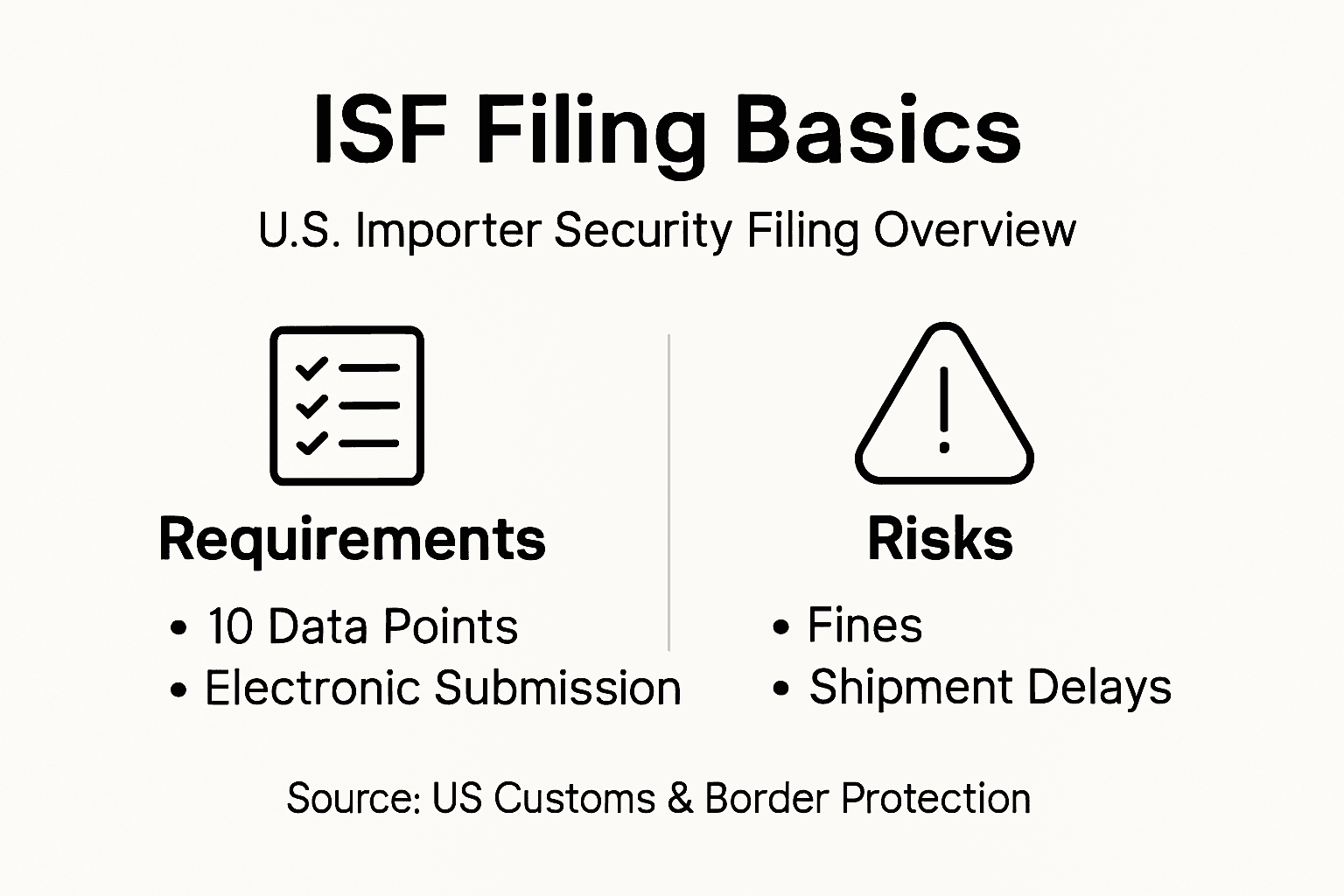
The legal landscape surrounding ISF compliance is complex and unforgiving. While importers can delegate filing responsibilities to customs brokers or freight forwarders, the ultimate legal accountability remains with the importer. Sophisticated importers invest in robust compliance management systems and regular staff training to mitigate these substantial legal and operational risks.
Pro tip: Implement a comprehensive internal audit process to double-check all ISF documentation before submission, reducing the likelihood of costly compliance errors.
Penalties, Financial Impact, and Best Practices
Importers face significant financial implications when navigating Importer Security Filing (ISF) requirements, with filing costs and potential penalties creating substantial economic risks. The monetary landscape of ISF compliance involves multiple financial considerations that can dramatically impact a company’s import operations.
Financial risks and potential costs include:
- Base filing fees ranging from $30 to $100 per submission
- Liquidated damages up to $5,000 per filing violation
- Potential cargo inspection expenses
- Indirect costs from shipping delays
- Increased administrative overhead for compliance management
- Potential loss of importing privileges
Proactive compliance strategies are essential for mitigating these financial risks. Sophisticated importers implement comprehensive data management systems, invest in staff training, and develop robust internal verification processes to minimize the likelihood of costly errors. Establishing clear communication protocols with suppliers and maintaining meticulous electronic documentation can significantly reduce the potential for expensive mistakes.
The most effective approach involves treating ISF compliance as a strategic investment rather than a bureaucratic requirement. Companies that develop systematic approaches to data collection, verification, and timely submission can transform potential financial liabilities into streamlined, efficient import processes. This proactive stance not only reduces direct monetary risks but also helps maintain a positive reputation with U.S. Customs and Border Protection.
Pro tip: Develop a standardized internal checklist for ISF documentation review that includes multiple verification steps and assigns clear accountability for each data element.
Simplify Your ISF Compliance with Expert Logistics Support
Importer Security Filing presents key challenges for businesses aiming to meet U.S. Customs and Border Protection requirements accurately and on time. Missing deadlines, incomplete ISF-10 or ISF-5 data elements, or lack of proper electronic submission can lead to costly penalties and shipment delays that disrupt your supply chain. Successfully navigating these complexities requires precise documentation, reliable filing systems, and expert coordination to ensure your imports clear smoothly.
At Worldwide Express, we understand the critical importance of ISF compliance in international shipping. Our customs brokerage services and freight forwarding expertise provide you with end-to-end support to avoid common pitfalls like late filings and inaccurate data entries. We leverage advanced technology, experienced professionals, and global tracking tools to keep every ISF submission accurate, timely, and fully compliant. Partner with us for peace of mind and a streamlined importing process—from ocean transportation to customs clearance and warehousing.
Don’t risk penalties or supply chain disruptions due to ISF errors. Explore how customs brokerage and comprehensive import/export freight forwarding solutions from Worldwide Express empower your business to meet U.S. import compliance confidently. Visit Worldwide Express today to get started with trusted international shipping support designed to protect and grow your operations.
Frequently Asked Questions
What is an Importer Security Filing (ISF)?
Importer Security Filing (ISF), also known as the “10+2 Rule,” is a U.S. Customs and Border Protection regulation that requires importers to submit specific shipment information electronically at least 24 hours before cargo is loaded onto a vessel. This helps enhance border security and risk assessment.
What are the main components of an ISF filing?
The primary components of an ISF filing include details about the manufacturer or supplier, ship of origin, container stuffing location, consolidator information, buyer and seller identification, shipping routing details, and the Harmonized Tariff Schedule (HTS) number for imported goods.
What are the differences between ISF-10 and ISF-5 filings?
ISF-10 filings include ten essential data elements for standard containerized imports, while ISF-5 filings contain five data elements and are designed for foreign cargo that remains onboard or requires in-bond transportation. ISF-10 is the more common type for most imports.
What are the consequences of failing to comply with ISF regulations?
Failing to comply with ISF regulations can lead to monetary penalties up to $5,000 per violation, increased customs inspections, cargo delays, and even denial of cargo entry into the United States. Importers are responsible for how well they adhere to these regulations.
Recommended
- How to Complete the ISF 10 2 Form PDF for Compliance – Worldwide Express, Inc.
- Complete isf 10 2 form for compliant U.S. imports – Worldwide Express, Inc.
- 7 Essential Importer Security Filing Tips for Success – Worldwide Express, Inc.
- Import License Requirements: Ensuring U.S. Trade Compliance – Worldwide Express, Inc.
- Staying Compliant: Financial Automation and Regulatory Requirements – BankStatementFlow Blog
- Security Compliance for Door Hardware: Meeting Safety Laws – A To Z Locksmith Inc