

Over eighty percent of American companies involved in global trade depend on proforma invoices to keep deals clear and organized. In the world of international business, a single error in basic documents can stall shipments and disrupt entire supply chains. Understanding how proforma invoices work protects American traders from surprise costs and confusion. This guide reveals the crucial details that set a proforma invoice apart and why getting it right matters for every American company looking to succeed overseas.
Table of Contents
- Defining A Proforma Invoice In International Trade
- Key Information Included In A Proforma Invoice
- How Proforma Invoices Facilitate Trade Transactions
- Legal Standing And Common Misconceptions
- Proforma Invoice Vs. Commercial Invoice Differences
- Common Mistakes When Using Proforma Invoices
Key Takeaways
| Point | Details |
|---|---|
| Proforma Invoices as Preliminary Documents | Proforma invoices act as advance communication tools, providing buyers with detailed transaction expectations before goods are shipped. |
| Essential Components | A proforma invoice must include complete contact information, descriptions of goods, pricing details, and clear payment terms to ensure transparency. |
| Non-Binding Nature | Proforma invoices are informational and do not create legally binding agreements, serving instead as detailed estimates for potential transactions. |
| Common Pitfalls | Businesses often make mistakes by omitting crucial information or failing to properly label documents, which can lead to misunderstandings and delays. |
Defining a Proforma Invoice in International Trade
A proforma invoice represents a critical preliminary document in international trade transactions, serving as an advance communication between sellers and buyers before goods are shipped. Preparing accurate commercial documentation is fundamental to smooth global commerce.
At its core, a proforma invoice functions as a detailed preliminary bill of sale that outlines the essential specifications of goods being considered for purchase. According to leading international trade resources, this document comprehensively details the kinds and quantities of goods, their precise monetary value, and additional critical information such as weight, dimensions, and shipping specifications. It operates as a binding contractual offer that provides buyers with transparent expectations about the upcoming transaction.
The strategic purpose of a proforma invoice extends beyond mere documentation. It serves multiple critical functions in international trade: establishing pricing transparency, facilitating customs clearance processes, helping buyers secure necessary financial approvals, and creating a preliminary agreement framework. By providing a comprehensive preview of the potential transaction, proforma invoices help mitigate misunderstandings and reduce potential disputes between trading partners.
Businesses engaged in international trade rely on proforma invoices as a key communication tool. These documents enable buyers to understand exact costs, confirm product specifications, and initiate payment or financing arrangements before goods are actually manufactured or shipped. The precision and clarity of a proforma invoice can significantly streamline complex cross-border commercial interactions, ultimately reducing administrative friction and supporting more efficient global trade relationships.
Key Information Included in a Proforma Invoice
When preparing a proforma invoice, international traders must carefully compile a comprehensive set of details that provide complete transparency for the potential transaction. Understanding customs invoice requirements is critical for ensuring accurate documentation in global trade.
According to international trade resources, a proforma invoice must include several key components that comprehensively describe the transaction. Typically, this document requires the issuing company’s complete contact information, including name, address, and communication details. Equally important is the inclusion of the customer’s name and address, establishing clear identification for both parties. The document should explicitly state that it is a proforma invoice, and specify a precise date of issue and a validity period for the proposed pricing.
The most critical elements of a proforma invoice involve detailed product information and financial specifications. This includes a comprehensive description of goods or services, precise pricing details, applicable taxes or duties, and specific international shipping considerations. Traders must provide exact product classifications, country of origin information, and detailed shipping terms. These specifications help facilitate smooth customs clearance processes and provide buyers with transparent expectations about the potential transaction.

Beyond basic transactional details, a proforma invoice serves as a preliminary contractual document that outlines essential terms and conditions. It should clearly articulate expected payment terms, delivery expectations, and any specific conditions governing the potential sale. By meticulously documenting these elements, businesses can minimize misunderstandings, streamline international trade negotiations, and create a solid foundation for future commercial agreements.
How Proforma Invoices Facilitate Trade Transactions
Proforma invoices are instrumental in streamlining international trade transactions, offering a strategic mechanism for businesses to communicate detailed transaction expectations. Understanding trade finance solutions becomes crucial in navigating the complex landscape of global commerce.
These preliminary documents play a pivotal role in eliminating transactional ambiguity by ensuring comprehensive transparency between buyers and sellers. Businesses leverage proforma invoices to provide detailed information about goods or services, including precise descriptions, quantities, pricing structures, and specific terms of engagement. By establishing clear mutual expectations, these documents help minimize potential misunderstandings and create a solid foundation for future commercial interactions.
Proforma invoices serve multiple critical functions in international trade processes. They are essential for obtaining import and export licenses, arranging shipping and insurance logistics, and securing necessary financial approvals. Traders utilize these documents to provide potential buyers with preliminary quotes, facilitate customs clearance procedures, and demonstrate compliance with intricate international trade regulations. The comprehensive nature of proforma invoices allows businesses to outline exact costs, quantities, and respective responsibilities, significantly reducing the likelihood of transactional disputes.
Beyond their immediate transactional utility, proforma invoices represent a strategic tool for effective financial planning and risk management. They provide a preliminary contractual framework that helps businesses assess potential trade opportunities, allocate resources efficiently, and establish clear communication channels. By meticulously documenting transaction details, companies can streamline negotiation processes, enhance financial transparency, and build stronger, more reliable international trading relationships.
Legal Standing and Common Misconceptions
Understanding the legal nuances of proforma invoices is crucial for businesses navigating international trade landscapes. Understanding international trade compliance basics provides essential context for comprehending these complex documentation requirements.
One of the most significant misconceptions surrounding proforma invoices is their perceived legal status. These documents are fundamentally preliminary and do not constitute a legally binding agreement between trading parties. Unlike commercial invoices, proforma invoices serve as informative documents that outline potential transaction details without creating mandatory legal obligations. Businesses often mistakenly believe that a proforma invoice commits either party to completing the transaction, when in reality, it functions more as a detailed quotation or proposal.
The non-binding nature of proforma invoices does not diminish their importance in international trade. They remain critical tools for communication, financial planning, and regulatory compliance. Traders rely on these documents to facilitate customs clearance, secure necessary financing, and establish clear expectations about potential transactions. However, businesses must understand that a proforma invoice represents an initial step in negotiations rather than a definitive contract that legally compels either party to complete the transaction.
Professional traders and logistics experts recognize that proforma invoices serve multiple strategic purposes beyond their apparent simplicity. They provide a transparent mechanism for detailing potential transactions, helping businesses assess financial implications, negotiate terms, and prepare for subsequent commercial interactions. While not legally enforceable, these documents play an indispensable role in streamlining international trade processes, reducing misunderstandings, and establishing a foundation for potential future agreements.
Proforma Invoice vs. Commercial Invoice Differences
Understanding the distinctive characteristics of proforma invoices and commercial invoices is essential for businesses engaged in international trade. Understanding trade finance solutions helps clarify the nuanced roles these documents play in global commerce.
Proforma invoices and commercial invoices serve fundamentally different purposes in the transaction lifecycle. A proforma invoice is a preliminary document issued before the actual sale, functioning as a detailed estimate that outlines potential transaction parameters. It provides comprehensive information about goods or services, including descriptions, quantities, and proposed pricing, but carries no legal obligation for payment. In contrast, a commercial invoice is a definitive, legally binding document generated after the transaction is finalized, serving as an official request for payment and a critical record for accounting and customs purposes.
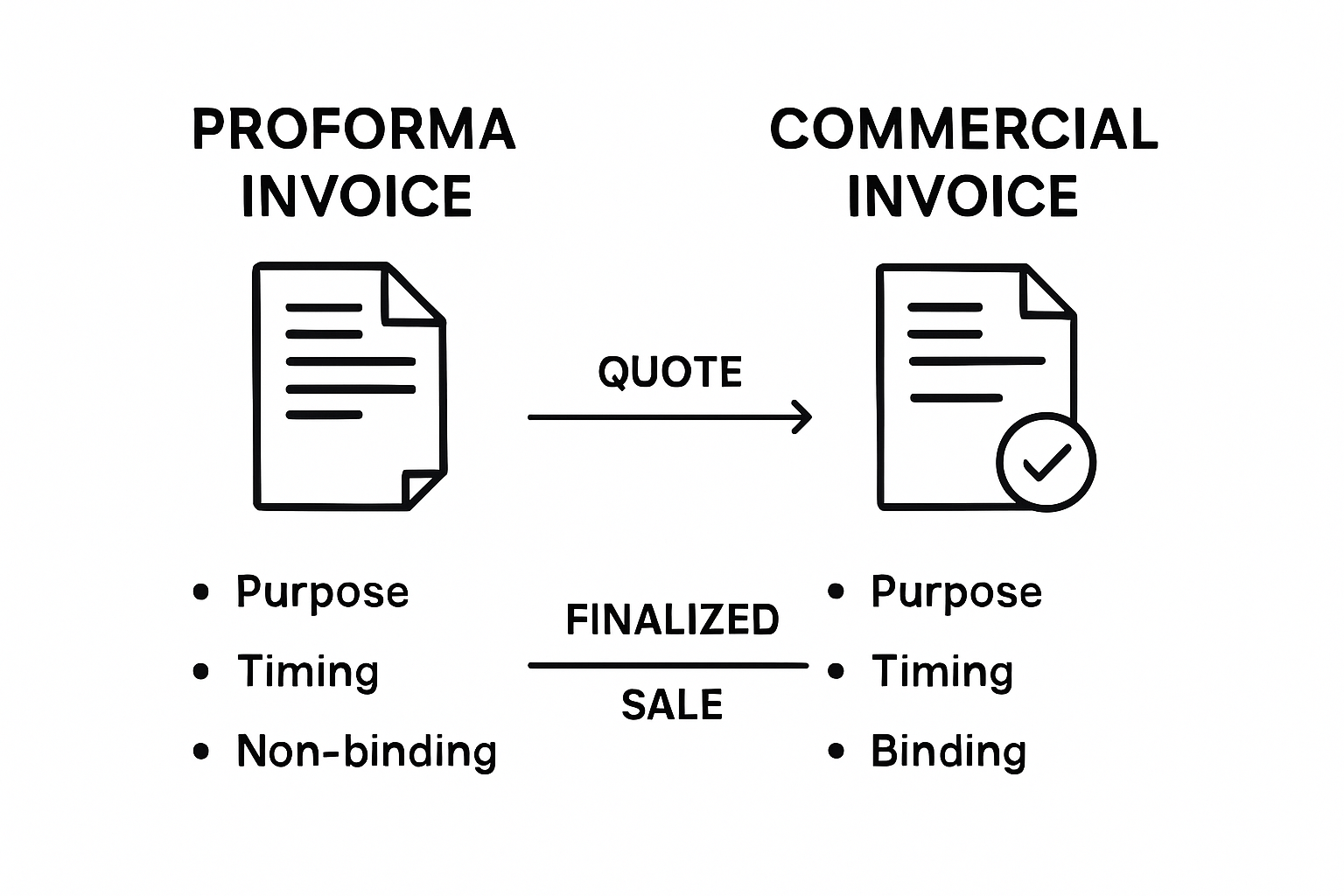
The key distinctions between these documents extend beyond their legal standing. Proforma invoices are typically used to facilitate initial negotiations, help buyers secure financing, and navigate import/export regulations. They provide a transparent preview of potential transaction terms without committing either party to the sale. Commercial invoices, however, represent the actual completed transaction, including precise final pricing, exact quantities, and specific payment terms. These documents are crucial for financial record-keeping, tax reporting, and customs clearance, carrying legal weight and serving as primary evidence of the completed commercial exchange.
Professional traders recognize that both documents play complementary roles in international trade processes. While a proforma invoice serves as a preliminary communication tool that sets expectations and aids in planning, a commercial invoice represents the formal financial transaction. Businesses must carefully manage the transition between these documents, ensuring accuracy, compliance, and clear communication throughout the trading process.
Common Mistakes When Using Proforma Invoices
Navigating the complexities of proforma invoices requires meticulous attention to detail and a comprehensive understanding of international trade documentation. Understanding international trade compliance basics helps businesses avoid potential pitfalls in their documentation processes.
One of the most critical errors businesses make involves insufficient or incomplete documentation. Traders frequently fail to clearly label documents as ‘Proforma Invoice,’ omitting essential details that provide clarity and context. These oversights can include missing crucial information such as the date of issue, precise validity period, and comprehensive descriptions of goods or services. Incomplete shipment information for physical items can create significant complications, potentially causing delays in transaction processing and creating unnecessary confusion between trading partners.
Professional traders must be vigilant about maintaining comprehensive documentation standards. Critical information that must be included encompasses the issuing company’s complete contact details, customer identification, exact product descriptions, precise pricing structures, explicit payment terms, and specific conditions governing the potential transaction. Omitting any of these elements can lead to misunderstandings, potential disputes, and complications in customs clearance processes. Businesses should treat proforma invoices as strategic communication tools that require the same level of precision and care as final commercial documentation.
The consequences of inadequate proforma invoices extend beyond immediate transactional challenges. Incomplete or poorly constructed documents can impede a company’s ability to secure financing, navigate import/export regulations, and establish credibility with international trading partners. Successful traders recognize that these preliminary documents serve as critical first impressions, setting the tone for potential business relationships and demonstrating a commitment to transparent, professional international commerce.
Simplify Your International Trade with Expert Logistics Support
Navigating the complex requirements of a proforma invoice is just one piece of successful global trade. Accurate documentation, customs compliance, and transparent communication can often feel overwhelming when managing import and export shipments. If you want to reduce delays, avoid costly mistakes, and ensure your shipments move seamlessly across borders, partnering with a logistics expert is essential.
Worldwide Express offers tailored international shipping solutions designed to support businesses like yours that depend on clear and compliant proforma invoices for customs clearance and financing. Our comprehensive services include customs brokerage, freight forwarding by air and ocean, trucking, and supply chain management tools. By working with Worldwide Express, you gain access to experienced professionals who streamline your documentation process and provide global tracking for peace of mind. Take control of your international trade today by visiting Worldwide Express and explore how our solutions can help you manage trade finance requirements through understanding trade finance solutions and stay compliant with international trade compliance basics. Your global logistics partner is just a click away to help you turn complex paperwork into clear progress.
Frequently Asked Questions
What is a proforma invoice?
A proforma invoice is a preliminary bill of sale that outlines the details of a transaction before goods are shipped. It provides information on the types and quantities of goods, their monetary value, and shipping specifications, serving as a binding contractual offer.
What information should be included in a proforma invoice?
A proforma invoice should include the issuing company’s contact information, customer details, product descriptions, pricing information, applicable taxes, shipping terms, and expected payment and delivery terms.
How does a proforma invoice facilitate international trade transactions?
A proforma invoice facilitates trade by providing detailed information about the transaction, ensuring transparency, helping with customs clearance processes, and allowing buyers to secure financing or approvals before goods are shipped.
What is the difference between a proforma invoice and a commercial invoice?
A proforma invoice is a preliminary document outlining potential transaction terms that carries no legal obligation. In contrast, a commercial invoice is a definitive document issued after the transaction, serving as an official request for payment and a record for accounting and customs purposes.
Recommended
- Understanding Customs Invoice Requirements for Trade – Worldwide Express, Inc.
- Understanding Inco Terms: Key Concepts for Global Trade – Worldwide Express, Inc.
- Understanding Importer of Record Responsibilities – Worldwide Express, Inc.
- Understanding Trade Finance Solutions: A Clear Guide – Worldwide Express, Inc.
- What Is Freight Forwarding? Guide for Modern Supply Chains 2025 – ORNER
- OCR for Invoices: The Future Over Paper Processing