

Most business leaders underestimate the complexity of international shipping. Roles go beyond shipper and carrier to include specialist coordinators, managers, and partners. A single weak link, whether mismanaged compliance, poor negotiation, or lack of tracking, can lead to major delays and costs. Global shipping moves over 80% of world merchandise trade, yet many companies still struggle to understand who does what. This article unpacks each major role, unique duties, and how aligning the right partners boosts supply chain success.
Table of Contents
- Why roles matter in international shipping
- The core roles in the international shipping process
- Operational roles: Day-to-day logistics control
- Advanced leadership: Senior roles and strategic oversight
- Challenges and emerging trends impacting global shipping roles
- How to align roles for smooth, resilient international shipping
- Simplify your shipping: Expert partners make a difference
- Frequently asked questions
Key Takeaways
| Point | Details |
|---|---|
| Know core roles | Each shipping role from coordinator to broker has unique responsibilities vital for efficient global trade. |
| Partner for compliance | Freight forwarders and customs brokers help avoid legal issues and costly delays. |
| Leverage negotiation | Experienced managers can secure 10-25 percent shipping cost savings through negotiations. |
| Adopt technology early | Digital tracking tools and defined responsibilities prevent shipment errors and boost reliability. |
| Monitor future skills | New logistics roles are emerging as technology and sustainability reshape the industry. |
Why roles matter in international shipping
To understand where problems often arise or how to run a tight operation, let’s clarify why these roles aren’t just titles. They’re operational necessities. Over 80% of global merchandise trade moves by sea, making clarity in roles essential to prevent delays, bottlenecks, and compliance fines. Misunderstandings on duties commonly lead to missed hand-offs and wasted resources.
Modern businesses leverage digital tools and partnerships to coordinate these roles effectively. The key is knowing who owns what at every stage. When responsibilities blur, shipments stall at borders, documentation gets rejected, and costs spiral.
The majority of shipment setbacks can be traced to role confusion or unclear responsibilities.
Here’s what happens when roles are clearly defined:
- Faster customs clearance because brokers know exactly when to act
- Lower freight costs through skilled negotiation by dedicated managers
- Fewer compliance penalties when specialists handle documentation
- Better tracking visibility with coordinators monitoring every milestone
Businesses that invest in optimizing global logistics through role clarity see measurable improvements in delivery times and cost control. The alternative is reactive firefighting that drains resources and damages customer relationships.
The core roles in the international shipping process
With the underlying reasons clear, here’s a simplified overview of who does what and how these roles connect throughout your shipment’s journey. Stakeholders include shippers, carriers, freight forwarders, customs brokers, and insurance providers, each with distinct responsibilities that must align for smooth operations.
| Role | Core Duties | Typical Employers | Impact on Outcomes |
|---|---|---|---|
| Shipper | Prepares goods, arranges pickup, provides documentation | Manufacturers, exporters, importers | Sets quality of initial documentation |
| Carrier | Operates vessels/aircraft, transports cargo | Shipping lines, airlines | Controls transit time and cargo safety |
| Freight Forwarder | Coordinates shipments, books space, consolidates cargo | Logistics companies, 3PLs | Optimizes routes and costs |
| Customs Broker | Files entries, ensures compliance, pays duties | Brokerage firms, forwarders | Prevents border delays |
| Insurance Provider | Covers cargo loss or damage | Insurance companies | Protects financial exposure |
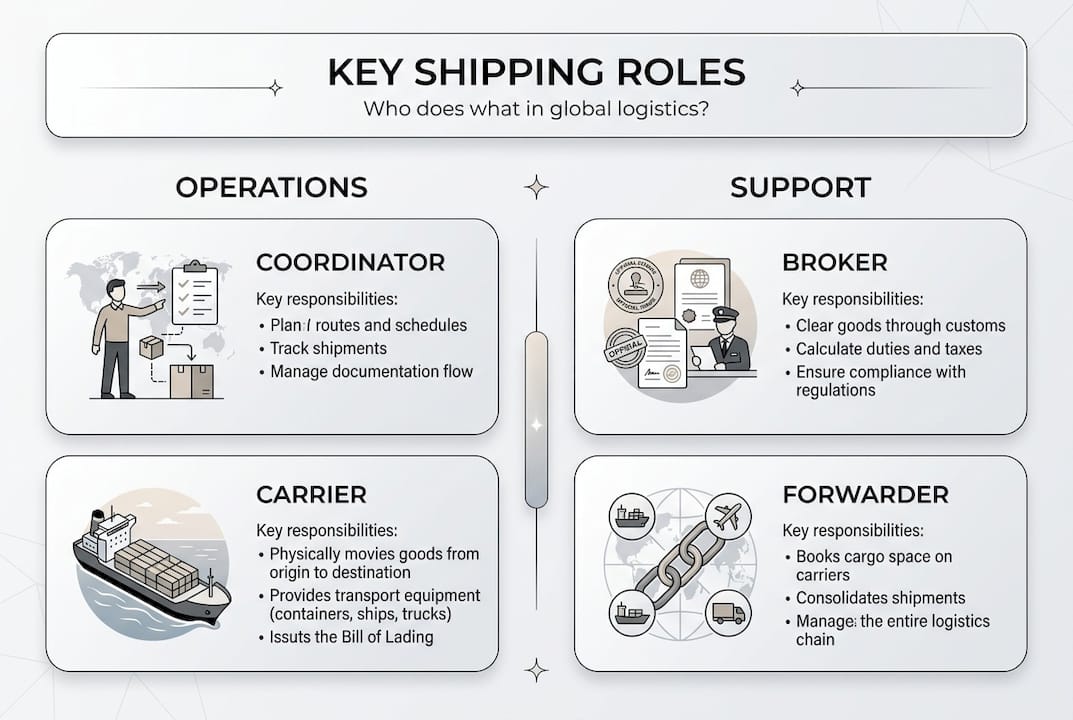
Understanding the customs broker vs freight forwarder distinction is critical. Brokers focus exclusively on regulatory compliance and customs clearance. Forwarders handle the broader logistics puzzle, from booking cargo space to arranging inland transport. The differences between brokers and forwarders often confuse new importers, leading to missed deadlines.
Realistic hand-off scenarios reveal where miscommunications usually occur:
- Shipper provides incomplete commercial invoices to forwarder
- Forwarder books space but fails to notify broker of arrival time
- Broker submits entry without verifying product classifications
- Carrier releases cargo before duties are paid
Each gap creates delays. Clear communication protocols and defined hand-off points eliminate these friction points.
Operational roles: Day-to-day logistics control
After understanding the high-level structure, let’s zoom in to the people ensuring things stay on track every hour of every shipping day. Logistics roles include coordinators who schedule, managers who oversee operations, shipping managers who ensure compliance, and freight managers who plan cargo movement.
| Role | Key Tasks | Skills Required | Typical Experience |
|---|---|---|---|
| Logistics Coordinator | Schedule pickups, track shipments, communicate with carriers | Organization, communication, software proficiency | 1-3 years |
| Logistics Manager | Oversee teams, optimize processes, manage budgets | Leadership, analytics, problem-solving | 3-5 years |
| International Shipping Manager | Ensure compliance, manage documentation, coordinate customs | Regulatory knowledge, attention to detail | 5-7 years |
| Freight Manager | Negotiate rates, plan cargo movement, select carriers | Negotiation, market knowledge, strategic thinking | 5-10 years |
| International Logistics Coordinator | Coordinate cross-border shipments, handle exceptions | Multilingual skills, cultural awareness | 2-4 years |
How specialization prevents delays and cuts costs becomes clear when you examine negotiation impact. Freight managers can negotiate cost savings of 10-25% through carrier relationships and market knowledge. That’s real money returning to your bottom line.
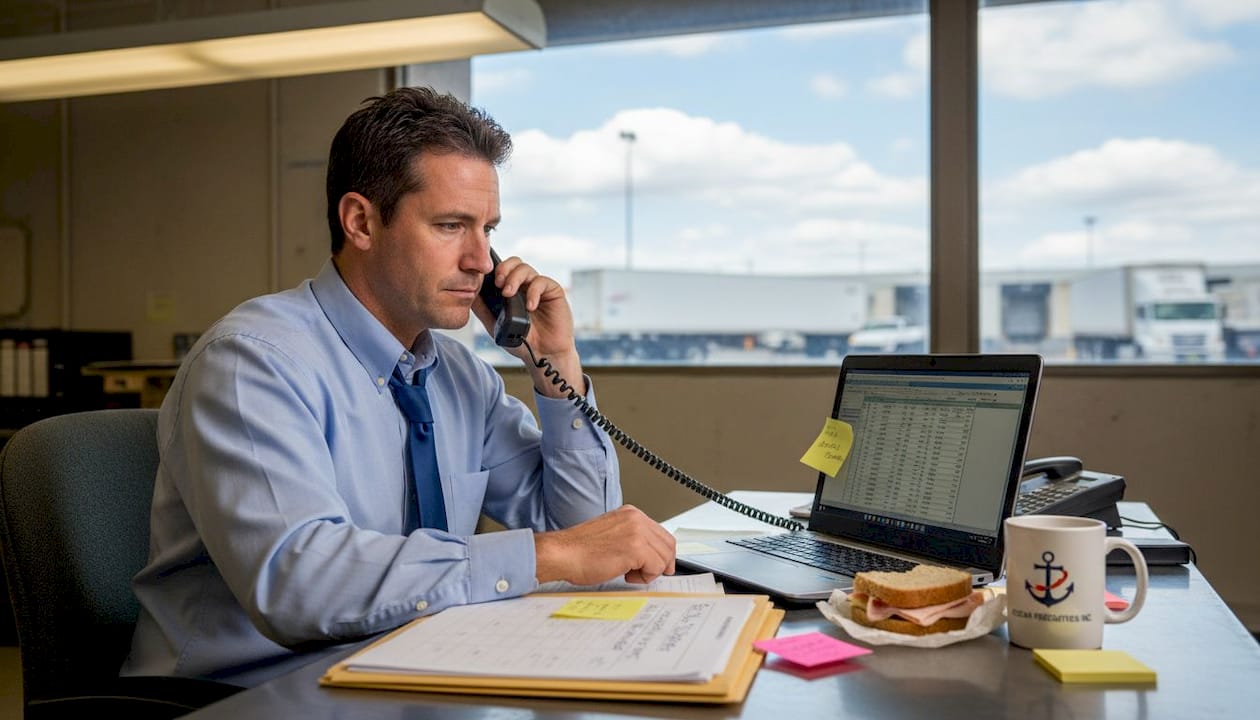
Pro Tip: Assign a dedicated coordinator even if your volume is low. Communication errors cost more than you save by spreading responsibilities across multiple people.
Common pitfalls for businesses new to global shipping include lack of tracking ownership and customs paperwork confusion. When no single person owns shipment visibility, problems surface only after they’ve caused damage. Working with experts in U.S. customs brokerage ensures someone monitors compliance daily. The customs broker impact on clearance speed and penalty avoidance justifies the investment.
Advanced leadership: Senior roles and strategic oversight
Beyond the hands-on operators, strategic leaders help companies adapt to a shipping landscape that’s increasingly complex and environmentally scrutinized. Senior roles like Head of Operations Sea Freight lead teams, manage pricing, oversee tenders, and drive operational efficiency.
Roles of senior managers in optimizing routes, negotiating large contracts, and driving digital initiatives shape long-term competitiveness. Strategic decision points include scaling up operations, responding to disruptions, pursuing decarbonization, and implementing digitization. These aren’t tactical choices but fundamental shifts in how companies compete.
Top strategies leaders use to adapt to volatile trade and environmental changes:
- Build carrier diversity to avoid over-reliance on single providers during capacity crunches
- Invest in predictive analytics to anticipate disruptions and reroute proactively
- Integrate sustainability metrics into vendor selection and route planning
Overcapacity and emission control will define the future of shipping leadership.
The environmental pressure is real. Emissions rose 5% in 2024, yet only 8% of the fleet uses alternative fuels. Leaders who ignore this trend risk regulatory penalties and reputational damage. Those who embrace it gain competitive advantages through efficiency and customer preference.
Senior managers also drive supply chain digitalization initiatives that connect disparate systems and create end-to-end visibility. Building a sustainable global supply chain requires executive commitment and cross-functional coordination that only senior leadership can provide.
Challenges and emerging trends impacting global shipping roles
Shipping isn’t standing still. Next, let’s examine the forces pushing global roles to evolve and what businesses need to do to stay ahead. Ports face congestion, a gender gap in the workforce, digitalization needs, and maritime single window requirements.
Major challenges include port congestion that delays vessels for days, a persistent gender gap that limits talent pools, and digitalization lag that prevents real-time decision-making. Why technology adoption and role clarity are now competitive necessities becomes obvious when competitors gain weeks of lead time through better systems.
Sustainability presents both challenge and opportunity. Only 8% of the fleet uses alternative fuels, but regulatory pressure is rising fast. Companies that wait will face sudden compliance costs and limited carrier options. Those that act now secure preferential rates and partnerships.
Pro Tip: Build redundancy into partner selection and track emerging skills shortages closely. The talent you need tomorrow may not be available if you wait to recruit.
Top emerging roles transforming international logistics:
- Data Analyst to interpret shipping patterns and optimize decisions
- Sustainability Officer to manage carbon reporting and green initiatives
- Digital Logistics Coordinator to integrate platforms and automate workflows
Technology tools for tracking and visibility are now essential, and defining roles and partners up front prevents costly scrambles. The shipment tracking benefits extend beyond knowing where cargo sits to predicting delays and communicating proactively with customers.
Staying informed about issues like port congestion helps you adjust strategies before problems impact your shipments. Reactive companies lose sales. Proactive ones capture market share.
How to align roles for smooth, resilient international shipping
Now that you know the who’s who and how roles are changing, here’s a blueprint for structuring your next international shipment for fewer surprises and greater control. Define clear roles, partner with forwarders and brokers, use digital tools, and plan for disruptions.
Practical actions to implement immediately:
- Map your current process and identify who owns each hand-off point
- Document responsibilities in writing with clear SLAs for every partner
- Select technology platforms that integrate with your partners’ systems
- Establish contingency protocols for common disruptions like port delays or customs holds
- Schedule regular reviews to assess performance and adjust roles as volume changes
- Vet partners thoroughly by checking references, certifications, and financial stability
- Create communication cadences with daily check-ins during critical shipment phases
Why upfront clarity with written hand-offs and SLAs prevents headaches becomes evident the first time a shipment moves flawlessly because everyone knew their role. The alternative is constant phone calls, finger-pointing, and damage control.
When to bring in freight forwarders or customs brokers depends on your volume, complexity, and internal expertise. If you ship internationally more than monthly, the cost of mistakes exceeds the cost of professional help. How to vet them involves checking industry certifications, asking for client references, and testing their responsiveness before committing to large volumes.
Understanding customs broker responsibilities helps you set realistic expectations and measure performance. The best brokers don’t just file paperwork. They advise on classifications, identify duty-saving programs, and keep you ahead of regulatory changes.
Simplify your shipping: Expert partners make a difference
If you want turnkey support and simple solutions, consider working with specialists whose job is making international shipping seamless. Worldwide Express offers comprehensive services that address the challenges discussed throughout this guide.
Our team handles everything from customs clearance to freight forwarding, giving you single-point accountability and eliminating the coordination headaches that drain your time. Whether you need help understanding the nuances in our freight forwarding guide, require expert US customs brokerage services, or want to implement global order tracking across your supply chain, we provide the expertise and technology to keep your shipments moving.
The difference between struggling with logistics and mastering it often comes down to having the right partners in the right roles. We’ve spent decades building the networks, systems, and expertise that turn complex international shipping into a competitive advantage for our clients.
Frequently asked questions
Who is responsible for customs clearance in international shipping?
Customs brokers and import/export controls are key in international shipping management. Brokers or in-house customs managers handle clearance to ensure legal compliance and avoid border delays.
What is the main difference between a freight forwarder and a carrier?
A carrier owns and operates the transport vessels, while a freight forwarder arranges shipments and coordinates between shippers and carriers. Forwarders don’t move cargo themselves but orchestrate the entire logistics process.
How can businesses reduce international shipping costs?
Negotiating with freight managers can lower costs by 10-25%. Using experienced forwarders who leverage volume discounts and route optimization delivers additional savings.
Why is digital tracking now essential in global shipping?
Technology for tracking and visibility is essential because it ensures shipment visibility, helps meet deadlines, and reduces the risk of lost or delayed goods. Real-time data enables proactive problem-solving.
What emerging roles are most in demand in international logistics?
Data analysts and sustainability officers are increasingly needed as shipping grows more complex. Digital logistics coordinators who can integrate platforms and automate workflows are also in high demand.
Recommended
- Complete Guide to International Shipping Basics – Worldwide Express, Inc.
- Master International Freight Shipping for Successful Trade – Worldwide Express, Inc.
- Understanding International Shipping Costs: Key Insights – Worldwide Express, Inc.
- Understanding the Role of a Freight Forwarder – Worldwide Express, Inc.