Many businesses believe managing international customs processes independently saves money and maintains control. This misconception often backfires spectacularly. Without expert guidance, importers face costly delays, compliance penalties, and misclassified tariffs that erode profit margins. Customs brokers deliver strategic advantages that transform international trade operations. They accelerate clearance, ensure regulatory compliance, and unlock duty savings through precise classifications and trade agreement expertise. This article reveals how partnering with licensed customs professionals protects your bottom line while streamlining cross-border logistics.
Table of Contents
- Understanding The Role Of Customs Brokers In International Trade
- How Customs Brokers Save Money And Reduce Risks For Your Business
- Improving Supply Chain Efficiency With Customs Brokers
- When To Consider Specialized Customs Brokerage Services
- Explore Reliable Customs Brokerage And Freight Services
- Frequently Asked Questions
Key takeaways
| Point | Details |
|---|---|
| Faster customs clearance | Brokers reduce processing times by up to 40%, minimizing port delays and storage fees. |
| Significant duty savings | Accurate tariff classification can reduce import duties by 15% through proper HS code application. |
| Compliance protection | Expert handling prevents costly penalties and resolves 85% of customs disputes before escalation. |
| Strategic trade advantage | Brokers leverage trade agreements and navigate evolving regulations to optimize supply chain performance. |
Understanding the role of customs brokers in international trade
Customs brokers serve as licensed specialists who navigate the complex regulatory landscape between your business and government agencies. They prepare and submit documentation, classify goods under harmonized tariff schedules, calculate duties and taxes, and ensure compliance with import regulations. Their expertise extends beyond paperwork to strategic advisory roles that protect businesses from costly mistakes.
The distinction between customs brokers and freight forwarders matters significantly. Customs brokers specialize exclusively in regulatory and documentation aspects, ensuring legal compliance with government requirements. Freight forwarders coordinate physical transportation and logistics. Many businesses benefit from both services, but only licensed customs brokers can legally represent you before customs authorities.
The licensing requirements reflect the specialized knowledge demanded by this profession. Becoming a customs broker requires passing a challenging federal licensing exam administered by U.S. Customs and Border Protection. This rigorous certification ensures brokers possess deep understanding of customs law, tariff classifications, trade agreements, and regulatory procedures that change frequently.
Pro Tip: When evaluating what customs brokers actually do, look for professionals who proactively advise on compliance strategies rather than simply processing paperwork reactively.
Core responsibilities customs brokers handle include:
- Preparing and filing entry documents with customs authorities
- Determining correct tariff classifications and duty calculations
- Coordinating inspections and resolving regulatory issues
- Maintaining compliance with import quotas and restrictions
- Advising on trade agreement benefits and duty reduction opportunities
- Representing clients during customs audits and dispute resolution
This specialized knowledge transforms brokers from transactional service providers into strategic partners who actively protect and enhance your international trade operations.
How customs brokers save money and reduce risks for your business
The financial impact of accurate tariff classification cannot be overstated. A manufacturing company realized a 15% reduction in import duties after correct tariff classification by a customs broker. Harmonized System codes contain over 5,000 classifications with nuanced distinctions that determine duty rates. A single digit error can mean thousands in unnecessary payments or compliance violations.

Customs disputes represent another area where broker expertise delivers measurable value. Industry data shows customs brokers resolved 85% of customs disputes, preventing financial losses that would otherwise escalate through appeals or litigation. When customs authorities question valuations, classifications, or origin determinations, brokers leverage their regulatory knowledge and agency relationships to resolve issues efficiently.
Compliance penalties pose substantial financial risks for businesses handling customs independently. Customs brokers help avoid costly penalties for non-compliance that can reach thousands of dollars per violation. Beyond monetary fines, serious infractions can result in shipment seizures, import privilege suspensions, or intensive audit scrutiny that disrupts operations for months.
Pro Tip: Calculate your potential savings by reviewing past shipments for tariff classification opportunities. Many businesses discover they have been overpaying duties for years due to imprecise HS code selections.
The regulatory landscape shifts constantly with new trade policies, tariff adjustments, and compliance requirements. Brokers monitor these changes and proactively adapt your import strategy. This includes:
- Identifying trade agreement benefits under USMCA, free trade agreements, or preferential programs
- Adjusting classifications when tariff schedules update
- Implementing compliance with new restrictions or documentation requirements
- Advising on duty drawback opportunities for re-exported goods
- Optimizing country of origin determinations to minimize duty exposure
Businesses leveraging the strategic benefits US customs brokers provide gain competitive advantages through lower landed costs and reduced compliance risks. Understanding how customs broker and agent roles differ helps you engage the right expertise for your specific needs.
The cumulative financial impact extends beyond direct duty savings. Avoiding delays, penalties, and disputes preserves cash flow and maintains supply chain reliability that protects customer relationships and market reputation.
Improving supply chain efficiency with customs brokers
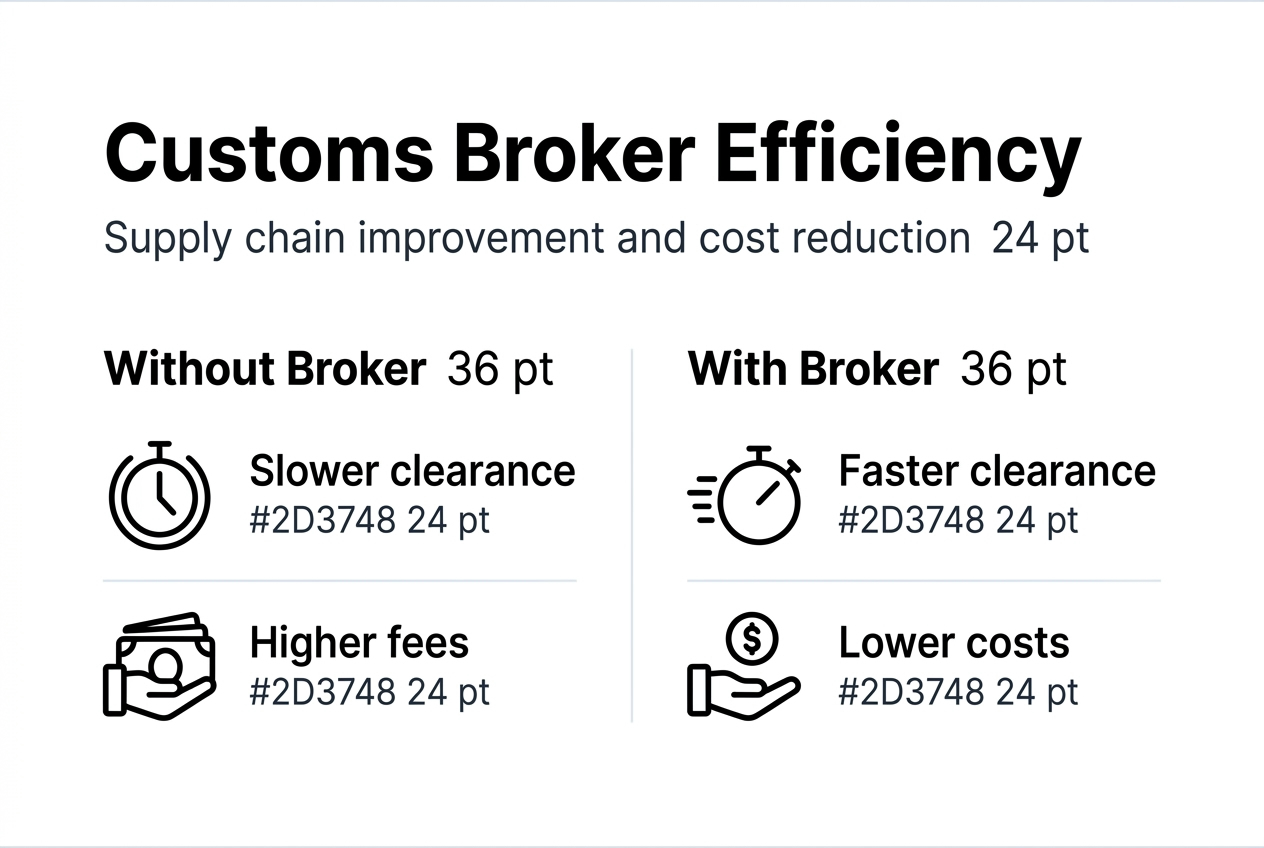
Speed matters critically in international logistics. Businesses using customs brokers report 40% faster customs clearance times compared to self-managed processes. This acceleration stems from brokers’ familiarity with documentation requirements, established relationships with customs officials, and experience navigating complex entry procedures efficiently.
Port delays generate cascading costs that extend far beyond storage fees. Each day of delay incurs demurrage charges, disrupts production schedules, and potentially damages perishable goods. Time-sensitive shipments for seasonal products, promotional campaigns, or just-in-time manufacturing face particularly severe consequences from customs bottlenecks.
Research indicates brokers can improve supply chain efficiency by 10-15% by expediting clearance processes. This improvement translates directly to enhanced inventory turnover, reduced working capital requirements, and greater supply chain responsiveness to market demands.
| Efficiency Metric | Without Broker | With Broker | Improvement |
|---|---|---|---|
| Average clearance time | 5-7 days | 2-3 days | 40-60% faster |
| Documentation errors | 15-20% | 2-5% | 75% reduction |
| Penalty incidents | 8-12 per year | 1-2 per year | 85% reduction |
| Supply chain costs | Baseline | Reduced 10-15% | Significant savings |
Pro Tip: For perishable goods or time-critical shipments, establish relationships with brokers who offer expedited processing and 24/7 availability to handle urgent clearance needs.
The operational advantages extend beyond speed to predictability. Understanding the comprehensive role of US customs brokers reveals how they create standardized processes that deliver consistent results. This reliability enables better inventory planning, more accurate delivery commitments to customers, and reduced safety stock requirements.
Complex entry requirements that vary by product category, country of origin, and regulatory agency create bottlenecks when managed internally. Brokers navigate these complexities daily, maintaining current knowledge of requirements for FDA regulated products, agricultural imports, textile quotas, and other specialized categories. Knowing what customs import brokers handle helps businesses leverage this expertise strategically.
When to consider specialized customs brokerage services
Certain business scenarios demand heightened broker expertise beyond routine clearance services. Specialized goods like pharmaceuticals, medical devices, food products, and hazardous materials face stringent regulatory requirements from multiple agencies. Businesses importing specialized or regulated goods benefit most due to brokers’ knowledge of specific regulations that govern these categories.
Trade agreement navigation requires detailed understanding of rules of origin, preferential duty programs, and documentation requirements that vary by agreement. The United States-Mexico-Canada Agreement alone contains over 2,000 pages of provisions affecting tariff treatment, origin certification, and sector-specific requirements. Brokers with trade agreement expertise identify opportunities that self-managed importers commonly miss.
Customs audits represent high-stakes situations where broker representation proves invaluable. Brokers help navigate complex audits and disputes, protecting against financial losses that can reach hundreds of thousands of dollars. When customs authorities conduct focused assessments or reasonable care audits, brokers provide documentation, explanations, and negotiation support that significantly improves outcomes.
Regulatory changes create compliance challenges that require immediate adaptation. Recent years have seen dramatic shifts in trade policy, tariff structures, and enforcement priorities. Brokers monitor these developments and implement compliance adjustments before violations occur.
Key scenarios warranting specialized broker services include:
- First-time imports requiring establishment of customs bonds and procedures
- High-value shipments where duty savings justify detailed classification analysis
- Products subject to antidumping or countervailing duties
- Imports requiring permits or licenses from regulatory agencies
- Goods eligible for foreign trade zone benefits or duty drawback programs
Selecting the right broker requires evaluating their experience with your product categories, familiarity with relevant trade agreements, and capacity to provide strategic advisory services beyond transactional processing. Understanding freight forwarding versus broker differences clarifies which services you need. Finding a qualified customs broker near you starts with assessing their industry expertise and service capabilities.
Explore reliable customs brokerage and freight services
Navigating international trade successfully requires partners who combine regulatory expertise with operational excellence. Worldwide Express delivers comprehensive customs brokerage services backed by decades of experience guiding businesses through complex clearance processes. Our licensed professionals handle documentation, classification, compliance, and dispute resolution while proactively identifying duty savings opportunities.
Our integrated approach connects efficient US customs brokerage services seamlessly with freight forwarding capabilities. This coordination eliminates handoff delays and ensures your shipments move smoothly from origin to final destination. Whether you need standalone customs expertise or comprehensive logistics solutions, our team designs strategies aligned with your specific business requirements.
Explore how freight forwarding and brokerage services work together to optimize your supply chain. Compare the best freight forwarding services available to find solutions that match your international trade goals. Our client-focused approach ensures you receive tailored support that grows with your business.
Frequently asked questions
What exactly does a customs broker do for my business?
A customs broker prepares and files import documentation, classifies goods under tariff schedules, calculates duties and taxes, and ensures compliance with customs regulations. They represent your business before government agencies and resolve issues that arise during the clearance process.
How is a customs broker different from a freight forwarder?
Customs brokers focus exclusively on regulatory compliance and customs clearance, handling documentation and legal requirements. Freight forwarders coordinate physical transportation and logistics. Both roles complement each other, but only licensed customs brokers can legally represent you to customs authorities.
Can customs brokers really reduce my import duties?
Yes, through accurate tariff classification, trade agreement application, and duty optimization strategies. Many businesses overpay duties due to imprecise classifications or missed preferential programs. Brokers identify these opportunities and implement corrections that deliver measurable savings.
When should I hire a customs broker instead of handling customs myself?
Consider professional brokerage when importing specialized or regulated goods, managing high-value shipments, facing compliance audits, or lacking internal expertise in customs regulations. The cost of mistakes typically far exceeds broker service fees.
How do I find a qualified customs broker?
Look for licensed professionals with experience in your product categories and familiarity with relevant trade agreements. Verify their CBP license status, ask about their dispute resolution track record, and evaluate whether they provide strategic advisory services beyond basic document processing.
Recommended
- Benefits of U.S. customs brokers for efficient trade – Worldwide Express, Inc.
- Role of a US customs broker: streamline trade compliance – Worldwide Express, Inc.
- Customs broker vs agent: Clear roles for easier compliance – Worldwide Express, Inc.
- Understanding Customs Broker Near Me: What You Need to Know – Worldwide Express, Inc.