Selecting the right freight transportation mode for international shipments requires evaluating cost, transit speed, cargo characteristics, geographic reach, and environmental impact. Many logistics professionals struggle to balance these competing priorities while minimizing risks and maintaining supply chain efficiency. This guide profiles major freight modes and explains decision criteria to help you optimize international shipping strategies.
Table of Contents
- Key Criteria For Choosing Freight Transportation Modes
- Air Freight: Speed And Use Cases
- Ocean Freight: Cost Efficiency And Bulk Cargo
- Rail Freight: Cost Benefits And Intermodal Potential
- Truck Freight: Flexibility Vs Cost
- Intermodal Freight: Combining Strengths
- Summary Comparison Table Of Freight Transportation Modes
- Situational Recommendations For Selecting Freight Modes
- Optimize Your Freight Shipping With Worldwide Express
- Frequently Asked Questions
Key takeaways
| Point | Details |
|---|---|
| Selection criteria | Cost, speed, cargo type, reliability, geography, and environmental impact determine optimal freight mode choices. |
| Air vs. ocean trade-offs | Air freight delivers in 1-3 days but costs up to 5x more; ocean freight saves 80% on cost with 20-40 day transit. |
| Intermodal advantages | Combining rail, truck, and ocean modes cuts costs 15-20% and reduces carbon emissions approximately 30%. |
| Situational optimization | Matching freight mode to shipment urgency, cargo nature, and business priorities improves logistics efficiency. |
Key criteria for choosing freight transportation modes
Selecting the optimal freight transportation mode starts with understanding six essential factors that directly impact your supply chain performance and bottom line.
Cost per unit weight or volume determines whether a mode fits your budget for shipment scale. Transit time affects how quickly goods reach customers and influences satisfaction levels. Cargo type and special handling requirements dictate which modes can safely accommodate your products, from temperature-sensitive pharmaceuticals to oversized machinery.
Reliability and service frequency influence your ability to meet delivery schedules consistently. Geographic coverage and infrastructure availability limit which modes can physically reach origin and destination points. Environmental impact matters increasingly as businesses pursue sustainability goals and customers demand greener logistics practices.
Evaluating these criteria systematically helps you avoid costly mistakes like choosing air freight for bulk commodities or ocean shipping for perishables. Cost, speed, cargo type, reliability, geography, and environmental impact guide freight mode choice in every international shipment decision.
With these criteria in mind, let’s review each major freight transportation mode and their unique advantages and limitations.
Air freight: speed and use cases
Air freight stands out as the fastest international shipping option, delivering cargo across continents in 1-3 days compared to weeks by ocean. This speed comes at a premium, with costs reaching up to five times higher than ocean freight per weight unit.
The mode excels for specific cargo categories where speed justifies the expense. Perishable goods like fresh seafood, cut flowers, and pharmaceuticals maintain quality through rapid transit. Electronics and fashion items with short product lifecycles reach markets before demand shifts. High-value shipments benefit from reduced inventory carrying costs and faster cash flow.
Air freight offers substantial security advantages. Controlled airport environments and strict cargo handling protocols minimize theft and damage risks. Regulatory compliance processes for customs clearance often proceed more smoothly at air cargo facilities than seaports.
Pro Tip: Calculate total landed cost including inventory carrying costs and potential stockout losses, not just freight rates. Air freight often proves more economical for high-value, time-sensitive goods when you factor in the full financial picture.
The air freight vs sea freight decision hinges on whether speed advantages outweigh cost differences for your specific shipment. Air freight offers fastest transit with high security but at highest cost, making it ideal when time matters more than freight spend.
Next, we contrast air freight’s speed with ocean freight’s cost efficiency for bulk shipping needs.
Ocean freight: cost efficiency and bulk cargo
Ocean freight delivers the lowest cost per unit weight among all international shipping modes, making it essential for businesses moving large volumes. Transit times typically range from 20 to 40 days depending on route and port congestion, which rules out urgent shipments but works perfectly for planned inventory replenishment.
The mode handles virtually unlimited cargo sizes and weights. Container ships transport everything from raw materials like iron ore and grain to finished automobiles and machinery. Full container loads (FCL) and less-than-container loads (LCL) accommodate both large and smaller shipment volumes.
Ocean freight dominates international trade volume because the cost savings reach up to 80% compared to air freight. Businesses shipping non-perishable goods on predictable schedules leverage these savings to maintain competitive pricing.
Environmental considerations increasingly favor ocean transport. Ships generate the lowest carbon emissions per ton-mile among freight modes, supporting corporate sustainability initiatives. Many ocean freight services now offer carbon offset programs and slow steaming options that further reduce environmental impact.
The trade-off between ocean freight’s affordability and extended transit requires careful demand forecasting. You need accurate sales projections to order inventory weeks in advance without creating excess stock or shortages.
Following ocean freight, rail offers a cost-effective and lower-emission alternative for certain land routes.
Rail freight: cost benefits and intermodal potential
Rail freight provides significant cost advantages over trucking for long-haul land routes, with savings reaching up to 30% on distances exceeding 500 miles. Single trains carry hundreds of containers across continents, creating economies of scale impossible for highway transport.
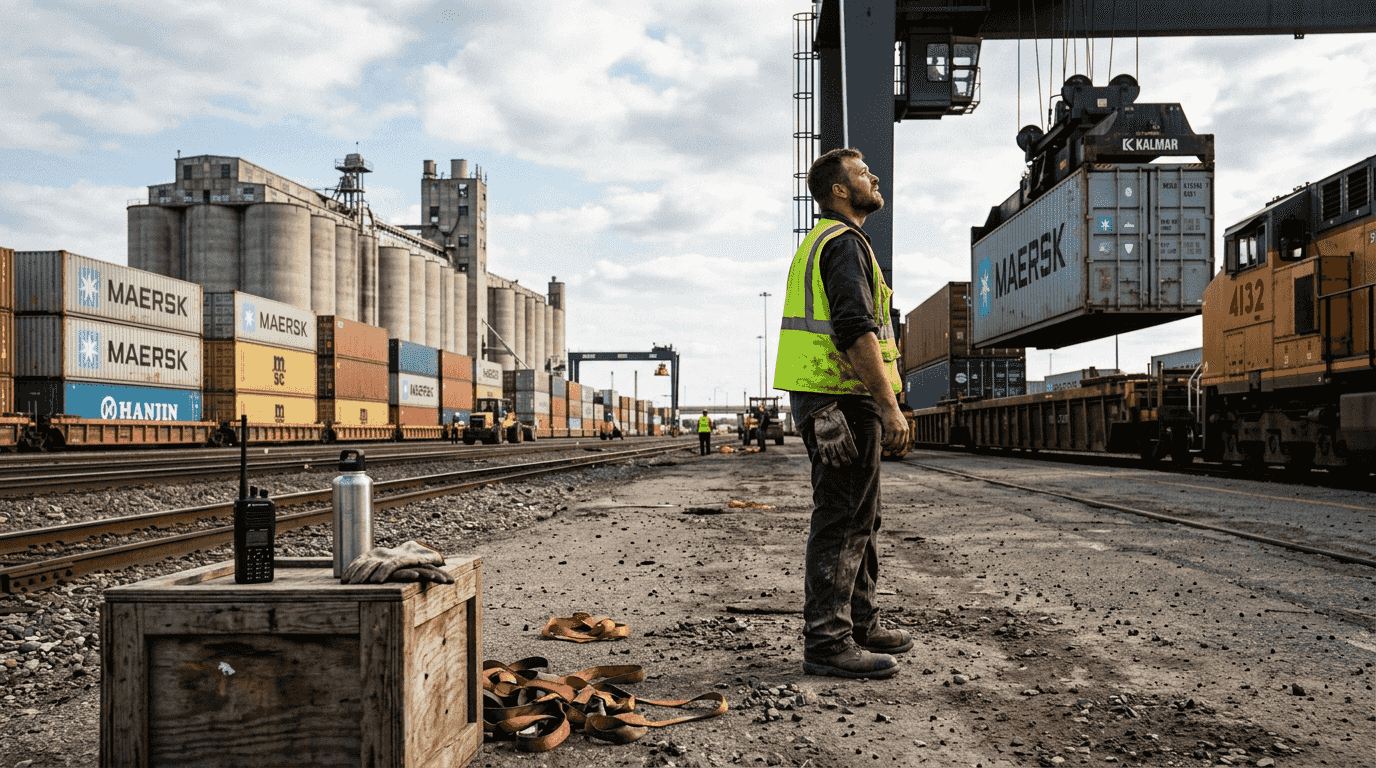
The mode integrates seamlessly into intermodal supply chains. Containers move from ships to rail cars at port facilities, then transfer to trucks for final delivery. This combination optimizes cost and efficiency across the entire journey from factory to warehouse.
Rail networks excel in specific geographic corridors. North American routes connecting West Coast ports to Midwest distribution centers handle massive import volumes. European rail corridors link manufacturing hubs across multiple countries. Asian rail systems increasingly compete with ocean shipping for certain China-Europe routes.
Environmental benefits make rail attractive for sustainability-focused logistics strategies. Trains produce significantly lower carbon emissions per ton-mile than trucks, helping businesses meet environmental targets without sacrificing cost efficiency.
Pro Tip: Evaluate whether your shipment route includes well-established rail corridors with frequent service. Rail becomes less attractive when infrastructure gaps require multiple transfers or when destinations lack nearby rail terminals.
Transit times lengthen by 1-2 days compared to direct trucking due to terminal handling and train schedules. Rail freight saves up to 30% versus trucking on long-haul routes and commonly appears in intermodal transport to enhance cost and environmental efficiency.
While rail aids long-haul transport, trucking remains vital for flexible door-to-door service and last-mile delivery.
Truck freight: flexibility vs cost
Trucking provides unmatched flexibility for regional freight and last-mile delivery, reaching virtually any location with road access. Trucks move directly from shipper to receiver without transfers, simplifying logistics and reducing handling damage risks.
The mode achieves approximately 85% on-time performance, making it reliable for time-sensitive regional shipments. Drivers navigate around disruptions more easily than rail or ocean vessels, adapting routes in real time.
Cost remains trucking’s primary disadvantage. Freight costs 40-50% more than rail for equivalent distances, driven by fuel expenses, driver wages, and vehicle maintenance. Labor shortages in many markets further inflate prices and reduce capacity.
Traffic congestion and regulatory constraints create variability in transit times. Urban areas experience frequent delays during peak hours. Hours-of-service regulations limit daily driving distances, extending delivery windows for long-haul moves.
Trucking proves essential when rail infrastructure doesn’t serve origin or destination points. Many distribution centers and manufacturing facilities rely exclusively on truck access. Cross-border movements between the United States, Canada, and Mexico depend heavily on trucking networks.
The mode also handles specialized cargo requiring dedicated equipment. Refrigerated trucks maintain cold chains for perishables. Flatbed trailers accommodate oversized machinery. Tankers transport liquids and gases safely.
Finally, combining multiple modes through intermodal freight unlocks cost and environmental synergies.
Intermodal freight: combining strengths
Intermodal freight transportation strategically combines ocean, rail, and truck modes to capture advantages from each while minimizing individual limitations. Containers move seamlessly across modes without unpacking cargo, reducing handling costs and damage risks.
Cost reductions of 15-20% compared to all-truck shipping make intermodal attractive for medium to long-haul moves. Businesses use rail or ocean for the longest segments where these modes deliver maximum savings, then switch to trucks for final delivery requiring flexibility.
Environmental benefits multiply through modal combinations. Intermodal freight cuts carbon emissions by approximately 30% compared to trucking alone, supporting corporate sustainability goals while reducing costs simultaneously.
Scalability improves as shippers access broader networks spanning multiple transportation providers. You can adjust capacity up or down more easily than relying on a single mode. Geographic reach expands to serve locations lacking direct ocean or rail connections.
Successful intermodal operations require careful coordination among ocean carriers, rail operators, trucking companies, and terminal facilities. Transfer points must handle containers efficiently to prevent delays. Technology platforms tracking shipments across modes provide visibility throughout the journey.
| Mode | Cost Level | Transit Time | Best Cargo Types | Carbon Impact |
|---|---|---|---|---|
| Air | Highest | 1-3 days | Perishables, electronics, urgent shipments | High per ton-mile |
| Ocean | Lowest | 20-40 days | Bulk, raw materials, non-urgent goods | Lowest per ton-mile |
| Rail | Moderate | 5-10 days | Containers, commodities | Low per ton-mile |
| Truck | High | 1-5 days | Regional, last-mile, specialized cargo | Moderate per ton-mile |
| Intermodal | Moderate-Low | 7-14 days | Diverse shipments balancing cost and speed | Low per ton-mile |
To summarize, here is a data-driven table comparing key freight modes across critical dimensions.
Summary comparison table of freight transportation modes
This comprehensive comparison helps logistics professionals evaluate freight transportation modes across critical decision factors. The table synthesizes cost structures, speed capabilities, cargo suitability, and environmental performance in a single reference.
| Factor | Air Freight | Ocean Freight | Rail Freight | Truck Freight | Intermodal |
|---|---|---|---|---|---|
| Relative Cost | Very High (5x ocean) | Very Low (baseline) | Low-Moderate (30% below truck) | High (40-50% above rail) | Moderate (15-20% below all-truck) |
| Typical Transit | 1-3 days | 20-40 days | 5-10 days | 1-5 days | 7-14 days |
| Weight Capacity | Limited (up to 50 tons) | Very High (thousands of TEUs) | High (100+ containers) | Moderate (up to 26 tons) | High (container-based) |
| Best Use Cases | Urgent, perishable, high-value | Bulk, non-urgent, heavy | Long-haul containers | Last-mile, regional, specialized | Mixed requirements |
| Reliability | 90%+ on-time | 75-85% on-time | 80-85% on-time | ~85% on-time | 80-90% on-time |
| Carbon per Ton-Mile | Highest | Lowest | Low | Moderate | Low |
| Geographic Reach | Global airports | Global ports | Continental corridors | Comprehensive road networks | Combined network coverage |
Cost per unit, delivery speed, cargo compatibility, and sustainability metrics directly influence mode selection for specific shipments. Air freight commands premium pricing but delivers unmatched speed for urgent cargo. Ocean freight offers maximum cost efficiency when extended transit fits inventory planning.
Rail freight balances cost and environmental performance on established corridors but requires intermodal connections for complete door-to-door service. Trucking provides flexibility and comprehensive geographic coverage at higher expense. Intermodal combinations optimize trade-offs by leveraging each mode’s strengths.
Building on this comparison, let’s explore actionable situational recommendations to select freight modes based on specific business priorities.
Situational recommendations for selecting freight modes
Applying freight mode selection to real business scenarios requires matching transportation characteristics to your specific shipment requirements and strategic priorities.
-
Urgent, high-value shipments: Choose air freight when speed outweighs cost considerations. Electronics launching on tight schedules, pharmaceutical products requiring temperature control, and replacement parts preventing production downtime justify air freight premiums through reduced inventory costs and avoided revenue losses.
-
Cost-sensitive bulk cargo: Select ocean freight for raw materials, commodities, and non-perishable goods where extended transit allows adequate planning. Businesses importing large volumes benefit from ocean freight’s 80% cost advantage, freeing capital for other investments.
-
Long-haul domestic routes: Leverage rail freight and intermodal combinations for shipments traveling 500+ miles across continental corridors. The 30% cost savings compared to trucking compounds on longer distances while reducing carbon footprint aligns with sustainability goals.
-
Last-mile and regional delivery: Use truck freight when destinations lack rail access or when door-to-door service simplifies logistics. The flexibility to adjust routes and schedules justifies higher costs for time-sensitive regional movements and final delivery legs.
-
Balanced requirements: Implement intermodal freight strategies when you need to optimize multiple factors simultaneously. Combining ocean or rail for main hauls with trucking for local delivery captures cost savings and environmental benefits while maintaining reasonable transit times.
Selecting the right freight mode depends on weighing shipment urgency, cargo characteristics, and the trade-offs between cost, speed, and sustainability. Your specific supply chain context determines which mode delivers optimal results.
Now that you know how to apply these recommendations, discover how our services can help optimize your freight transportation choices.
Optimize your freight shipping with Worldwide Express
Navigating freight transportation mode decisions becomes simpler when you partner with experienced logistics professionals who understand your business priorities and supply chain challenges.
Worldwide Express provides expert freight forwarding services tailored to diverse international shipping needs. We coordinate ocean freight, air, rail, truck, and intermodal options to optimize your cost and speed requirements. Our team analyzes your shipment characteristics and timeline constraints to recommend freight modes aligned with your business goals.
Access professional guidance throughout the freight selection process. Learn how to choose a freight forwarder who delivers transparency, reliability, and cost efficiency for your supply chain operations.
To further assist your freight mode decisions, here are answers to common questions logistics professionals ask.
Frequently asked questions
What factors most influence freight transportation mode selection?
Cost per unit weight, transit time requirements, and cargo characteristics form the primary decision factors. Reliability expectations, geographic coverage needs, and environmental impact goals also shape optimal mode choices. Businesses must balance these competing priorities based on specific shipment contexts and strategic objectives.
How does intermodal freight improve shipping efficiency?
Intermodal freight combines rail, truck, and ocean modes to achieve 15-20% cost savings while cutting carbon emissions approximately 30%. The approach enhances scalability and network flexibility by accessing multiple transportation providers. Containers move seamlessly across modes without unpacking cargo, reducing handling costs and damage risks.
When should I choose air freight over ocean freight?
Choose air freight for urgent shipments, perishable goods, or high-value cargo requiring fast delivery within 1-3 days. Ocean freight suits bulk shipments or non-urgent goods where 20-40 day transit allows proper planning and cost savings reach 80%. Calculate total landed cost including inventory carrying expenses to determine true mode economics.
What challenges does rail freight face in international shipping?
Rail freight typically requires trucking for last-mile delivery, adding coordination complexity and transfer points. Transit times can lengthen by 1-2 days due to terminal handling and train scheduling compared to direct trucking. Infrastructure gaps in some regions limit rail accessibility, requiring alternative modes for complete door-to-door service.
Recommended
- Global Shipping 2026: 72% Face Tariff Volatility – Worldwide Express, Inc.
- How to Reduce Shipping Costs: Effective Strategies for 2025 – Worldwide Express, Inc.
- Carrier vs Freight Forwarder: Cut 20% Shipping Costs 2026 – Worldwide Express, Inc.
- How to Optimize Logistics for Efficient Global Shipping – Worldwide Express, Inc.
- How to Choose a Freight Forwarder for Amazon FBA and Build a Resilient – Reddog Consulting Group