TL;DR:
- Effective perishable cargo logistics centers on controlling handoff points, validating packaging by route and season, and ensuring comprehensive, compliant documentation.
- Most temperature excursions happen at docks, during vehicle changeovers, and in last-mile delivery, not in transit, making operational discipline at these points critical.
Perishable cargo logistics is defined as the end-to-end management of temperature-sensitive goods, from origin to final delivery, within an unbroken cold chain that preserves product integrity and regulatory compliance. This discipline covers food, pharmaceuticals, biologics, and fresh produce, each with distinct temperature windows: fresh produce typically requires 0°C to 10°C, chilled pharmaceuticals demand 2°C to 8°C, and frozen biologics may require below -20°C. Standards such as the IATA Perishable Cargo Regulations (PCR), the ATP Agreement for international road transport, and WHO GDP guidelines define the operational floor for every shipment. The consequences of failure are concrete: spoiled product, regulatory penalties, and liability exposure that no importer or freight forwarder can afford to absorb.
What are the critical temperature control challenges in perishable cargo logistics?
Temperature excursions are the single greatest operational risk in cold chain shipping, and they rarely happen where most teams expect them. Breaks in cold chain occur most frequently at loading and unloading docks, during vehicle changeovers, and in last-mile delivery, not on the main transit leg. This matters because most monitoring investment historically focused on the reefer container or refrigerated truck in motion, leaving the handoff moments poorly covered.
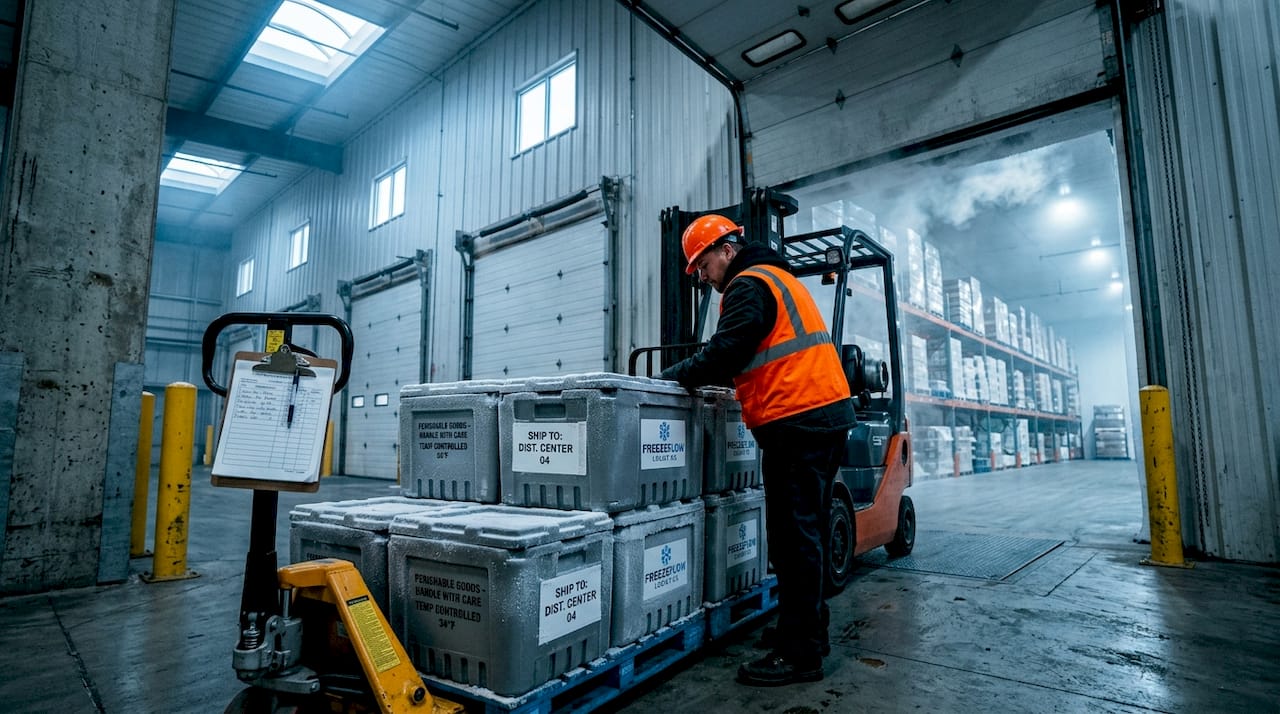
The practical consequences of an excursion depend on the product. A two-hour temperature spike above 8°C can render a pharmaceutical shipment non-compliant under EU GDP rules, requiring full quarantine and investigation before any release decision. For fresh produce, even a brief warm exposure accelerates ethylene production and microbial growth, cutting shelf life by days. The financial and reputational damage compounds quickly.
Ambient weather extremes add another layer of complexity. Summer loading docks in Texas or the Gulf Coast can reach ambient temperatures above 40°C, meaning a pallet staged outdoors for 20 minutes faces a severe thermal challenge regardless of how well the reefer unit performed during transit. Aging warehouse infrastructure, particularly in secondary distribution hubs, often lacks adequate dock seals and pre-cooling capacity.
The correct operational model treats any break in the cold chain as a failure event requiring documentation and investigation. Excursion handling requires a defensible evidence package that includes a precise timeline, device data review, and a documented corrective action basis. Without that package, product disposition decisions lack the evidentiary support regulators and quality teams require.
“Excursion events cluster at docks, during door-open times at transfers, and last-mile delivery stages.” Per Bytes Europe, this clustering pattern means operational controls at handoff points deliver more risk reduction than additional in-transit monitoring alone.
Pro Tip: Map every physical handoff point in your cold chain before selecting monitoring equipment. Dock staging areas, cross-dock transfers, and last-mile vehicles are where your investment in sensors and SOPs will return the most value.
How does real-time temperature monitoring enhance cold chain compliance?
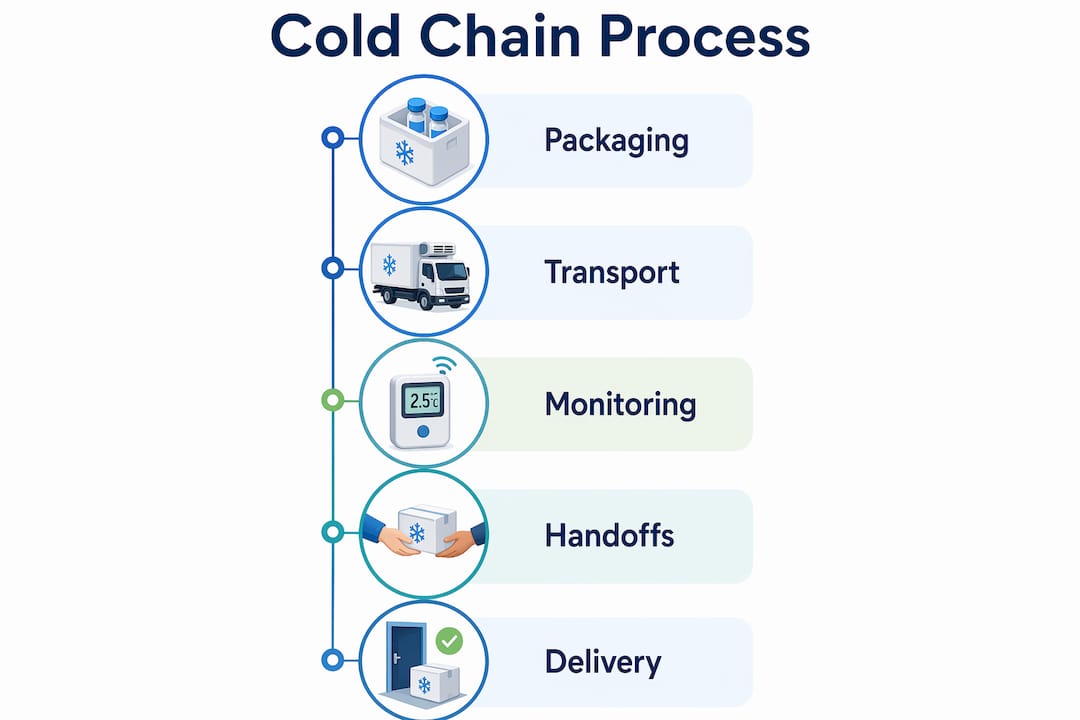
Cold-chain monitoring is implemented through data loggers and real-time monitoring systems that provide continuous temperature records throughout a shipment’s journey. These tools serve two distinct purposes: operational intervention during transit and post-delivery compliance documentation. Conflating the two leads to gaps in both.
For operational intervention, real-time systems connected to fleet management platforms allow dispatchers to receive alerts when a reefer unit malfunctions or a door is left open. Fleet management software that integrates real-time monitoring and predictive maintenance reduces spoilage risk and optimizes both route selection and vehicle deployment. Geotab, for example, offers telematics platforms that combine vehicle diagnostics with temperature sensor data, giving fleet managers a single dashboard view of cold chain status.
For compliance documentation, the chain-of-custody process matters as much as the data itself. Logger time stamps must align with operational records at every handoff: dock transfer logs, driver manifests, and receiving inspection reports. Matching logger timestamps to handling steps such as dock transfers and receipt inspections creates the defensible evidence chain that regulators and quality auditors require.
The receiving-side workflow is frequently underestimated. Immediate data download and review after delivery, before product is moved to storage, is as critical as in-transit monitoring. Latent excursions discovered hours or days later create far more complex disposition and liability problems than those caught at the dock door.
- Define monitoring intervals before shipment, not after. Intervals of 5 to 15 minutes are standard for pharmaceuticals; 15 to 30 minutes are typical for produce.
- Assign a named reviewer for logger data at each handoff point. Unreviewed data is operationally worthless.
- Establish a written review workflow that triggers within two hours of delivery for temperature-sensitive pharmaceuticals.
- Archive logger data with shipment records for the full retention period required by applicable regulations (typically five years under EU GDP).
Pro Tip: Use shipment visibility tools that integrate temperature data with location tracking. Knowing a shipment is at a specific dock and simultaneously seeing a temperature alert gives you the context to act, not just react.
What transportation modes work best for fresh produce and pharmaceutical logistics?
The choice of transport mode in temperature-sensitive logistics is not simply a cost decision. It is a product integrity decision, and the wrong choice can invalidate an entire shipment’s compliance status.
| Mode | Best Use Case | Temperature Capability | Key Limitation |
|---|---|---|---|
| Refrigerated truck | Domestic and short-haul distribution | Single zone, 0°C to 15°C typical | Limited range; dock exposure risk |
| Reefer container (ocean) | Long-haul international bulk | Controlled atmosphere capable | Transit time; port dwell risk |
| Active air freight container | Pharmaceuticals, high-value biologics | Precise multi-zone control | High cost per kilogram |
| Passive insulated shipper | Small parcel pharma, clinical trials | 2°C to 8°C or frozen, time-limited | Payload and duration constraints |
| Refrigerated railcar | Bulk produce, mid-distance domestic | Single zone | Limited network; inflexible routing |
Modern infrastructure investments are reshaping what is possible for cross-border fresh produce transportation. Robinson Fresh opened a 142,600-square-foot logistics center in Pharr, Texas specifically to reduce border dwell times for Mexico-origin produce imports. The facility combines multiple temperature zones, repacking capabilities, quality control inspection, and cross-docking services under one roof. The result is a measurable reduction in the time produce spends outside optimal temperature conditions during the critical border crossing stage.
Specialized air freight programs from carriers such as Lufthansa Cargo (td.Pharma) and Qatar Airways Cargo (QR Pharma) offer dedicated pharmaceutical lanes with tarmac-to-tarmac temperature control, pre-conditioned ULDs, and priority handling. These programs exist because standard air freight handling exposes cargo to ambient conditions on the tarmac, which can exceed acceptable limits in minutes during summer operations at hub airports.
- For cross-border produce, prioritize border hub facilities that offer repacking and quality inspection rather than simple transit storage.
- For pharmaceutical air freight, specify carrier programs with documented tarmac handling procedures, not just temperature-controlled holds.
- For domestic distribution, evaluate refrigerated truck fleets on dock seal quality and pre-cooling procedures, not just reefer unit specifications.
How do packaging validation and route planning prevent temperature excursions?
Thermal packaging qualification is a formal process, not a one-time vendor test. Packaging systems must maintain required temperature ranges under defined ambient conditions, and chamber testing must simulate seasonal extremes relevant to the actual shipping lanes in use. A packaging system validated for a winter lane from Chicago to Frankfurt requires revalidation before use on a summer lane from Miami to Dubai.
Route validation follows the same logic. Packaging qualification should be route-dependent, with revalidation triggered by any change in route, season, or payload configuration. This principle is frequently violated in practice, particularly when logistics teams inherit validated configurations from previous vendors or seasons without questioning the underlying assumptions.
The operational discipline of packout is where validated designs either succeed or fail in the field. Pre-conditioning cargo and packaging components to the correct temperature before assembly, placing loggers in the warmest location within the package (not the geometric center), and following a disciplined packout sequence are all critical control points. Deviating from the validated packout procedure, even slightly, invalidates the qualification data.
- Conduct seasonal transport route validation for every lane where ambient temperature ranges differ by more than 10°C between seasons.
- Pre-condition all packaging components and product to the target temperature range before packout begins.
- Place data loggers at the thermal worst-case location within the package, as identified during qualification testing.
- Implement a formal change control process that flags route, season, carrier, or payload changes as triggers for revalidation review.
- Train receiving staff on critical control points during unloading and staging, since human error at receipt is a leading cause of latent excursions.
Pro Tip: Build your change control trigger list into your transportation management system as a mandatory field. When a booking is made for a new lane or season, the system should automatically flag the need for a packaging revalidation review before the shipment is approved.
What regulatory and documentation requirements govern perishable cargo compliance?
Regulatory compliance in perishable cargo logistics operates across multiple overlapping frameworks, and no single standard covers every shipment type or trade lane.
- ATP Agreement: Governs international road transport of perishables in Europe and select other regions. Requires certified equipment and defined temperature classes for different product categories.
- EU GDP (Good Distribution Practice): Applies to pharmaceutical products distributed within or through the European Union. Mandates continuous temperature monitoring, qualified equipment, deviation management, and audit-ready documentation.
- WHO GDP: The global reference standard for pharmaceutical cold chain, widely adopted by regulatory authorities in Asia, Latin America, and Africa.
- FDA 21 CFR Part 211: Governs pharmaceutical manufacturing and distribution in the United States, including temperature control requirements for finished drug products.
- IATA PCR: Sets handling, packaging, and documentation standards for perishable cargo transported by air, covering food, plants, and live animals as well as pharmaceuticals.
| Regulatory Framework | Scope | Key Documentation Requirement |
|---|---|---|
| ATP Agreement | International road transport, Europe | Equipment certification, temperature class records |
| EU GDP | Pharmaceutical distribution, EU | Continuous temperature logs, deviation reports |
| WHO GDP | Global pharmaceutical cold chain | Qualified equipment records, SOP documentation |
| IATA PCR | Air freight perishables | Shipper’s declaration, time-temperature records |
| FDA 21 CFR 211 | US pharmaceutical distribution | Temperature excursion investigation records |
Non-compliance consequences extend well beyond fines. Product that cannot be supported by continuous temperature records faces quarantine or destruction, representing a direct financial loss. For pharmaceutical importers, a single undocumented excursion can trigger an FDA import alert, blocking future shipments until a corrective action plan is accepted. For food importers, FDA’s FSMA Preventive Controls rule creates liability for importers who cannot demonstrate supply chain controls.
Best practice is to build documentation requirements into operational workflows rather than treating them as a post-shipment administrative task. Customs clearance for perishables is directly affected by documentation completeness: missing temperature records or equipment certifications at the border create dwell time that compounds the very temperature risk the documentation was meant to control.
Key takeaways
Effective perishable cargo logistics depends on controlling handoff points, validating packaging by route and season, and maintaining audit-ready documentation across every applicable regulatory framework.
| Point | Details |
|---|---|
| Handoffs are the highest risk | Temperature excursions cluster at docks, vehicle changeovers, and last-mile delivery, not in transit. |
| Monitoring requires a review workflow | Real-time data has no compliance value unless a named reviewer acts on it at each handoff and immediately post-delivery. |
| Packaging validation is route-specific | A validated packaging system for one lane requires revalidation before use on a different route or season. |
| Infrastructure investment pays off | Cold-chain border hubs like Robinson Fresh’s Pharr facility reduce dwell time and measurably improve produce freshness. |
| Documentation is an operational tool | Audit-ready temperature records must be built into workflows, not assembled after the fact, to avoid border delays and liability. |
What I’ve learned about where cold chains actually break
After years of working with importers and freight forwarders on temperature-sensitive cargo, the pattern that stands out most clearly is this: organizations invest heavily in reefer equipment and in-transit monitoring, then lose product at a dock that lacks a functional seal or at a last-mile vehicle that was never equipped with a logger. The main transit leg is the most visible part of the cold chain, so it attracts the most attention and budget. The handoff points are invisible until something goes wrong.
The Robinson Fresh Pharr facility is a genuinely exciting development because it represents infrastructure investment aimed directly at the right problem. Border dwell time for cross-border produce is one of the most damaging and least controllable variables in fresh produce transportation. A purpose-built hub that combines repacking, quality control, and multiple temperature zones at the crossing point addresses the problem structurally rather than operationally. More of this thinking is needed across other high-volume corridors.
The technology side has matured significantly. Fleet management platforms that combine telematics with temperature sensor data now give logistics managers a level of visibility that was genuinely difficult to achieve five years ago. The gap that remains is not technological. It is procedural. Data loggers that are never downloaded, alerts that go to inboxes no one monitors, and receiving staff who move product before anyone reviews the temperature record are all human and organizational failures, not equipment failures.
The most effective cold chain programs I have seen share one characteristic: they treat every handoff as a formal control point with a named responsible person, a defined action threshold, and a documented outcome. That discipline is harder to build than any piece of technology, and it is the actual differentiator between programs that hold compliance and those that do not.
— Ian
How Worldwideexpress supports your perishable cargo operations
Worldwideexpress brings deep expertise in international freight forwarding and customs clearance to the specific challenges of temperature-sensitive cargo. Whether you are moving fresh produce across the U.S.-Mexico border, shipping pharmaceutical products under EU GDP requirements, or managing refrigerated freight services across multiple trade lanes, Worldwideexpress offers tailored solutions built around your compliance and operational needs.
From freight forwarding guidance to customs documentation support, Worldwideexpress helps importers and exporters avoid the delays and spoilage risks that come from incomplete paperwork or misaligned handling procedures. The team’s experience with logistics services for perishables means you get practical support, not generic advice, at every stage of your cold chain.
FAQ
What is perishable cargo logistics?
Perishable cargo logistics is the management of temperature-sensitive goods through an unbroken cold chain from origin to delivery, covering food, pharmaceuticals, and biologics under standards such as IATA PCR, ATP, and WHO GDP.
Where do most cold chain temperature excursions occur?
Temperature excursions occur most frequently at loading and unloading docks, during vehicle changeovers, and in last-mile delivery, not during the main transit leg, per cold chain vulnerability research.
What documentation is required for perishable cargo compliance?
Required documentation includes continuous temperature records, equipment qualification certificates, deviation investigation reports, and chain-of-custody logs aligned to applicable frameworks such as EU GDP, ATP, or IATA PCR.
How often should thermal packaging be revalidated?
Thermal packaging requires revalidation whenever the shipping route, season, carrier, or payload configuration changes, since qualification data is specific to the ambient conditions and handling steps of the validated lane.
What is the role of real-time monitoring in cold chain compliance?
Real-time monitoring provides in-transit alerts for intervention and generates the continuous temperature record required for regulatory compliance, but only delivers full value when paired with a defined post-delivery data review workflow.
Recommended
- Global Shipping 2026: 72% Face Tariff Volatility – Worldwide Express, Inc.
- Shipment Visibility Tools: A 2026 Guide for Logistics Pros – Worldwide Express, Inc.
- Freight marketplace trends shaping logistics in 2025 – Worldwide Express, Inc.
- Avoid costly international shipping mistakes in 2026 – Worldwide Express, Inc.