TL;DR:
- Proper documentation and compliance are crucial to avoid delays and fines in international container shipping. Selecting the correct container type and understanding cost factors directly impact shipment success and cost-efficiency. Real-time monitoring and working with experienced freight forwarders help ensure cargo arrives safely and on time.
A cargo freight container is a standardized, reusable metal unit designed to move goods across ocean, road, and rail without repacking at each transfer point. The International Organization for Standardization (ISO) governs container dimensions and structural requirements through standards like ISO 668 and ISO 1496, making containers compatible with ports, ships, and trucks worldwide. This interoperability is the foundation of modern containerized freight transport. Understanding container types, regulatory requirements, and cost structures gives businesses and logistics managers a real advantage when planning international cargo shipping.
What are the most common cargo freight container types?
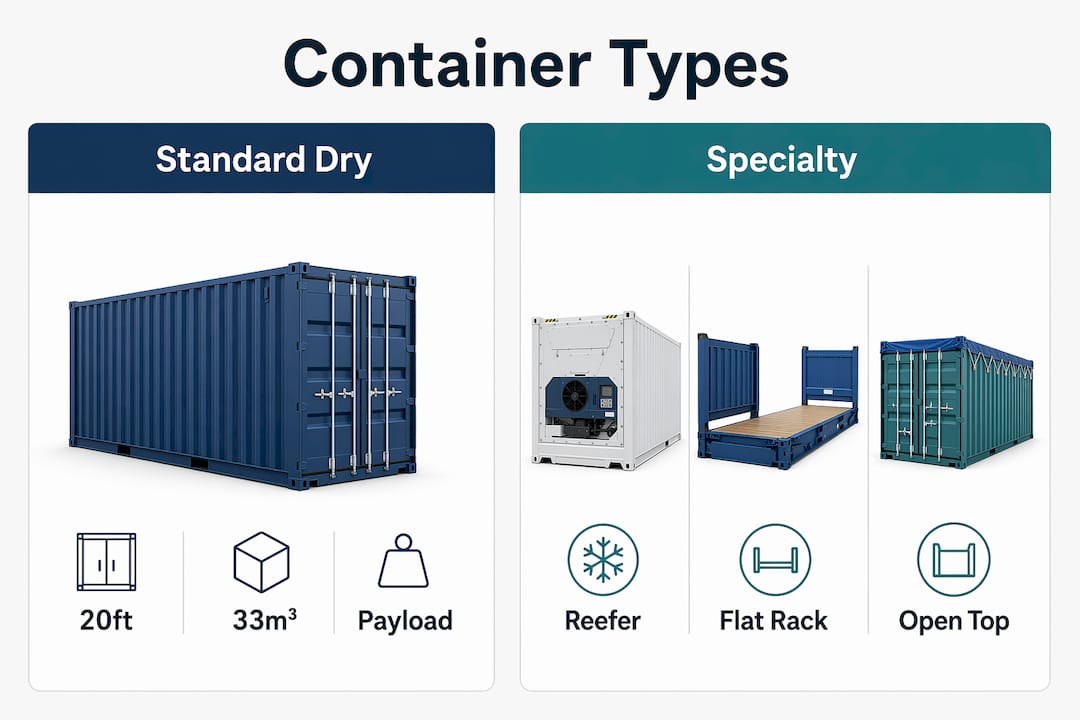
The types of shipping containers available today cover a wide range of cargo needs, from standard dry goods to frozen food and oversized machinery. Choosing the wrong type wastes money and risks cargo damage.
The five most widely used container types are:
- Dry van (standard): The default choice for non-perishable, packaged goods. Available in 20ft and 40ft lengths.
- High cube: One foot taller than a standard container, ideal for lightweight but bulky cargo like furniture or textiles.
- Refrigerated (reefer): Temperature-controlled units for perishables, pharmaceuticals, and other cold-chain goods.
- Open top: No fixed roof, allowing cranes to load oversized or tall cargo like machinery or timber.
- Flat rack: No side walls or roof, built for heavy or irregularly shaped freight like vehicles or steel coils.
Specialized container types including reefers, flat racks, and open tops accommodate perishable or oversized cargo within standardized intermodal systems. Each type conforms to ISO standards, which means you can transfer them between ships, trains, and trucks without special handling.
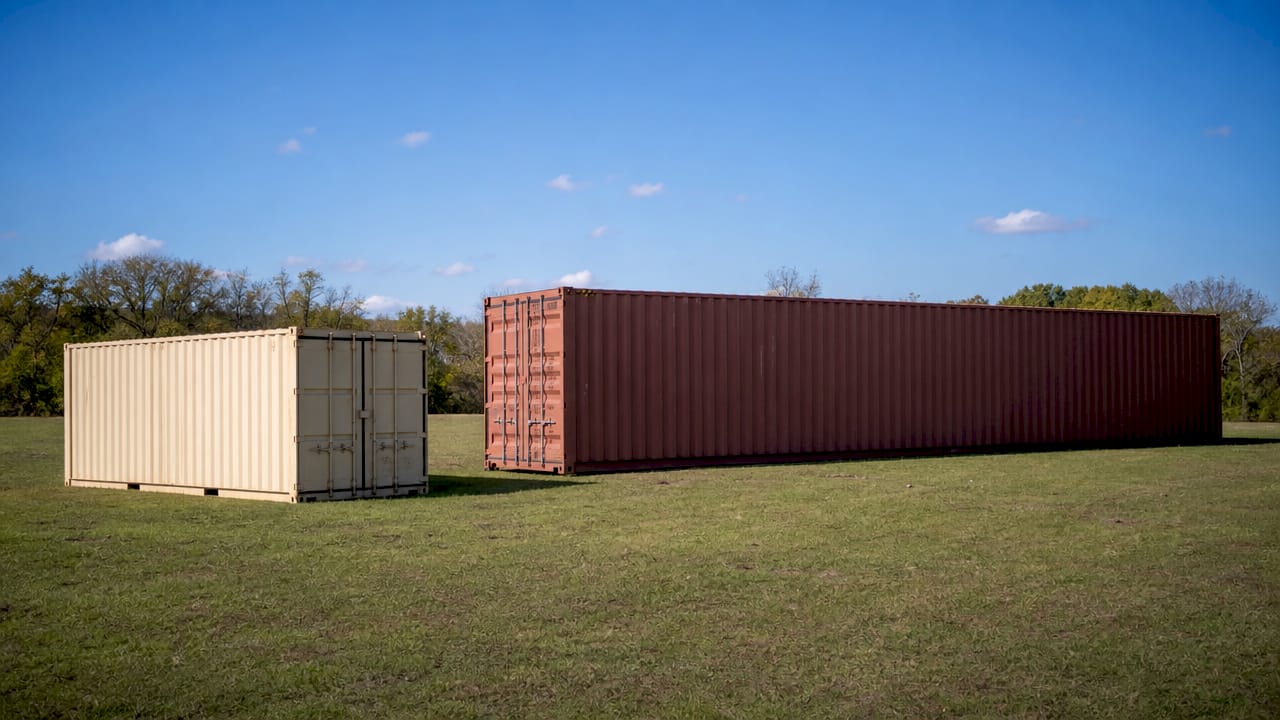
Dimensions matter as much as type. A standard 20ft container provides approximately 33 cubic meters of usable volume. A 40ft High Cube container offers 76.4 cubic meters and stands 305mm taller than a standard unit, with a payload capacity of approximately 28,550 kg. That extra height makes a measurable difference when shipping light, voluminous goods.
| Container Type | Length | Volume (approx.) | Payload Capacity |
|---|---|---|---|
| Standard dry van | 20ft | 33 m³ | ~28,200 kg |
| Standard dry van | 40ft | 67 m³ | ~26,700 kg |
| High cube | 40ft | 76.4 m³ | ~28,550 kg |
| Reefer | 40ft | ~59 m³ | ~27,700 kg |
| Flat rack | 40ft | N/A (open) | ~40,000 kg |
Pro Tip: If your cargo is light but bulky, a 40ft High Cube almost always delivers better cost-per-cubic-meter value than two 20ft standard units.
How do regulations and documentation requirements impact container shipping?
International container shipping involves complex regulations and documentation that vary by country, commodity, and transport mode. Skipping or mishandling any step can result in cargo holds, fines, or seizure at the border.
Key compliance requirements include:
- ISO 668 and ISO 1496 standards: These govern container dimensions, structural strength, and maximum gross weight ratings. Containers not meeting these standards may be rejected at ports.
- Bill of lading: The primary transport document confirming cargo details, shipper, and consignee.
- Commercial invoice and packing list: Required for customs valuation and duty calculation in virtually every country.
- Certificates of origin: Many trade agreements require proof of where goods were manufactured to qualify for reduced tariff rates.
- Dangerous goods declarations: Required under IMDG (International Maritime Dangerous Goods) code for hazardous materials.
Each country maintains unique import and export laws that must be navigated before cargo arrives at the destination port. Failing to prepare the right documents before departure is one of the most common and costly mistakes in international shipping.
Overweight violations are another frequent pitfall. The max gross weight of a 40ft container is approximately 30,480 kg, but that figure includes the container’s own tare weight. Actual payload capacity is lower, and shippers who calculate based on gross weight alone regularly face port fines or forced offloading.
Freight forwarders are the most reliable way to manage customs compliance and clearance. They know country-specific rules, prepare documentation packages, and coordinate with customs authorities on your behalf. For businesses shipping to multiple markets, working with a licensed forwarder is not optional. It is the difference between predictable transit times and expensive surprises.
Pro Tip: Always verify the Harmonized System (HS) code for your goods before booking. Misclassification is the leading cause of customs delays and unexpected duty assessments.
What are the main cost factors for international container shipping?
Ocean freight haulage from port to port is the primary cost driver for containerized freight transport. However, total costs also include customs brokerage and documentation fees that first-time shippers routinely overlook.
The main cost components to budget for include:
- Base ocean freight rate: Priced per TEU (twenty-foot equivalent unit) or per container, varying by trade lane and carrier.
- Fuel surcharge (BAF): Bunker Adjustment Factor, applied to offset fluctuating fuel prices.
- Peak season surcharge (PSS): Applied during high-demand periods, typically before major retail holidays.
- Congestion surcharge: Charged when destination ports experience vessel backlogs.
- Currency adjustment factor (CAF): Accounts for exchange rate fluctuations on specific trade lanes.
- Customs brokerage fees: Charged by licensed brokers for preparing and filing import or export entries.
- Documentation fees: Covering bill of lading issuance, telex release, and similar administrative costs.
Cost optimization in container shipping requires evaluating both direct freight rates and ancillary costs such as customs fees and surcharges. A rate that looks attractive at first glance can become expensive once surcharges are added.
Container size and type also directly affect cost. A 40ft container typically costs less per cubic meter than a 20ft unit on the same trade lane. Reefer containers carry a premium over dry vans due to the energy required to maintain temperature. For a detailed breakdown of how capacity and surcharges interact, the ocean freight charges guide from Worldwideexpress covers current 2026 rate structures clearly.
One cost that surprises many shippers is cargo insurance. It is separate from freight charges and not automatically included. For high-value shipments, cargo insurance coverage is a necessary line item, not an optional add-on.
What are best practices for loading and monitoring cargo containers?
Choosing the right container is only the first step. How you load and monitor it determines whether your cargo arrives intact and on time.
-
Match container type to cargo characteristics. Perishables require reefers with verified pre-cooling. Oversized items need flat racks or open tops with proper blocking and bracing. Dry goods in standard containers need moisture-absorbing desiccants if the voyage crosses humid climate zones.
-
Distribute weight evenly across the container floor. Heavy items go on the bottom and toward the front of the container, near the doors. Uneven weight distribution shifts the container’s center of gravity and increases the risk of cargo shifting during rough seas or sharp road turns.
-
Secure cargo with approved lashing and blocking materials. Loose cargo inside a container is a liability. Use ISO-compliant lashing rings, strapping, and dunnage bags to prevent movement. Proper securing also satisfies carrier liability requirements.
-
Verify gross weight before gate-in. Under the SOLAS VGM (Verified Gross Mass) regulation, shippers must declare the verified gross weight of a packed container before it is loaded onto a vessel. Failure to comply results in the container being held at the terminal.
-
Use real-time monitoring for sensitive shipments. Modern monitoring technologies enable shippers to track container temperature, humidity, and route deviations with 24/7 alerts during transit. This is critical for pharmaceutical, food, and high-value electronics shipments. For a full look at perishable cargo handling, Worldwideexpress outlines the monitoring protocols that protect cold-chain integrity.
Pro Tip: Request a pre-trip inspection (PTI) report for any reefer container before loading. A faulty refrigeration unit discovered after departure can destroy an entire shipment.
Logistics managers who also handle ground transport can benefit from reviewing B2B vehicle rental options for last-mile and drayage needs, particularly when coordinating container pickups from port terminals.
Key Takeaways
Selecting the right cargo freight container type, understanding total costs, and maintaining compliance with ISO and customs standards are the three factors that most directly determine whether an international shipment succeeds or fails.
| Point | Details |
|---|---|
| Container type drives cargo fit | Match dry van, reefer, flat rack, or open top to your specific cargo characteristics. |
| ISO standards govern all dimensions | ISO 668 and ISO 1496 set the weight, size, and structural rules every container must meet. |
| Total cost exceeds base freight rate | Budget for surcharges, customs brokerage, documentation, and insurance beyond the quoted rate. |
| Overweight violations are preventable | Calculate payload using tare weight, not max gross weight, to avoid port fines. |
| Real-time monitoring protects sensitive cargo | Temperature and route tracking systems provide 24/7 alerts for high-value or perishable shipments. |
What I’ve learned after years of watching container shipments go wrong
The single most underestimated risk in container freight is not the ocean crossing. It is the paperwork that happens before the ship leaves port. I have seen well-organized shipments held for days because of a single misclassified HS code or a missing certificate of origin. The cargo was fine. The documentation was not.
The second thing that surprises people is how much the ancillary costs add up. A shipper will negotiate hard on the base ocean freight rate and then get hit with a peak season surcharge, a congestion fee, and a currency adjustment factor that together exceed the discount they worked so hard to secure. The customs compliance tips that Worldwideexpress publishes are worth reading before you book, not after.
On the technology side, the shift toward real-time container monitoring is genuinely exciting. The ability to receive a temperature alert mid-Pacific and redirect a reefer shipment before it spoils represents a real change in how supply chains respond to disruption. Digitalization in supply chain visibility is not a trend. It is becoming the baseline expectation for any serious freight operation.
My practical recommendation: treat your freight forwarder as a partner, not a vendor. The best ones catch problems before they become crises. That relationship is worth more than any rate negotiation.
— Ian
Worldwideexpress and your container freight needs
Worldwideexpress brings deep expertise in international container freight, from selecting the right container type to managing customs clearance across multiple markets.
The team at Worldwideexpress handles the full scope of containerized freight transport, including ocean freight forwarding, customs brokerage, cargo insurance, and real-time shipment tracking. For businesses shipping regularly or entering new markets, the freight forwarding guide covers the complete process from booking to delivery. Those ready to compare service structures can review the ocean freight forwarding steps to understand exactly what a managed shipment looks like end to end. Contact Worldwideexpress for a freight quote tailored to your cargo type, trade lane, and compliance requirements.
FAQ
What is a cargo freight container?
A cargo freight container is a standardized, reusable metal unit built to ISO specifications for transporting goods across ocean, road, and rail. Standard sizes are 20ft and 40ft in length, with variants including high cube, reefer, open top, and flat rack designs.
What is the difference between a 20ft and 40ft container?
A 20ft container provides approximately 33 cubic meters of volume, while a 40ft High Cube container offers 76.4 cubic meters with a payload capacity of approximately 28,550 kg. The 40ft unit delivers better cost efficiency for large or bulky shipments.
What documents are required for international container shipping?
Core documents include a bill of lading, commercial invoice, packing list, and certificate of origin. Hazardous goods require an IMDG declaration, and most countries require customs entry filings prepared by a licensed broker.
Why do container shipping costs vary so much?
Base ocean freight rates fluctuate with capacity and demand, but surcharges including fuel (BAF), peak season (PSS), and congestion fees can significantly increase total cost. Customs brokerage and documentation fees add further to the final figure.
What is SOLAS VGM and why does it matter?
SOLAS VGM (Verified Gross Mass) is an international regulation requiring shippers to declare the verified total weight of a packed container before vessel loading. Non-compliance results in the container being withheld from the ship, causing delays and additional port fees.
Recommended
- Freight transportation modes: optimize shipping in 2026 – Worldwide Express, Inc.
- Container shipping basics: Reliable solutions for global trade – Worldwide Express, Inc.
- 7 Proven Ways to Lower International Container Shipping Rates – Worldwide Express, Inc.
- Understanding Container Shipping Rates for Global Trade – Worldwide Express, Inc.